


Primary sourcePainting1851
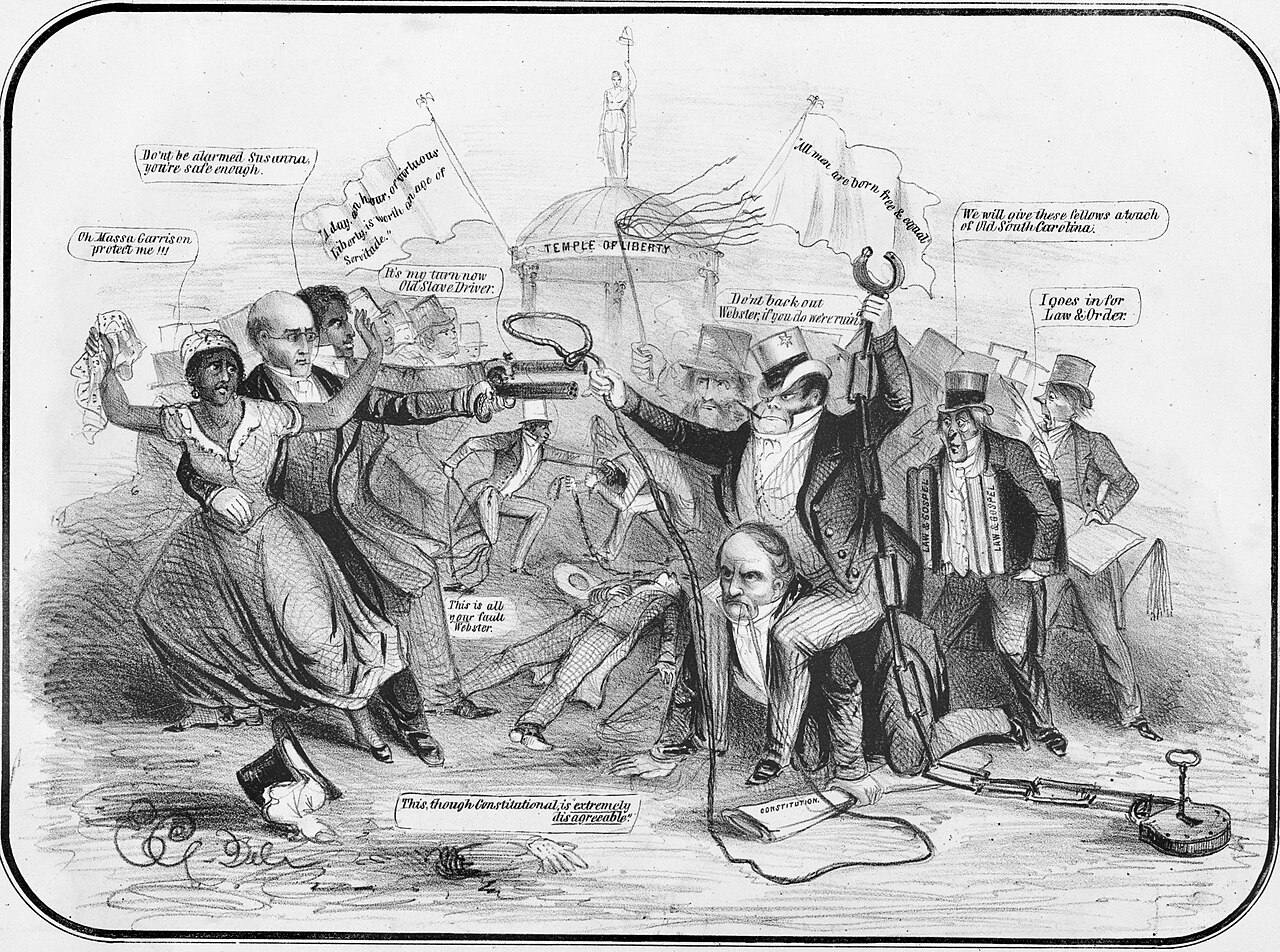
Practical Illustration of the Fugitive Slave Law
E.C. (artist initials on the print) · 1851
An 1851 anti-slavery lithograph cartoon satirizing the Fugitive Slave Act of 1850, the law under which Dred Scott's case was argued. It does not show Scott himself.
Shows the legal climate of the Fugitive Slave Act in which Dred Scott sued for freedom, though it does not depict Scott himself.
About this source
What it is
This is a black-and-white lithograph cartoon printed in 1851 on wove paper. Its drawing is signed 'E.C. del.' The image is a satire on the Fugitive Slave Act of 1850. It shows Northern abolitionists, including William Lloyd Garrison and Frederick Douglass, on one side and Secretary of State Daniel Webster and supporters of enforcement on the other. The scene includes a slave catcher, a whipping, and enslaved people in chains. The cartoon includes racist caricatures of Black figures.
Why it matters
The Fugitive Slave Act made it a federal crime to aid people escaping slavery and made the North part of the enforcement system. Dred Scott's freedom suit was argued against this legal background. The cartoon shows how people in 1851 argued about the law, with abolitionists, politicians and enslaved people all placed within one charged scene. It reveals how the conflict was understood and portrayed by people at the time.
Look closer
- Which figures does the cartoonist place in the foreground, and what actions and objects does he give each one?
- The cartoon uses banners and labels such as 'Law & Order.' What do these labels suggest about the artist's opinion of the law?
- Which people are drawn as caricatures, and what does this show about the cartoonist's view of Black Americans, and what is missing from the scene?
This painting is part of the curated material that grounds the AI version of Dred Scott on Humy.ai — when students ask about related events, the AI can quote it and cite it.
More Dred Scott sources
Browse all 70 →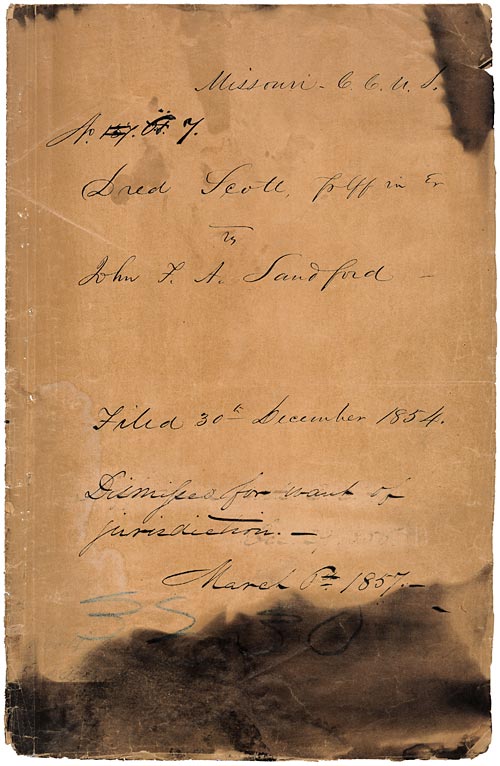 Document
Primary source
Dred Scott v. Sandford
Roger B. Taney · 6 March 1857
 Document
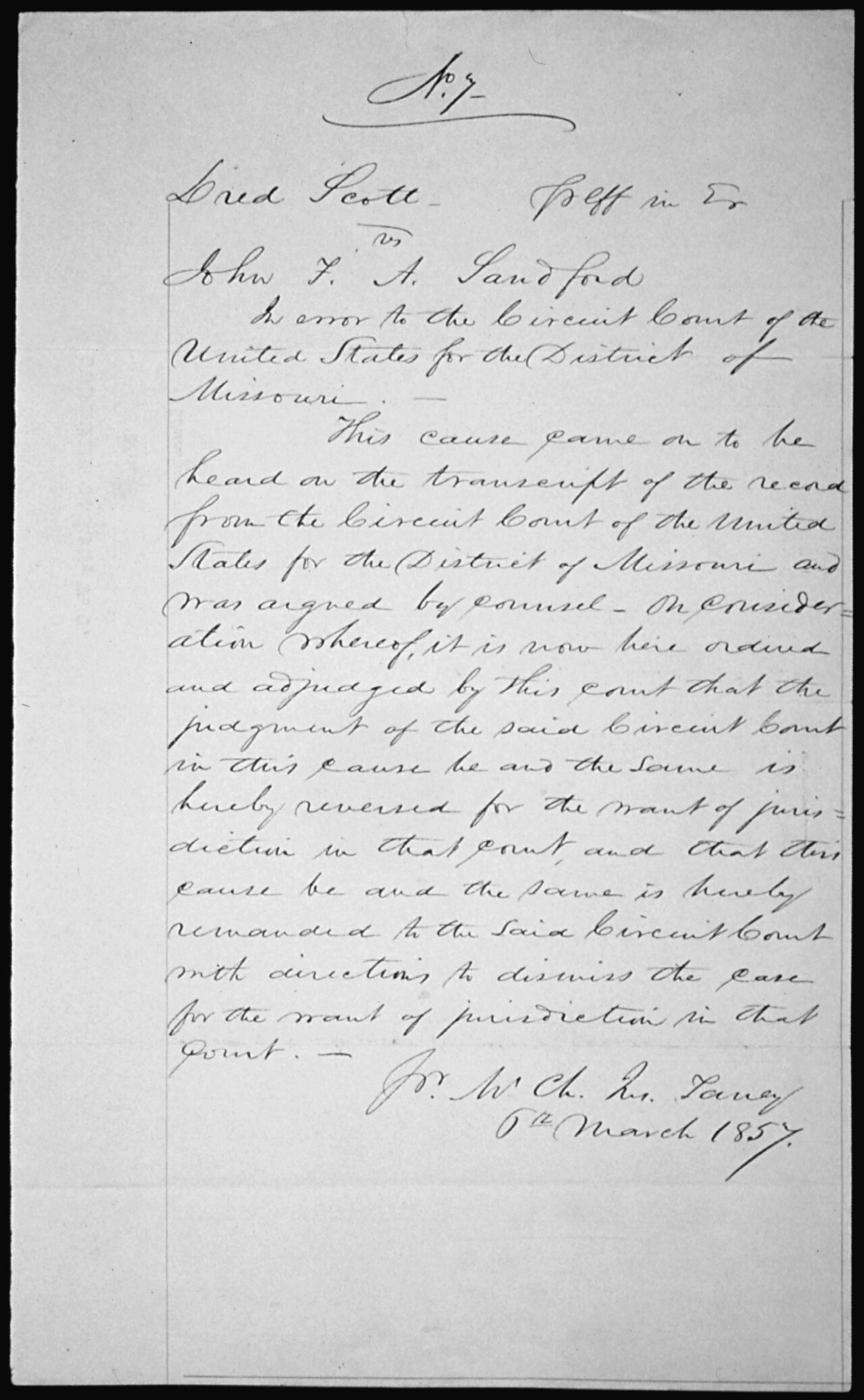
Primary source
Judgment in the U.S. Supreme Court Case Dred Scott v. John F. A. Sandford
Roger B. Taney · 6 March 1857
 Photograph
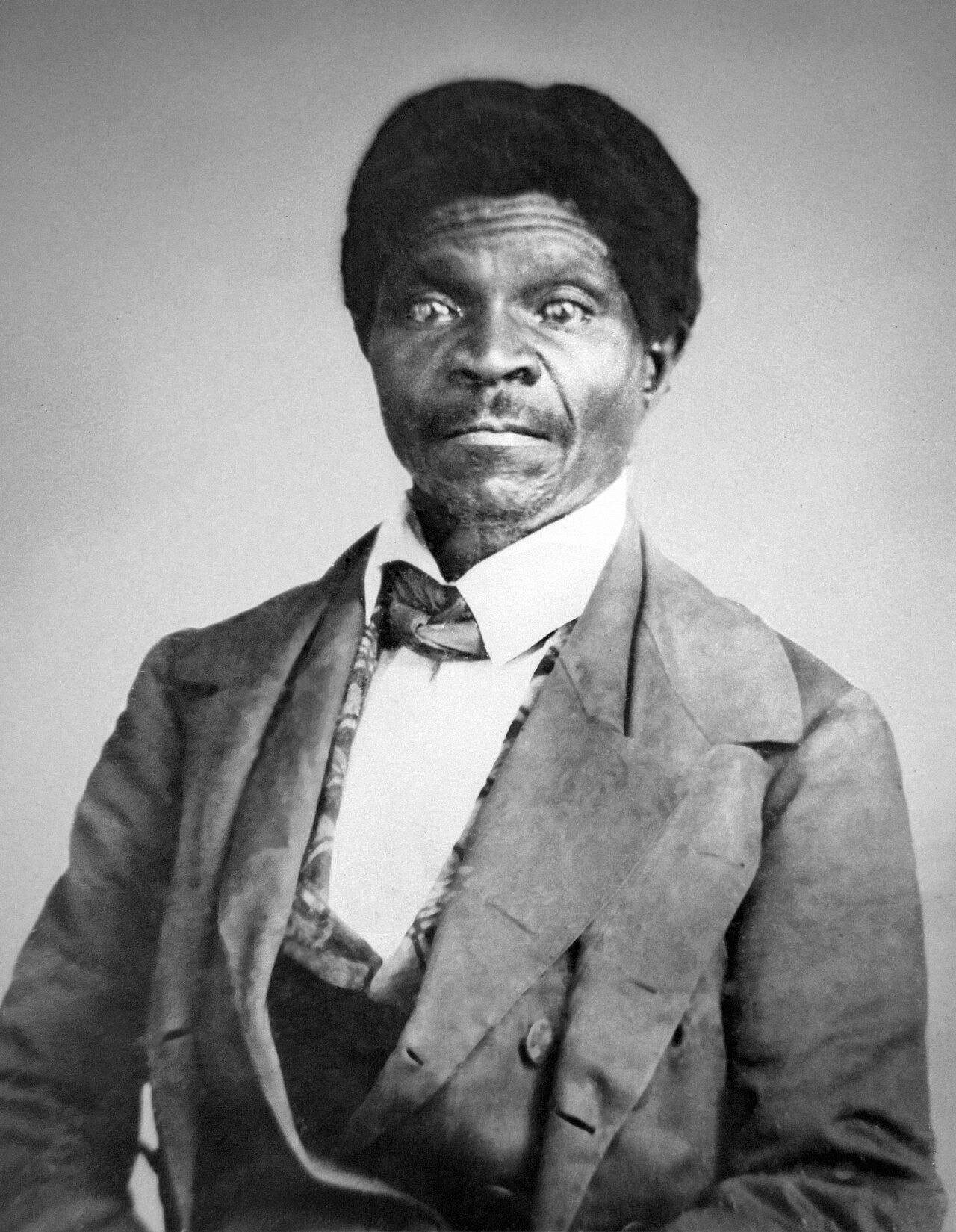
Primary source
Portrait of Dred Scott
c. 1857
 Document
Primary source
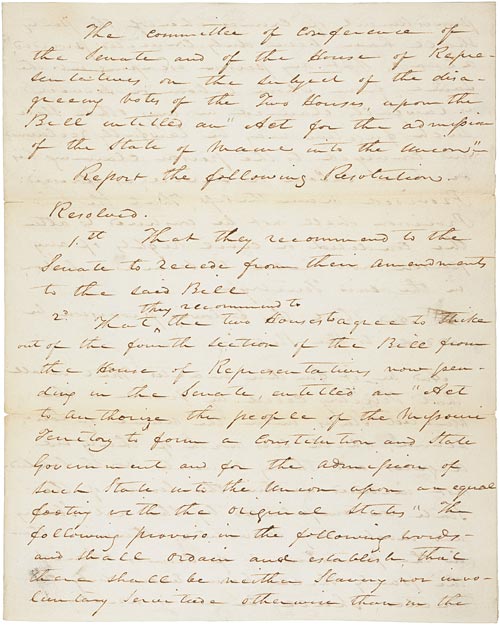
Missouri Compromise Conference Committee Report
1 March 1820
Free account
Read every Dred Scott source
Sign up free →
Ready when you are
Start chatting with Dred Scott now.
20 messages free · No credit card · Available in 50+ languages.