


Primary sourceDocument1776
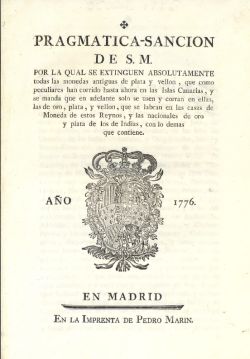
Pragmatica Sancion on the Coinage of the Canary Islands
Antonio Martínez Salázar · 1776
A 1776 printed royal decree by Charles III withdrawing old coinage in the Canary Islands and standardizing currency.
This decree, issued in Charles III's name, demonstrates his monetary reforms and centralizing policies.
About this source
What it is
This is a printed royal decree ('Pragmatica-Sancion') issued in the name of Charles III in 1776, printed in Madrid by Pedro Marin. It ordered the end of old silver and copper coins used in the Canary Islands and required that only coins minted in the official royal mints of Spain and the Indies be used there from then on.
Why it matters
This decree shows Charles III's efforts to centralize and standardize the Spanish monetary system across his territories, a key part of his program of enlightened administrative reform. It reveals how the crown used printed law to reach into everyday economic life, even in distant island territories.
Look closer
- Why might a king want to eliminate local or regional coinage in favor of a single national currency?
- What does the formal, legal language of the decree tell you about how royal power was communicated to the public?
- Who would have been most affected by this change in currency, and how might they have reacted?
This document is part of the curated material that grounds the AI version of Charles III of Spain on Humy.ai — when students ask about related events, the AI can quote it and cite it.
More Charles III of Spain sources
Browse all 94 →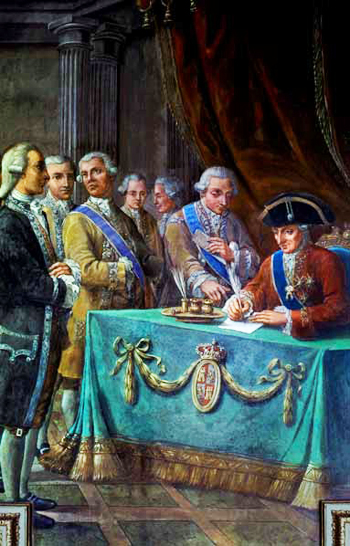 Document
Secondary source
Free Trade Regulations
Pere Pau Muntanya · 1778
 Painting
Primary source
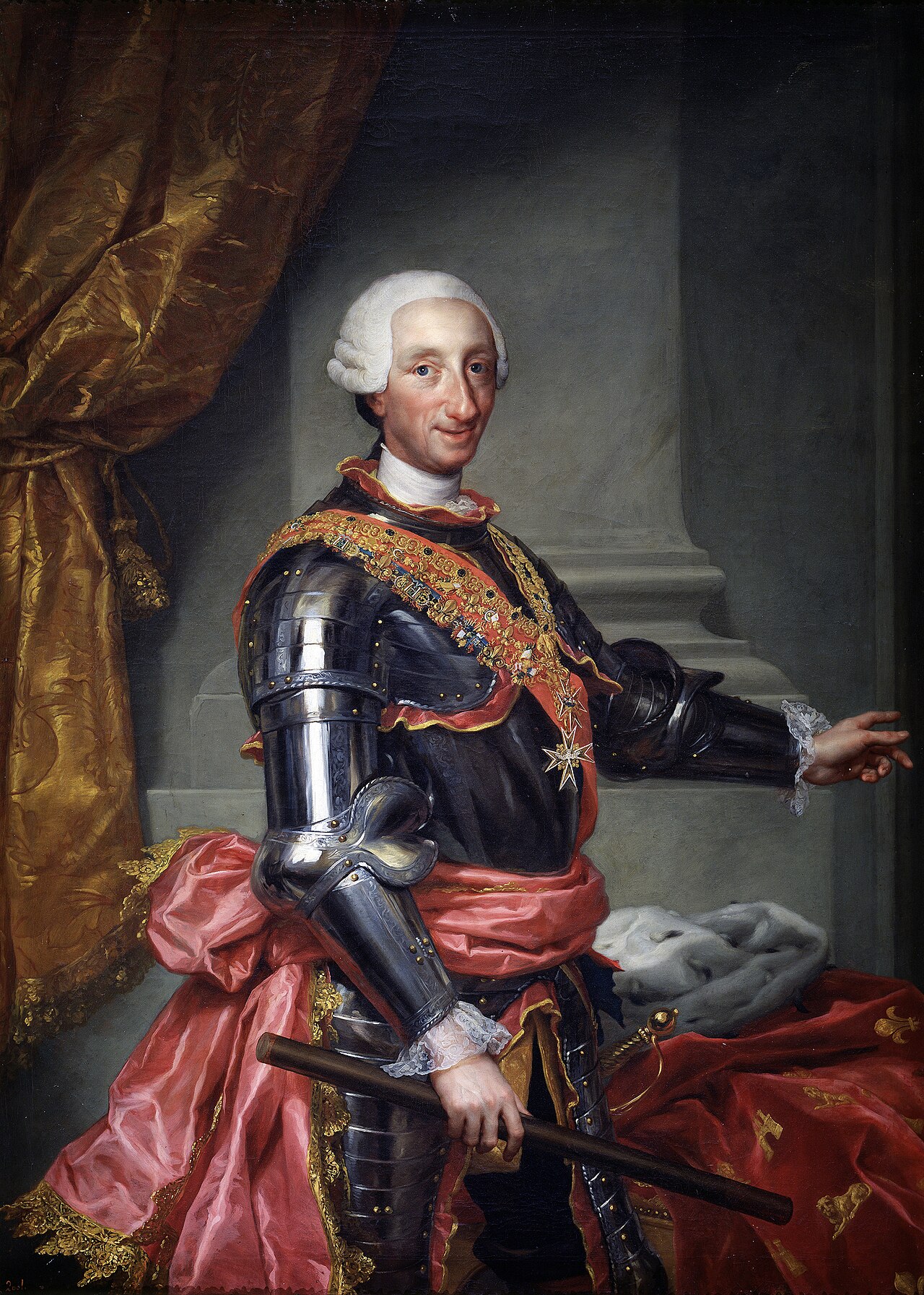
Charles III
Anton Raphael Mengs · 1767
 Painting
Primary source
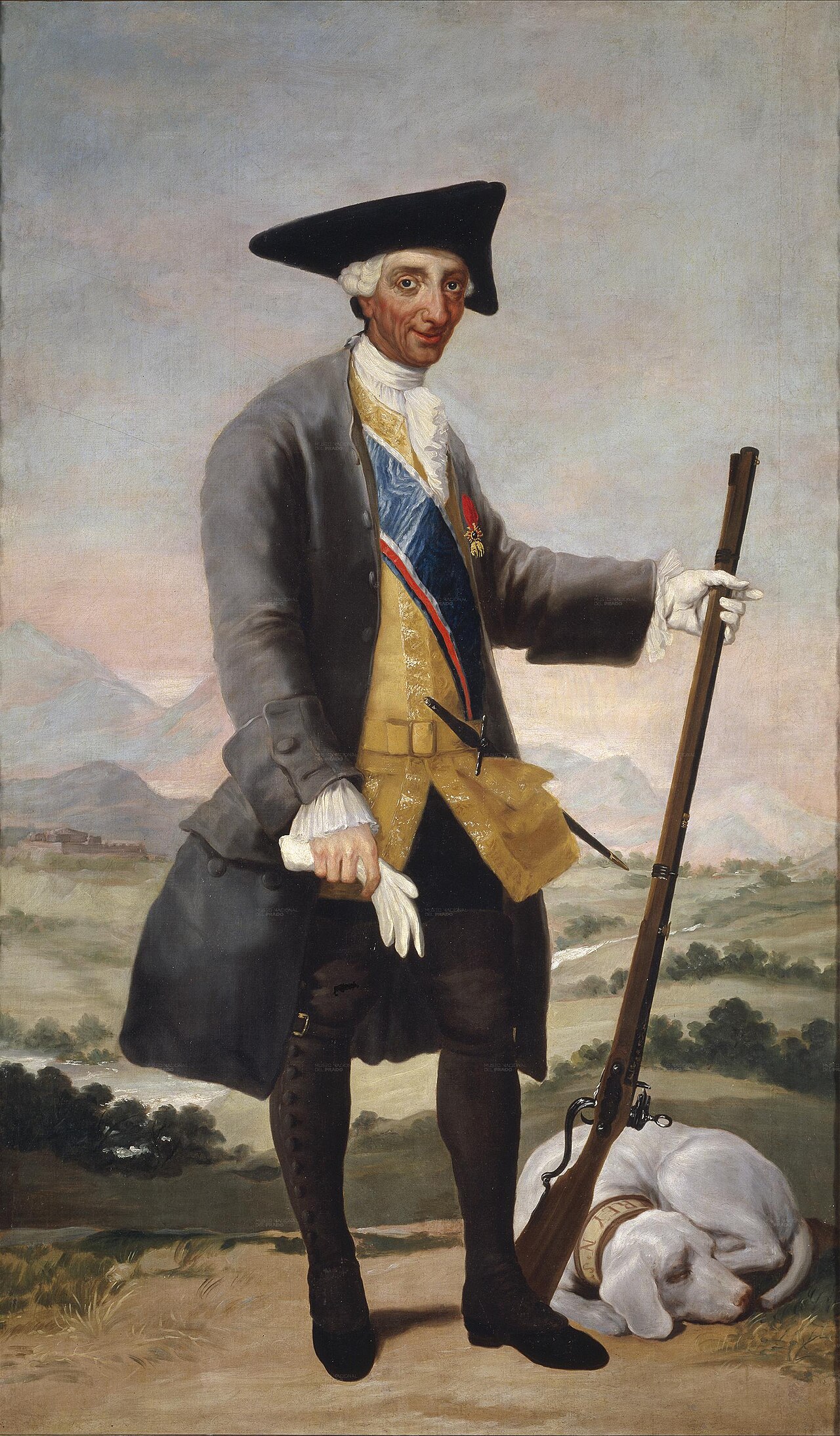
Charles III in Hunting Dress
Francisco Goya · 1786
 Painting
Primary source
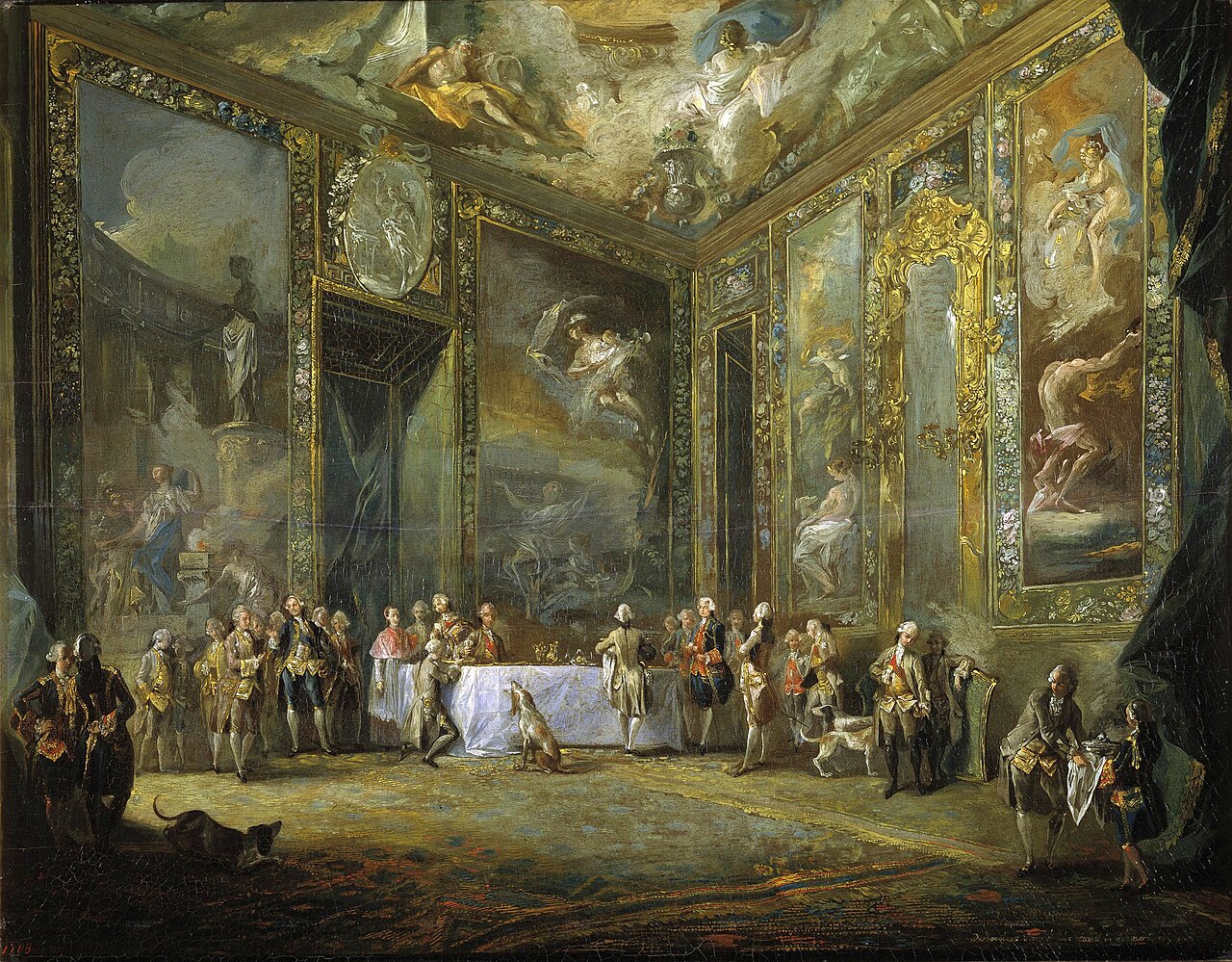
Charles III dining before the Court
Luis Paret y Alcázar · 1775


Free account
Read every Charles III of Spain source
Sign up free →
Ready when you are
Start chatting with Charles III of Spain now.
20 messages free · No credit card · Available in 50+ languages.