


Primary sourcePaintingc. 1510-1520
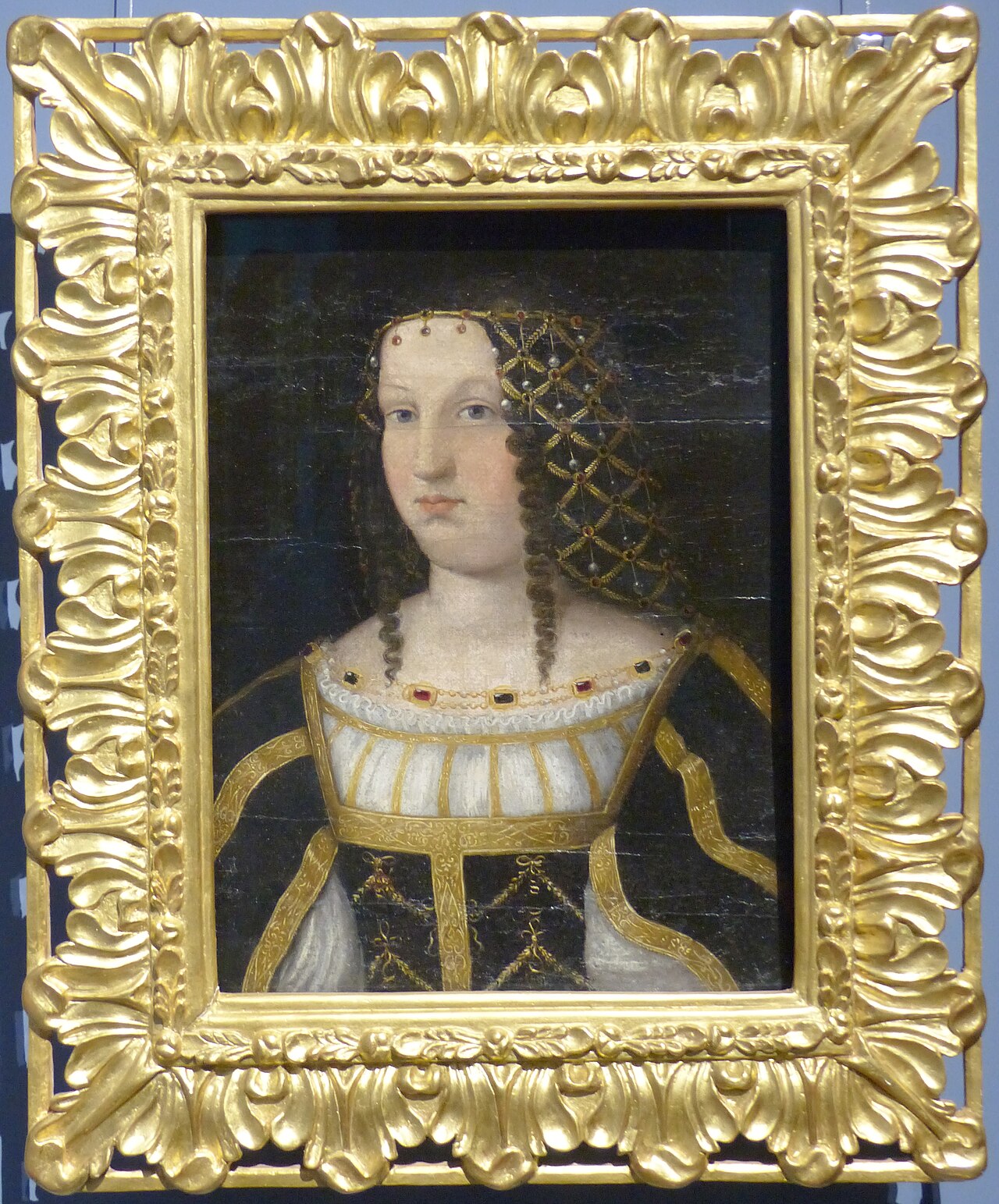
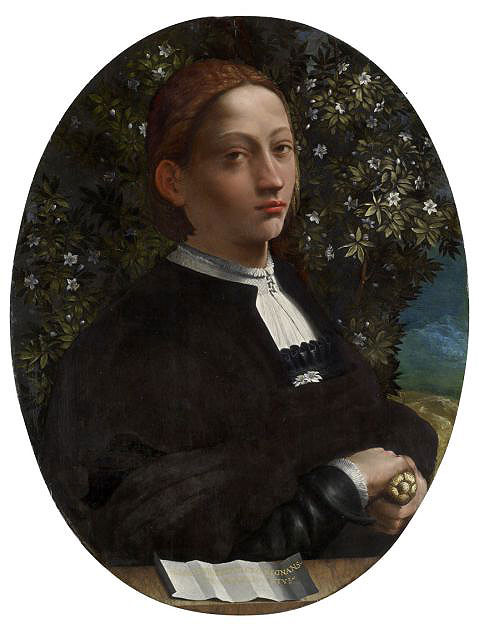
Presumed portrait of Lucrezia Borgia
Anonymous, after Bartolomeo Veneto · c. 1510-1520
A painted copy of a lost early 16th-century portrait, traditionally identified as Lucrezia Borgia, though the identity is uncertain.
This portrait is traditionally presumed to show Lucrezia Borgia, though her identity as the sitter is uncertain.
About this source
What it is
This is a painting made between about 1510 and 1520, copied by an anonymous artist from a lost original by Bartolomeo Veneto. It shows a young woman looking to one side, wearing a jeweled, lattice-patterned headdress with pearls, a white chemise, and a dark dress trimmed with gold and set with red and green jewels.
Why it matters
The painting has long been presumed to show Lucrezia Borgia, connecting it to both her and the artist Bartolomeo Veneto, though the sitter's identity cannot be confirmed with certainty. It shows how Renaissance portraits of noblewomen emphasized rich dress and jewelry as signs of status.
Look closer
- What details of clothing and jewelry suggest the sitter was wealthy or of high rank?
- Why might historians be uncertain about who is really shown in this portrait?
- How might the fact that this is a copy of a lost original change how we read it as evidence?
This painting is part of the curated material that grounds the AI version of Lucrezia Borgia on Humy.ai — when students ask about related events, the AI can quote it and cite it.
More Lucrezia Borgia sources
Browse all 64 →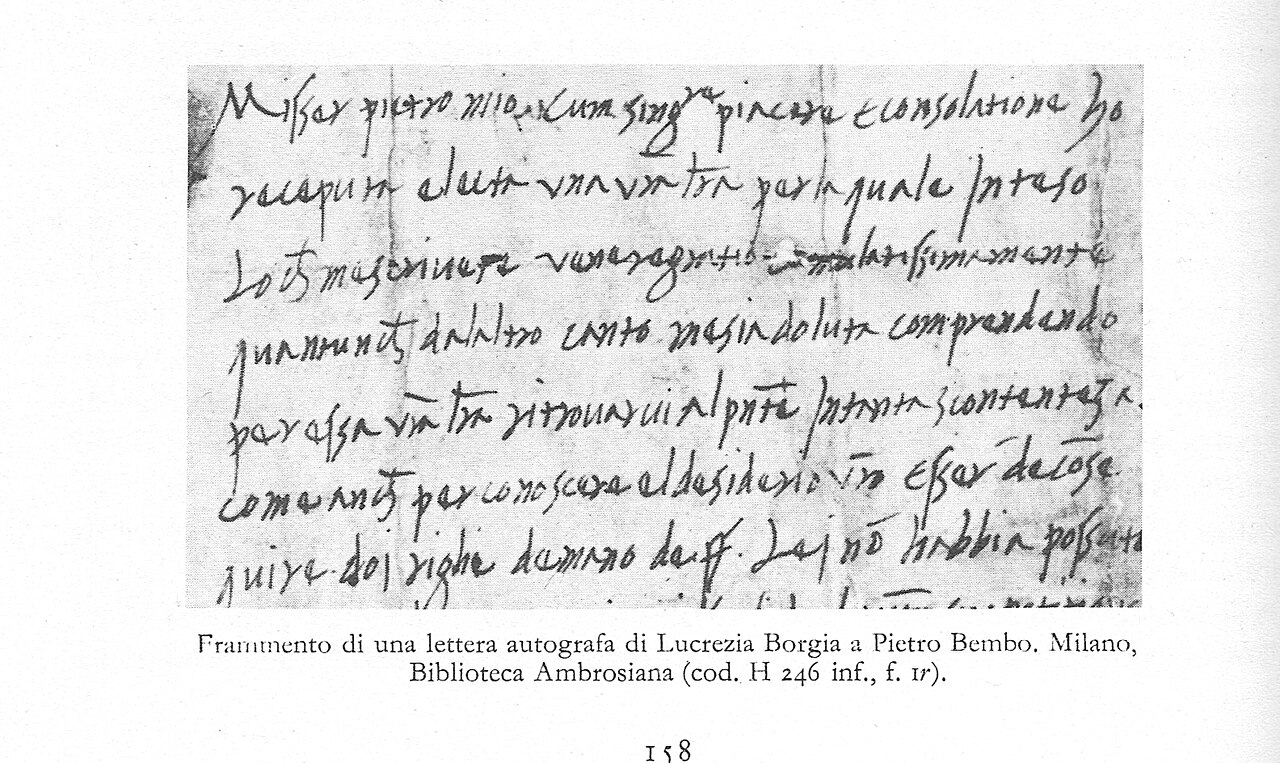 Letter
Primary source
Letters of Lucrezia Borgia to Pietro Bembo
Lucrezia Borgia · 1503–1505
 Letter
Primary source
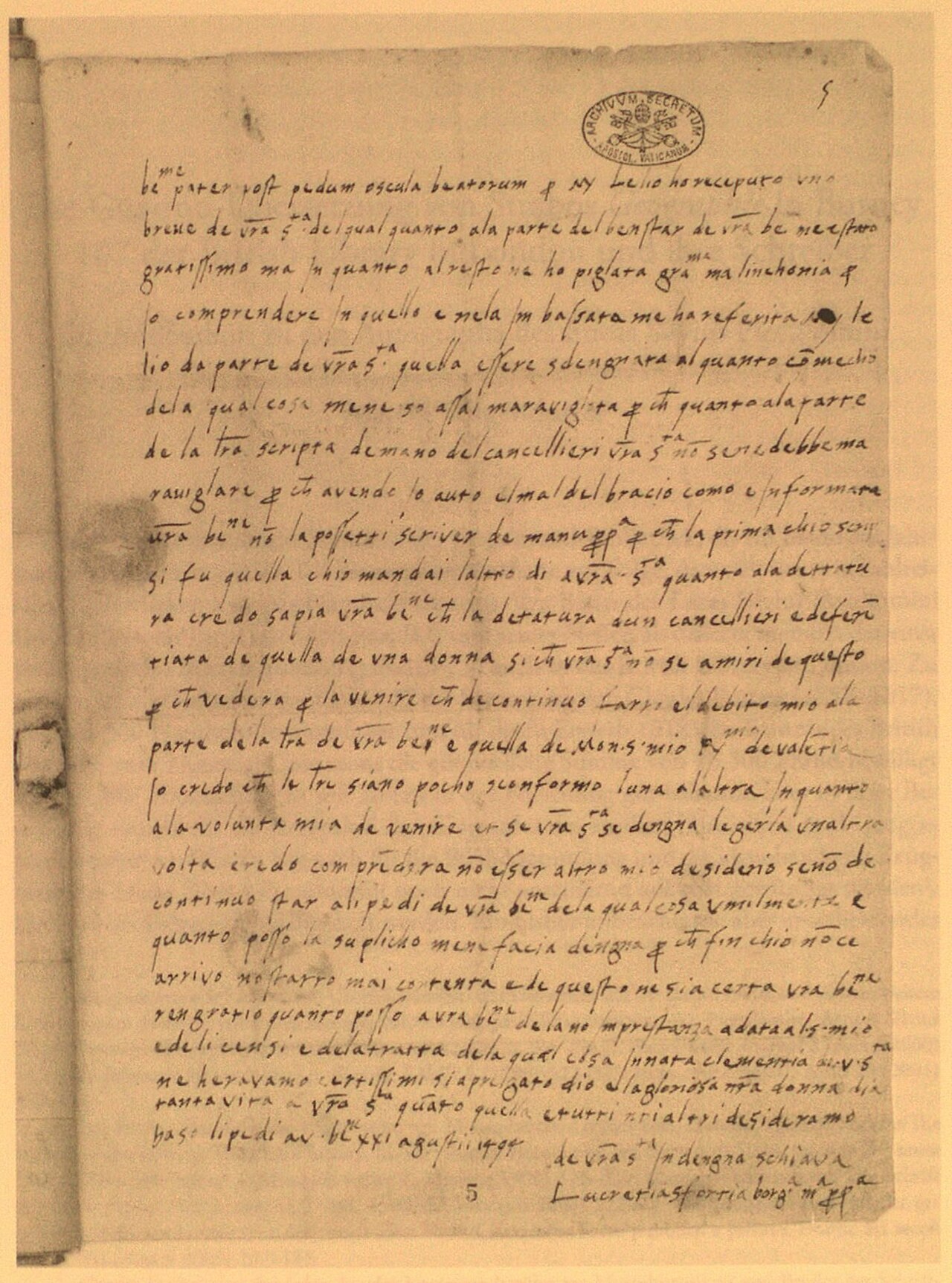
Letter to Pope Alexander VI, 1494
Lucrezia Borgia · 1494
 Letter
Primary source
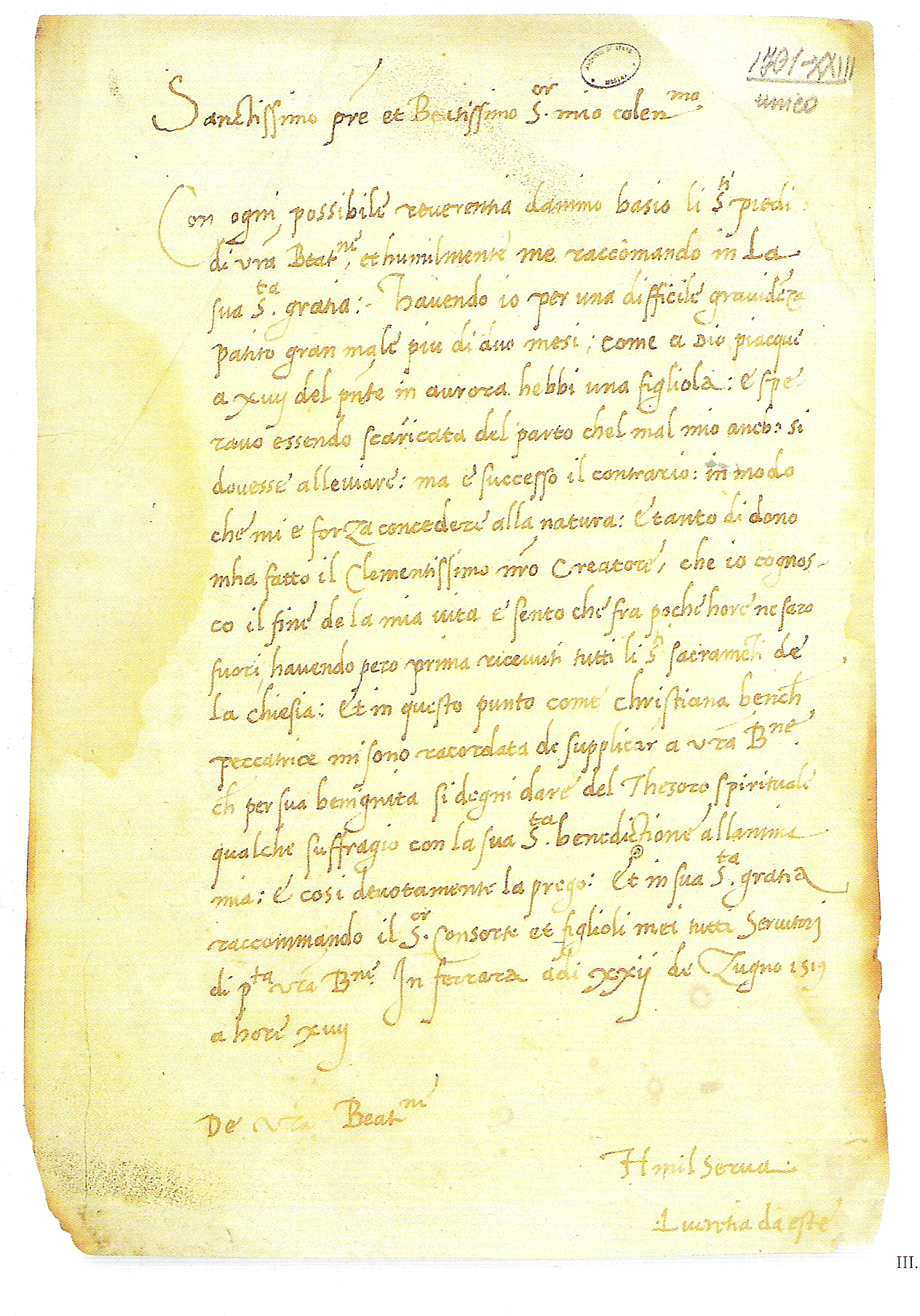
Letter to Pope Leo X
Lucrezia Borgia · 1519
 Painting
Primary source
Lucrezia Borgia, Duchess of Ferrara
Dosso Dossi · 1518
Free account
Read every Lucrezia Borgia source
Sign up free →
Ready when you are
Start chatting with Lucrezia Borgia now.
20 messages free · No credit card · Available in 50+ languages.