


Secondary sourcePainting1750
Prince Charles Edward Stuart
William Mosman · 1750
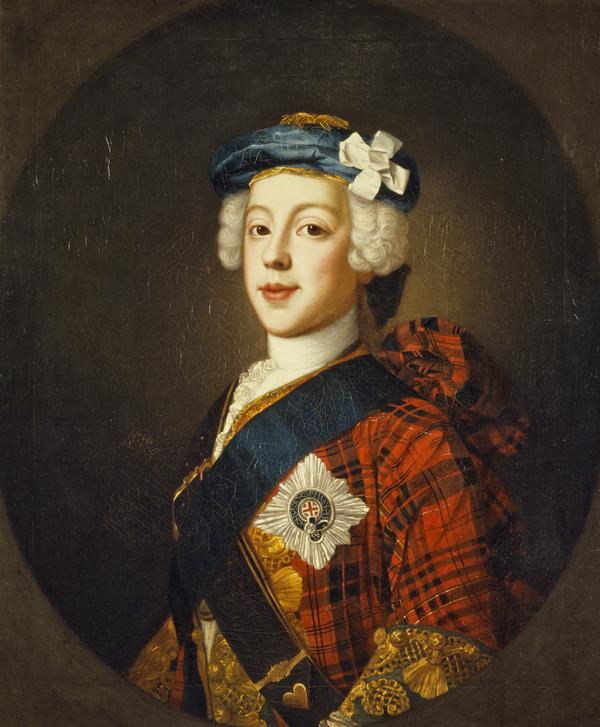
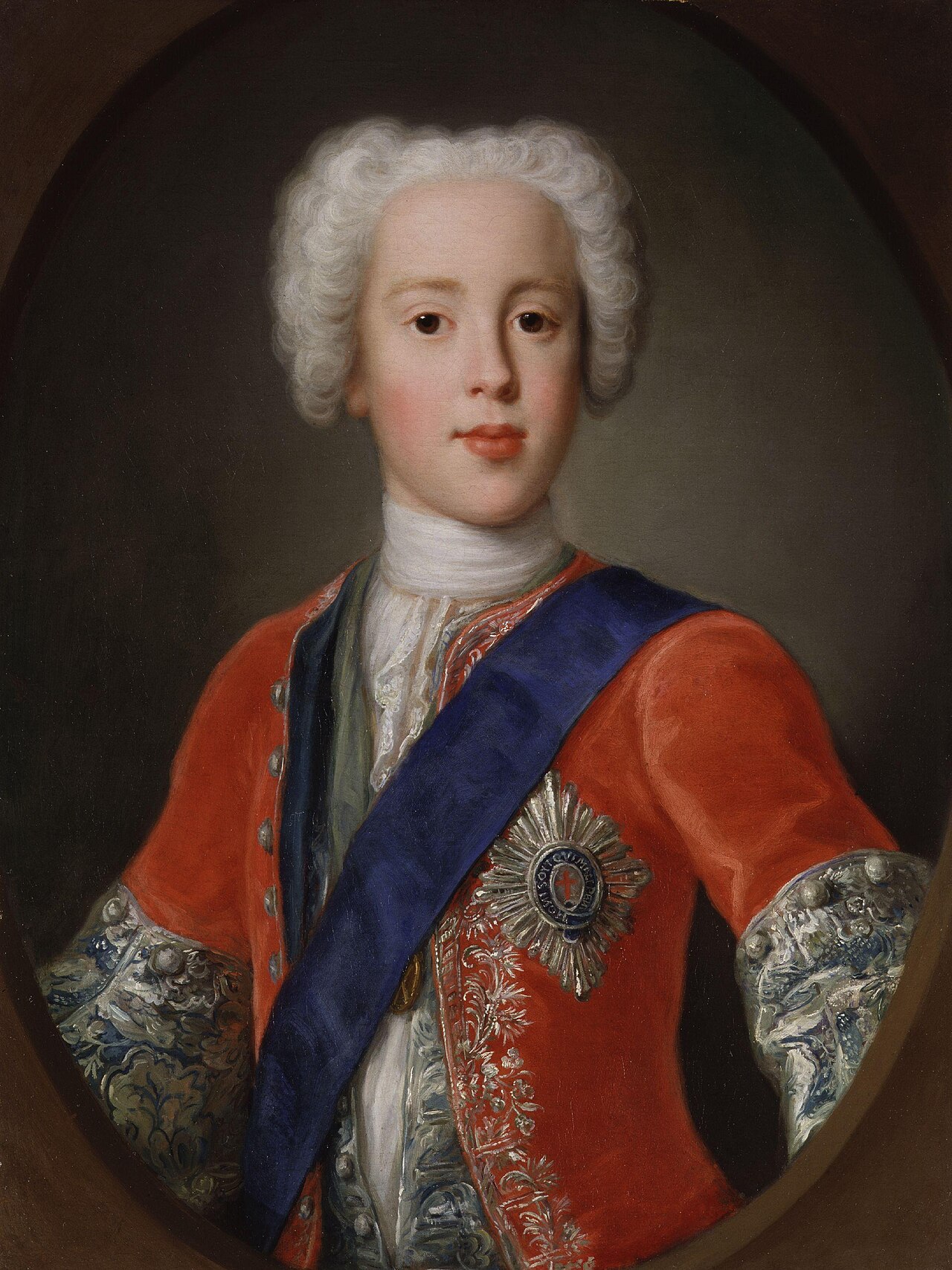
A posthumous-style Scottish portrait of Charles Edward Stuart painted around 1750, showing how his supporters pictured him after the Rising.
A posthumous Scottish portrait showing how supporters pictured Charles Edward Stuart after the failed Rising.
About this source
What it is
This oval oil portrait of Prince Charles Edward Stuart was painted by William Mosman around 1750, a few years after the failed 1745 Rising. It is held by National Galleries Scotland.
The painting shows a young man with powdered hair wearing a blue velvet bonnet, a tartan plaid, and a sash with a star badge, imagery strongly associated with Highland and Jacobite identity.
Why it matters
Painted after the Rising had already collapsed, this image reflects how Scottish supporters wanted to remember and visualise their prince, using tartan and Highland dress to link him to Scottish identity and the Jacobite cause, even in defeat.
Why it matters
Look closer
- What details in the clothing and badge are meant to connect Charles to Scotland and the Jacobite cause?
- Why might supporters have wanted such an image painted even after the Rising had failed?
- How does this portrait compare to how Charles might have actually looked by 1750?
This painting is part of the curated material that grounds the AI version of Charles Edward Stuart on Humy.ai — when students ask about related events, the AI can quote it and cite it.
More Charles Edward Stuart sources
Browse all 96 → Painting
Primary source
Portrait of Charles Edward Stuart
Allan Ramsay · October 1745
Primary source
Letter from Prince Charles Edward Stuart to the Scottish Chiefs
Charles Edward Stuart · 28 April 1746
 Painting
Primary source
Prince Charles Edward Stuart
Louis Gabriel Blanchet · 1738
 Painting
Primary source
Prince Charles Edward Stuart
Hugh Douglas Hamilton · 1785
Free account
Read every Charles Edward Stuart source
Sign up free →
Ready when you are
Start chatting with Charles Edward Stuart now.
20 messages free · No credit card · Available in 50+ languages.