


Tertiary sourcePainting1581
Promptuaire des medailles
Guillaume Rouillé · 1581
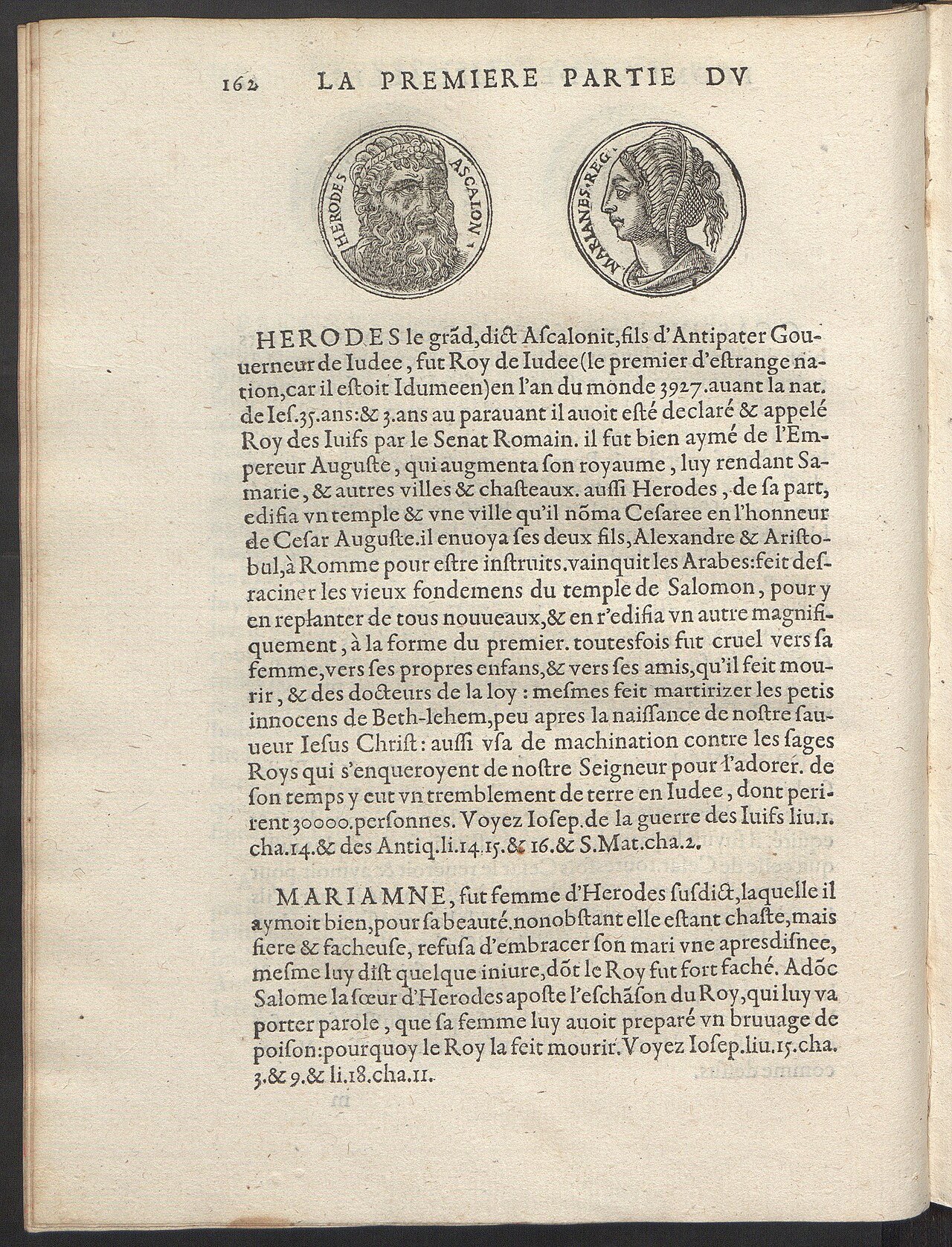
A 1581 printed book page with an invented woodcut medallion 'portrait' of Herod, since no real image of him survives from his lifetime.
This invented woodcut 'portrait' of Herod shows how later generations imagined him, since no contemporary image of him survives.
About this source
What it is
This is a page from a printed book, the Promptuaire des medailles, published in Lyon in 1581 by Guillaume Rouillé. It shows two woodcut medallion portraits labeled as Herod ('Herodes Ascalon') and Mariamne, with French text describing Herod below.
Why it matters
No portrait of Herod survives from his own lifetime, and his coins carried no image of his face. This Renaissance print instead invents a face for him, a common practice in books of this kind that imagined the appearances of historical figures long after they lived. It is a useful reminder that not every old image of a ruler reflects how they actually looked.
Look closer
- What clues in the image show that this is an imagined portrait rather than one made from life?
- Why might a Renaissance printer want to include a 'portrait' of Herod even without evidence of his real appearance?
- What does the pairing with Mariamne suggest about how the book organizes historical figures?
This painting is part of the curated material that grounds the AI version of Herod the Great on Humy.ai — when students ask about related events, the AI can quote it and cite it.
More Herod the Great sources
Browse all 87 →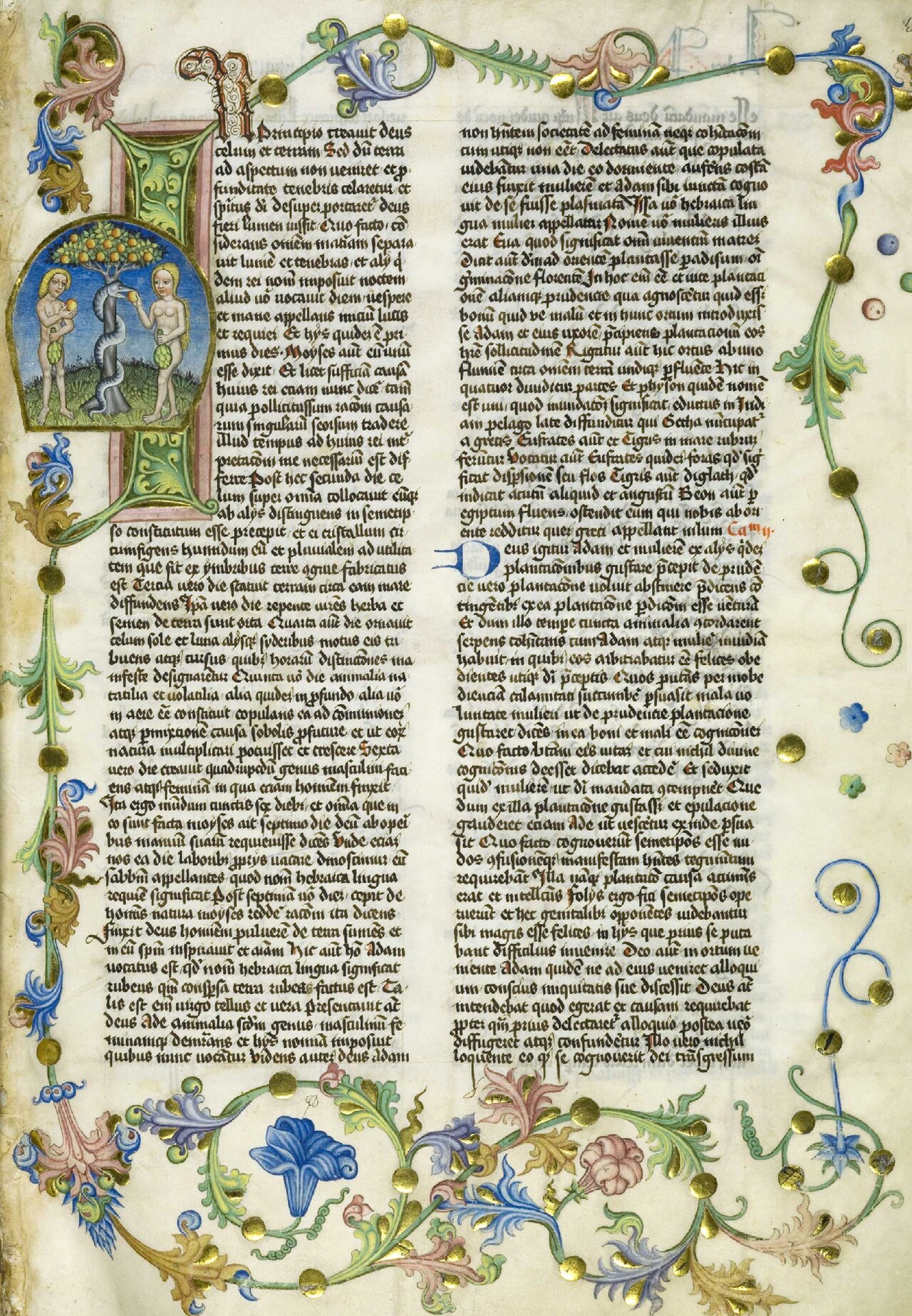 Book
Secondary source
Antiquities of the Jews
Josephus · 94 CE
 Book
Secondary source
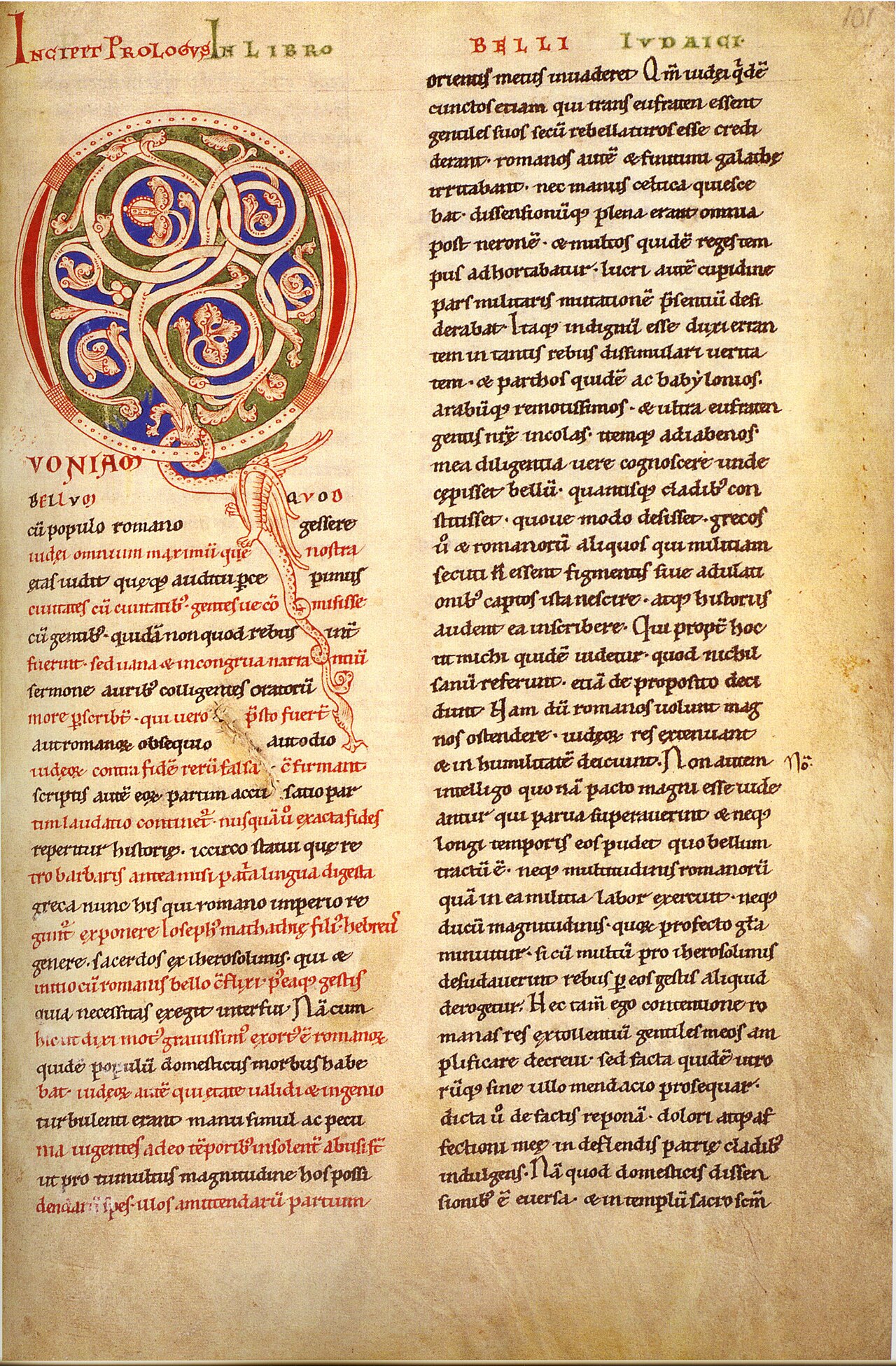
The Jewish War
Josephus · c. AD 75
 Artifact
Primary source
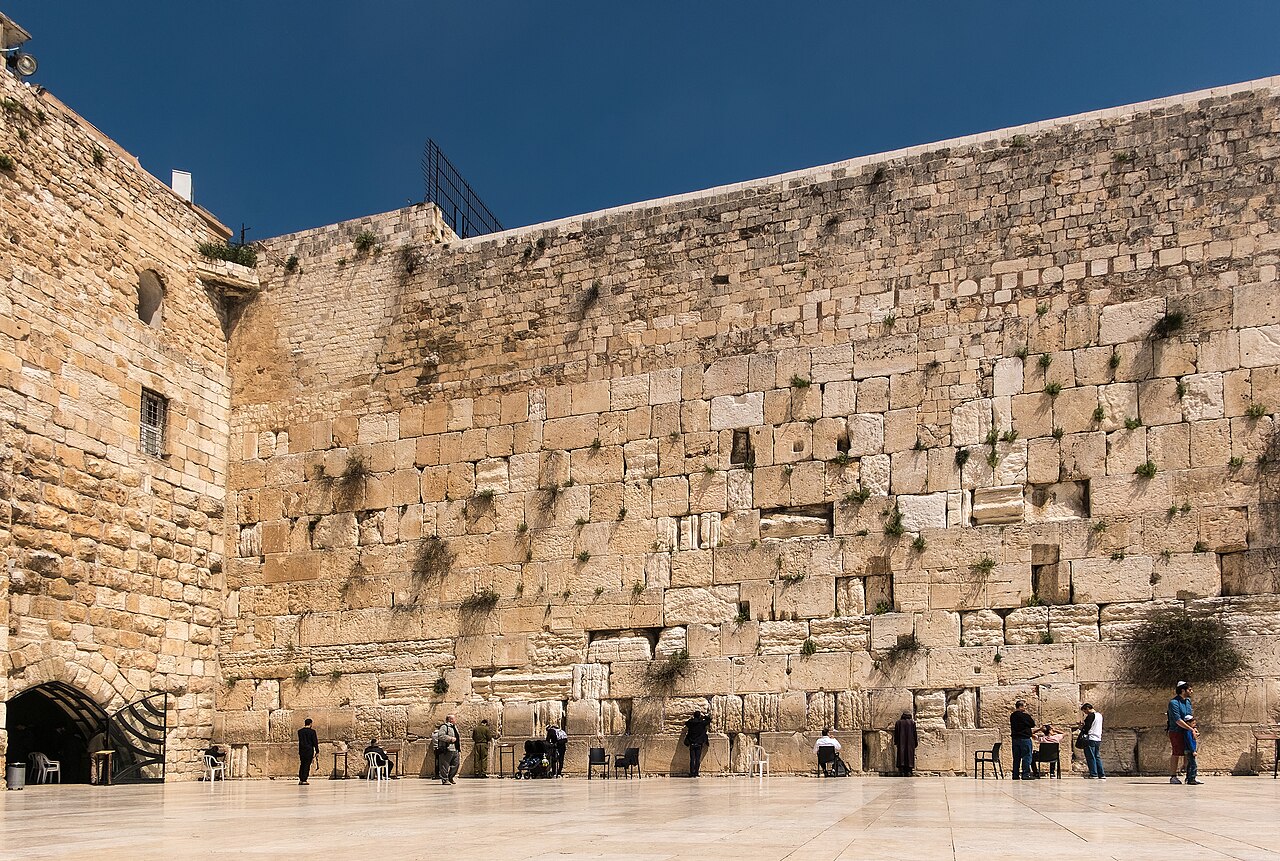
Western Wall
begun 18 BCE
 Artifact
Primary source
Herod's Temple
Builders of Herod the Great · begun c. 20-19 BCE
Free account
Read every Herod the Great source
Sign up free →
Ready when you are
Start chatting with Herod the Great now.
20 messages free · No credit card · Available in 50+ languages.