


Primary sourceArtifact1943
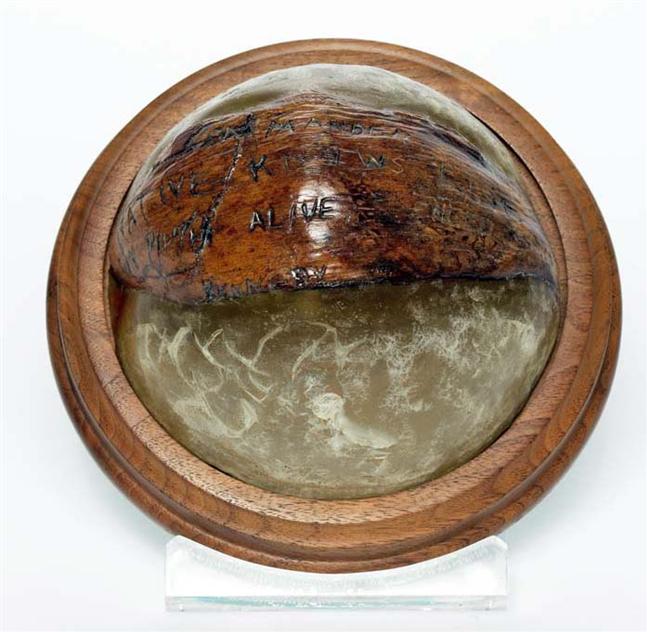
PT-109 Coconut Shell
John F. Kennedy · 1943
A coconut shell on which Kennedy carved a rescue message in WWII, later kept as a paperweight on his Oval Office desk.
Kennedy personally carved this message during his WWII rescue, later displaying it as a symbol of his wartime heroism.
About this source
What it is
This is a coconut shell carved by Lieutenant John F. Kennedy during World War II after his PT-109 boat was sunk by a Japanese destroyer, stranding his crew in the Solomon Islands. Kennedy carved a short rescue message on the shell and gave it to two local scouts, Biuku Gasa and Eroni Kumana, to carry to a nearby base. The message helped lead to the crew's rescue. Kennedy later had the shell encased in wood and plastic and kept it as a paperweight on his Oval Office desk.
Why it matters
The coconut became a powerful symbol of Kennedy's wartime courage and connected his image as a war hero to his later political career. It also highlights the vital role played by Biuku Gasa and Eroni Kumana, the Solomon Islanders who risked their lives to deliver the message.
Look closer
- What does it mean that Kennedy chose to keep this object on his desk as president?
- Why might this story have been useful to his political image?
- What does the object leave out about the people who actually carried the message?
This artifact is part of the curated material that grounds the AI version of John F. Kennedy on Humy.ai — when students ask about related events, the AI can quote it and cite it.
More John F. Kennedy sources
Meet the AI John F. Kennedy →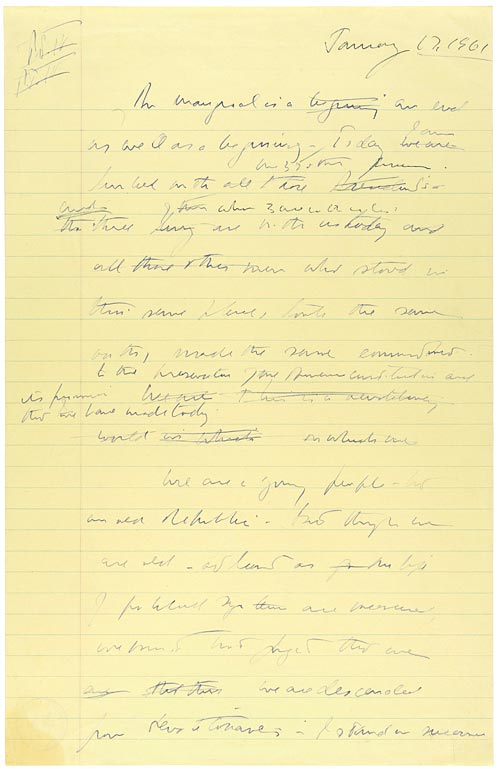 Speech
Primary source
President John F. Kennedy's Inaugural Address
John F. Kennedy · 17 January 1961 (draft); delivered 20 January 1961
Primary source
Address to the Nation on the Soviet Arms Buildup in Cuba
John F. Kennedy · 22 October 1962
 Photograph
Primary source
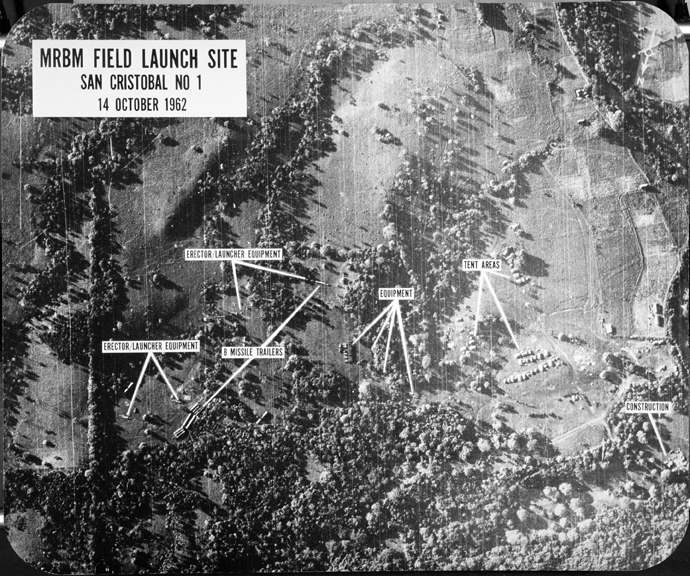
Aerial Photograph of Missiles in Cuba
14 October 1962
 Speech
Primary source
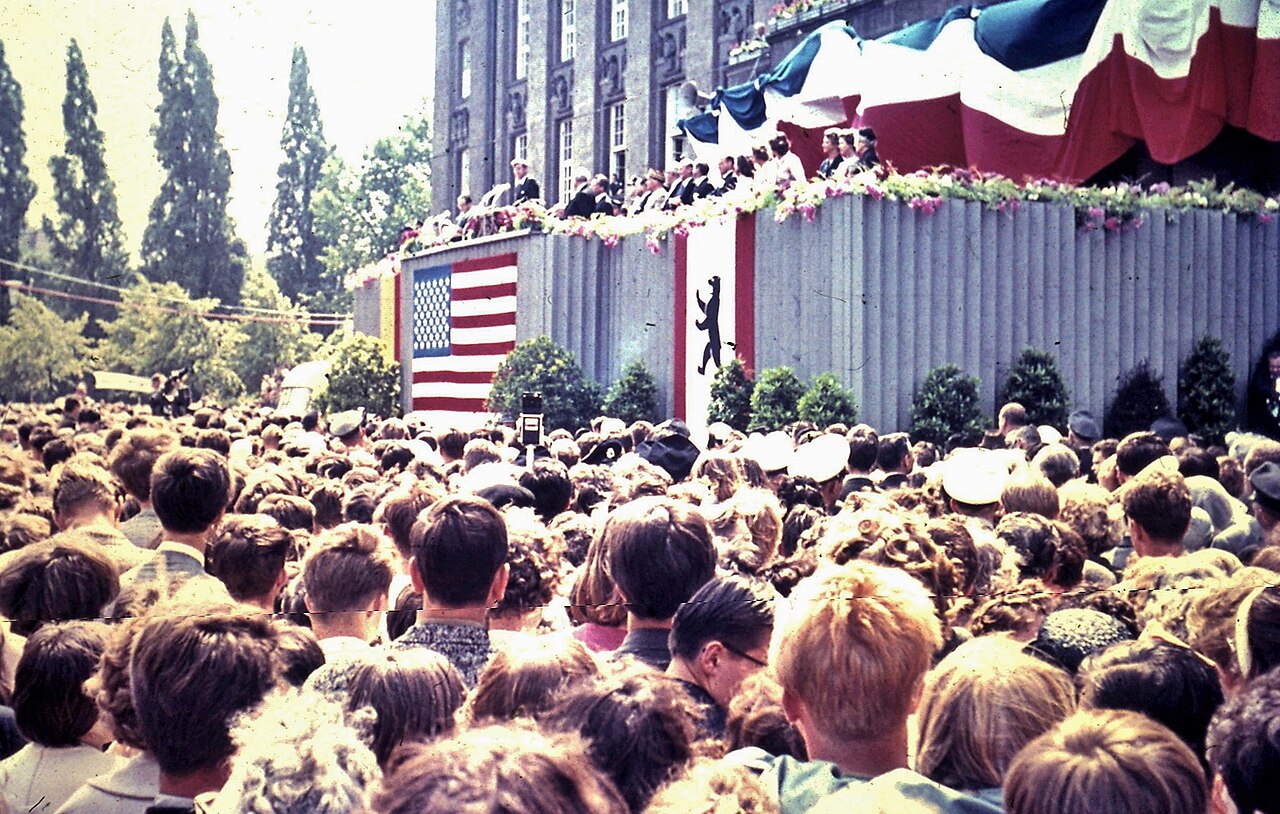
Ich bin ein Berliner
John F. Kennedy · 26 June 1963
 Letter
Primary source
Kennedy–Khrushchev letters of the Cuban Missile Crisis
John F. Kennedy; Nikita Khrushchev · October 1962
Ready when you are
Start chatting with John F. Kennedy now.
20 messages free · No credit card · Available in 50+ languages.