


Secondary sourceArtifact26 September 2016
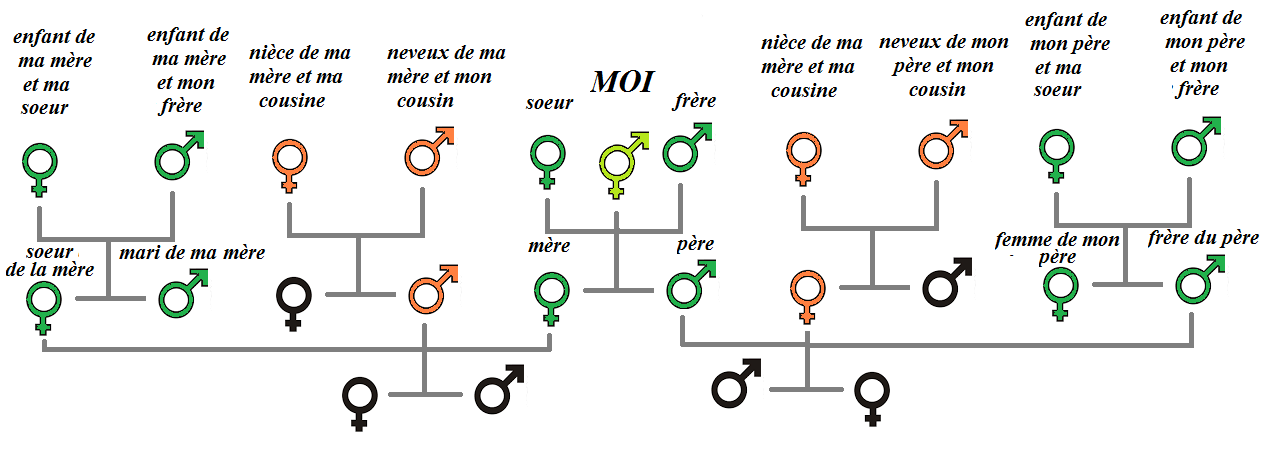
Punaluan family diagram from The Origin of the Family
Zorion · 26 September 2016
A modern French-language kinship diagram that illustrates the Punaluan family system described by Lewis Henry Morgan and explained by Engels. It is a redrawn illustration, not an original.
Illustrates the kinship system Engels described in his book, which connects this diagram to his work on the origin of the family.
About this source
What it is
This is a modern kinship diagram in French, created in 2016 by a Wikimedia Commons user named Zorion. It shows a Punaluan family tree, with green and orange circles and male and female signs. A central figure is labeled MOI (me), and labels such as soeur, frère, mère, père, cousin and enfant connect the generations across several rows. The file title says the diagram follows Lewis Henry Morgan and was described by Friedrich Engels in L'origine de la famille, de la propriété privée et de l'État.
Why it matters
Engels used Morgan's research on kinship systems to argue about how family and property developed over time. Diagrams like this help readers picture family relationships that differ from the ones they know. Because this one was drawn in 2016, it is a modern explanation of Engels's argument rather than something he made himself.
Look closer
- Which relationships does the diagram make easy to see, and which are harder to follow?
- Why would someone redraw an older argument as a diagram, and what might they have simplified?
- Whose point of view does the central label MOI represent, and what would the diagram look like from another position?
This artifact is part of the curated material that grounds the AI version of Friedrich Engels on Humy.ai — when students ask about related events, the AI can quote it and cite it.
More Friedrich Engels sources
Browse all 80 →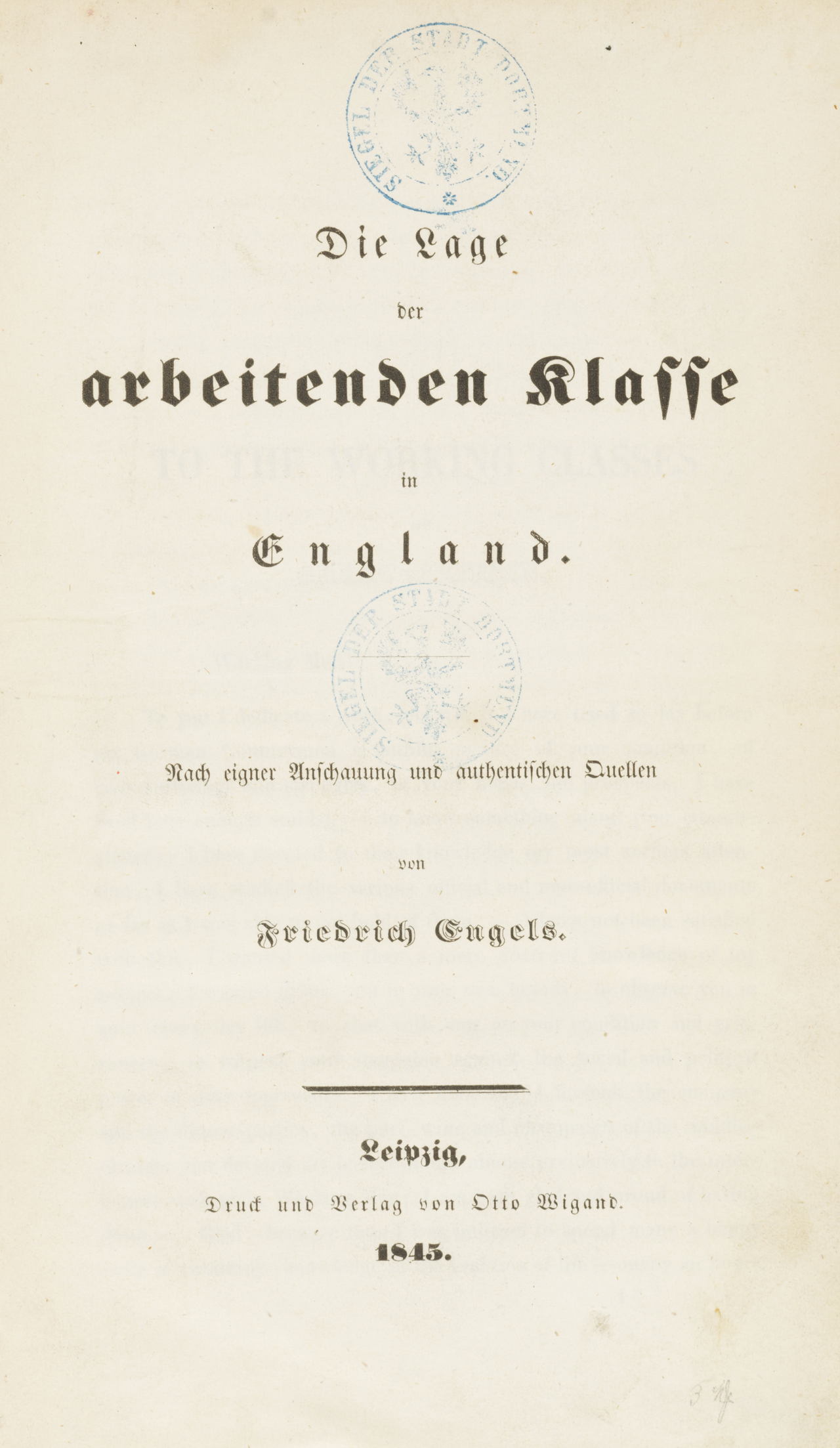 Book
Primary source
The Condition of the Working Class in England in 1844
Friedrich Engels · 1845
Primary source
Principles of Communism
Friedrich Engels · October–November 1847
 Photograph
Primary source
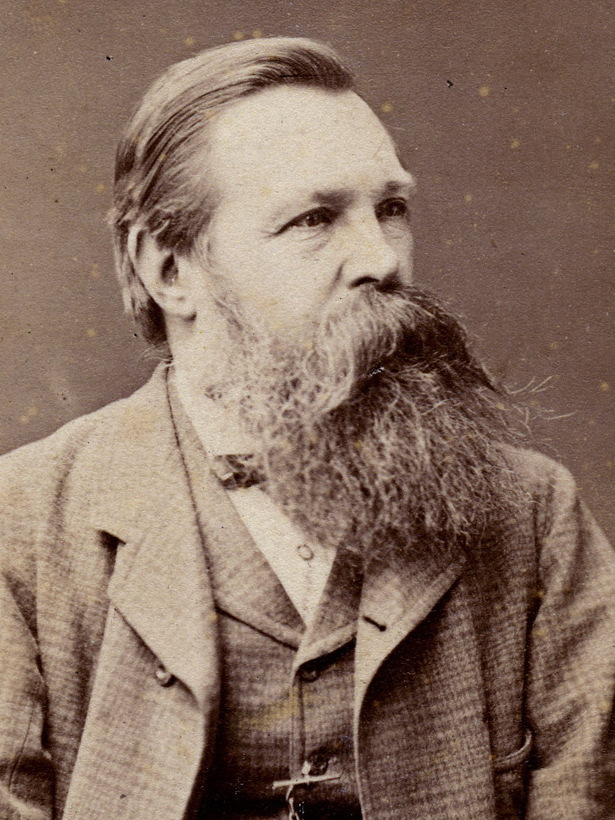
Portrait of Friedrich Engels
 Book
Primary source
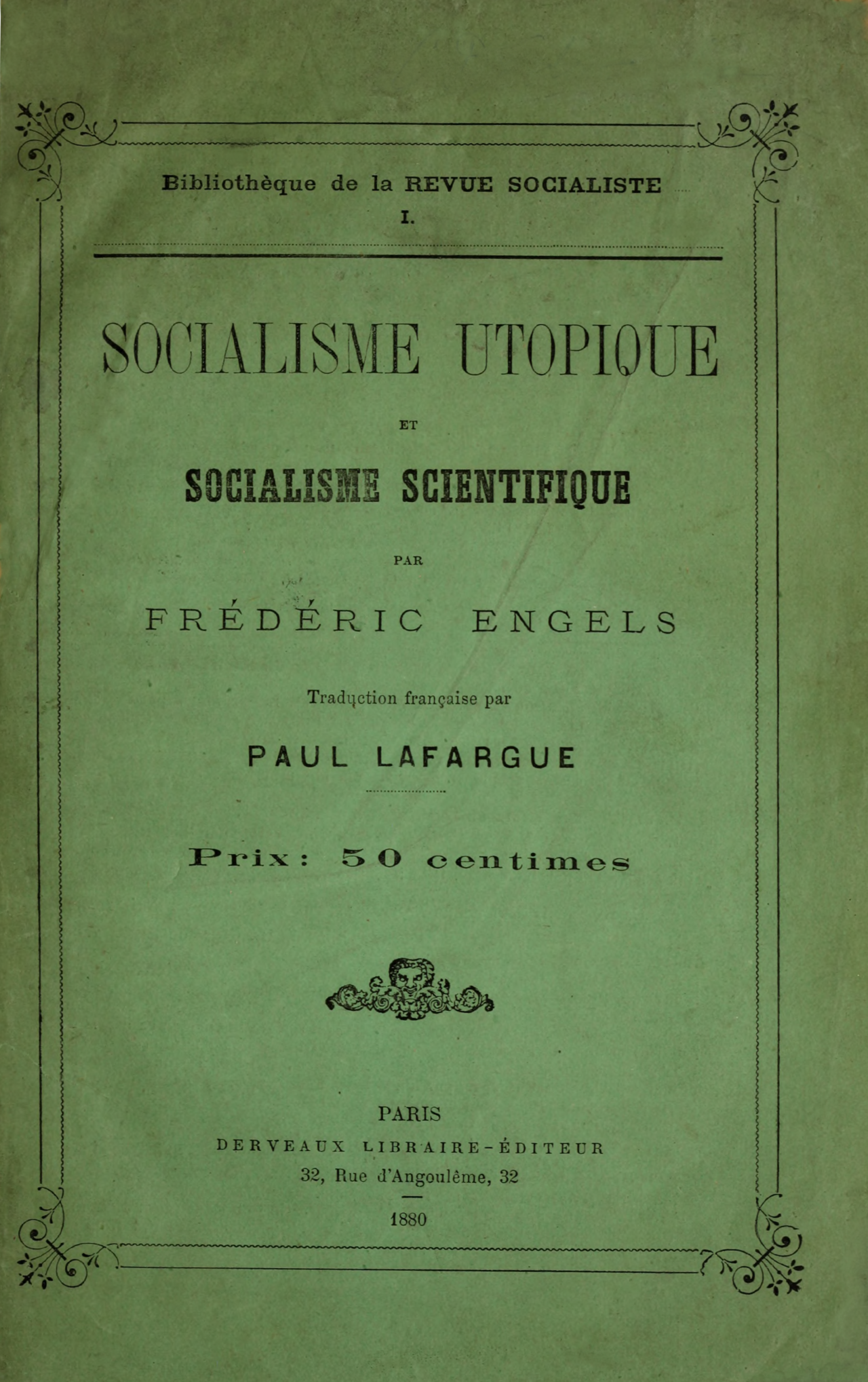
Socialism: Utopian and Scientific
Friedrich Engels · 1880
Free account
Read every Friedrich Engels source
Sign up free →
Ready when you are
Start chatting with Friedrich Engels now.
20 messages free · No credit card · Available in 50+ languages.