


Primary sourceArtifact1834-1871
Punched Cards for the Analytical Engine
Charles Babbage · 1834-1871
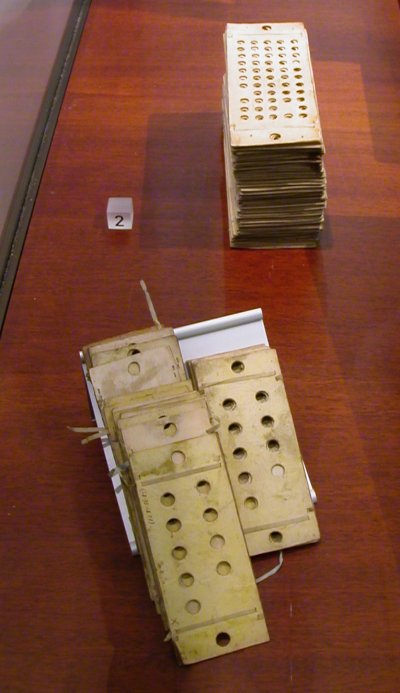
Surviving punched cards designed by Charles Babbage to feed instructions and data into his never-completed Analytical Engine.
Physical cards designed by Babbage himself to program his unfinished Analytical Engine.
About this source
What it is
These are punched cards created as part of Charles Babbage's project for the Analytical Engine, dated to the period 1834-71. The Science Museum in London, which holds them, explains that smaller 'Operational Cards' specified mathematical operations like multiplication or addition, while larger 'Variable Cards' told the machine where to find numbers and where to place results.
Why it matters
The cards show how Babbage borrowed the idea of punched-card control from the Jacquard weaving loom and applied it to mechanical computing. This method of separating instructions from data is seen as an early step toward the way modern computers are programmed, making the cards important evidence of Babbage's engineering thinking.
Look closer
- Why might borrowing a method from weaving looms have been a clever solution for controlling a calculating machine?
- What does having two different kinds of cards tell you about how the Analytical Engine was meant to work?
- Why do you think the Analytical Engine was never completed in Babbage's lifetime?
This artifact is part of the curated material that grounds the AI version of Charles Babbage on Humy.ai — when students ask about related events, the AI can quote it and cite it.
More Charles Babbage sources
Browse all 91 →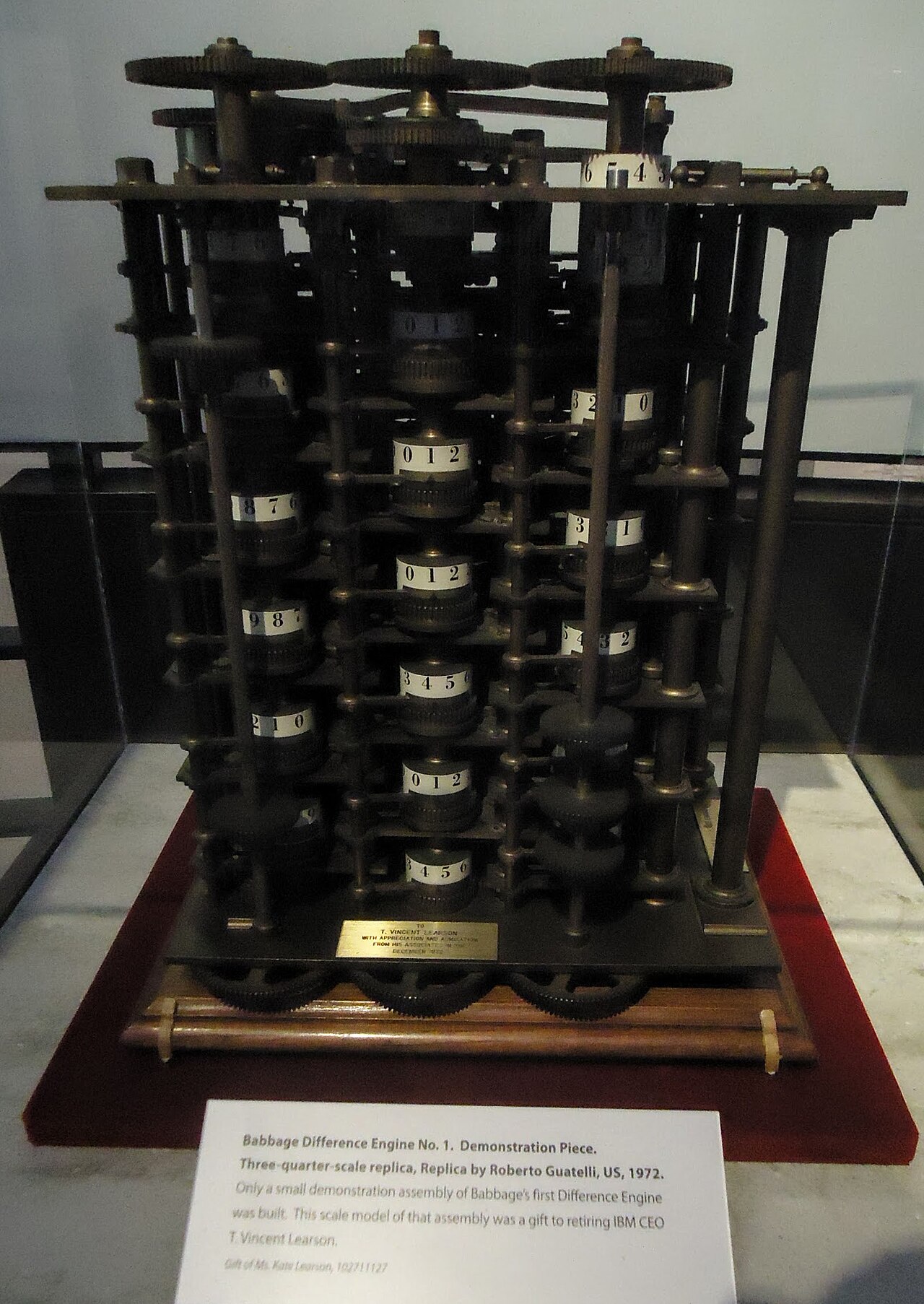 Artifact
Primary source
Difference Engine No. 1 Demonstration Piece
Charles Babbage; Joseph Clement · 1832
 Artifact
Primary source
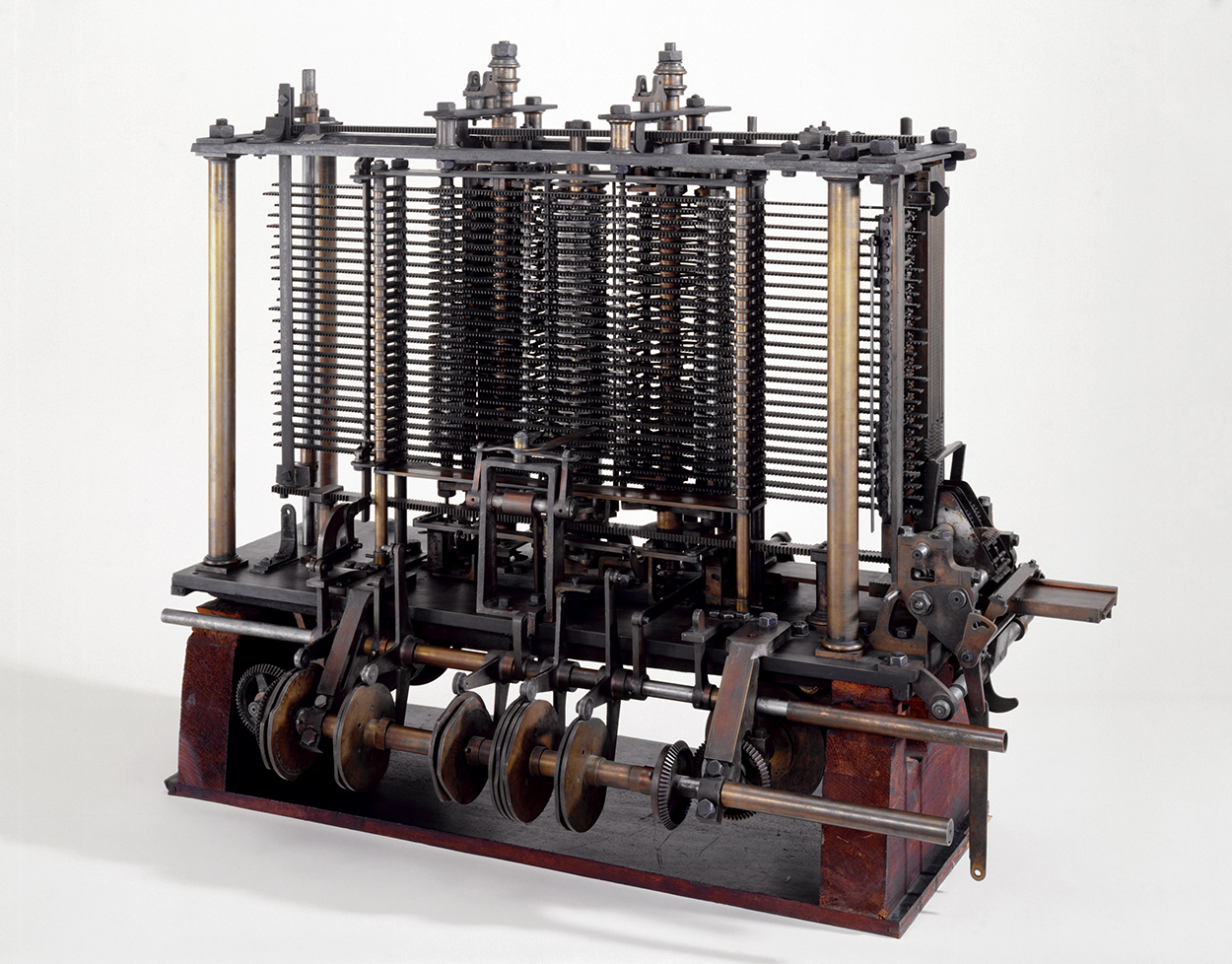
Babbage's Analytical Engine
Charles Babbage · 1871
Primary source
On the Economy of Machinery and Manufactures
Charles Babbage · 1832
Secondary source
Passages from the Life of a Philosopher
Charles Babbage · 1864
Free account
Read every Charles Babbage source
Sign up free →
Ready when you are
Start chatting with Charles Babbage now.
20 messages free · No credit card · Available in 50+ languages.