


Primary sourceBook1912
Pygmalion
George Bernard Shaw · 1912
Shaw's comedy about a phonetics professor who transforms a Cockney flower girl's speech, satirising English class divisions.
Shaw's own play, his most famous work, directly expressing his views on class and language.
Free Humy account · No credit card · 120,912 sources to read
About this source
What it is
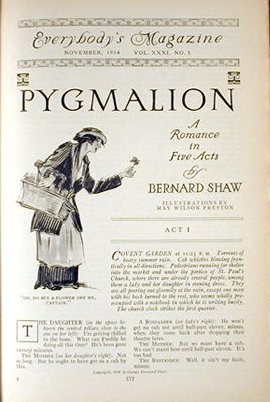
Pygmalion is a play written by George Bernard Shaw in 1912. It tells the story of phonetics professor Henry Higgins, who trains Cockney flower girl Eliza Doolittle to speak with upper-class pronunciation. It premiered in Vienna in 1913 and opened in London the following year.
Why it matters
Shaw used the play to argue that accent and manners, not real merit, divided English society into classes. It became his most popular work and was later adapted into the musical My Fair Lady. The image here shows the opening page of its first American magazine printing, illustrated for a 1914 audience.
Look closer
- Why might Shaw choose speech and accent, rather than wealth, as his symbol of class division?
- What does the illustration of the flower seller suggest about how readers were meant to see Eliza at the start of the story?
- What does the play leave out about the real lives of working-class Londoners?
This book is part of the curated material that grounds the AI version of George Bernard Shaw on Humy.ai — when students ask about related events, the AI can quote it and cite it.
More George Bernard Shaw sources
Browse all 94 →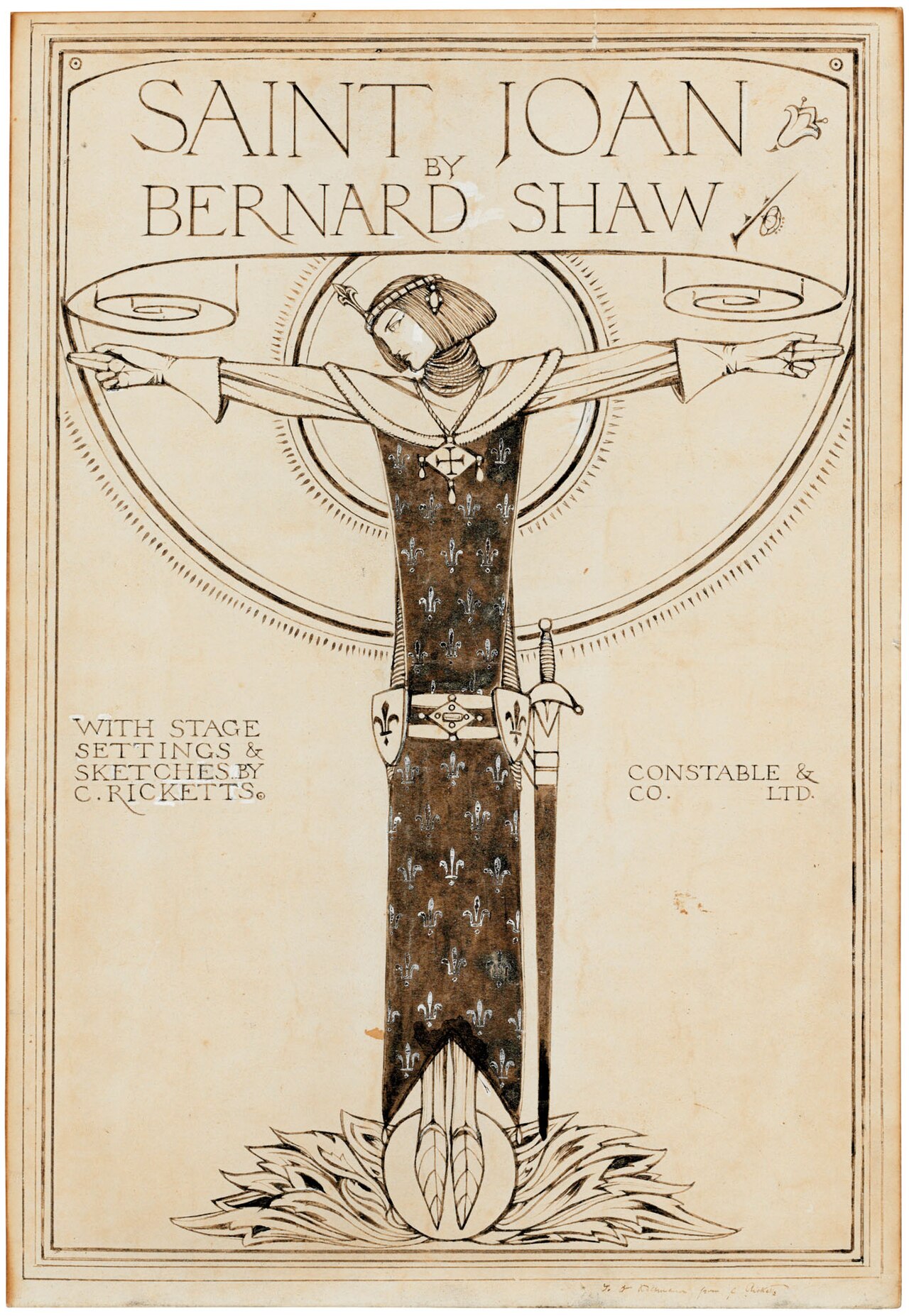 Book
Secondary source
Saint Joan
George Bernard Shaw · 1923
Primary source
Man and Superman
George Bernard Shaw · 1903
Primary source
Major Barbara
George Bernard Shaw · 1905
 Book
Primary source
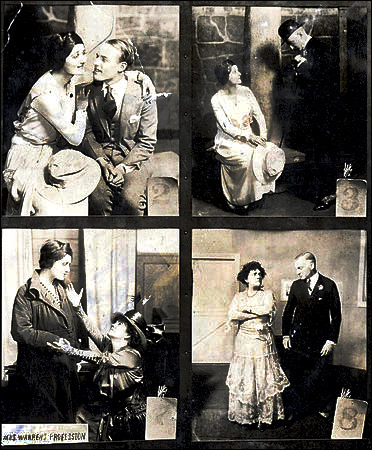
Mrs. Warren's Profession
George Bernard Shaw · 1893
Free account
Read every George Bernard Shaw source
Sign up free →
Ready when you are
Start chatting with George Bernard Shaw now.
20 messages free · No credit card · Available in 50+ languages.