


Primary sourceDocument1290
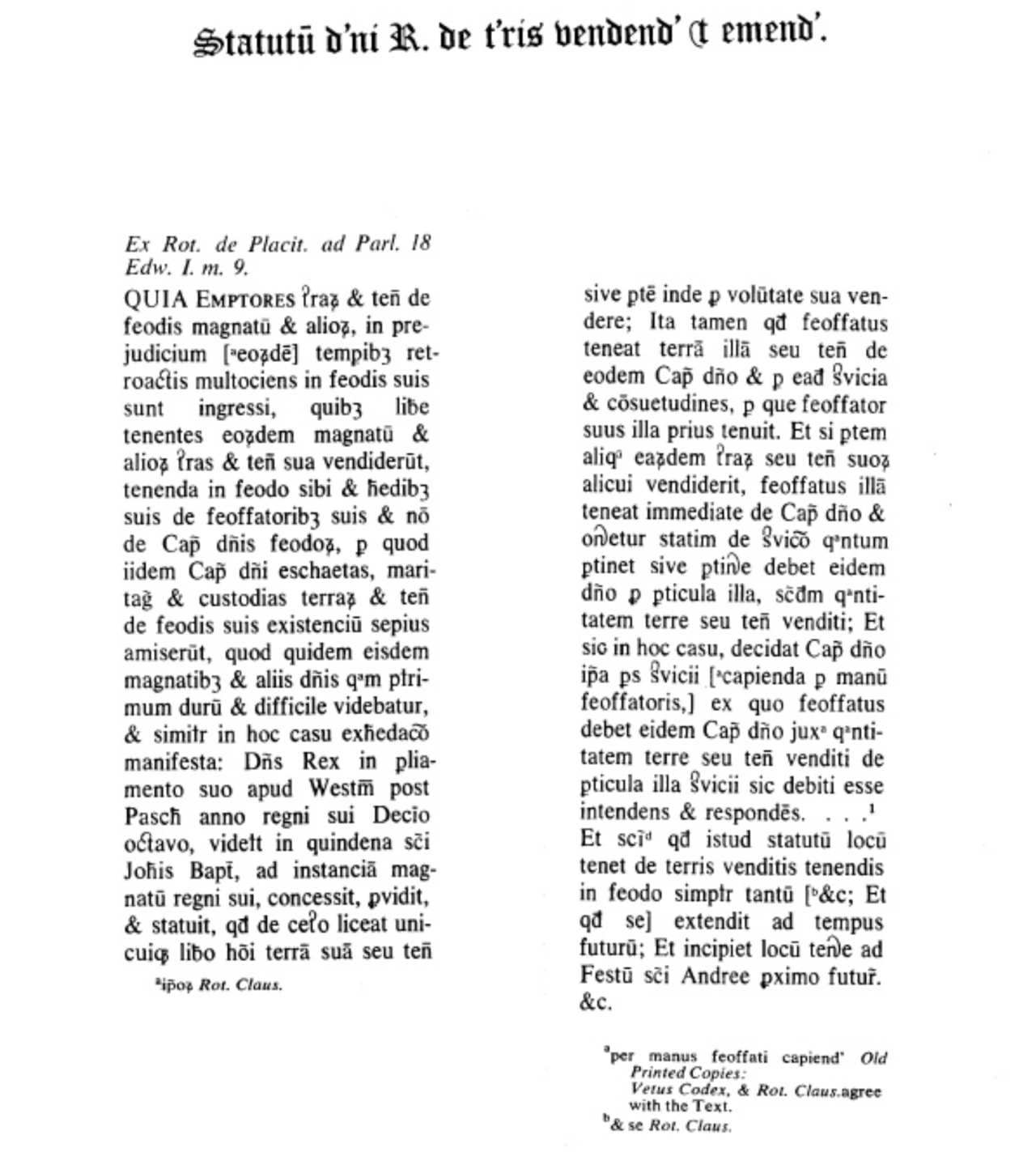
Quia Emptores
Edward I of England · 1290
A 1290 statute of Edward I's parliament that stopped subinfeudation, letting free men sell land while keeping the feudal chain of lordship intact.
Edward I issued this statute with Parliament, reshaping English land law under his reign.
Free Humy account · No credit card · 120,288 sources to read
About this source
What it is
Quia Emptores is a statute passed in 1290 by the Parliament of England during the reign of Edward I. It is written in medieval Latin and survives as an official record of the Acts of Parliament. The scanned page shown here reproduces the original legal text.
Why it matters
The law stopped tenants from creating new layers of lordship beneath themselves (subinfeudation) when they sold land, so that buyers instead held directly from the original lord. This protected the rights and incomes of great lords, who had complained of losing control over their lands. It shows Edward I acting with his magnates to reshape English land law, and parts of it remained in force for centuries.
Look closer
- Why might lords have wanted this change, and who benefited most?
- What does the formal Latin language tell you about who the law was written for?
- What does the statute not tell you about ordinary tenants' views?
This document is part of the curated material that grounds the AI version of Edward I on Humy.ai — when students ask about related events, the AI can quote it and cite it.
More Edward I sources
Browse all 97 →





Ready when you are
Start chatting with Edward I now.
20 messages free · No credit card · Available in 50+ languages.