


Primary sourcePainting1904
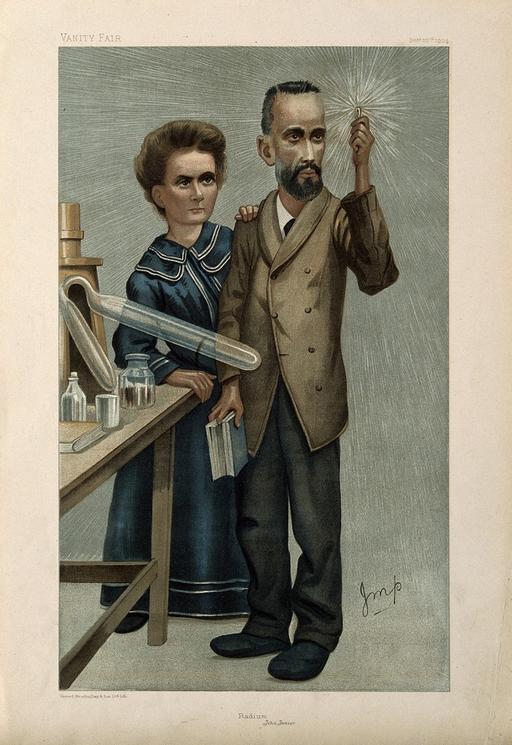
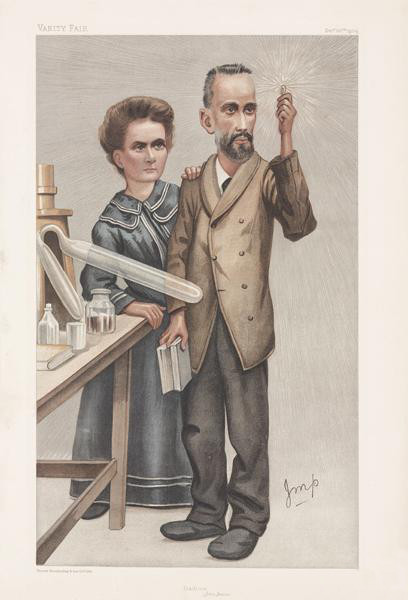
Radium: Marie and Pierre Curie Caricature
1904
A 1904 colour caricature print from Vanity Fair showing Pierre Curie holding up a glowing radium specimen beside Marie Curie.
Depicts Pierre Curie holding up a glowing radium specimen, capturing how he and Marie became famous for discovering radium.
About this source
What it is
This is a colour caricature print published in Vanity Fair in 1904, titled Radium. It shows Marie Curie in a dark blue dress beside Pierre Curie, who holds up a glowing point of light representing radium, with laboratory glassware on a table nearby. It is held by the Wellcome Collection.
Why it matters
This print shows how quickly the Curies' discovery of radium became a sensation beyond the scientific world, inspiring popular magazine caricatures. It reveals how the public imagined radioactivity as a glowing, almost magical substance, and how Pierre and Marie Curie became famous public figures because of it.
Look closer
- Why might a satirical magazine like Vanity Fair have chosen to depict the Curies this way?
- What does the glowing light suggest about how people understood radium at the time, compared to what we know now about radiation safety?
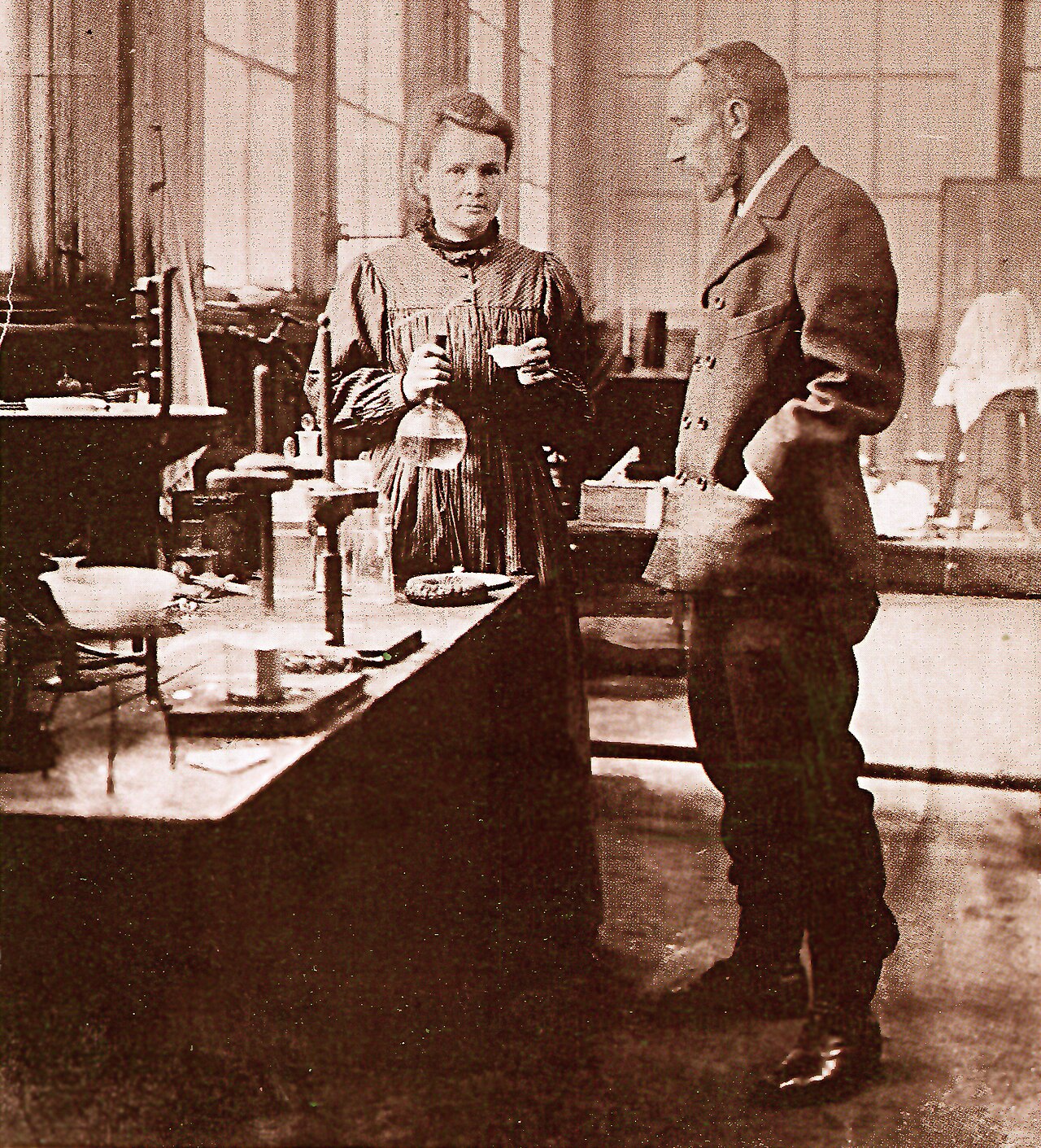
- How does this cartoon-like image differ from the earlier laboratory photographs of the couple?
This painting is part of the curated material that grounds the AI version of Pierre Curie on Humy.ai — when students ask about related events, the AI can quote it and cite it.
More Pierre Curie sources
Browse all 93 →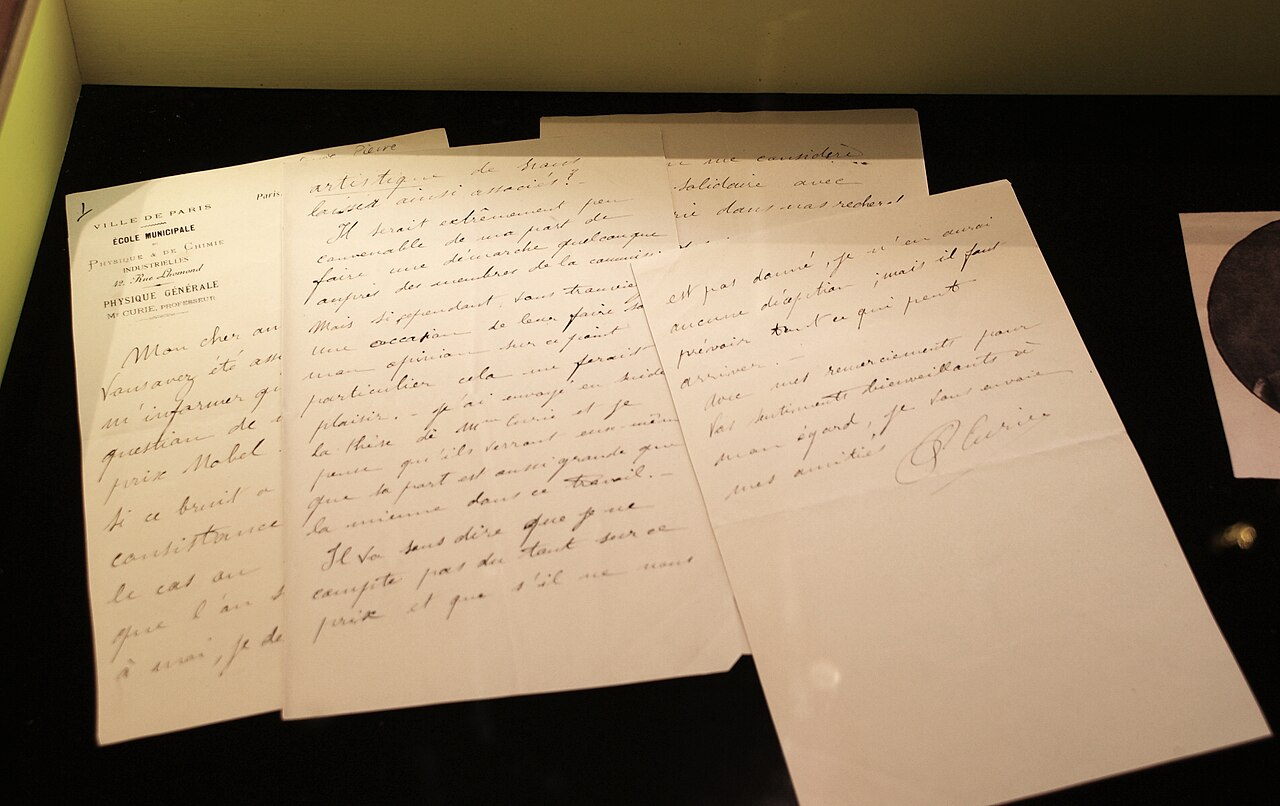 Letter
Primary source
Letter to Gösta Mittag-Leffler on the Nobel Prize
Pierre Curie · 6 August 1903
 Document
Primary source
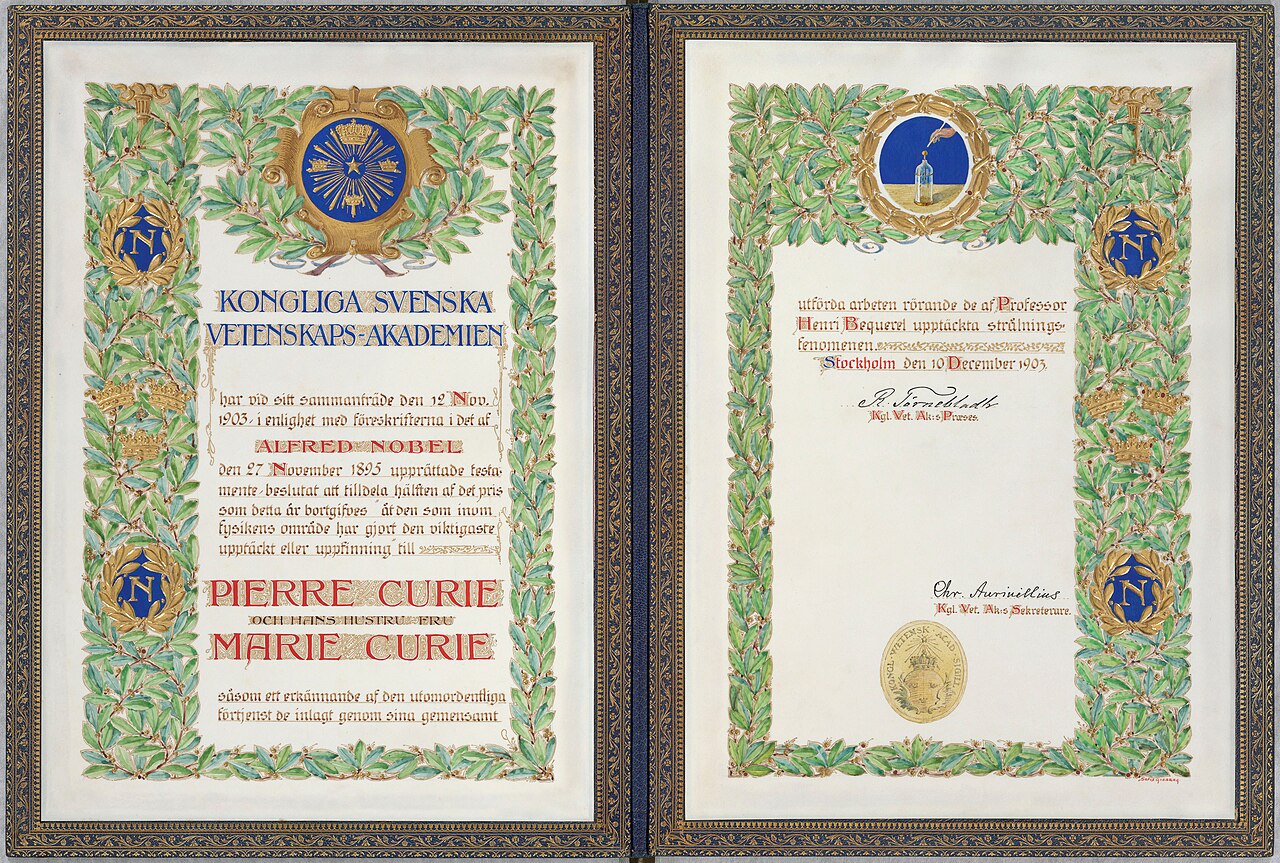
Nobel Prize in Physics Diploma, 1903
Sofia Gisberg · December 1903
 Photograph
Primary source
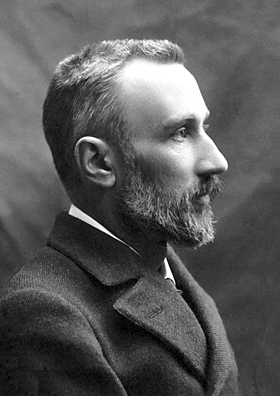
Pierre Curie Nobel Portrait
Nobel Foundation · c. 1903
 Photograph
Primary source
Marie et Pierre Curie in Their Laboratory
Unknown
Free account
Read every Pierre Curie source
Sign up free →
Ready when you are
Start chatting with Pierre Curie now.
20 messages free · No credit card · Available in 50+ languages.