


Secondary sourceArtifact1603
Raymond of Capua Visits Catherine and Finds Christ Himself
1603
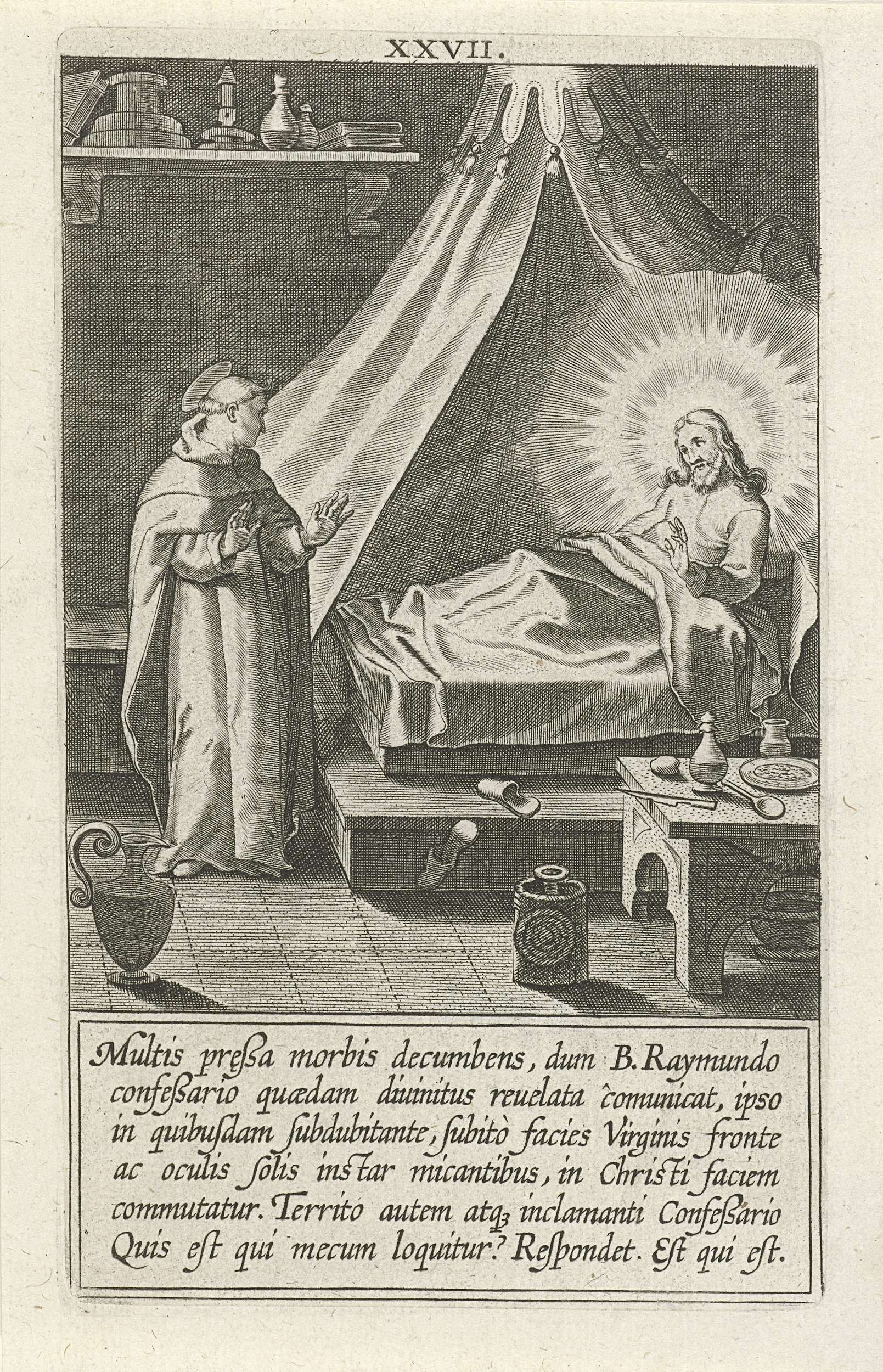
An engraved scene from a 1603 series on the life of Catherine of Siena, showing her confessor Raymond of Capua discovering Christ at her home.
Shows Catherine's confessor Raymond of Capua in a later print, so the scene belongs to how her life was remembered rather than to her own time.
About this source
What it is
This is an engraving, numbered XXVII, from a series of 32 numbered scenes plus a title print and a portrait about the life of Catherine of Siena, published in 1603. It is held by the Rijksmuseum in the Netherlands. The scene shows a friar in a hooded habit at left, hands raised in astonishment, facing a bed where a bearded man with a halo of light sits up and raises his hands in blessing. Latin caption text fills the lower panel. The Rijksmuseum's record gives the Dutch caption: Raimundus van Capua bezoekt Catharina thuis en treft Christus aan.
Why it matters
The print is a later picture of a story told about Catherine of Siena, a fourteenth-century Italian Dominican. Her confessor, Raymond of Capua, appears here as a witness to her visions. Images like this helped shape how her life was remembered in the centuries after her death. It is a secondary source: it was made in 1603, more than two hundred years after her death in 1380.
Look closer
- What details show that the friar is surprised, and what does the bed and the blessing gesture tell you about who is in control of the scene?
- Why might an engraver in 1603 choose to show a visionary moment as a dramatic event?
- What does this image leave out about Catherine herself, who is not shown in this scene?
This artifact is part of the curated material that grounds the AI version of Catherine of Siena on Humy.ai — when students ask about related events, the AI can quote it and cite it.
More Catherine of Siena sources
Browse all 95 →Secondary source
Libro della divina dottrina
Catherine of Siena · 1912 edition (text dictated 1377-78)
 Letter
Primary source
Letters of Catherine of Siena
Catherine of Siena · 1375-1380
 Sculpture
Secondary source
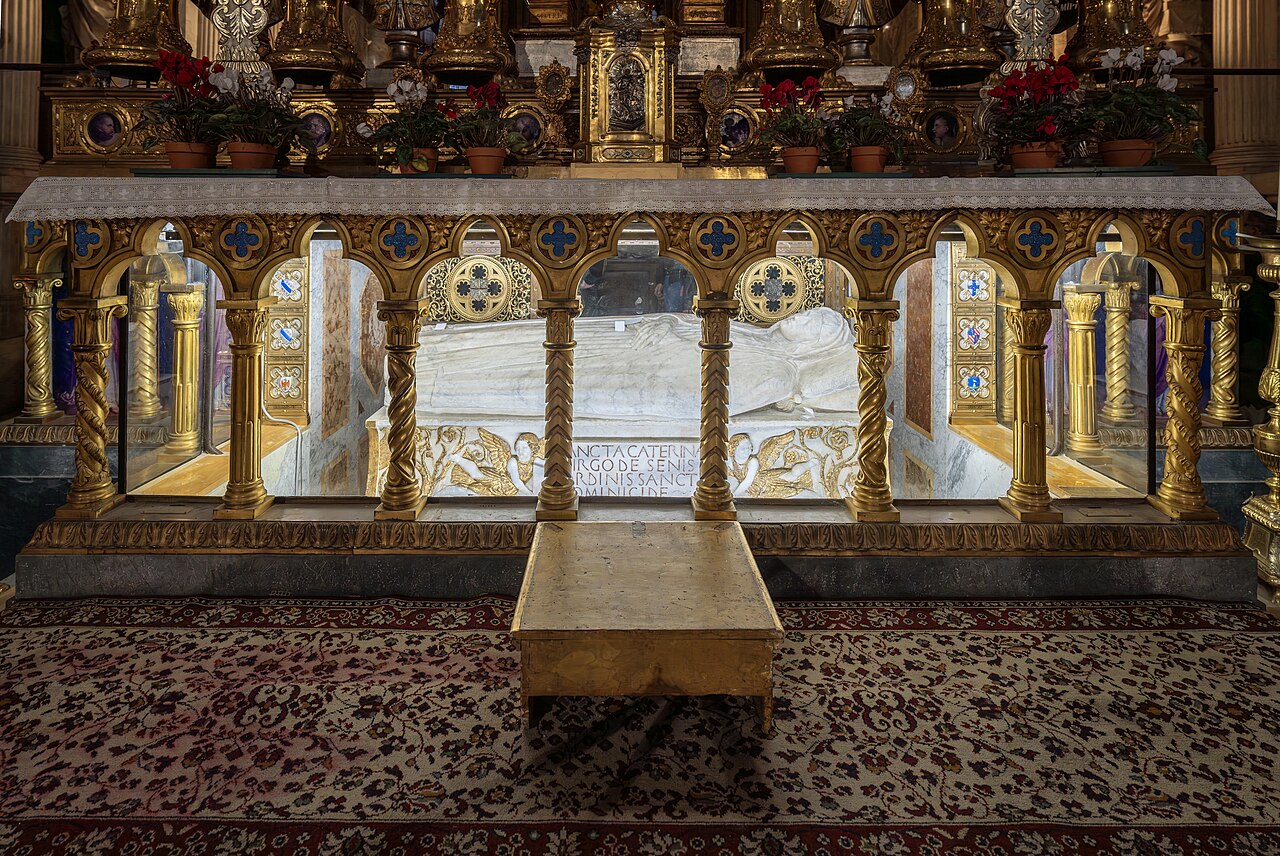
Saint Catherine of Siena tomb
 Artifact
Secondary source
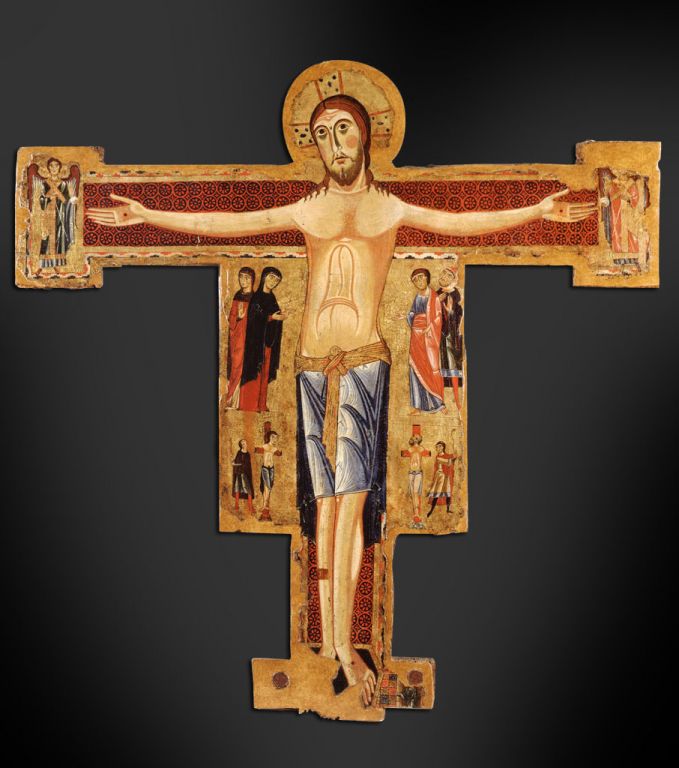
Crucifix of the Stigmata of Saint Catherine of Siena
1200 (crucifix); event dated 1375
Free account
Read every Catherine of Siena source
Sign up free →
Ready when you are
Start chatting with Catherine of Siena now.
20 messages free · No credit card · Available in 50+ languages.