


Secondary sourceArtifact1914
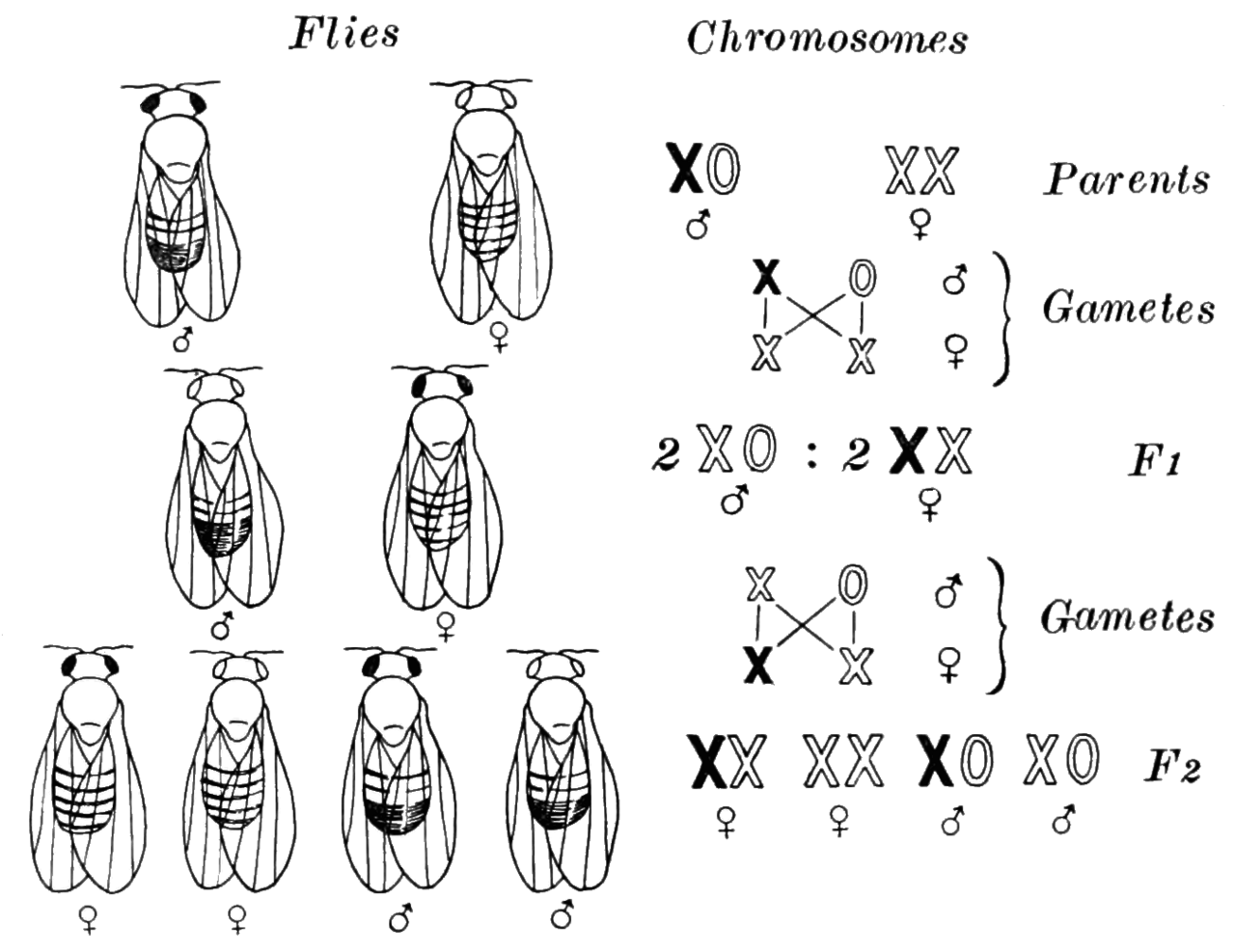
Reciprocal Cross of Sex Linked Inheritance
Unknown · 1914
A 1914 diagram using fruit flies to illustrate sex-linked inheritance, extending Mendelian genetics.
A later genetics diagram using fruit flies, showing how Mendel's laws were extended to sex-linked traits.
About this source
What it is
This line drawing, titled Flies and Chromosomes, was published in Popular Science Monthly in 1914. It shows fruit flies and chromosome notation to explain a reciprocal genetic cross involving sex-linked traits.
Why it matters
Fruit flies became a key tool for geneticists studying inheritance after Mendel's work on peas. This diagram shows how scientists built on Mendel's basic laws to explore more complex patterns, like traits linked to sex chromosomes.
Look closer
- Why might fruit flies have been a useful organism for studying inheritance?
- How does the diagram use chromosome labels to show the pattern across generations?
- What does this source tell you about how scientific ideas develop and spread over time?
This artifact is part of the curated material that grounds the AI version of Gregor Mendel on Humy.ai — when students ask about related events, the AI can quote it and cite it.
More Gregor Mendel sources
Meet the AI Gregor Mendel →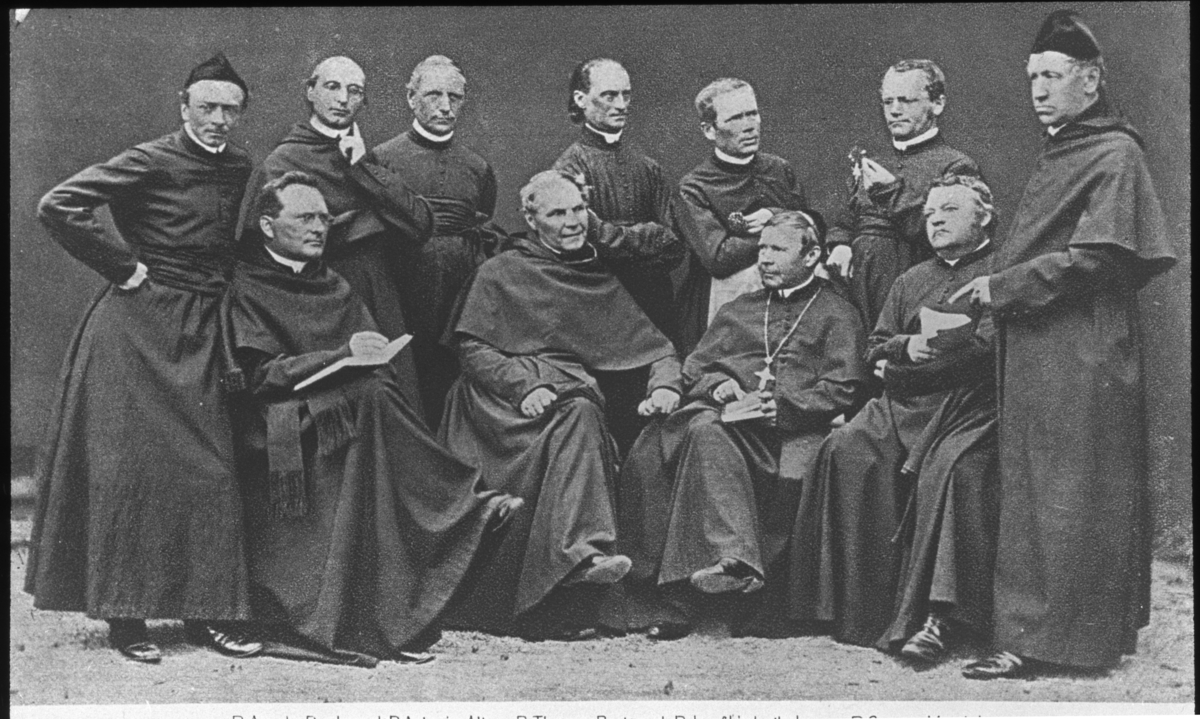 Photograph
Primary source
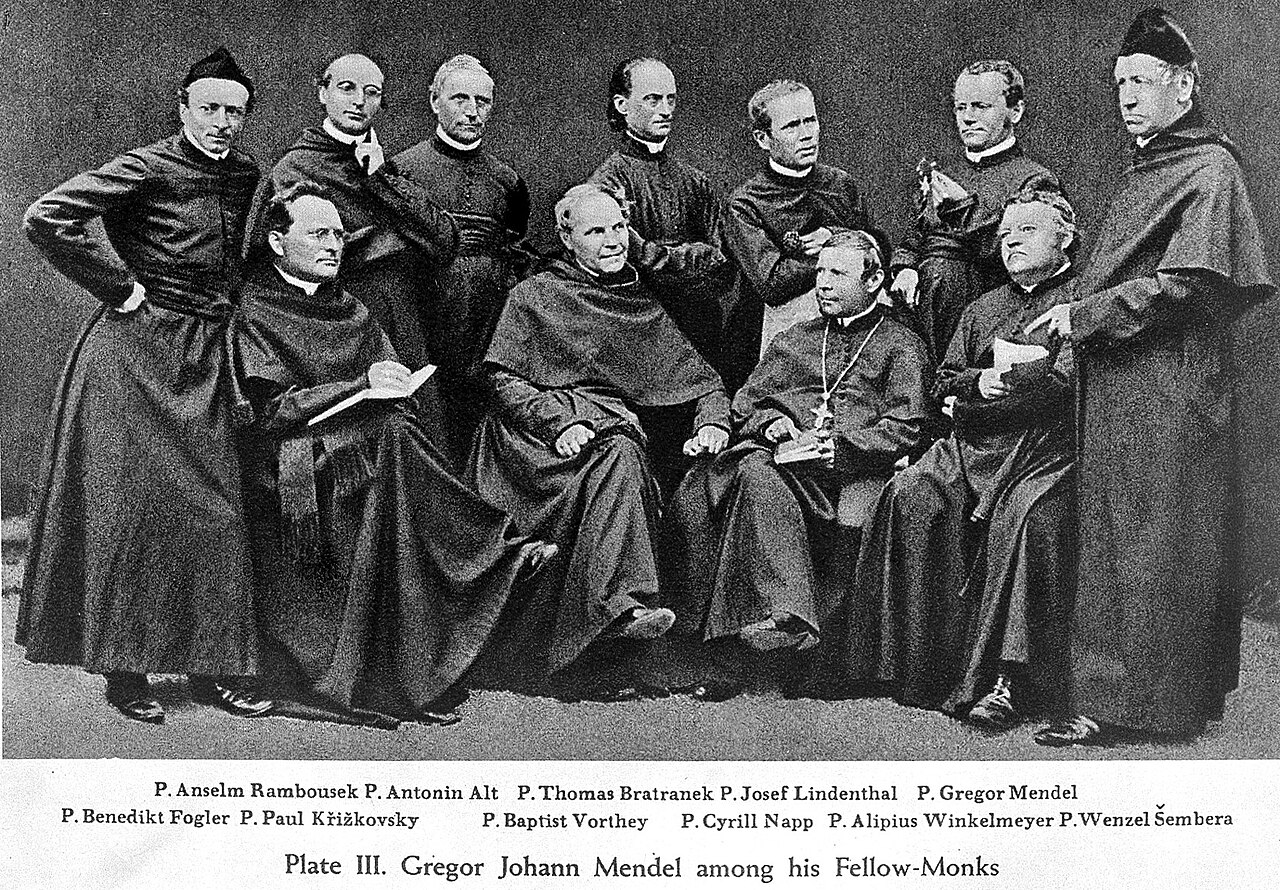
Mendel among his fellow monks
c. 1861-1864
 Book
Primary source
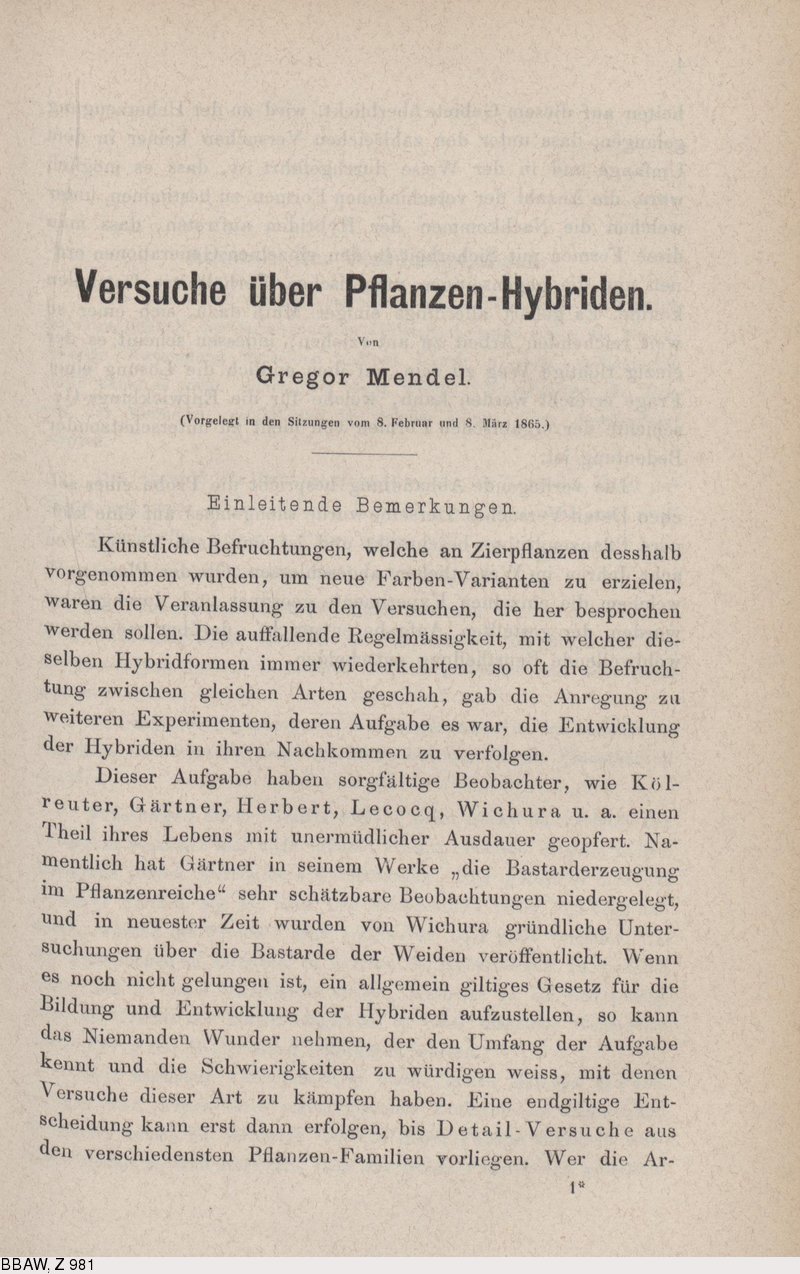
Versuche über Pflanzen-Hybriden
Gregor Mendel · 1866 (read 1865)
 Photograph
Primary source
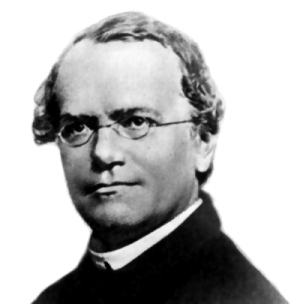
Gregor Mendel
Unknown
 Photograph
Primary source
Mendel with other monks
Unknown
 Photograph
Primary source
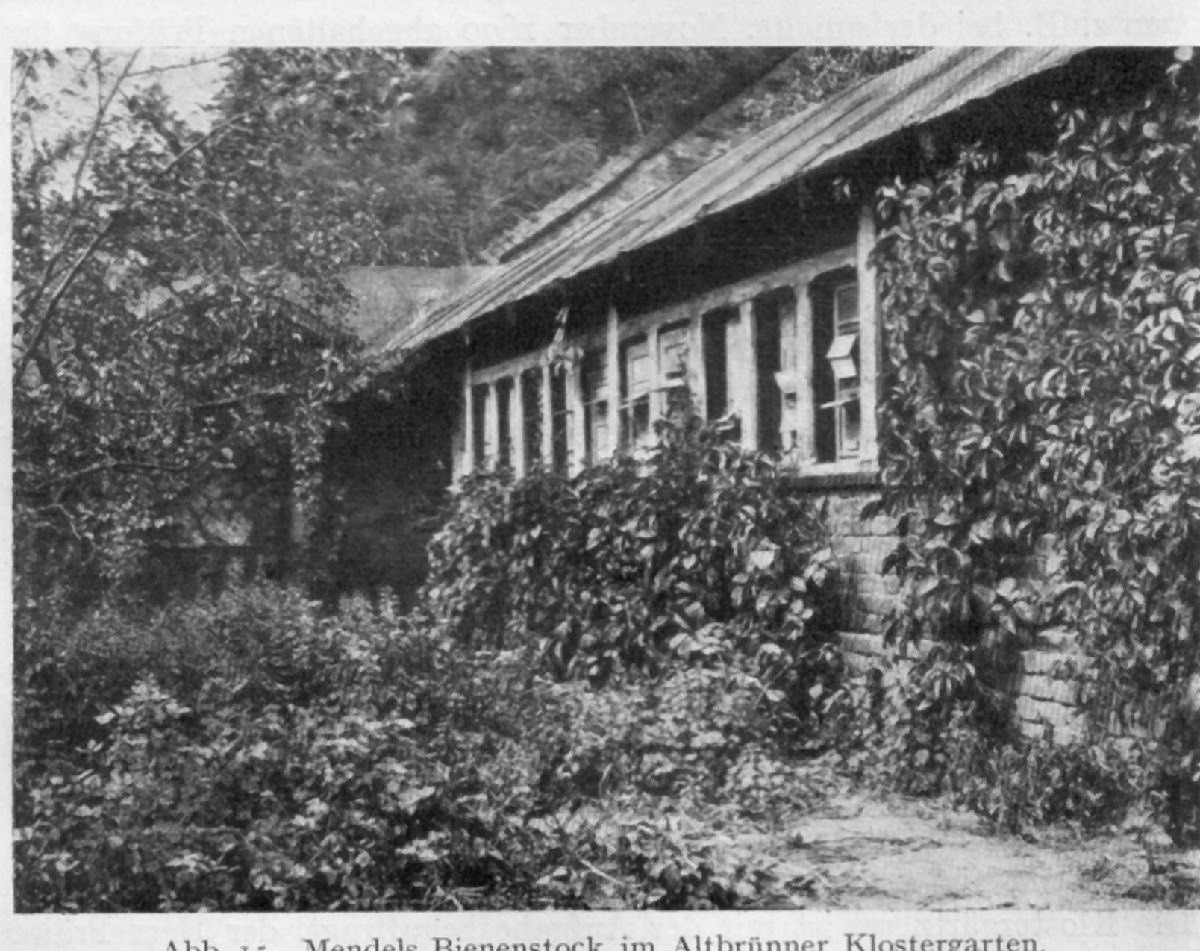
Mendel's Beehouse
Unknown · before 1909
Ready when you are
Start chatting with Gregor Mendel now.
20 messages free · No credit card · Available in 50+ languages.