


Primary sourceArtifactbetween 360 and 363
Reduced Siliqua of Julian Augustus
Hampshire Cultural Trust and Katie Hinds · between 360 and 363
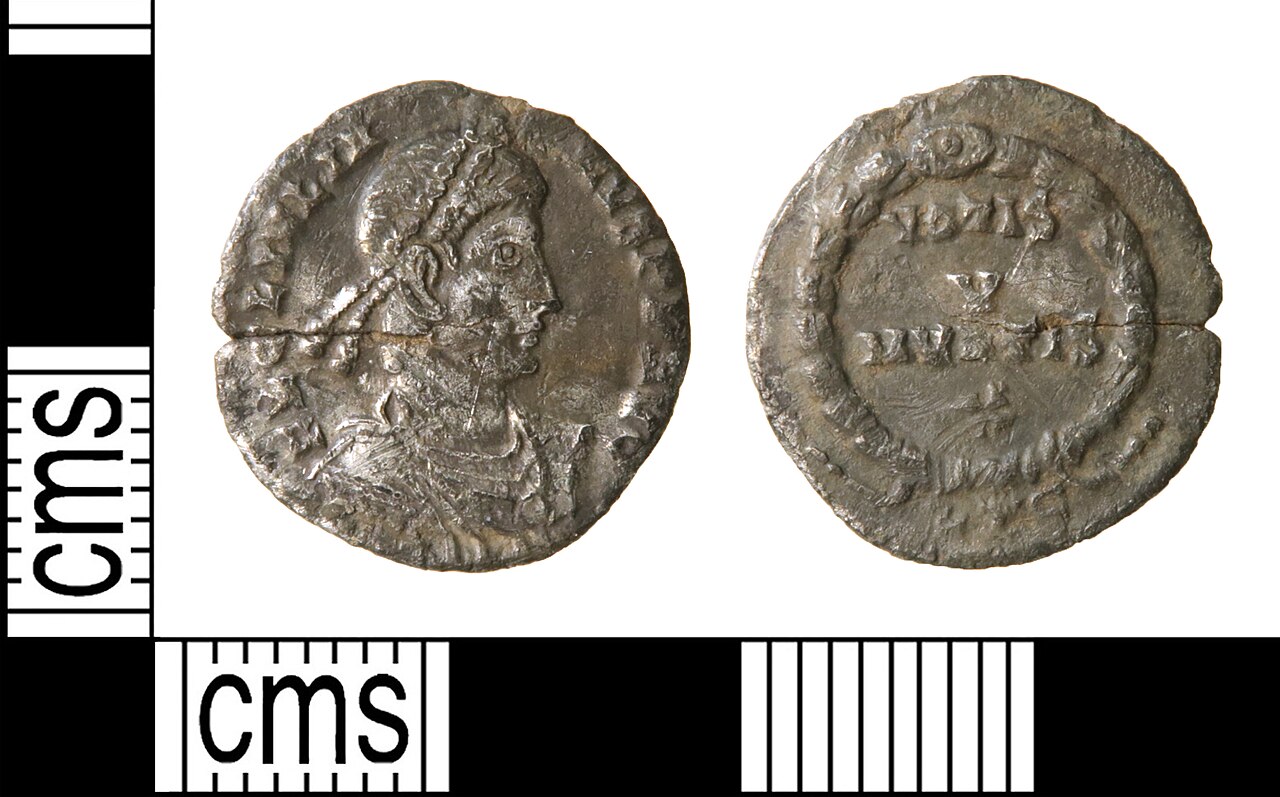
A small silver Roman coin of Julian, dated AD 360-363 and minted at Lyon, found in Hampshire. Its reverse reads VOTIS V MULTIS X.
Shows a coin issued in Julian's name during his reign, found far from Rome, showing how his coinage spread.
About this source
What it is
This is a small silver-grey Roman coin, a reduced siliqua of Julian Augustus. The record dates it to AD 360-363 and gives its mint as Lyon. The obverse shows a diademed bust of the emperor facing right, and the reverse reads VOTIS V MVLTIS X inside a laurel wreath. The photograph was taken by the Hampshire Cultural Trust and uploaded by Katie Hinds in 2020. The reference given is RIC volume VIII, p.193, no.218, a standard catalogue of Roman coins.
Why it matters
The reverse text refers to the vota, or vows, that marked a ruler's promises to the gods for the good of the state. Coins like this one spread the emperor's name and image through local markets across the empire. This find from Hampshire shows that Julian's coinage reached Britain, far from the capital.
Look closer
- What does the text VOTIS V MULTIS X on the reverse suggest the emperor wanted people to remember?
- Why might a coin minted at Lyon end up in a find in Hampshire?
- What parts of the coin are worn, and what would you need a catalogue to read them?
This artifact is part of the curated material that grounds the AI version of Julian on Humy.ai — when students ask about related events, the AI can quote it and cite it.
More Julian sources
Browse all 89 →

Ready when you are
Start chatting with Julian now.
20 messages free · No credit card · Available in 50+ languages.