


Primary sourceArtifactAD 360-363
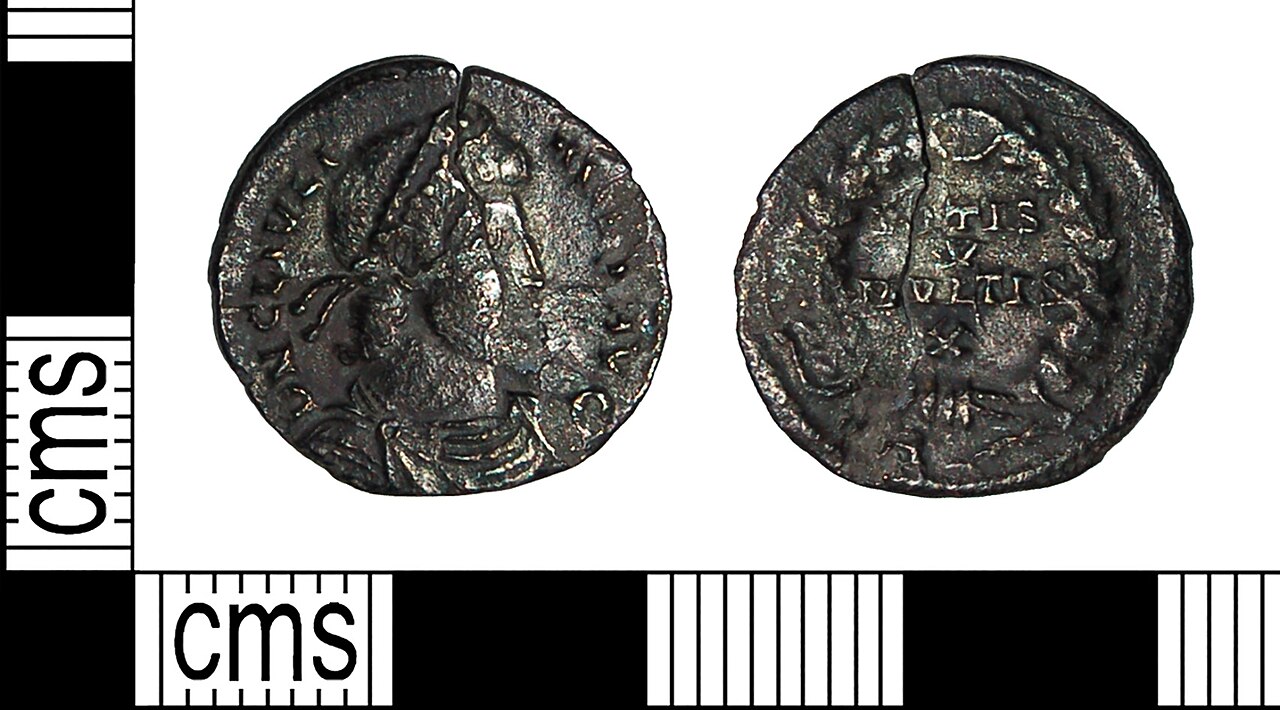
Reduced Siliqua of Julian Augustus, Trier Mint
AD 360-363
A reduced siliqua of Julian Augustus, dated AD 360-363 and struck at the Trier mint. It was found in Britain and recorded by the Portable Antiquities Scheme.
A small coin in Julian's name, found in Britain, showing that his imperial coinage reached far from the court.
About this source
What it is
This is a reduced siliqua issued in Julian's name, dated by the record to AD 360-363 and attributed to the Trier mint. Its reverse reads VOTIS, V, MVLTIS, X inside a laurel wreath. The obverse shows a diademed bust facing right. The coin was recorded by the Portable Antiquities Scheme, which documents finds made by members of the public in England and Wales. The photographs show a small, dark, corroded coin with a scale bar. The record describes it as a bronze-era reduced coin, but this is the catalogue's wording, so check the record before stating its metal.
Why it matters
Finds like this show that imperial coinage reached the far provinces, including Britain, during Julian's short reign. Coins of this kind were used in daily exchange, so their survival in the ground helps historians trace how the empire's money and messages moved.
Look closer
- How does the corroded surface change what students can see on the bust and the wreath?
- Why might a coin found in Britain carry the name of an emperor who ruled from farther away?
- What does a scale bar add that a photograph alone cannot show?
This artifact is part of the curated material that grounds the AI version of Julian on Humy.ai — when students ask about related events, the AI can quote it and cite it.
More Julian sources
Browse all 89 →

Ready when you are
Start chatting with Julian now.
20 messages free · No credit card · Available in 50+ languages.