


Primary sourcePainting1357
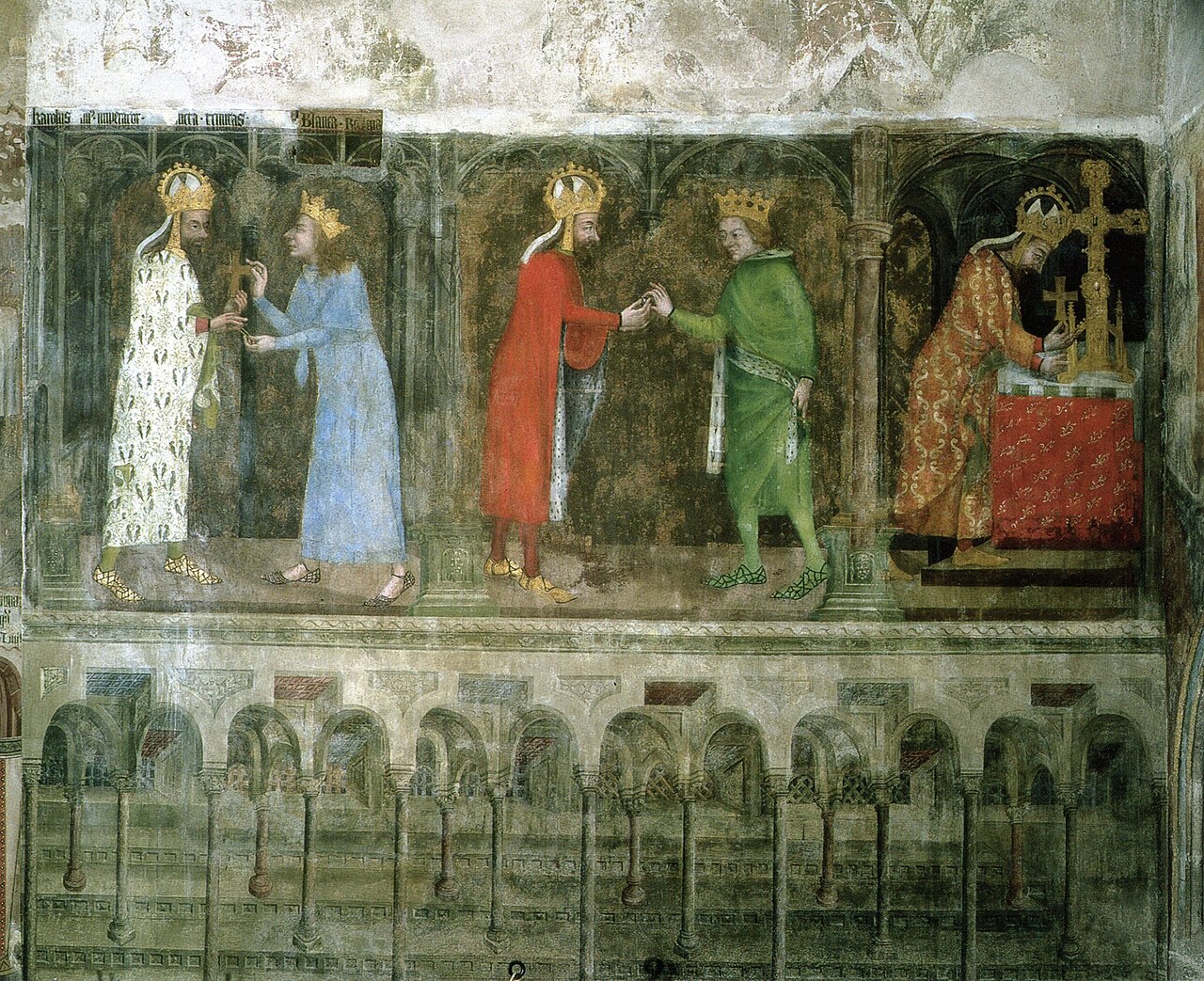
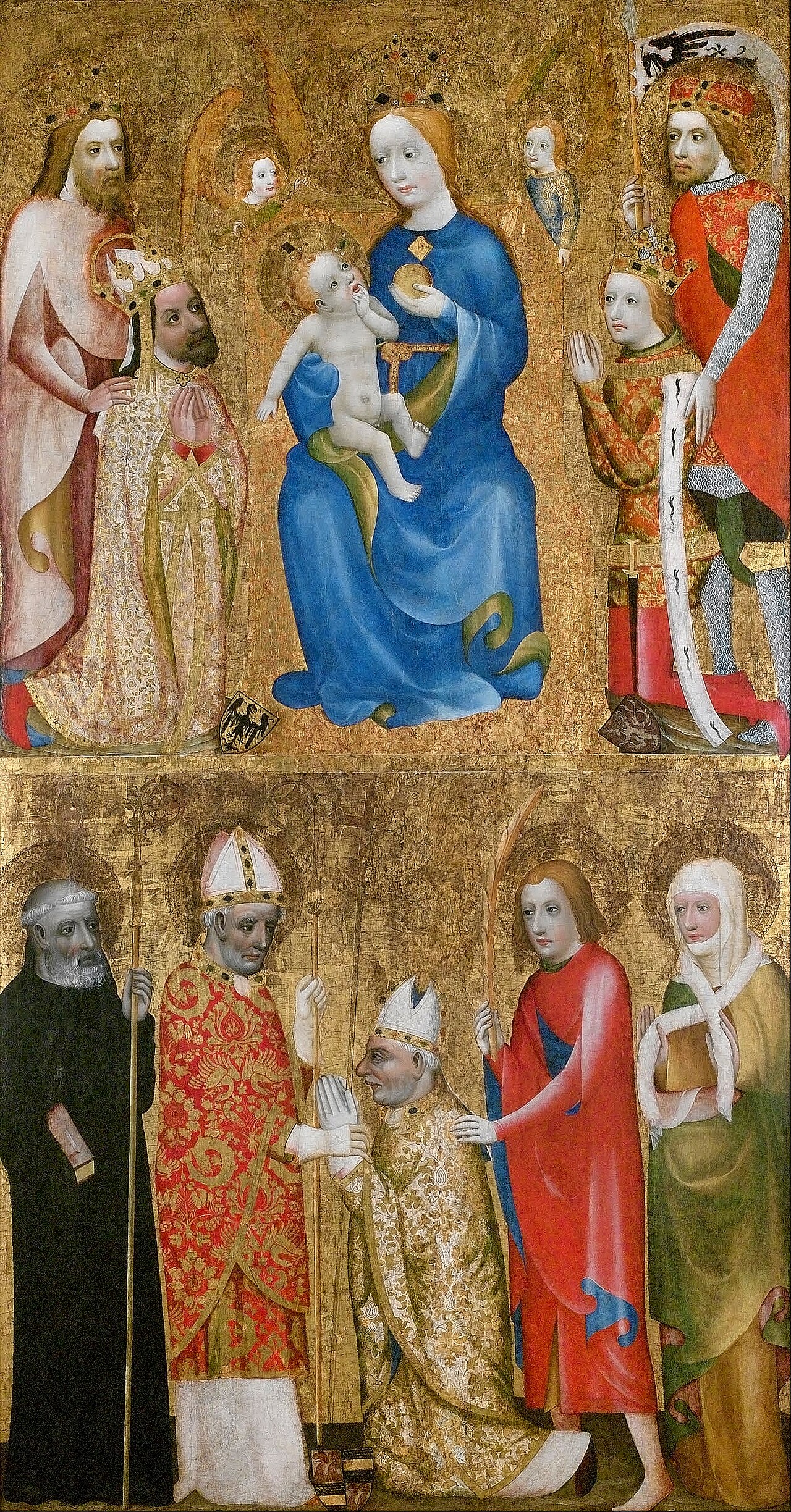
Relic Scenes, Church of the Virgin, Karlštejn Castle
Nicholas Wurmser · 1357
A 1357 fresco cycle showing Charles IV receiving and placing holy relics, part of his self-presentation as a sacred ruler.
Charles IV is shown receiving and placing relics, part of a lifetime cycle presenting him as a sacred ruler.
About this source
What it is
This is a fresco on the southern wall of the church of the Virgin at Karlštejn Castle, attributed to the painter Nicholas Wurmser and dated to 1357. It shows a row of crowned figures under Gothic arches, with one figure kneeling before an altar holding a large cross.
Why it matters
Charles IV built Karlštejn Castle as a treasury for relics and imperial regalia. These scenes were part of a cycle designed to present Charles as a ruler chosen and blessed by God, receiving and caring for sacred relics. It shows how medieval rulers used religious imagery to strengthen their authority.
Look closer
- Why might a ruler want to be shown handling holy relics?
- What does the arrangement of crowned figures and arches tell you about how the artist wanted viewers to feel?
- What is left out of this image that a modern history painting might include?
This painting is part of the curated material that grounds the AI version of Charles IV, Holy Roman Emperor on Humy.ai — when students ask about related events, the AI can quote it and cite it.
More Charles IV, Holy Roman Emperor sources
Browse all 97 →
Ready when you are
Start chatting with Charles IV, Holy Roman Emperor now.
20 messages free · No credit card · Available in 50+ languages.