


Secondary sourcePhotograph338 BC
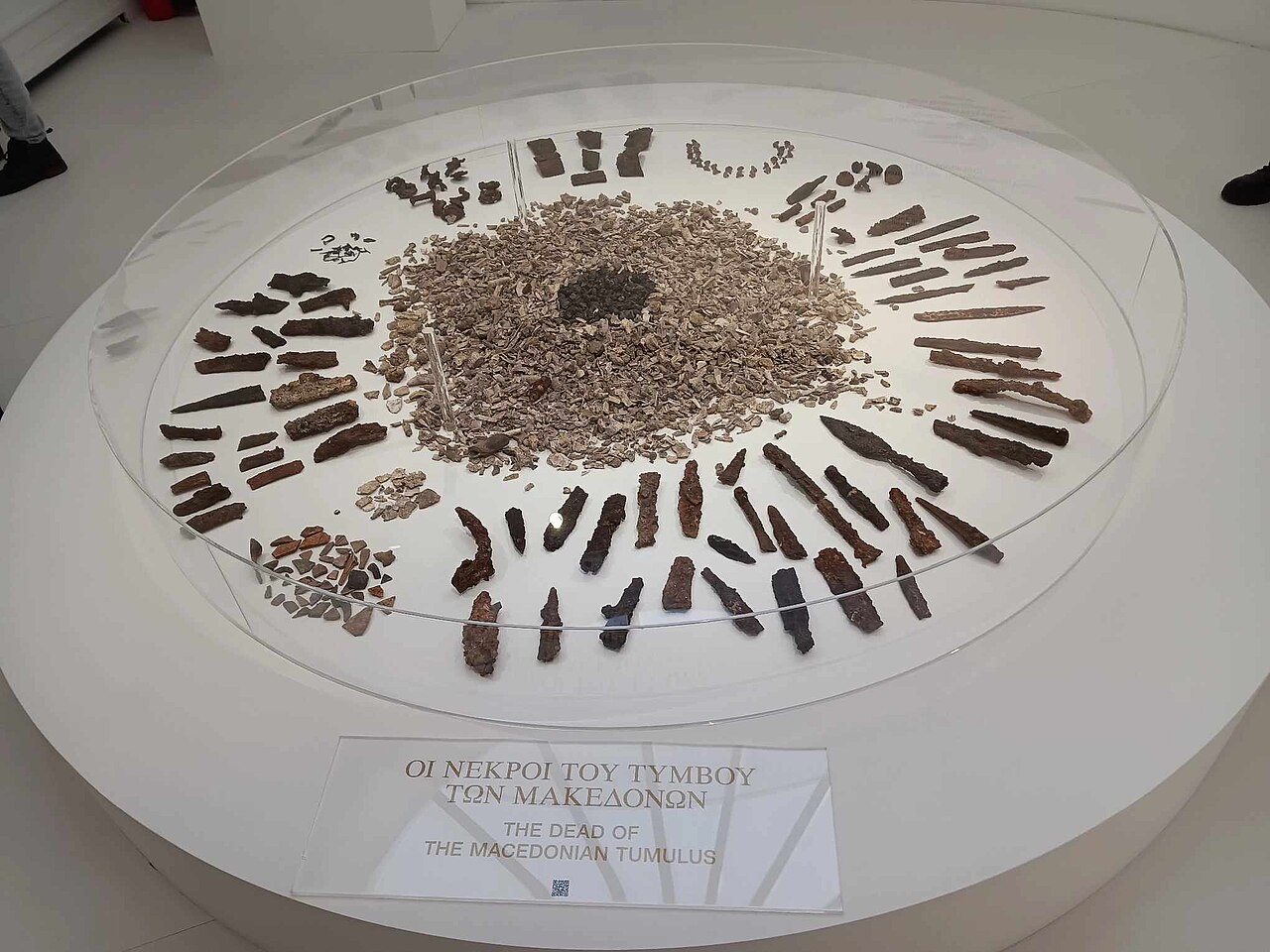
Remains of the Dead from the Macedonian Tumulus at Chaeronea
Catlemur · 338 BC
A photograph of a museum display of cremated remains and iron weapon fragments from a burial mound after the Battle of Chaeronea in 338 BC, a victory linked to Philip II.
It shows the remains of the dead from the burial mound linked to Philip II's victory at Chaeronea, a battle that secured his power over Greece.
About this source
What it is
This is a photograph, taken on 22 January 2024, of a display at an exhibition at the Museum of Cycladic Art in Chaeronea, titled A day that changed the world. The display shows a central heap of small grey-white bone fragments, surrounded by radiating rows of corroded iron weapon fragments such as blades and spearheads, with small pottery pieces. A label in Greek and English reads The Dead of the Macedonian Tumulus. The remains come from a mound created after the Battle of Chaeronea, which the collection record dates to 2 August 338 BC.
Why it matters
The Battle of Chaeronea was fought in 338 BC between Philip II of Macedon and an alliance of Athens and Thebes, and it gave Philip control over much of Greece. The mound holds the dead of his army, so the display connects his victory to the people who fell in it. The photograph is a modern picture of a museum display, not a record made in Philip's time, but it shows how archaeologists now study the human cost of his campaigns.
Look closer
- What objects are placed around the bones, and what might they tell you about the men who died?
- Who arranged this display and what story did they want visitors to take from it?
- What does the photograph leave out, such as the names of the dead or the views of the people who lost the battle?
This photograph is part of the curated material that grounds the AI version of Philip II of Macedon on Humy.ai — when students ask about related events, the AI can quote it and cite it.
More Philip II of Macedon sources
Browse all 90 →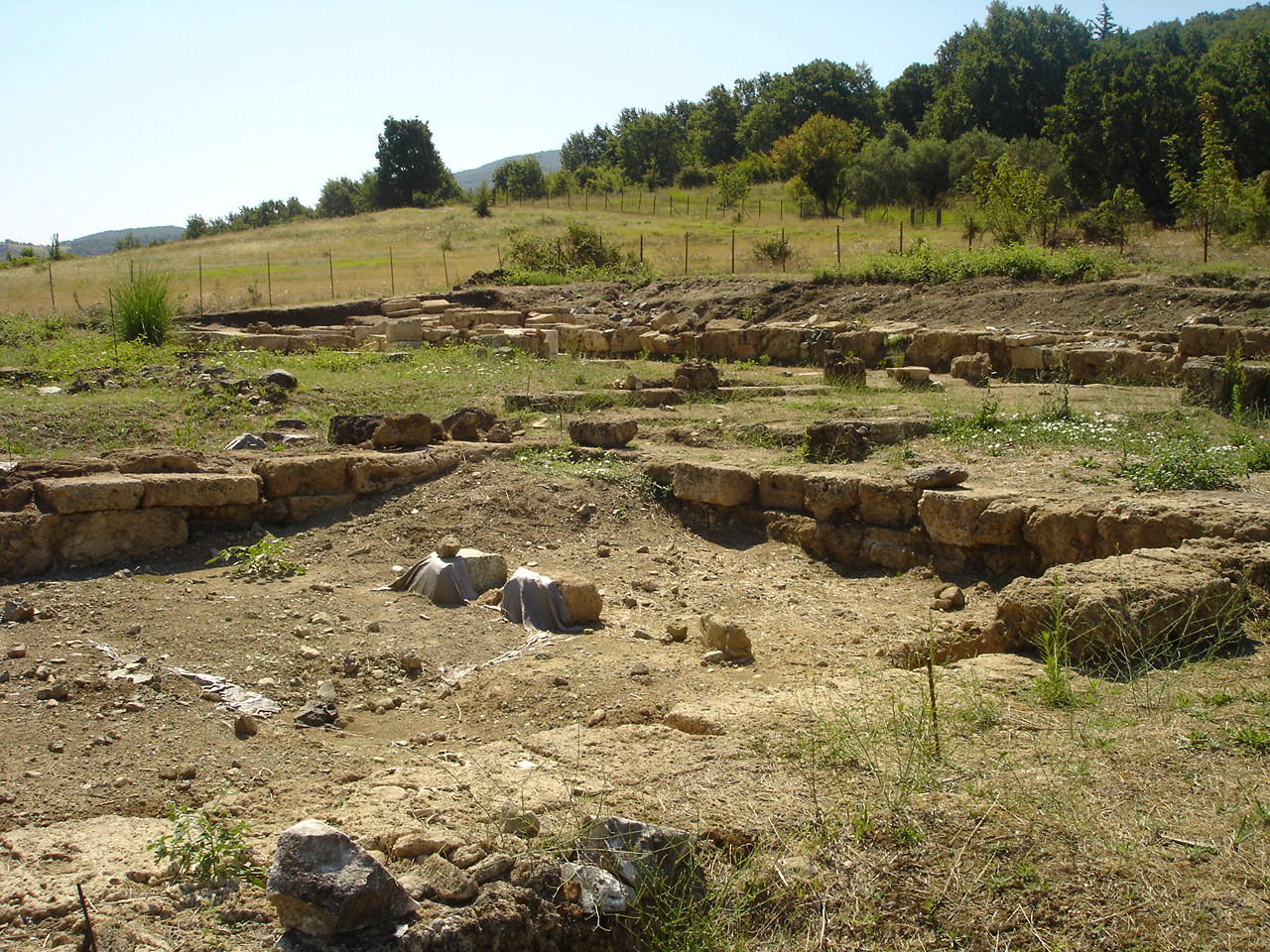 Artifact
Secondary source
Aigai
c. 750 BC onward; Philip's tomb c. 336 BC
 Speech
Primary source
First Philippic
Demosthenes · c. 351-350 BC
 Speech
Primary source
Third Philippic
Demosthenes · 341 BC
 Artifact
Primary source
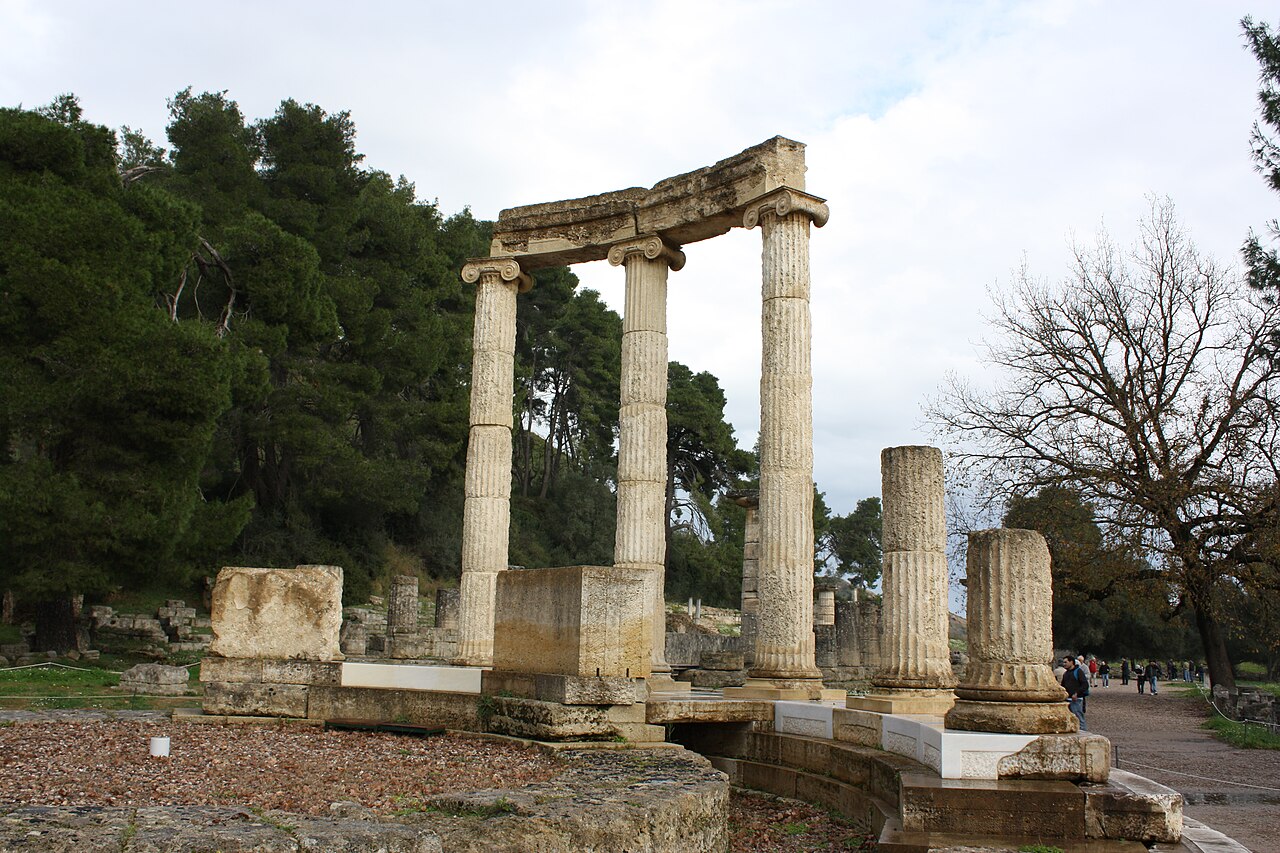
Philippeion
Leochares · begun 338/337 BC, completed under Alexander
Free account
Read every Philip II of Macedon source
Sign up free →
Ready when you are
Start chatting with Philip II of Macedon now.
20 messages free · No credit card · Available in 50+ languages.