


Secondary sourcePainting1817
Report of the Leipzig victory to the allied monarchs
Johann Peter Krafft · 1817
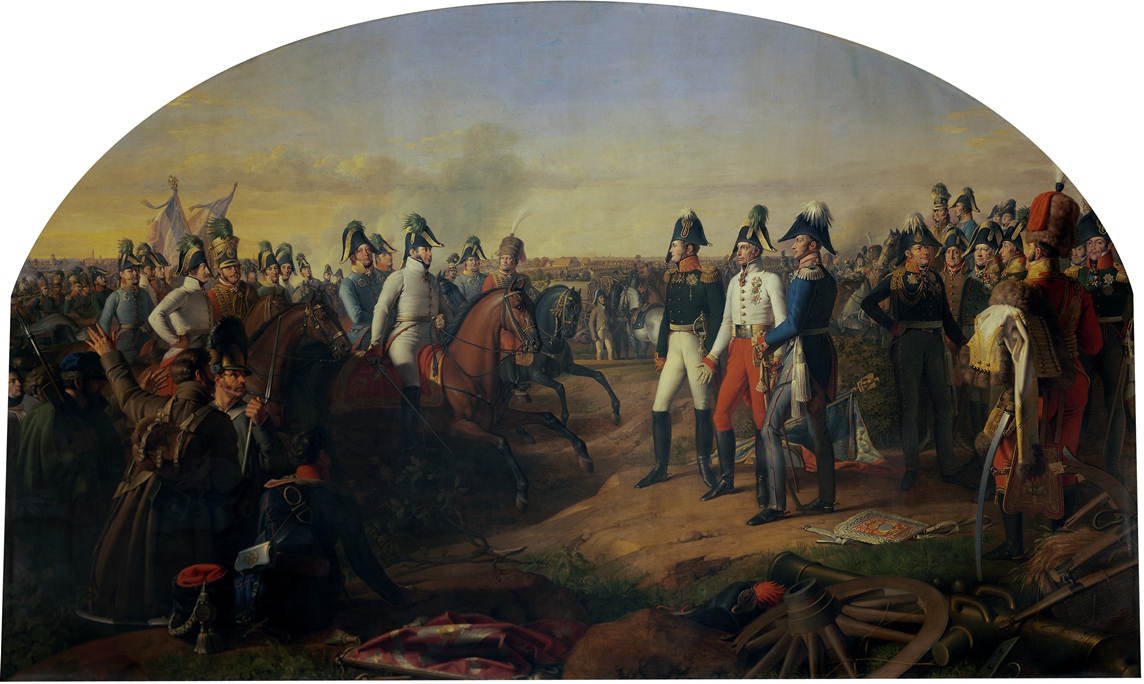
A large painting by Johann Peter Krafft showing Prince Schwarzenberg reporting the victory at Leipzig to Alexander I, Francis I and Frederick William III in 1817.
Shows Alexander I as one of the three allied monarchs receiving the news of the Leipzig victory, which connects him to the wars against Napoleon.
About this source
What it is
This is a large painting by Johann Peter Krafft, dated 1817, set in an arched frame. Its German title names Prince Karl Philipp zu Schwarzenberg reporting victory to the allied monarchs Alexander I of Russia, Francis I of Austria and Frederick William III of Prussia. The painting shows a battlefield at dusk. Soldiers in blue and white uniforms and a flag stand on the left, three officers on a dirt rise face a messenger in the center, and cannons and weapons lie in the foreground.
Why it matters
The painting refers to the Battle of Leipzig in 1813, which the allied powers fought against Napoleon. It shows the allied rulers receiving the news of victory as a shared achievement. Painted four years after the battle, it presents the allied leaders as the people who received and responded to the outcome, rather than as men on the field.
Look closer
- Who receives the news in the center, and how is the messenger positioned relative to them?
- Why might a painter place the cannons and weapons in the foreground?
- What does this painting leave out about the soldiers who actually fought at Leipzig?
This painting is part of the curated material that grounds the AI version of Tsar Alexander I and Francis II, Holy Roman Emperor on Humy.ai — when students ask about related events, the AI can quote it and cite it.
More Tsar Alexander I sources
Browse all 89 →Primary source
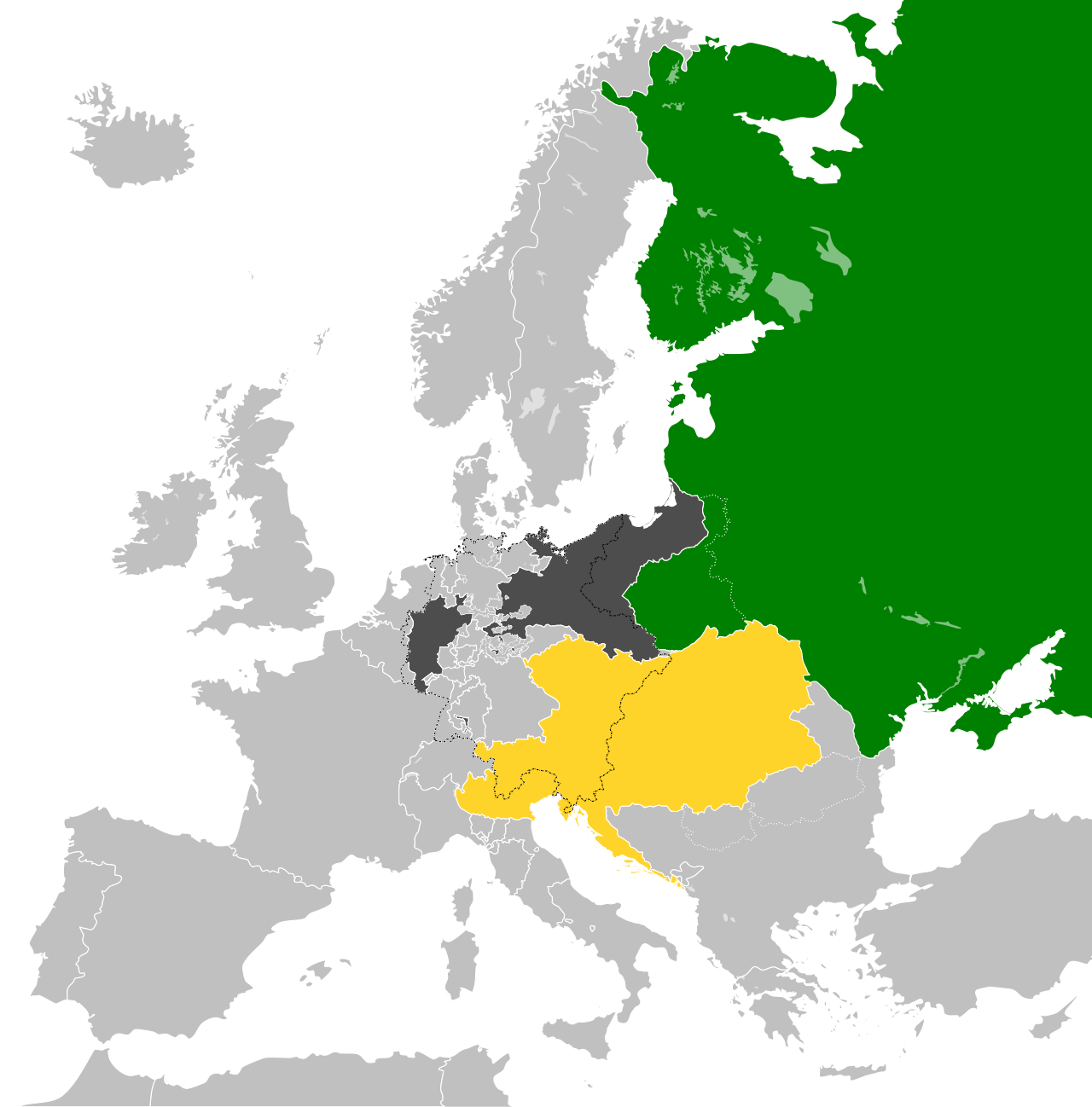
Treaties of Tilsit
7-9 July 1807
 Document
Primary source
Holy Alliance
Alexander I of Russia · 26 September 1815
 Document
Primary source
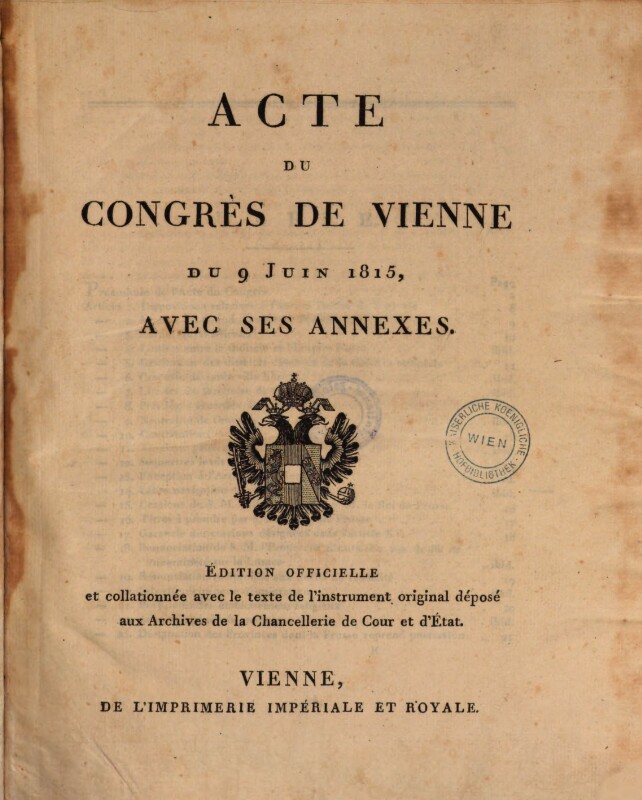
Final Act of the Congress of Vienna
9 June 1815
 Letter
Primary source
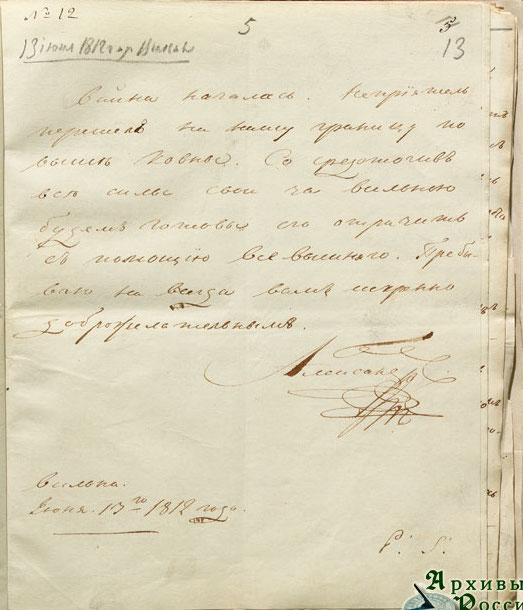
Alexander I's letter to N.I. Saltykov
Alexander I of Russia · 13 June 1812
Free account
Read every Tsar Alexander I source
Sign up free →
Ready when you are
Start chatting with Tsar Alexander I now.
20 messages free · No credit card · Available in 50+ languages.