


Secondary sourcePainting1914
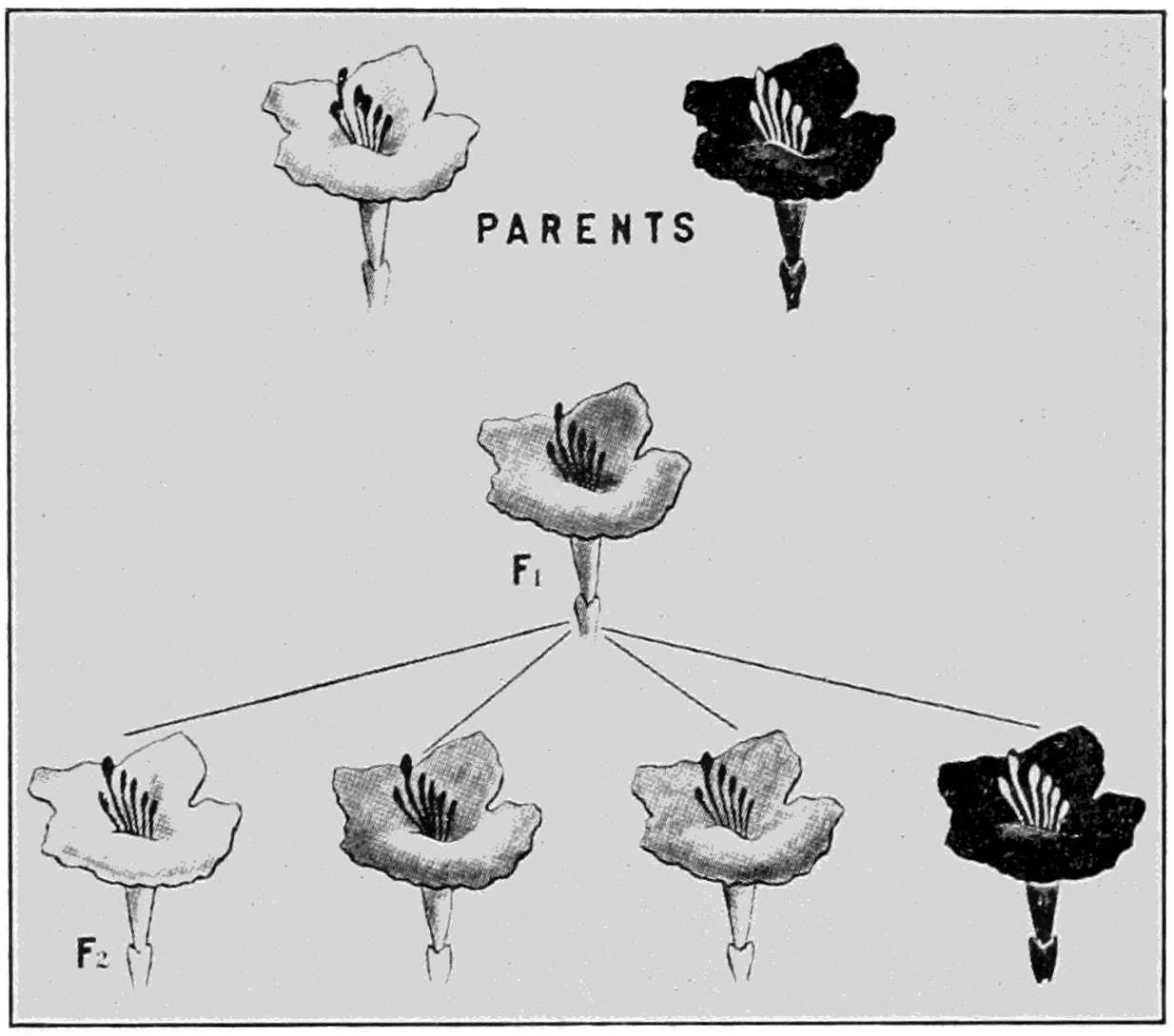
Results of Crossing White and Red Flowered Mirabilis Jalapa
1914
A 1914 magazine diagram showing inheritance ratios in four o'clock flowers, illustrating ideas built on Mendel's work.
A later diagram applying Mendelian inheritance patterns to a different plant, decades after Mendel's own experiments.
About this source
What it is
This is a diagram published in 1914 showing the results of crossing white-flowered and red-flowered four o'clock plants (Mirabilis jalapa). It shows parent flowers, a first generation (F1) of pinkish flowers, and a second generation (F2) with a mix of lighter and dark red flowers.
Why it matters
The diagram is not Mendel's own work but a later illustration, made decades after he died, applying and testing the kind of inheritance patterns he first described in pea plants. It shows how scientists after Mendel extended his ideas to other organisms.
Look closer
- How do the flower colours in F1 and F2 compare to the ratios Mendel found in his pea experiments?
- Why might scientists test Mendel's ideas on a different plant?
- What does this diagram leave out about how the experiment was actually carried out?
This painting is part of the curated material that grounds the AI version of Gregor Mendel on Humy.ai — when students ask about related events, the AI can quote it and cite it.
More Gregor Mendel sources
Meet the AI Gregor Mendel →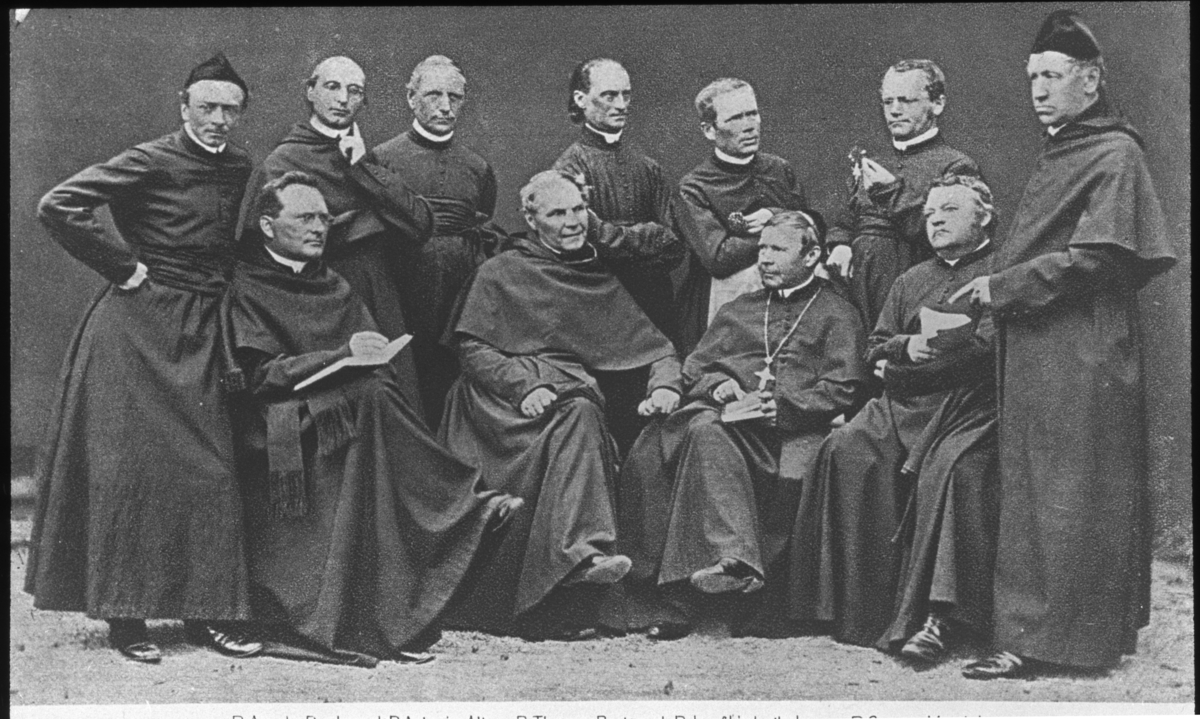 Photograph
Primary source
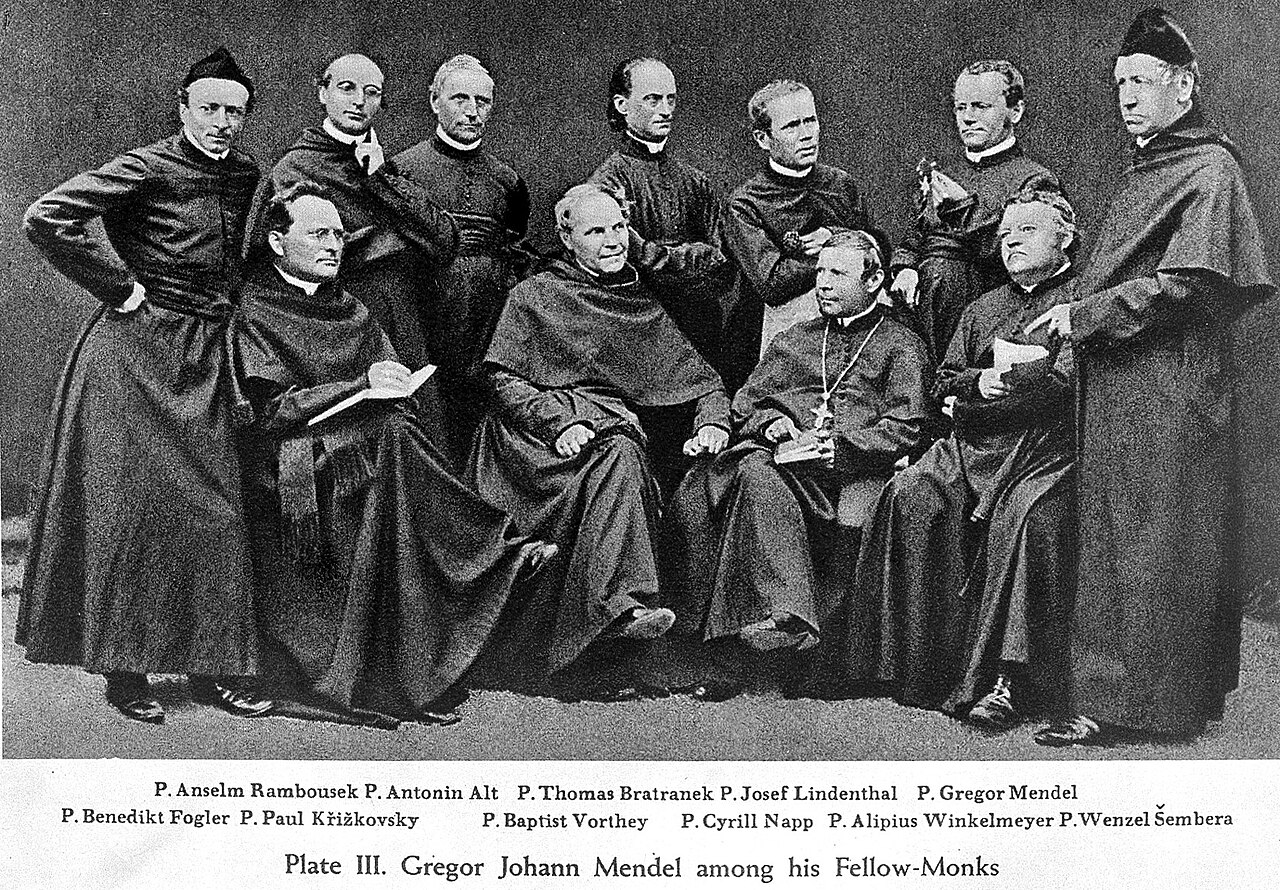
Mendel among his fellow monks
c. 1861-1864
 Book
Primary source
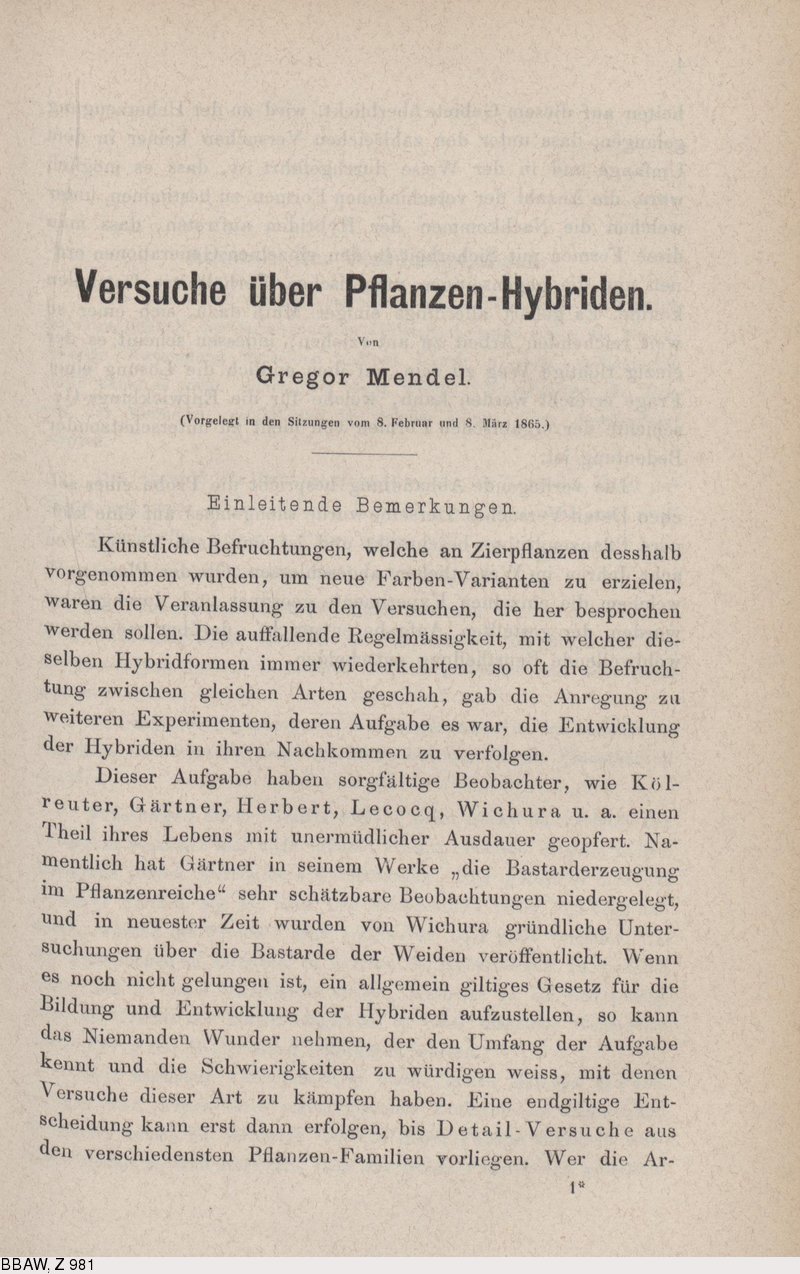
Versuche über Pflanzen-Hybriden
Gregor Mendel · 1866 (read 1865)
 Photograph
Primary source
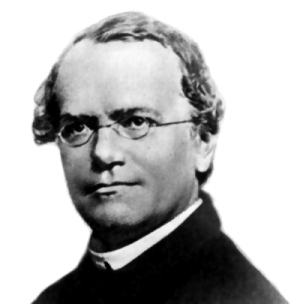
Gregor Mendel
Unknown
 Photograph
Primary source
Mendel with other monks
Unknown
 Photograph
Primary source
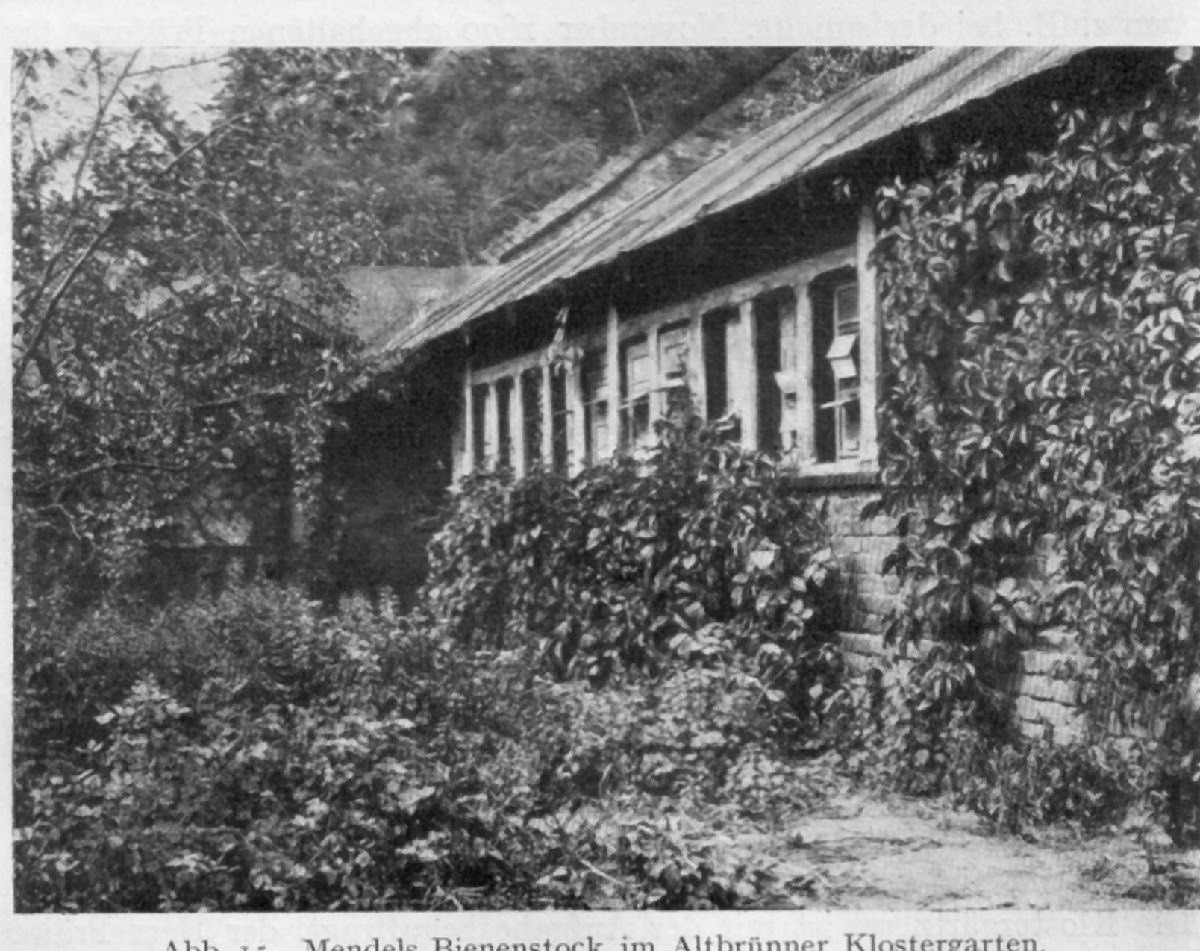
Mendel's Beehouse
Unknown · before 1909
Ready when you are
Start chatting with Gregor Mendel now.
20 messages free · No credit card · Available in 50+ languages.