


Primary sourceArtifact1387-1405
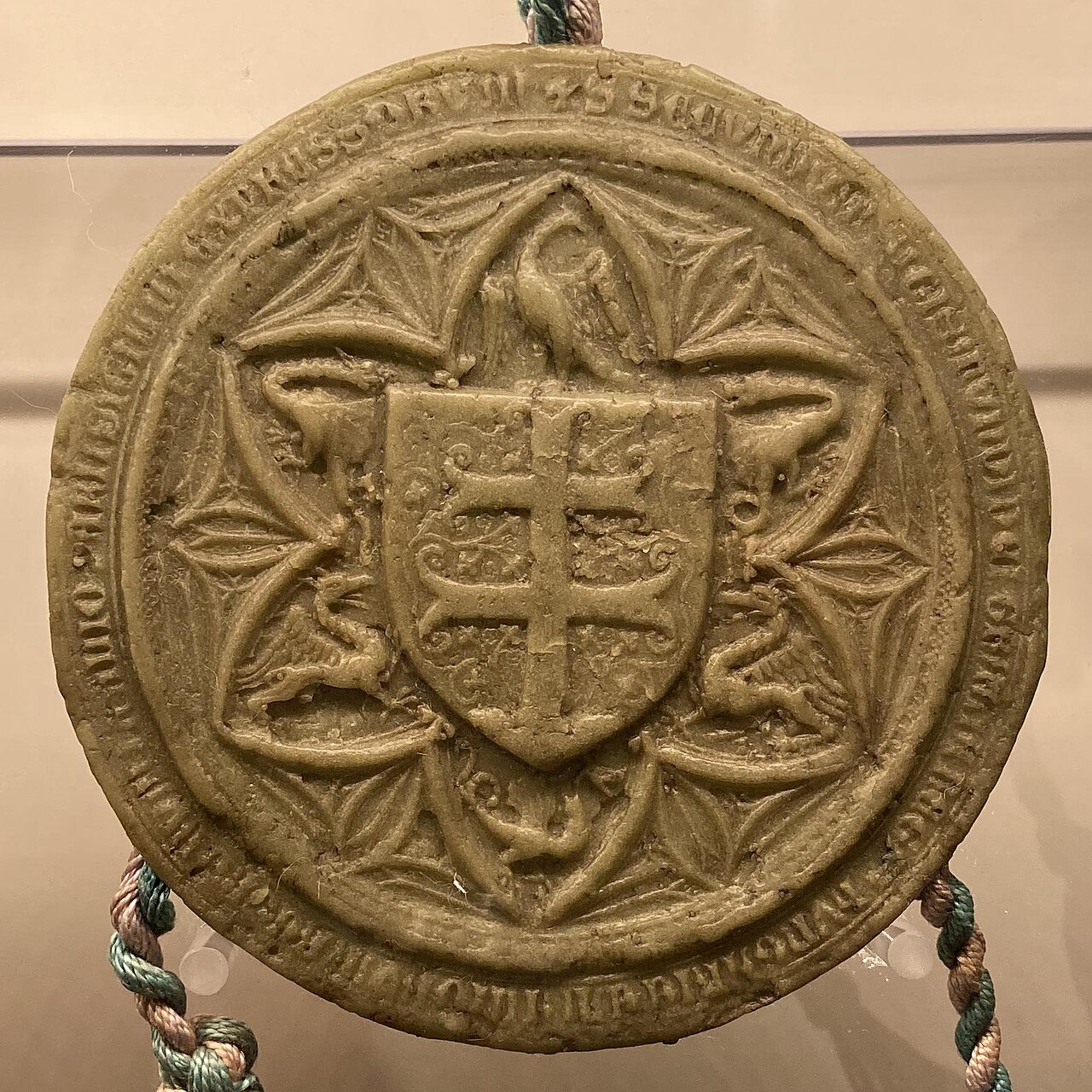
Reverse of the First Double Seal of King Sigismund of Hungary
1387-1405
The back side of Sigismund's first Hungarian royal seal, used from 1387 to 1405 to authenticate his acts as king.
This seal was used by Sigismund himself to authenticate his royal acts as King of Hungary.
About this source
What it is
This is the reverse side of the first double majesty seal of Sigismund of Luxemburg, used between 1387 and 1405 during his reign as King of Hungary. The wax impression shows a central shield with a cross pattern, flanked by heraldic animals, inside a decorative border with an inscription.
Why it matters
Royal seals were used to authenticate official documents, acting like a signature of state. The heraldic images on this seal display the different claims and titles Sigismund held as king, making it a tool of political authority as much as decoration.
Look closer
- What symbols can you find on the seal, and what might each one represent?
- Why would a king need a seal instead of (or alongside) handwriting his name?
- What does the care put into this design tell you about how rulers wanted to be seen?
This artifact is part of the curated material that grounds the AI version of Sigismund, Holy Roman Emperor on Humy.ai — when students ask about related events, the AI can quote it and cite it.
More Sigismund, Holy Roman Emperor sources
Browse all 95 →Primary source
Safe Conduct to John Huss
Sigismund
 Painting
Primary source
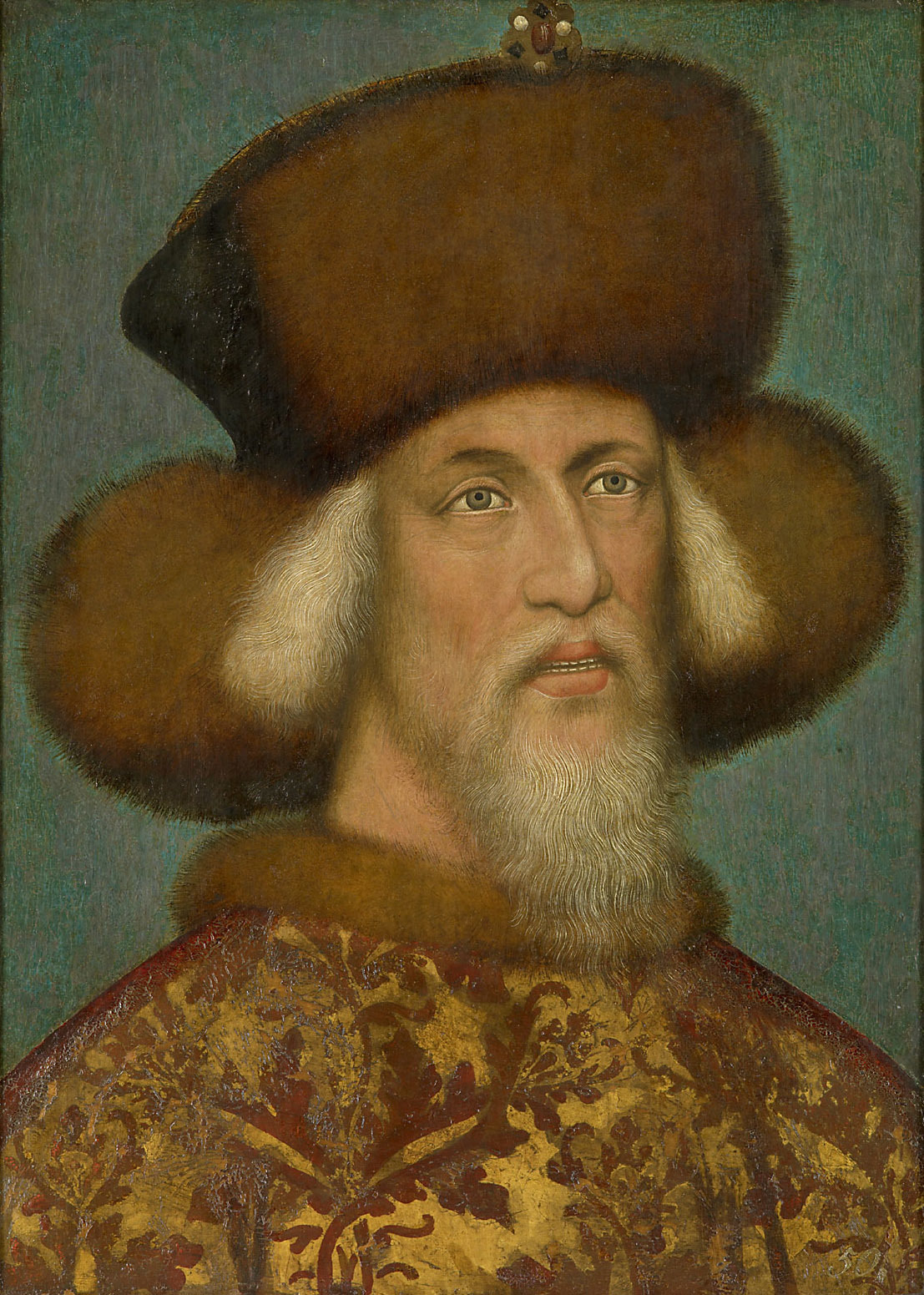
Portrait of Sigismund of Luxemburg
Pisanello (attributed) · c. 1430
 Painting
Primary source
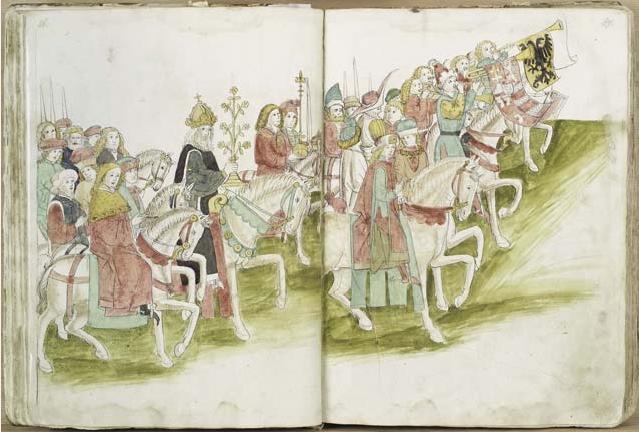
Sigismund's Entry into the Council of Constance
Ulrich Richental
 Document
Secondary source
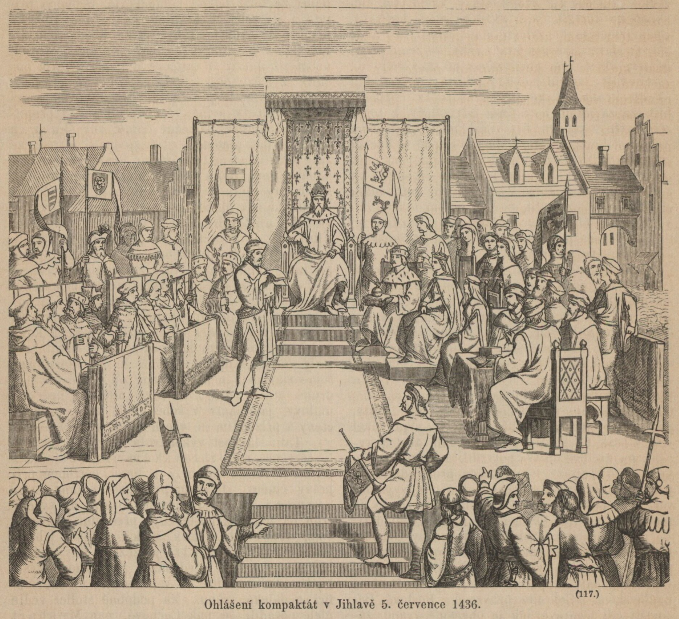
Compacts of Basel
1436
Free account
Read every Sigismund, Holy Roman Emperor source
Sign up free →
Ready when you are
Start chatting with Sigismund, Holy Roman Emperor now.
20 messages free · No credit card · Available in 50+ languages.