


Primary sourceBook1893
Rikki-Tikki-Tavi
Rudyard Kipling · 1893
Kipling's short story from The Jungle Book about a brave mongoose defending a British family's household in India.
A story from The Jungle Book, a staple of school readers, illustrating Kipling's colonial-era India through an animal hero.
About this source
What it is
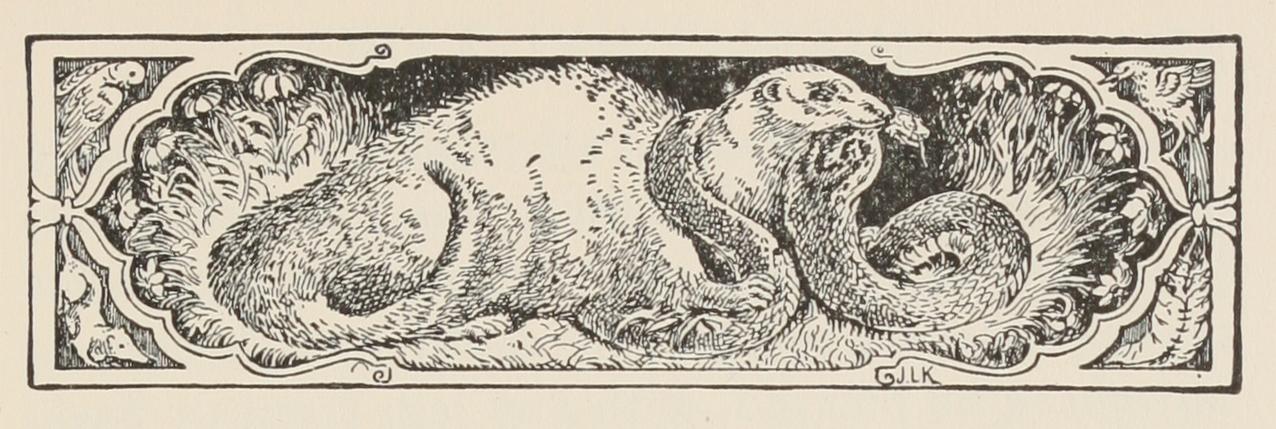
"Rikki-Tikki-Tavi" is a short story by Rudyard Kipling, published in his 1894 collection The Jungle Book. It tells of a young mongoose who is rescued by a British family living in a house and garden in India and who protects them from two dangerous cobras.
Why it matters
Kipling likely drew on an older Indian fable from the Panchatantra about a mongoose and a snake. The story has been reprinted and adapted many times, including as animated films, and remains widely read in schools. It offers a glimpse of a colonial household in India told through an animal hero, blending Indian storytelling traditions with a British domestic setting.
Look closer
- Why do you think Kipling chose a mongoose, rather than a person, as the story's hero?
- What does the depiction of the British family and their household tell us about colonial India as Kipling pictured it?
- How might the story read differently to an Indian reader compared to a British one?
This book is part of the curated material that grounds the AI version of Rudyard Kipling on Humy.ai — when students ask about related events, the AI can quote it and cite it.
More Rudyard Kipling sources
Browse all 96 →
Ready when you are
Start chatting with Rudyard Kipling now.
20 messages free · No credit card · Available in 50+ languages.