


Primary sourceDocument1829
Roman Catholic Relief Act 1829
1829
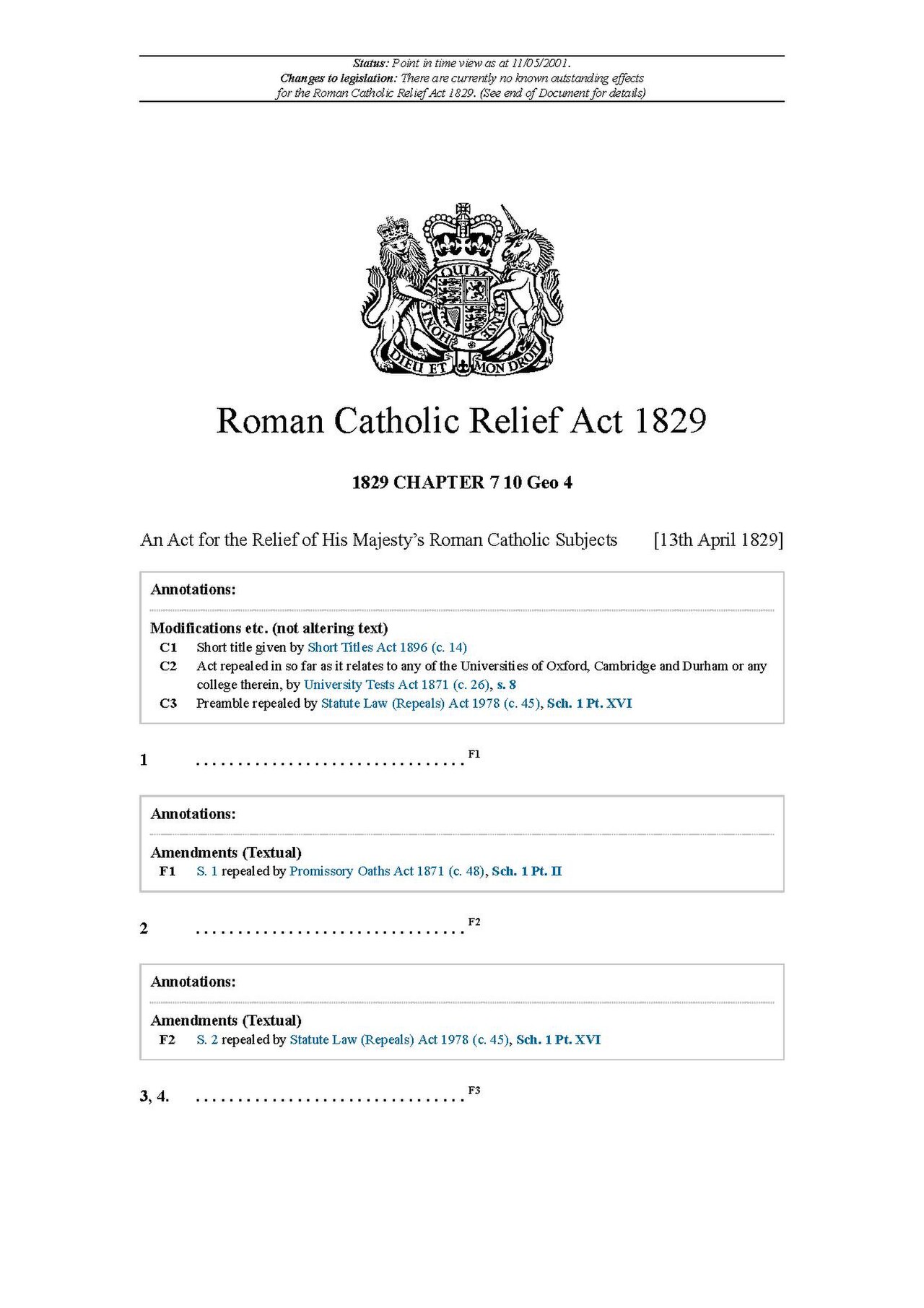
The 1829 act granting Catholic emancipation, reluctantly signed into law by George IV under pressure from his own government.
George IV reluctantly gave royal assent to this Act, showing how his ministers could override his personal opposition.
About this source
What it is
The Roman Catholic Relief Act 1829, also called the Catholic Emancipation Act, was passed by the Parliament of the United Kingdom. It removed many legal barriers that had stopped Roman Catholics from sitting in Parliament or holding senior judicial and state offices.
Why it matters
The Act followed decades of campaigning, especially by Daniel O'Connell and the Catholic Association in Ireland, and was pushed through by Prime Minister the Duke of Wellington and Home Secretary Robert Peel, who feared unrest in Ireland if emancipation was refused. George IV strongly opposed the measure but gave his royal assent only after Wellington threatened to resign. It shows how, by the 1820s, a British king's personal wishes could be overridden by his own ministers when they judged the stakes high enough.
Look closer
- Why might Wellington have been willing to resign over this issue?
- What does George's resistance tell you about the real limits of royal power in this period?
- Whose voices are missing from the official text of the Act itself?
This document is part of the curated material that grounds the AI version of George IV on Humy.ai — when students ask about related events, the AI can quote it and cite it.
More George IV sources
Browse all 99 →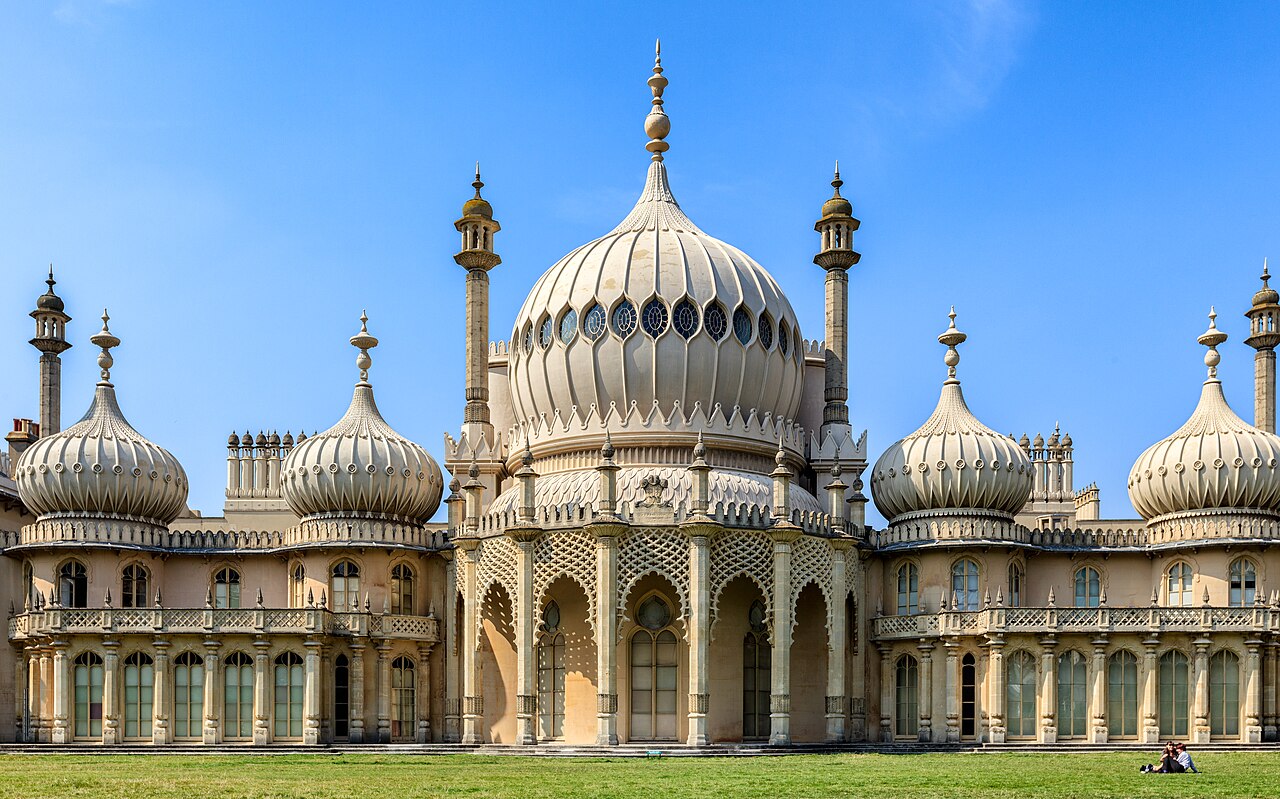 Artifact
Primary source
Royal Pavilion
John Nash · 1787 (extended 1815-1822)
 Painting
Primary source
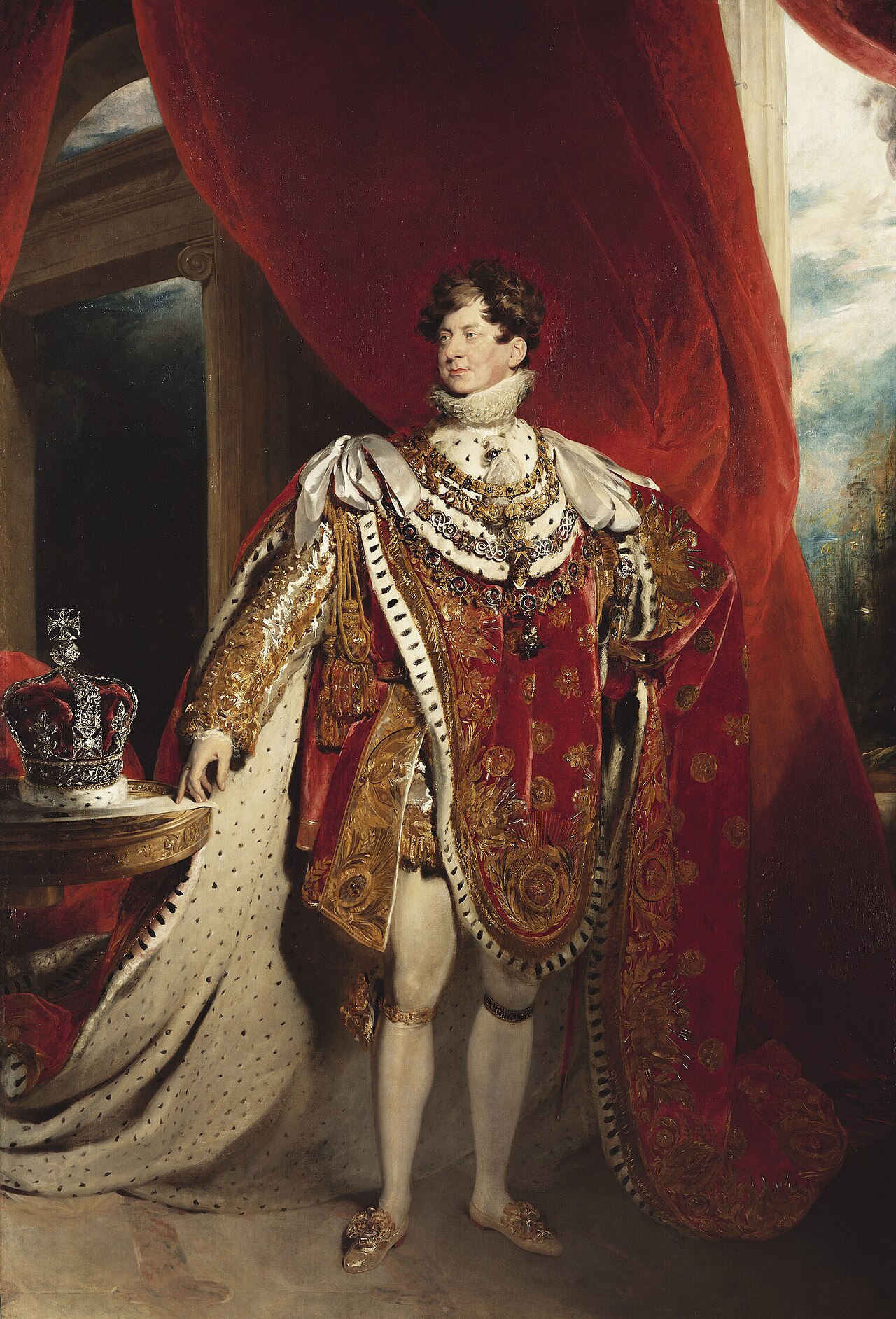
George IV
Thomas Lawrence · 1821
 Painting
Primary source
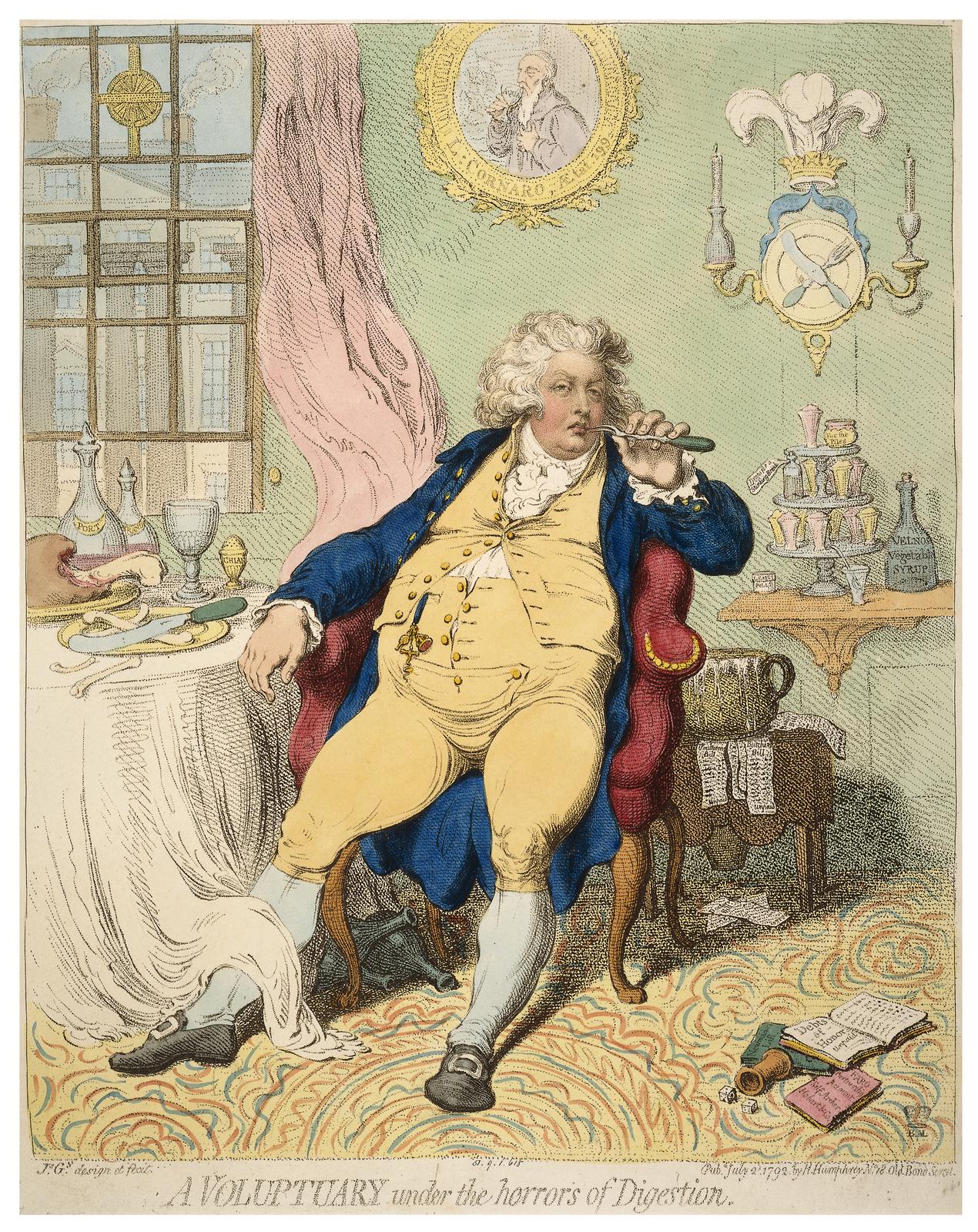
A Voluptuary under the Horrors of Digestion
James Gillray · 1792
Primary source
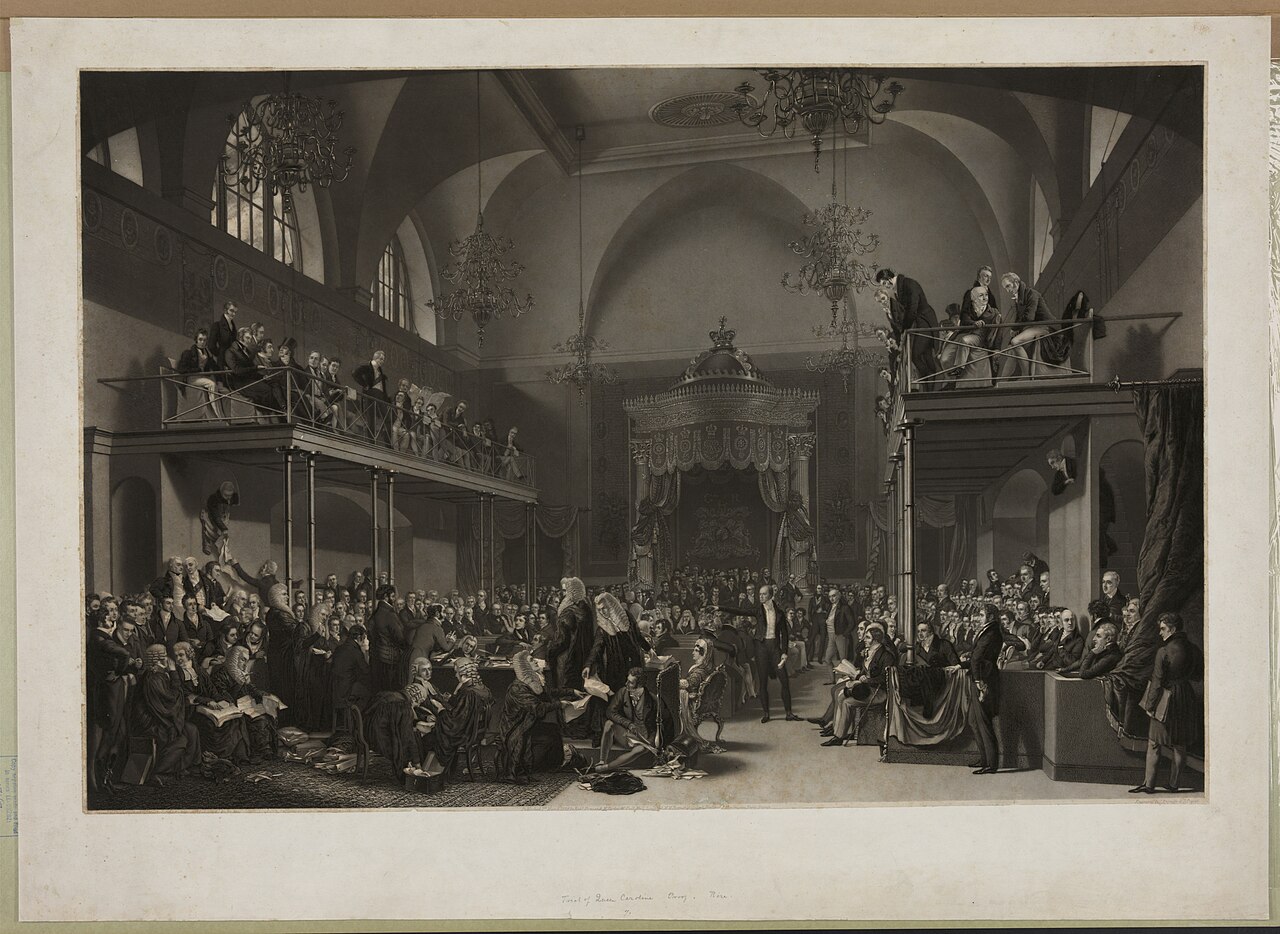
Pains and Penalties Bill 1820
1820

Free account
Read every George IV source
Sign up free →
Ready when you are
Start chatting with George IV now.
20 messages free · No credit card · Available in 50+ languages.