


Secondary sourceArtifact1913-1917 and 1920-1922
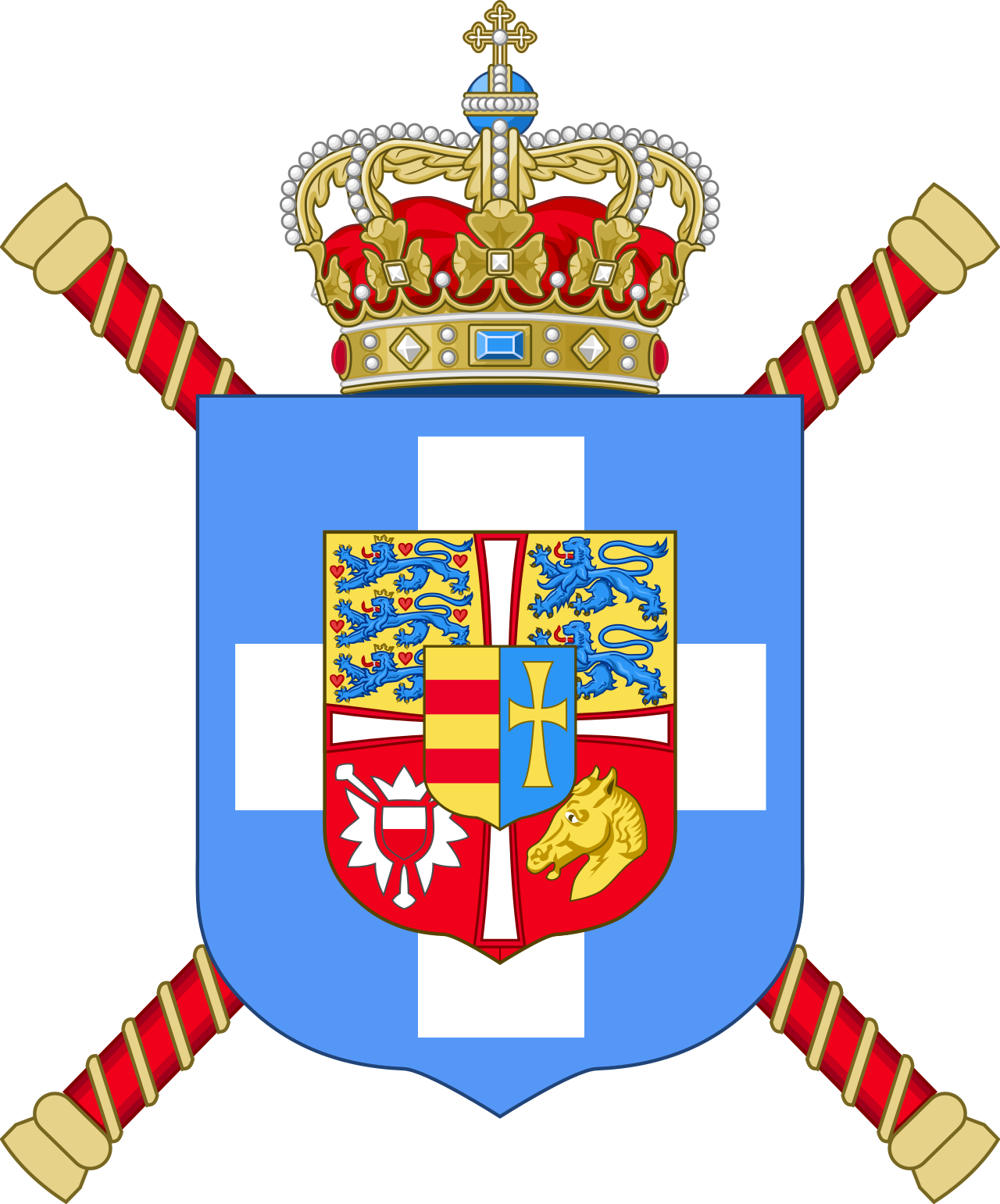
Royal Arms of King Constantine I of Greece
1913-1917 and 1920-1922
The coat of arms used by Constantine I of Greece during his two reigns, combining Greek and Danish heraldic elements.
These are Constantine I's personal royal arms, displaying his dynastic heritage as king of Greece.
About this source
What it is
This is the royal coat of arms used by King Constantine I of Greece during his reigns, from 1913 to 1917 and again from 1920 to 1922. It shows a light blue shield with a white Greek cross, topped by a royal crown, with a central shield bearing Danish-style heraldic symbols.
Why it matters
The arms reveal the family history behind the Greek throne: Constantine belonged to the Glücksburg dynasty, a Danish-descended royal house that supplied kings to Greece. The mixing of Greek and Danish symbols on one shield shows how European royal families were linked across borders by marriage and inheritance.
Look closer
- Why would a Greek king's coat of arms include Danish symbols?
- What might the crossed batons behind the shield represent?
- What does this combination of symbols tell you about how royal families connected different countries?
This artifact is part of the curated material that grounds the AI version of Constantine I of Greece on Humy.ai — when students ask about related events, the AI can quote it and cite it.
More Constantine I of Greece sources
Browse all 83 → Painting
Primary source
The Greatest of the Constantines, the Bulgarslayer
1912-1913
 Photograph
Primary source
King George I of Greece and Crown Prince Constantine Enter Thessaloniki
November 1912
 Book
Secondary source
Ex-King Constantine and the War
George M. Melas
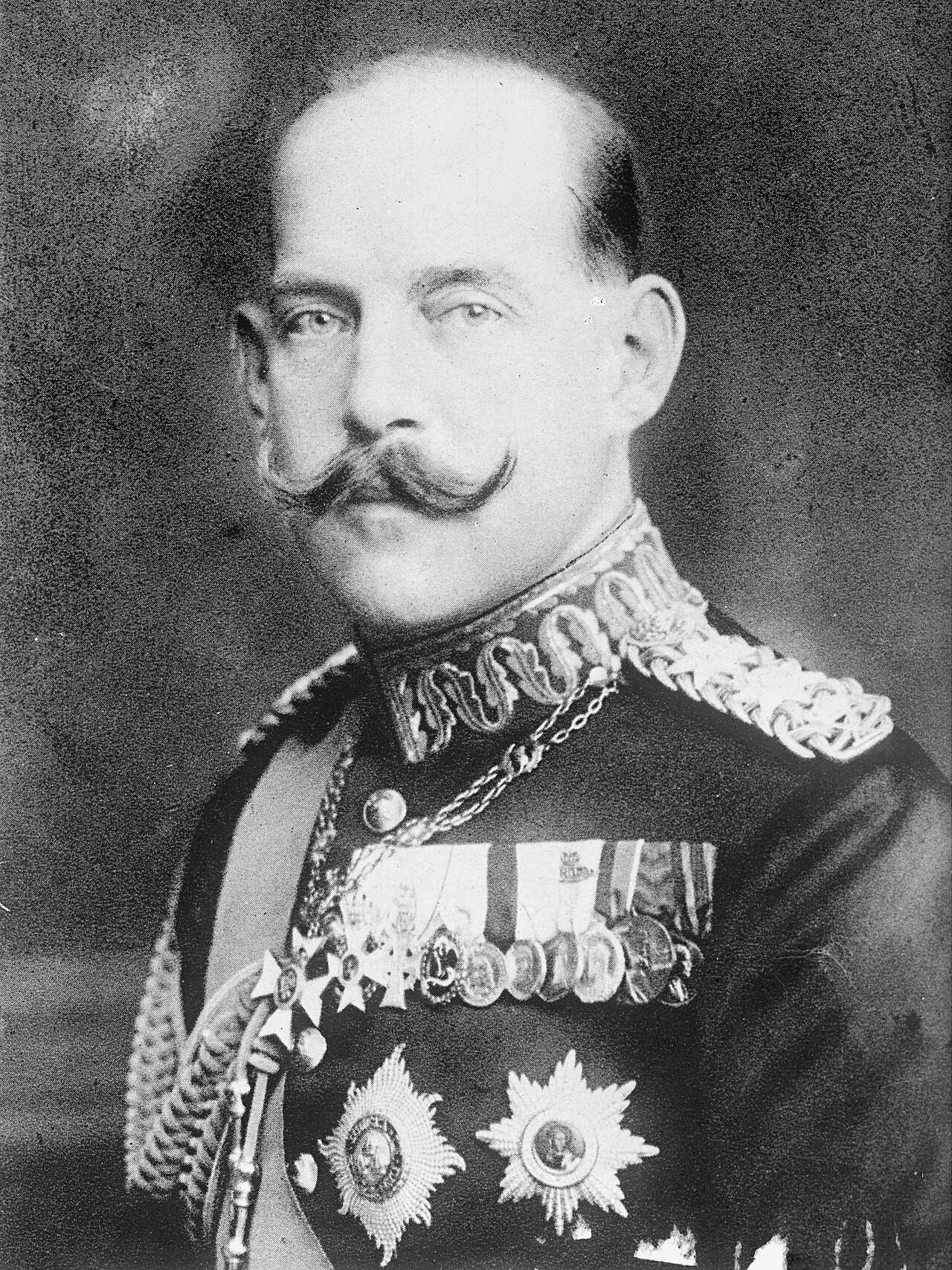 Photograph
Primary source
Portrait of Constantine I of Greece
1914


Free account
Read every Constantine I of Greece source
Sign up free →
Ready when you are
Start chatting with Constantine I of Greece now.
20 messages free · No credit card · Available in 50+ languages.