


Secondary sourceArtifact1819–1903
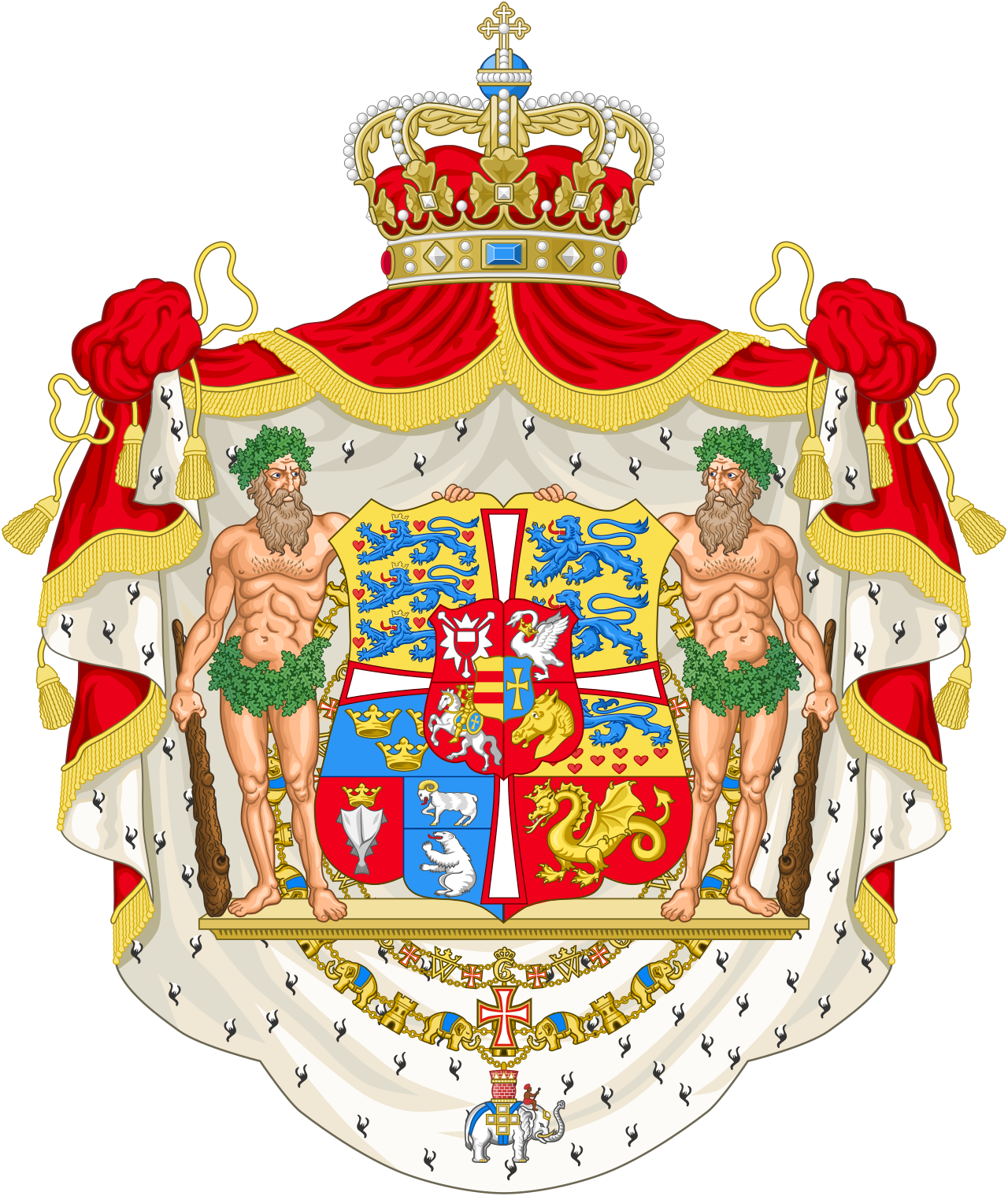
Royal Coat of Arms of Denmark (1819–1903)
1819–1903
The heraldic arms used by the Danish royal house, including the version Christian IX used before altering it in 1903.
The royal arms Christian IX inherited and later altered in 1903, reflecting Denmark's lost duchies.
About this source
What it is
This is the full heraldic coat of arms of the Danish royal house as used between 1819 and 1903. It shows a crowned shield supported by two wild men, quartered with lions, crowns, a lamb, a bear and a dragon, with the Dannebrog cross at its centre and an elephant below.
Why it matters
This version of the arms was used by several kings, including Frederick VI, Christian VIII, Frederick VII and Christian IX. It still included symbols referring to territories such as the duchies, which Denmark lost before the end of the century. Christian IX changed the design in 1903, reflecting how the monarchy had to adjust its symbols after losing land and power.
Look closer
- What do the different animals and symbols on the shield represent?
- Why might a king choose to change a coat of arms during his reign?
- What does keeping old symbols on a coat of arms tell us about a ruler's sense of history?
This artifact is part of the curated material that grounds the AI version of Christian IX of Denmark on Humy.ai — when students ask about related events, the AI can quote it and cite it.
More Christian IX of Denmark sources
Browse all 90 →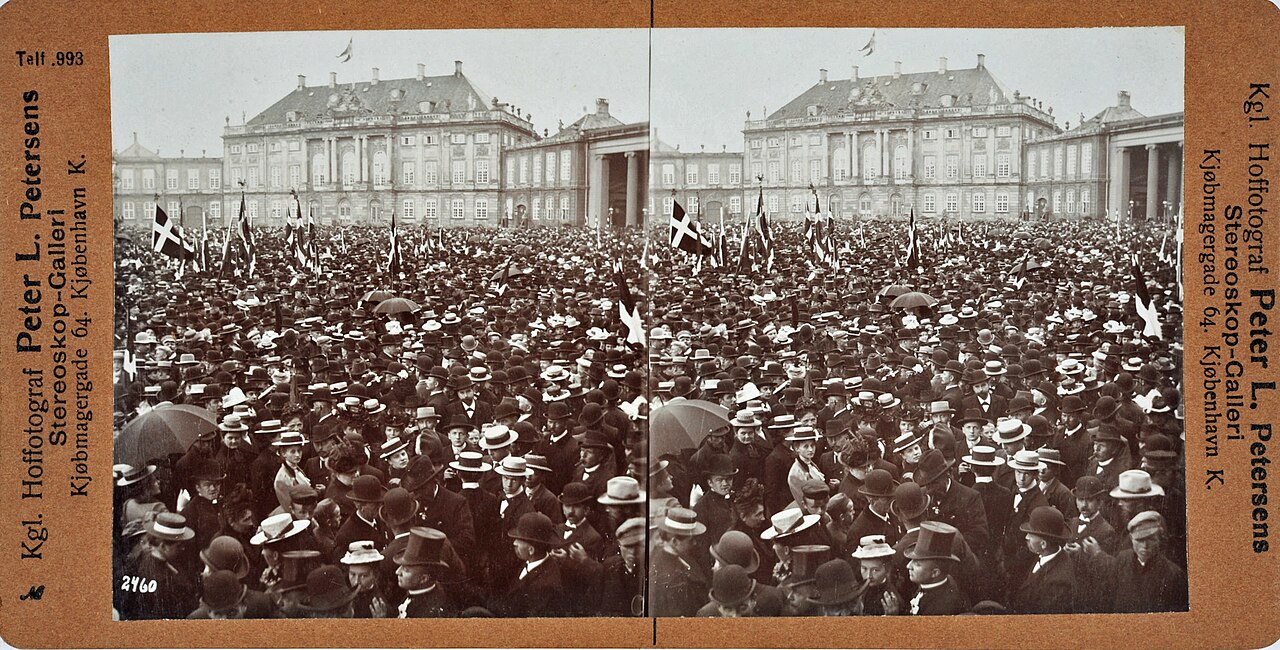 Photograph
Primary source
Folkeoptog for Kong Christian d. 9., 1. september 1901
Peter Lars Elfelt · 1 September 1901
 Painting
Secondary source
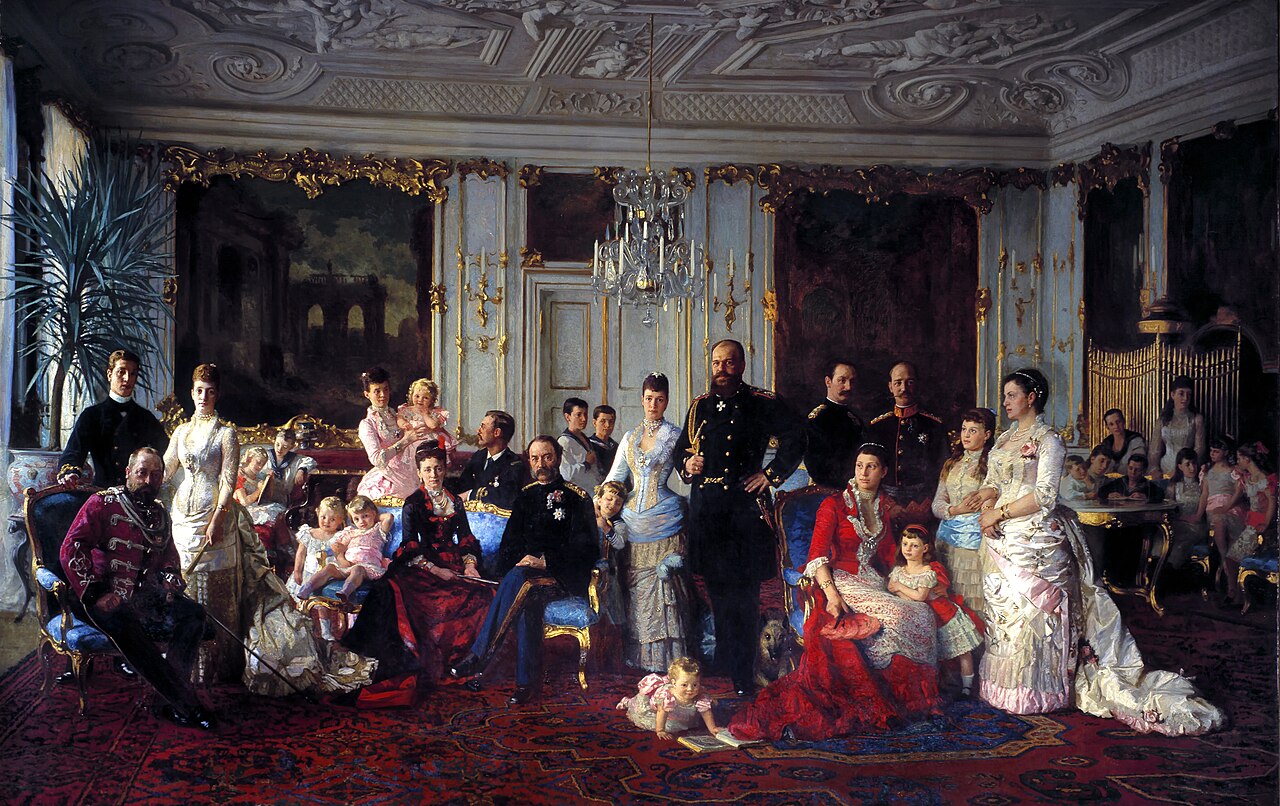
The Family of Christian IX of Denmark
Laurits Tuxen · 1886
 Photograph
Primary source
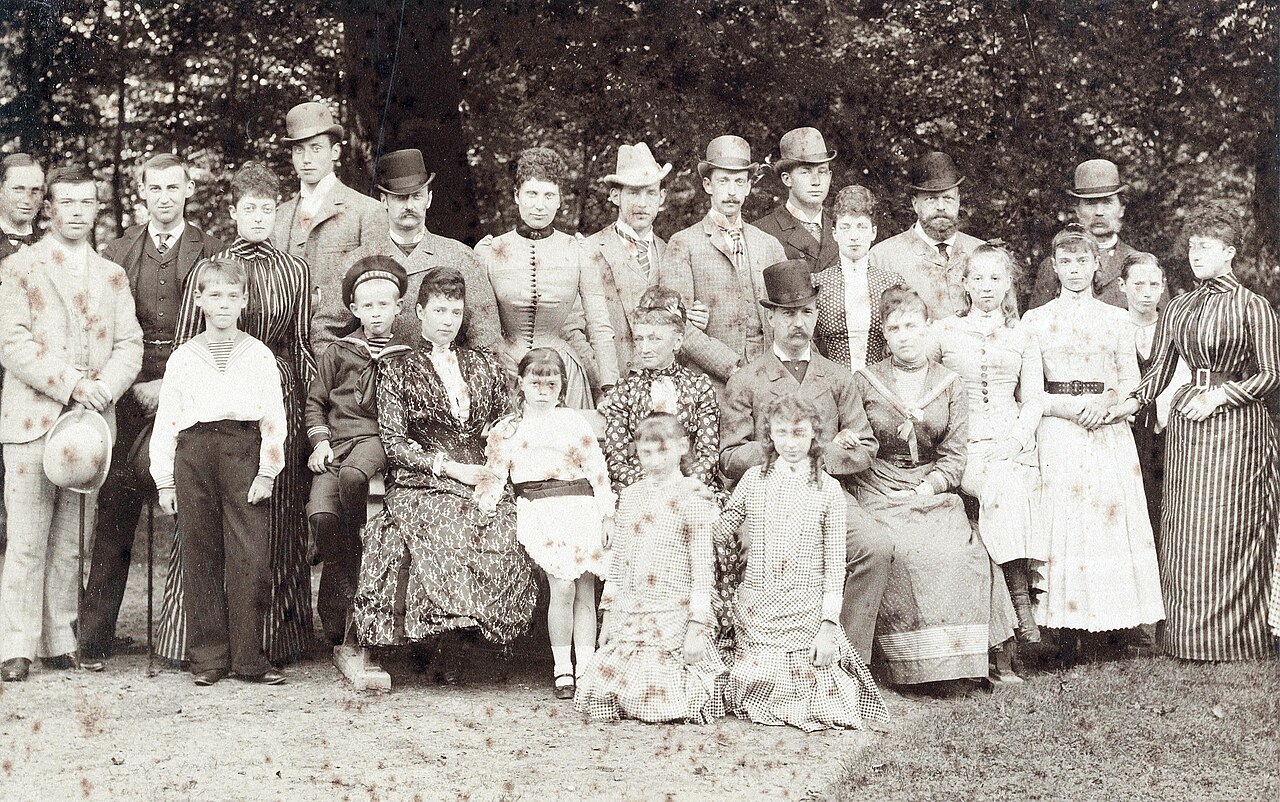
Family of Emperor Alexander III at Fredensborg
J. Danielsen · 1889
 Artifact
Primary source
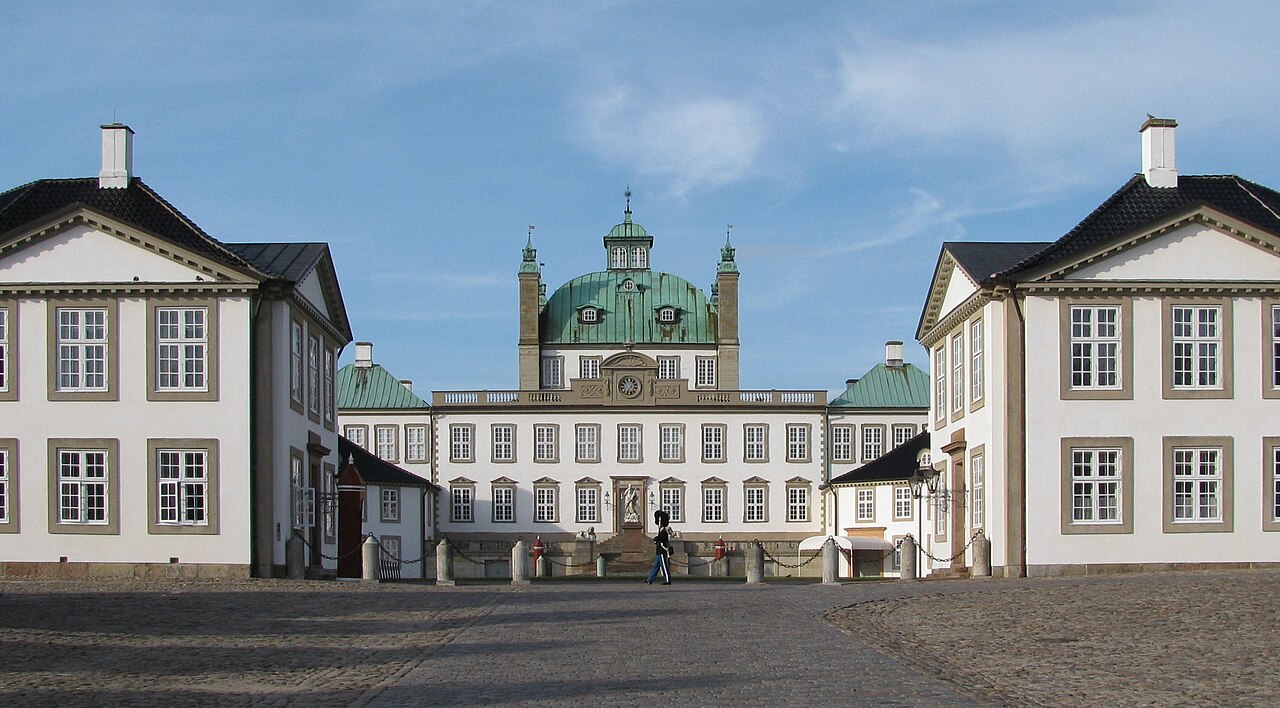
Fredensborg Palace
Johan Cornelius Krieger · 1722
Free account
Read every Christian IX of Denmark source
Sign up free →
Ready when you are
Start chatting with Christian IX of Denmark now.
20 messages free · No credit card · Available in 50+ languages.