


Secondary sourcePhotograph26 May 2009
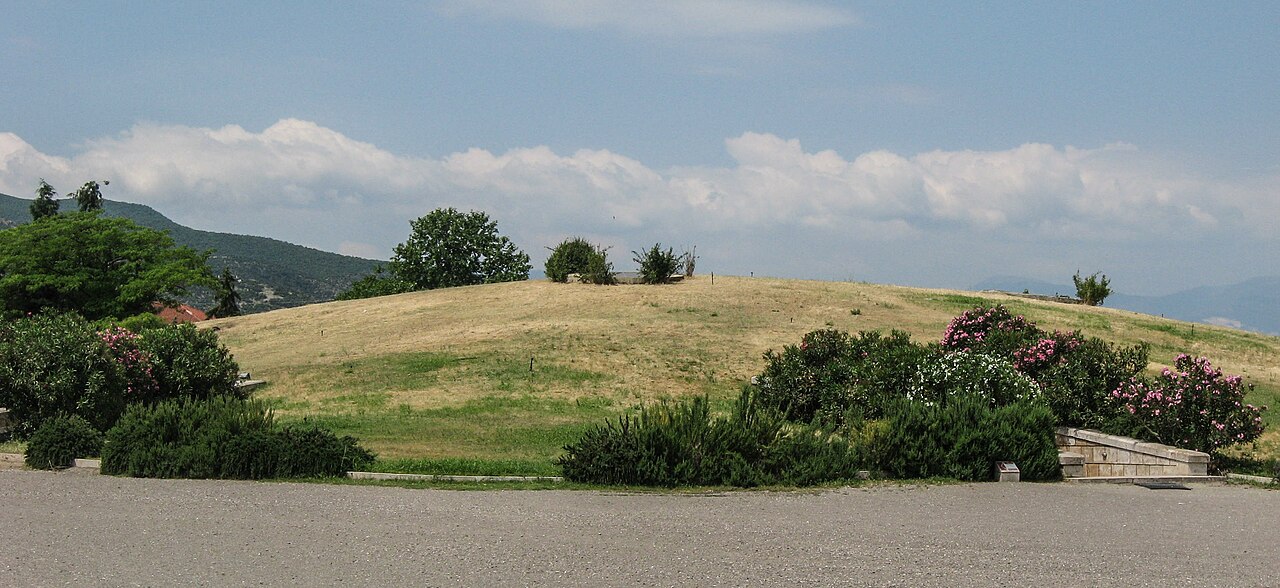
Royal tombs at Vergina, including Philip II's tomb
Explorer1940 · 26 May 2009
A photograph of the Vergina royal tombs, where Philip II was reportedly buried. The mound is a modern view of the burial site.
Shows the Vergina royal tombs, where Philip II was reportedly buried, as the modern site connected to his burial.
About this source
What it is
This is a 2009 photograph of the royal tombs at Vergina in Greece. A grassy, dry-topped burial mound rises under a partly cloudy sky. Green shrubs and flowering oleanders grow in front of it, with a gravel path and a stone step at the right. Hills lie behind. The photo was taken by the Wikimedia Commons user Explorer1940.
Why it matters
The tombs are linked to Philip II, who is reportedly buried in one of them. The photo shows the burial site as it looks today, not as it looked when the tomb was built. The Argead royal family is connected to these tombs, which the facts describe as the site of Macedonian royal burials. The image helps students see where the king's burial place is found.
Look closer
- What does the mound look like, and what details show that people visit the site?
- Why might the photographer choose a view that shows the surrounding plants and hills?
- What can a photo of the outside of a tomb not tell us about who was buried inside?
This photograph is part of the curated material that grounds the AI version of Philip II of Macedon on Humy.ai — when students ask about related events, the AI can quote it and cite it.
More Philip II of Macedon sources
Browse all 90 →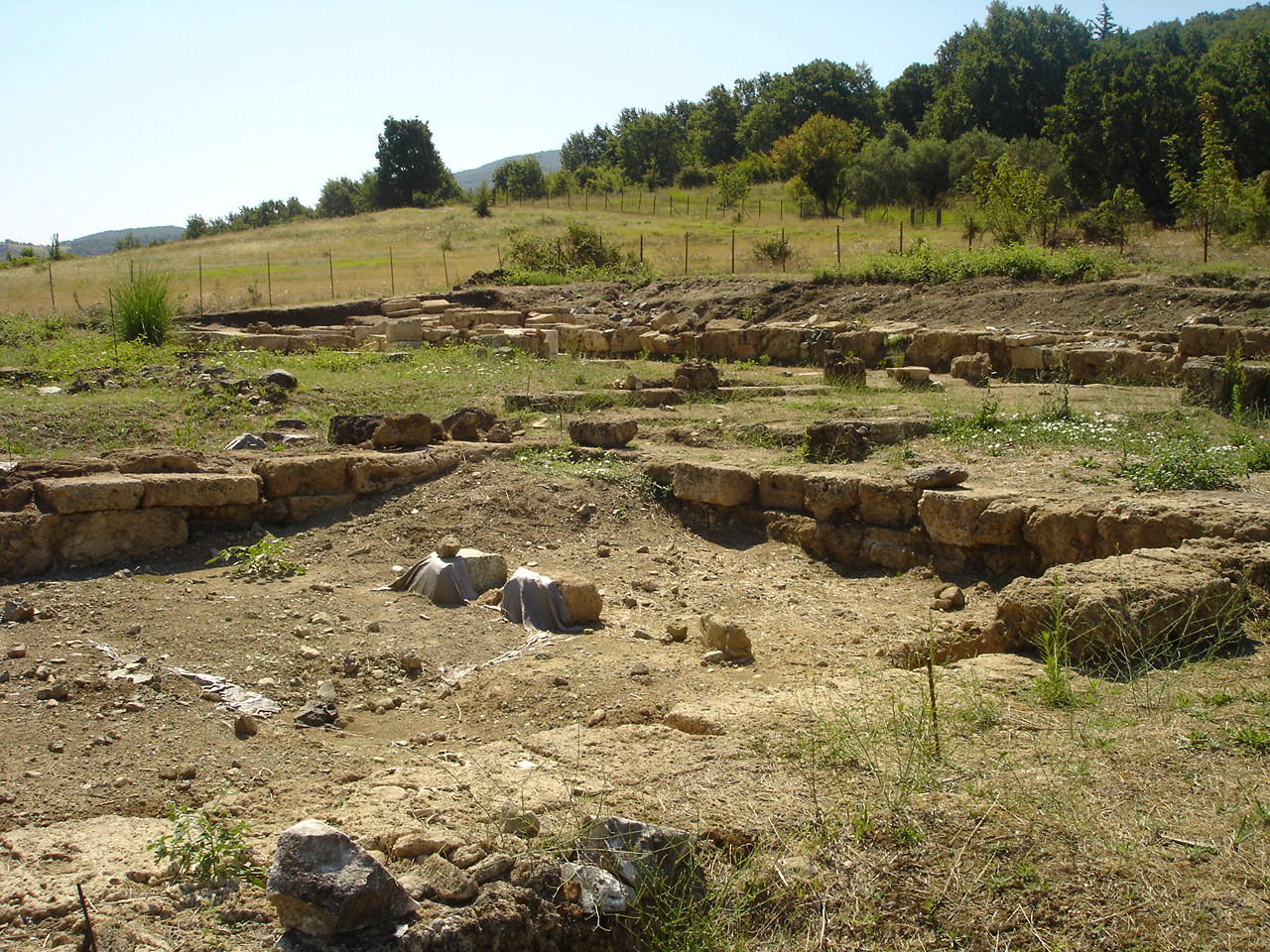 Artifact
Secondary source
Aigai
c. 750 BC onward; Philip's tomb c. 336 BC
 Speech
Primary source
First Philippic
Demosthenes · c. 351-350 BC
 Speech
Primary source
Third Philippic
Demosthenes · 341 BC
 Artifact
Primary source
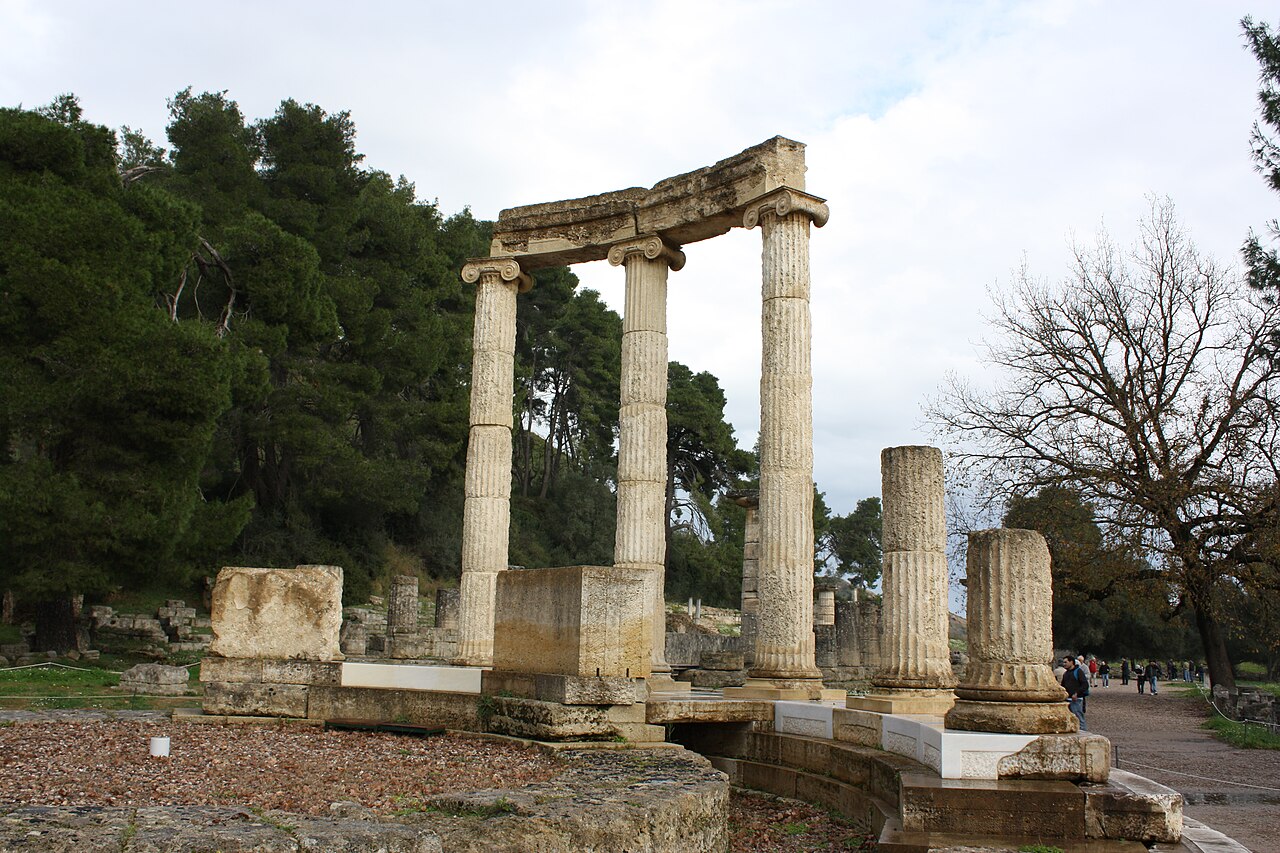
Philippeion
Leochares · begun 338/337 BC, completed under Alexander
Free account
Read every Philip II of Macedon source
Sign up free →
Ready when you are
Start chatting with Philip II of Macedon now.
20 messages free · No credit card · Available in 50+ languages.