


Secondary sourcePainting19th century
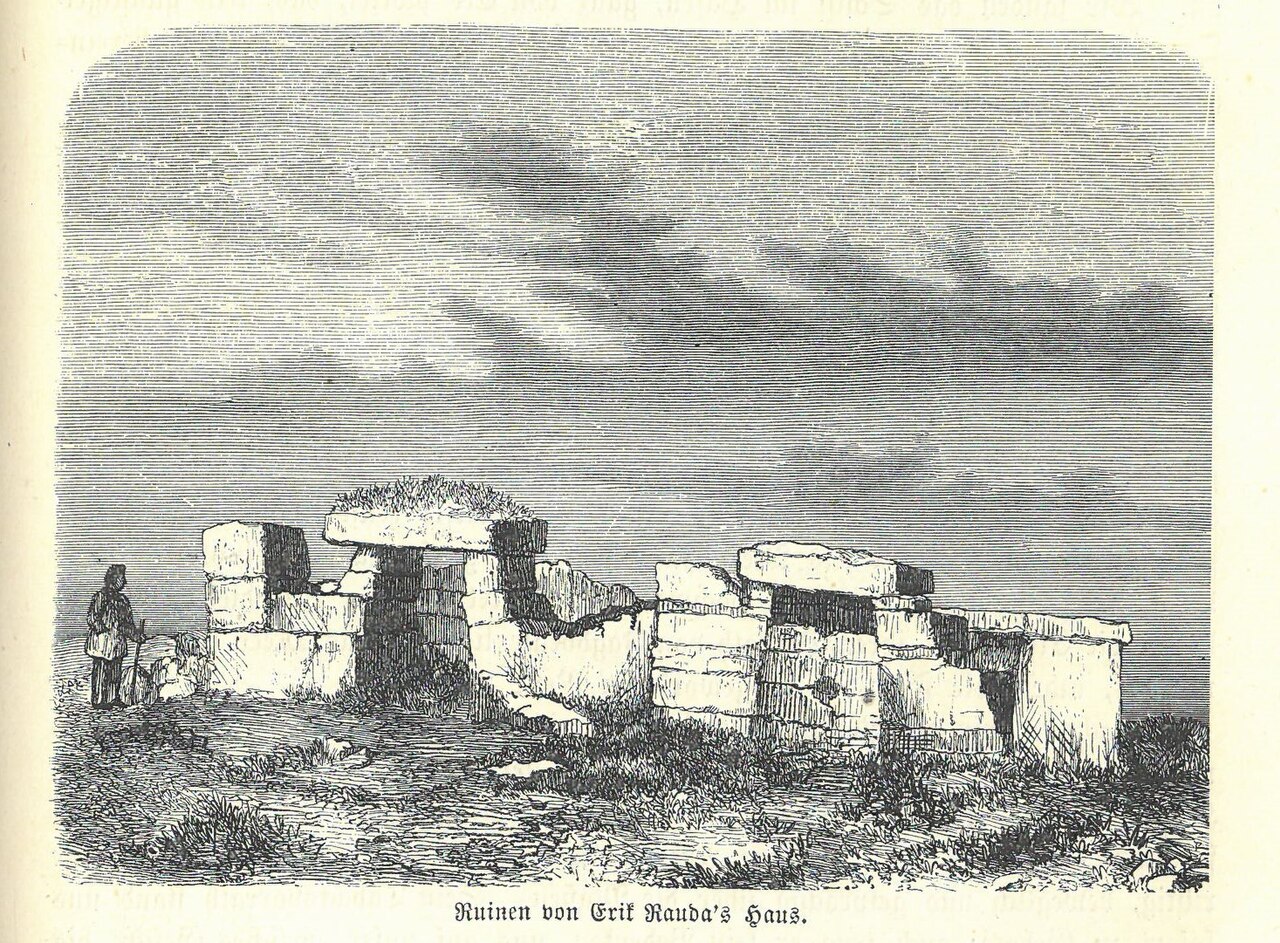
Ruinen vom Haus Eriks des Roten
Karl Koldewey · 19th century
A 19th-century engraving showing stone ruins in Greenland that European explorers identified as the house of Erik the Red.
Shows ruins that 19th-century explorers linked to Erik the Red's house in the settlement he founded.
About this source
What it is
This engraving appeared in the literature of the Koldewey expedition in the 19th century. It shows stone ruins on a grassy plain, labelled in the caption as the ruins of Erik the Red's house.
Why it matters
Centuries after Erik the Red founded the first Norse settlement in Greenland, European explorers searched the landscape for traces of the Norse colony and tried to connect surviving ruins to figures from the sagas. This image shows how 19th-century explorers imagined and labelled such sites, even though modern archaeology has since questioned many such identifications.
Look closer
- Why might explorers have wanted to identify these ruins specifically as Erik's house?
- What does the small human figure in the image add to the scene?
- How reliable is a 19th-century label attaching a saga name to ruins found centuries later?
This painting is part of the curated material that grounds the AI version of Eric the Red on Humy.ai — when students ask about related events, the AI can quote it and cite it.
More Eric the Red sources
Browse all 44 →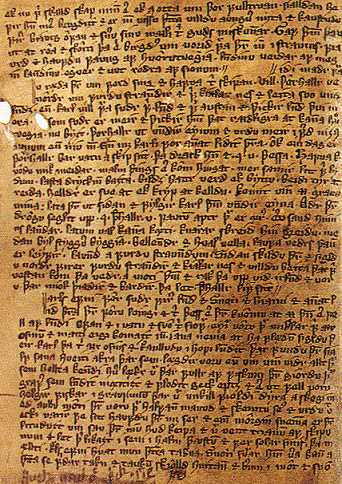 Book
Secondary source
Saga of Erik the Red
c. 1300 (manuscript); events set c. 1000
Secondary source
Saga of the Greenlanders
c. 1300 (manuscript); events set c. 1000
 Book
Secondary source
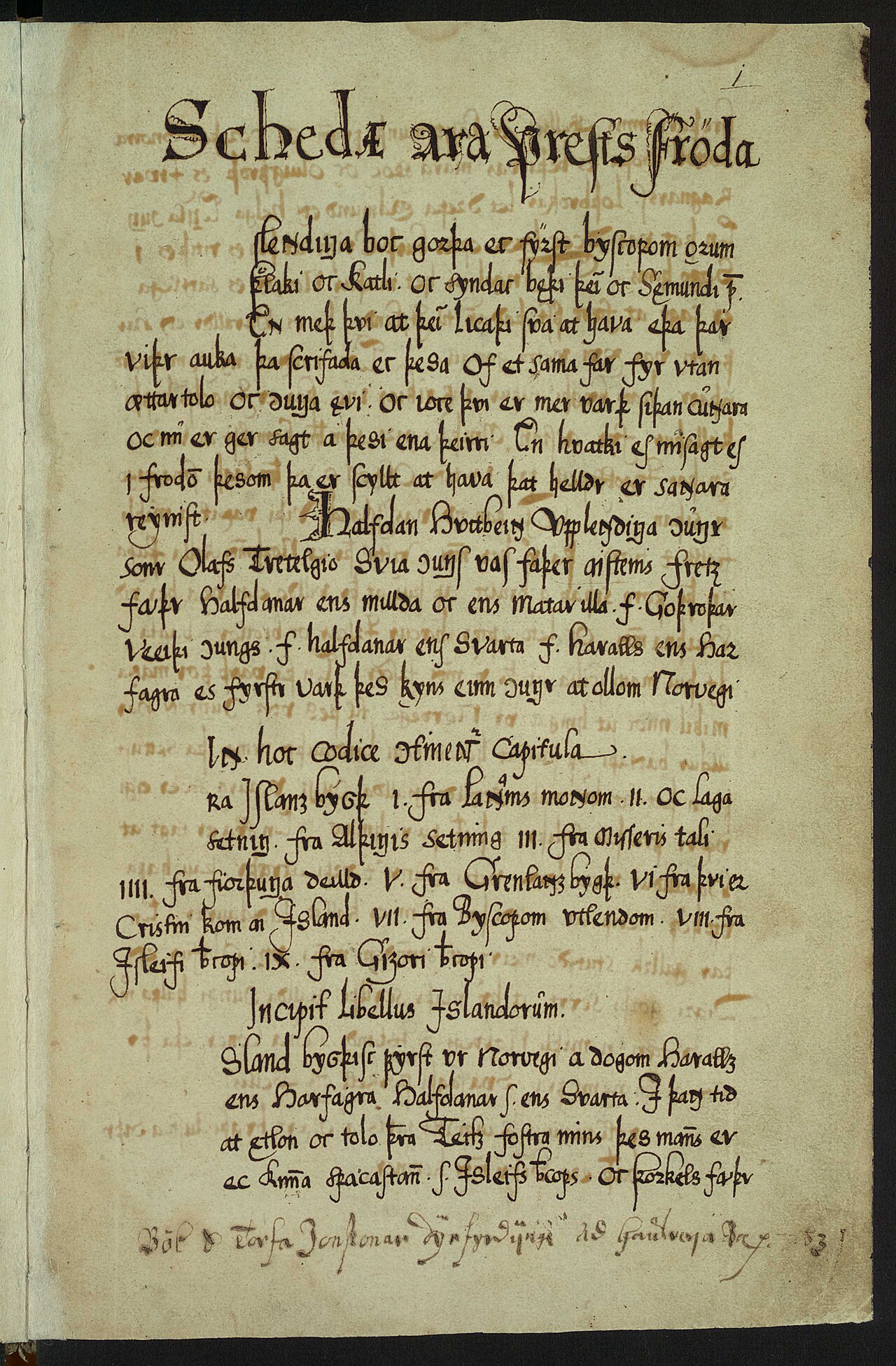
Íslendingabók
Ari Þorgilsson · c. 1122-1133
 Book
Secondary source
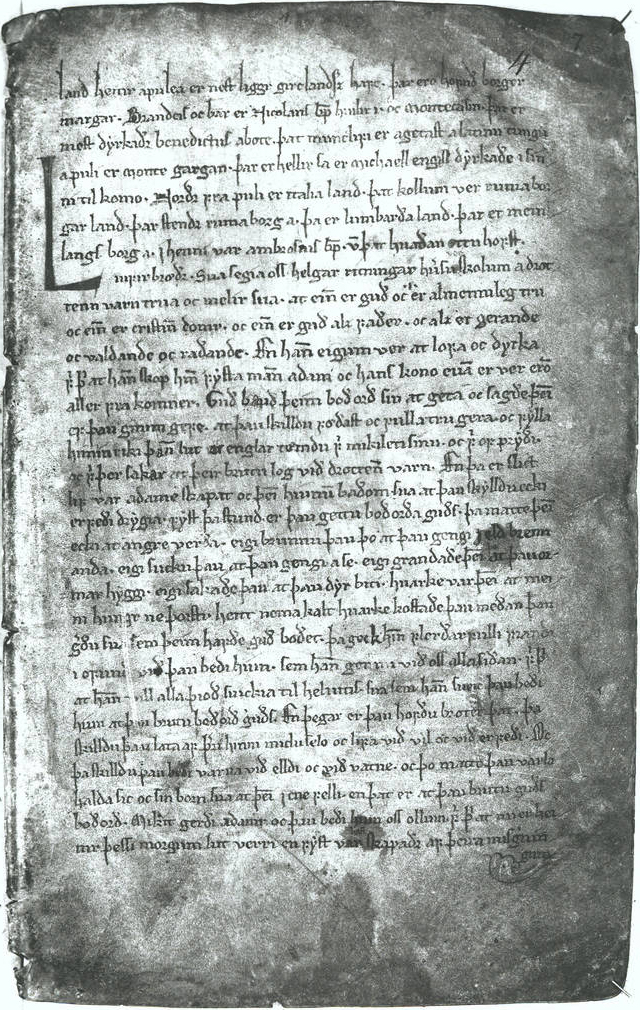
Hauksbók
Haukr Erlendsson · c. 1302–1310
Free account
Read every Eric the Red source
Sign up free →
Ready when you are
Start chatting with Eric the Red now.
20 messages free · No credit card · Available in 50+ languages.