


Secondary sourcePaintingpublished 1910; scene depicts February 1690
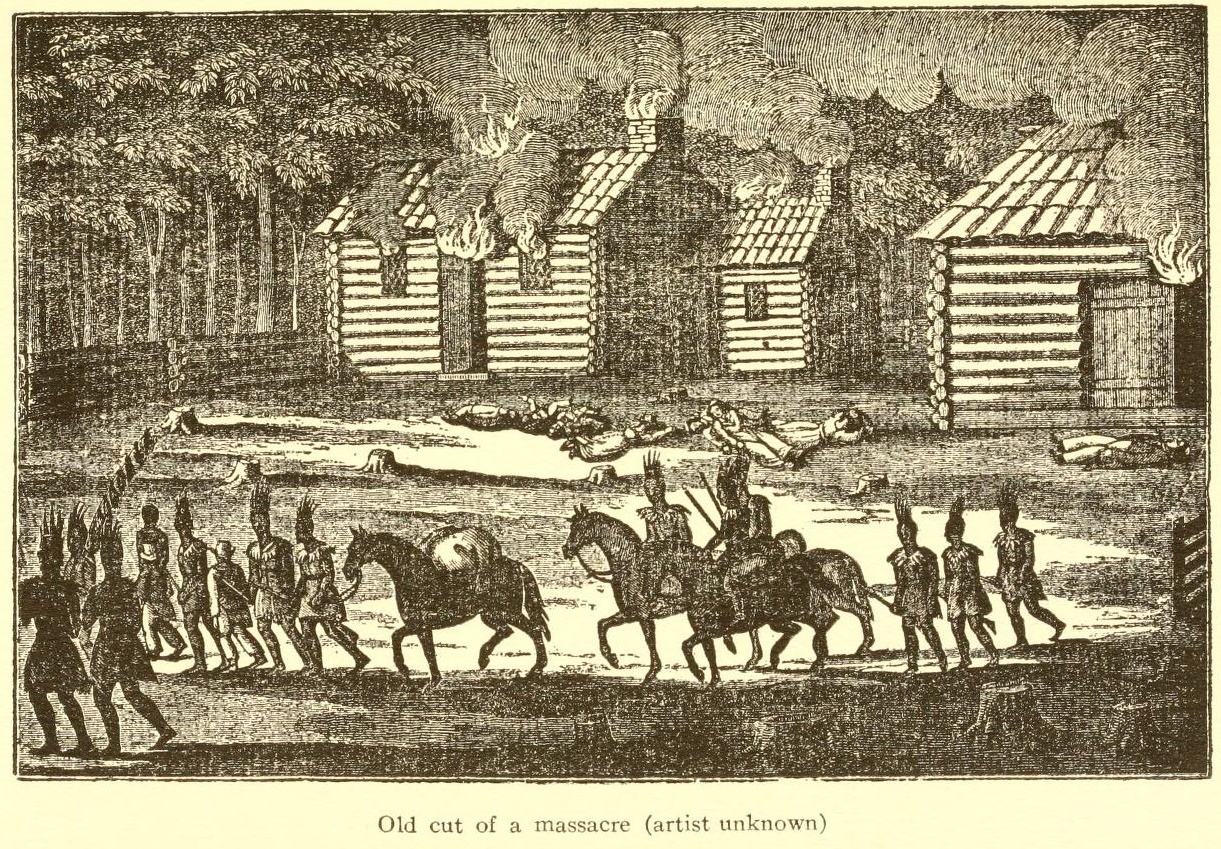
Saccage de Schenectady
Unknown artist · published 1910; scene depicts February 1690
An old print showing the 1690 Schenectady raid, a frontier attack in which Iberville served as second in command.
Iberville served as second in command of this raid, shown here in a later, stereotyped print.
About this source
What it is
This is a print, probably made in the 17th or 18th century, showing the attack on the village of Schenectady in the English colonies. It was published in 1910 in an American book remembering the massacre. The artist is unknown.
Why it matters
The raid was carried out by French and allied Indigenous forces, with Iberville as second in command. The print shows burning cabins, bodies on the ground, and figures leading away horses and captives. It reflects how later generations pictured frontier warfare, though the scene is drawn in summer even though the raid happened in winter.
Look closer
- What details tell you the artist was not present at the event?
- How are the Indigenous attackers drawn, and why might that matter?
- What does the print leave out about why the raid happened?
This painting is part of the curated material that grounds the AI version of Pierre Le Moyne d'Iberville on Humy.ai — when students ask about related events, the AI can quote it and cite it.
More Pierre Le Moyne d'Iberville sources
Meet the AI Pierre Le Moyne d'Iberville →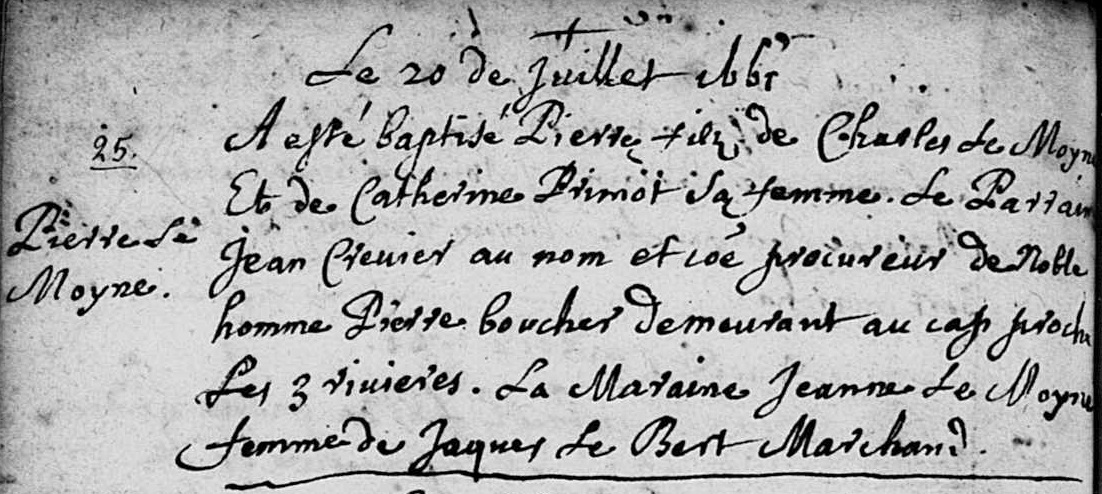 Document
Primary source
Baptismal Record of Pierre Le Moyne d'Iberville
Église catholique du Québec · 20 July 1661
 Book
Primary source
Histoire de l'Amérique septentrionale
Claude-Charles Le Roy de Bacqueville de La Potherie · 1722
 Diary entry
Primary source
Journal de l'expédition du chevalier de Troyes à la baie d'Hudson
Pierre de Troyes · 1686
 Artifact
Primary source
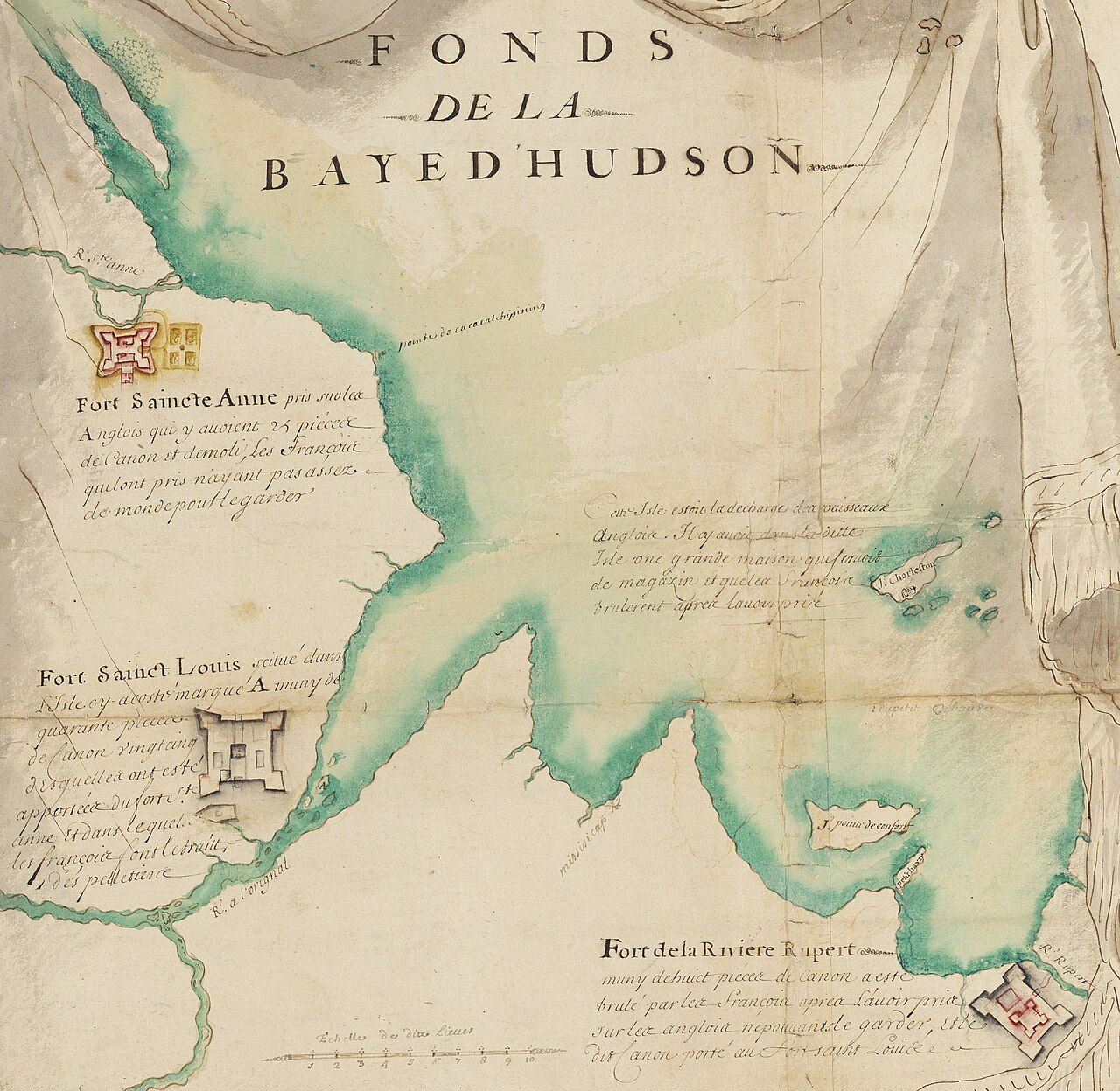
Fond de la baie d'Hudson avec les forts anglais pris par les Français en 1686
Pierre Allemand · 1686-1687
 Painting
Primary source
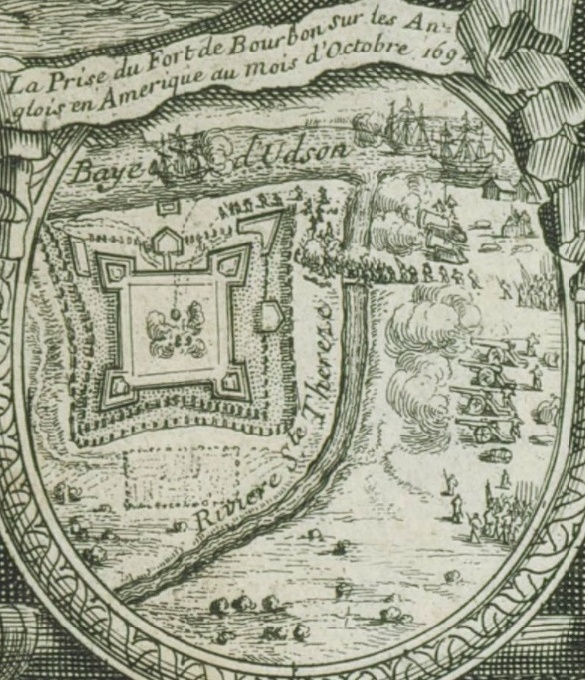
La prise du fort Bourbon dans la baie d'Hudson en 1694 par les Français
Nicolas Langlois · 1694
Ready when you are
Start chatting with Pierre Le Moyne d'Iberville now.
20 messages free · No credit card · Available in 50+ languages.