


Primary sourceDocument17 April 1410
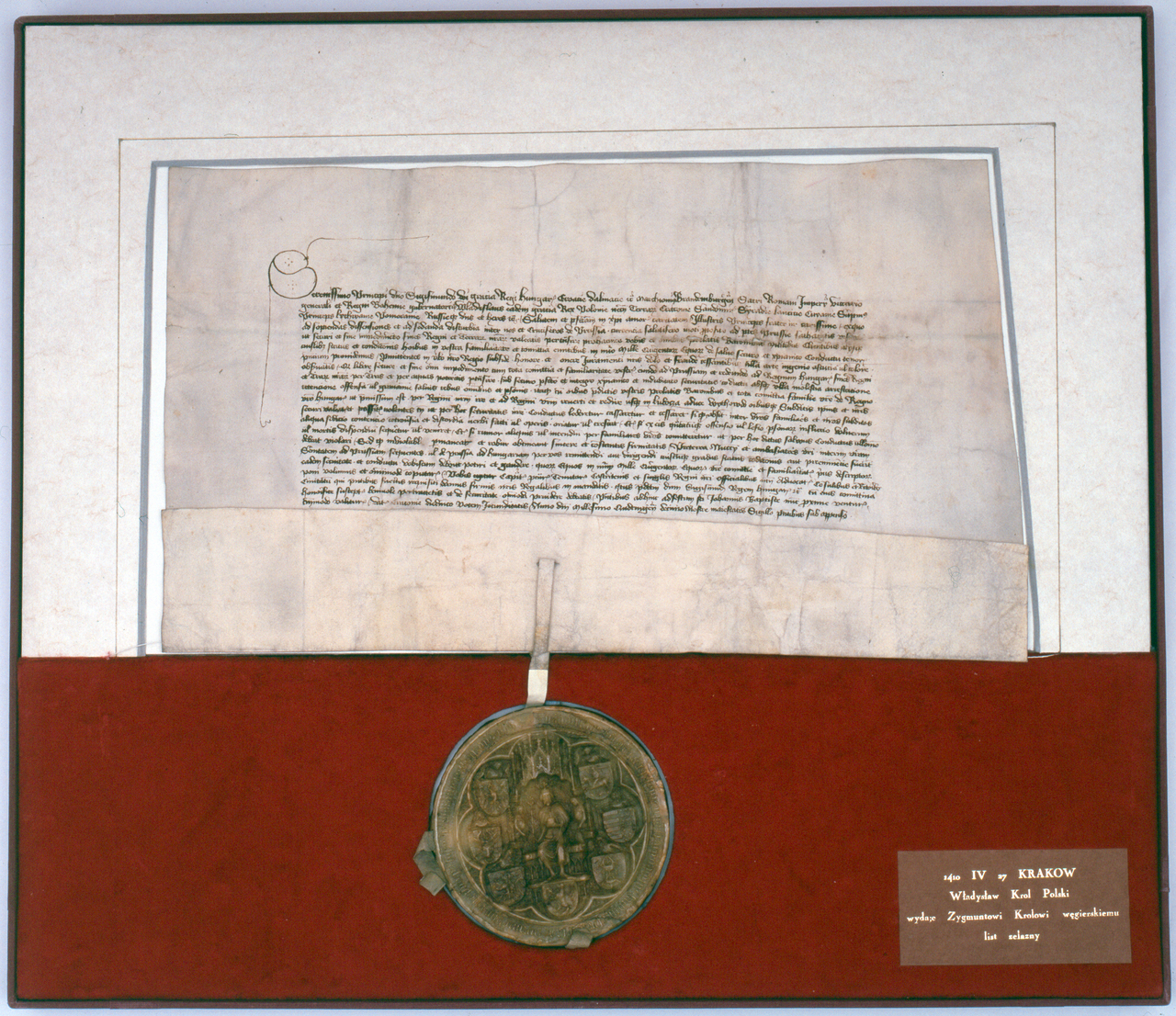
Safe conduct issued by Władysław II Jagiełło to Sigismund, 1410
Władysław II Jagiełło · 17 April 1410
A 1410 charter in which the Polish king Władysław II Jagiełło issued a safe-conduct to Sigismund. It is an original document from Sigismund's lifetime.
It is a 1410 safe conduct issued to Sigismund by the Polish king, an original document from his lifetime.
About this source
What it is
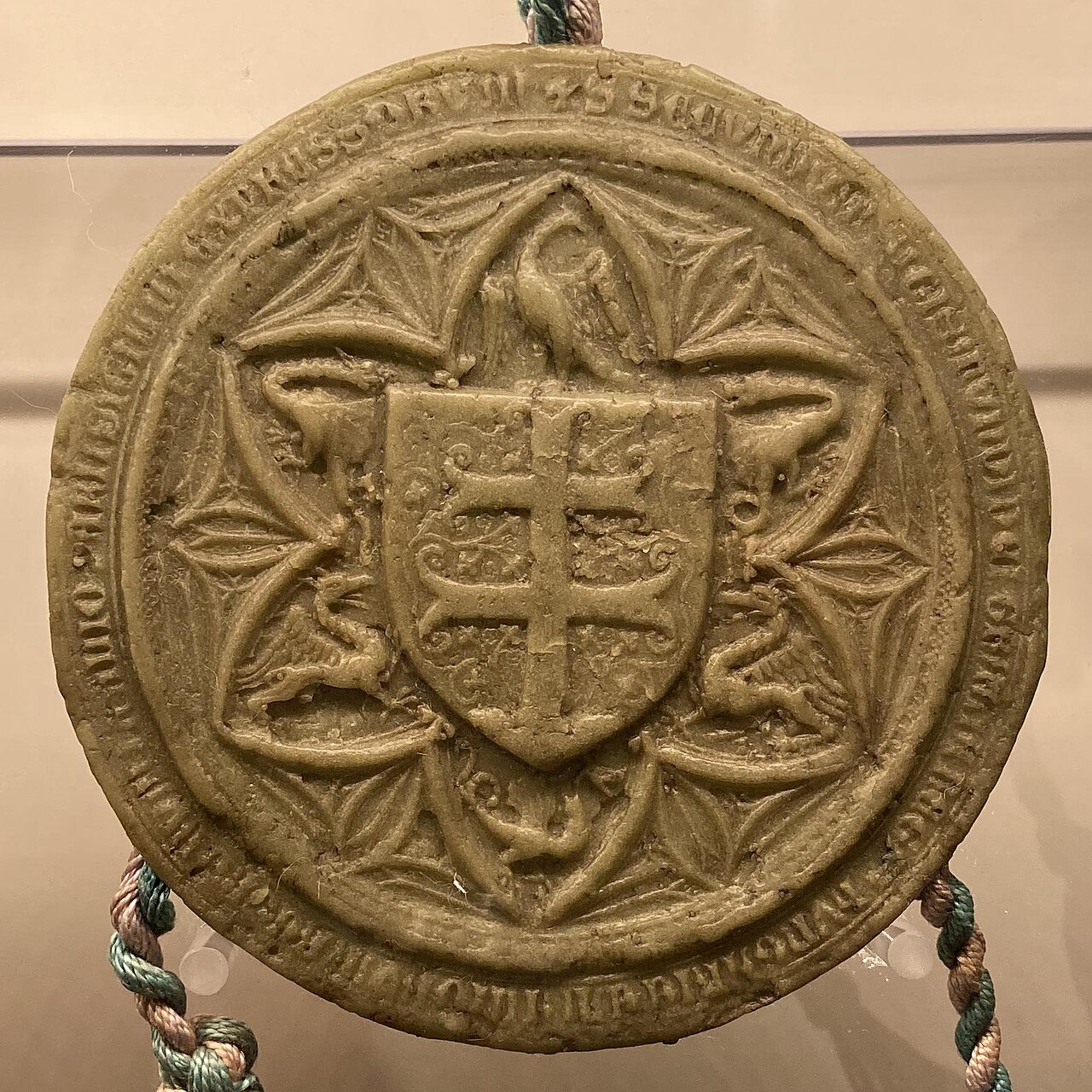
This is a framed medieval charter on parchment, written in Latin in brown ink. It hangs from a round wax seal bearing an embossed figure and coats of arms, set on a red mat. A caption plate reads 1410 IV 17 Kraków and identifies the issuer as Władysław, King of Poland. The Commons title describes it as a safe conduct issued in 1410 by Władysław Jagiełło to Zygmunt, King of Hungary.
Why it matters
A safe conduct was a written promise that a person could travel without being attacked or arrested. Documents like this show how rulers across Central Europe dealt with one another during a period of rivalry and diplomacy, and this one links Sigismund to the Polish king who issued it.
Look closer
- What does the wax seal show, and why would a ruler attach one to a document?
- Why would Sigismund need a safe conduct from another king?
- What does the document leave out about the conflicts behind it?
This document is part of the curated material that grounds the AI version of Sigismund, Holy Roman Emperor on Humy.ai — when students ask about related events, the AI can quote it and cite it.
More Sigismund, Holy Roman Emperor sources
Browse all 95 →Primary source
Safe Conduct to John Huss
Sigismund
 Painting
Primary source
Portrait of Sigismund of Luxemburg
Pisanello (attributed) · c. 1430
 Painting
Primary source
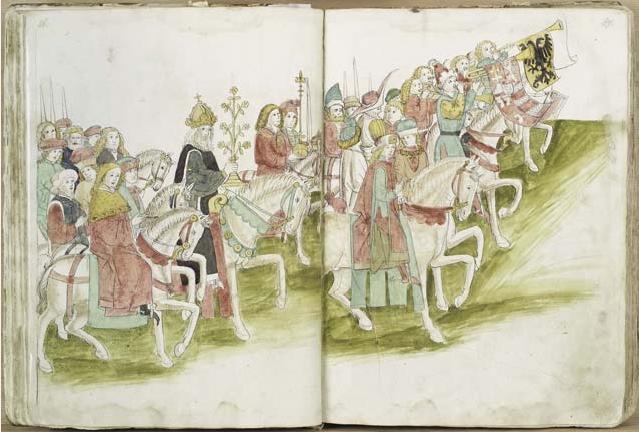
Sigismund's Entry into the Council of Constance
Ulrich Richental
 Document
Secondary source
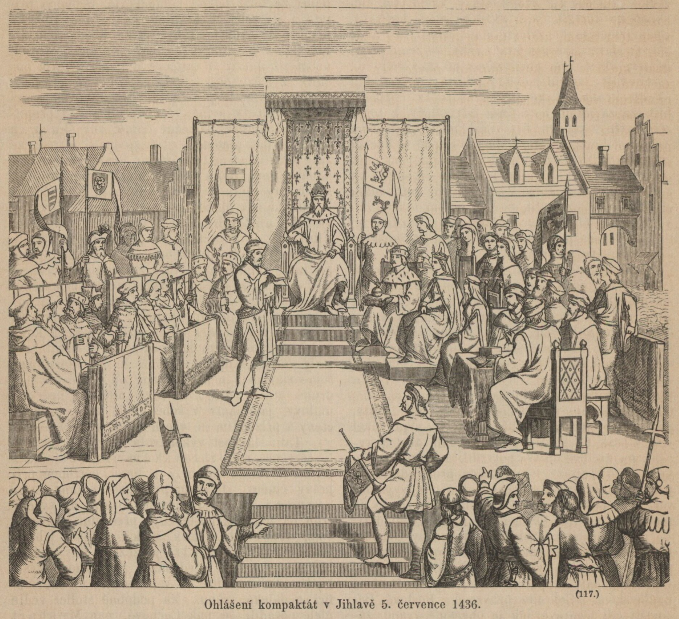
Compacts of Basel
1436
Free account
Read every Sigismund, Holy Roman Emperor source
Sign up free →
Ready when you are
Start chatting with Sigismund, Holy Roman Emperor now.
20 messages free · No credit card · Available in 50+ languages.