


Secondary sourceSculpture
Sagornas Död Sculpture at Näs
Berit Lindfeldt
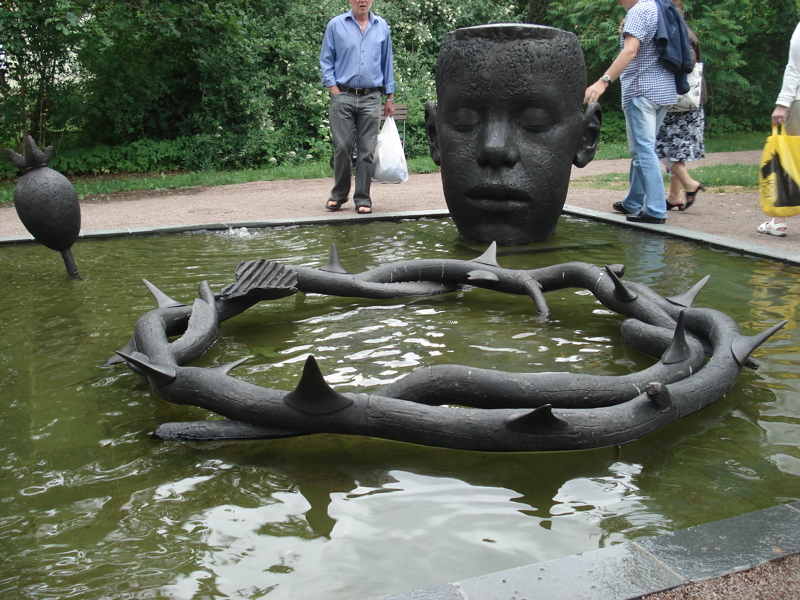
A bronze garden sculpture by Berit Lindfeldt, nicknamed 'Sagornas Död', in the garden of Astrid Lindgren's childhood farm Näs.
A symbolic sculpture placed at Lindgren's childhood farm Näs, reflecting on her legacy as a storyteller.
About this source
What it is
This photograph shows a bronze sculpture by the artist Berit Lindfeldt, standing in a shallow pond in the garden of Näs, the farm where Astrid Lindgren grew up. The work shows a large head with closed eyes above a twisted, thorny coil of bronze, and is popularly nicknamed 'Sagornas Död' ('The Death of Fairy Tales').
Why it matters
This is a later artwork, not something from Lindgren's own childhood, but it was placed at her childhood home to reflect on her life and stories. It shows how artists and institutions have responded creatively to her legacy, using symbolic imagery rather than a straightforward portrait or monument.
Look closer
- Why might an artist choose closed eyes and a thorny coil to represent a storyteller's legacy?
- What feeling does the sculpture's nickname suggest, and do you think it fits the image you see?
- How is a symbolic sculpture like this different from a traditional statue of a person?
This sculpture is part of the curated material that grounds the AI version of Astrid Lindgren on Humy.ai — when students ask about related events, the AI can quote it and cite it.
More Astrid Lindgren sources
Browse all 44 →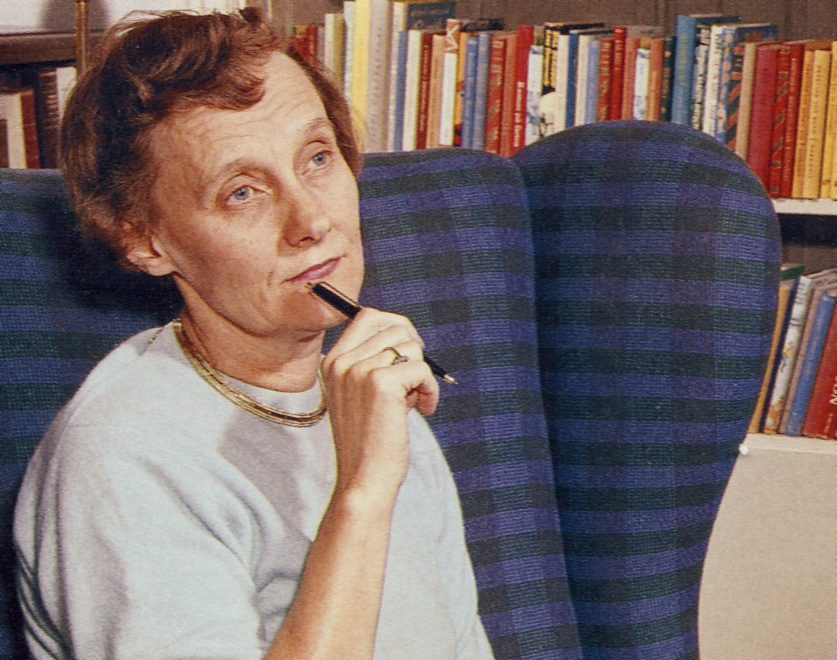 Photograph
Primary source
Astrid Lindgren, c. 1960
Unknown author · c. 1960
 Photograph
Primary source
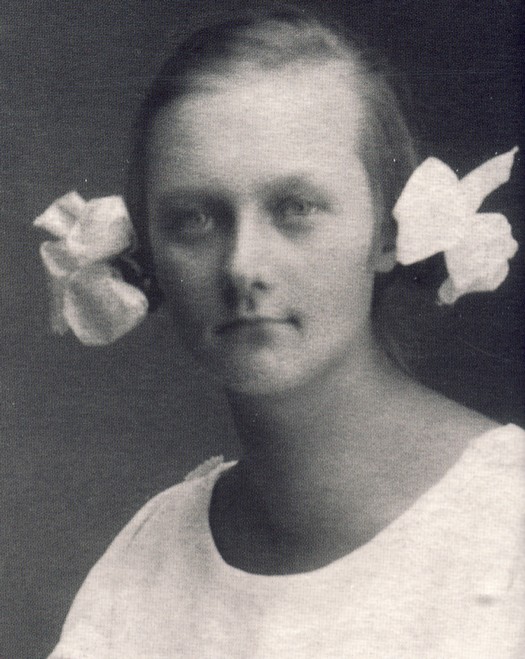
Astrid Lindgren's Confirmation Portrait, 1923
Chr. Widén · 1923
 Photograph
Primary source
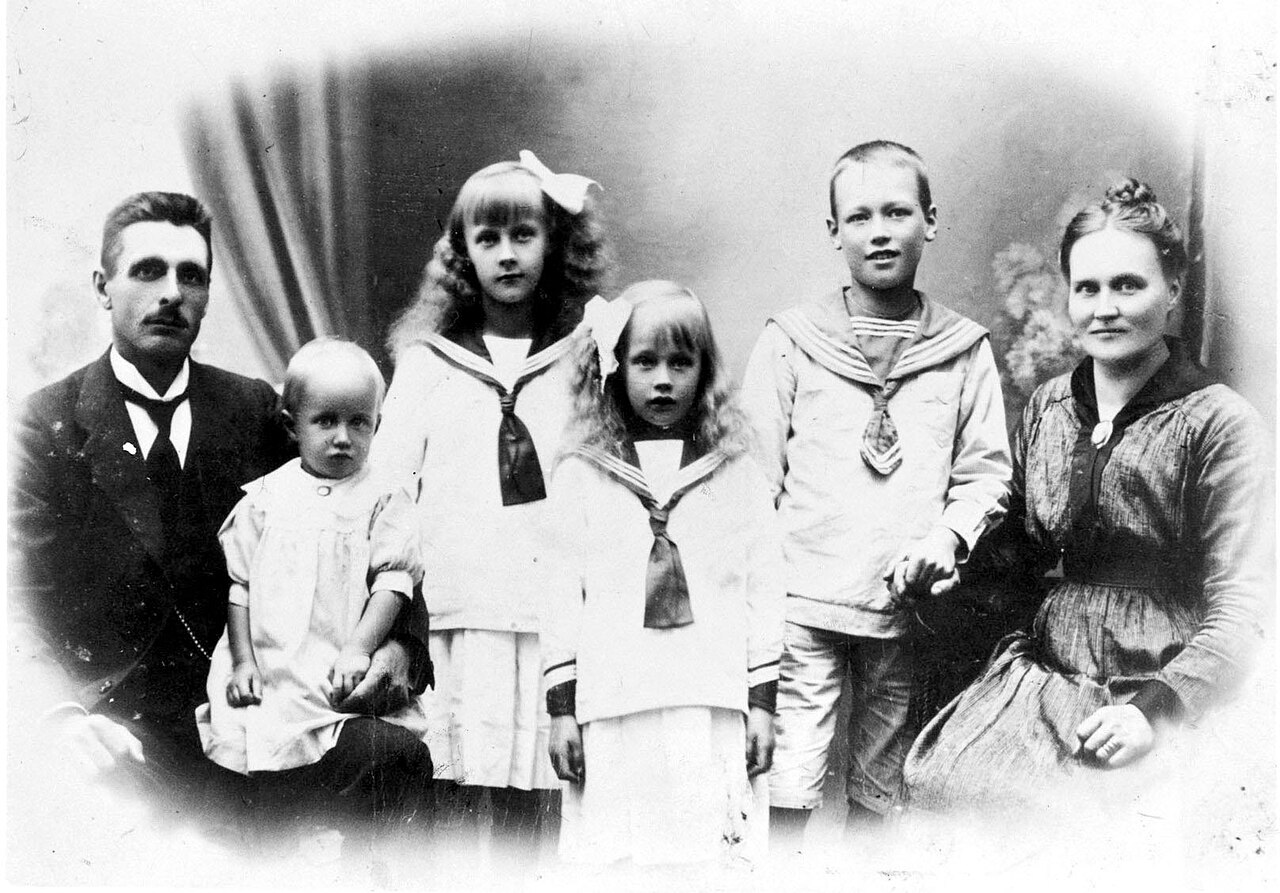
Childhood Family Photograph of Astrid Lindgren
hd.se
 Photograph
Primary source
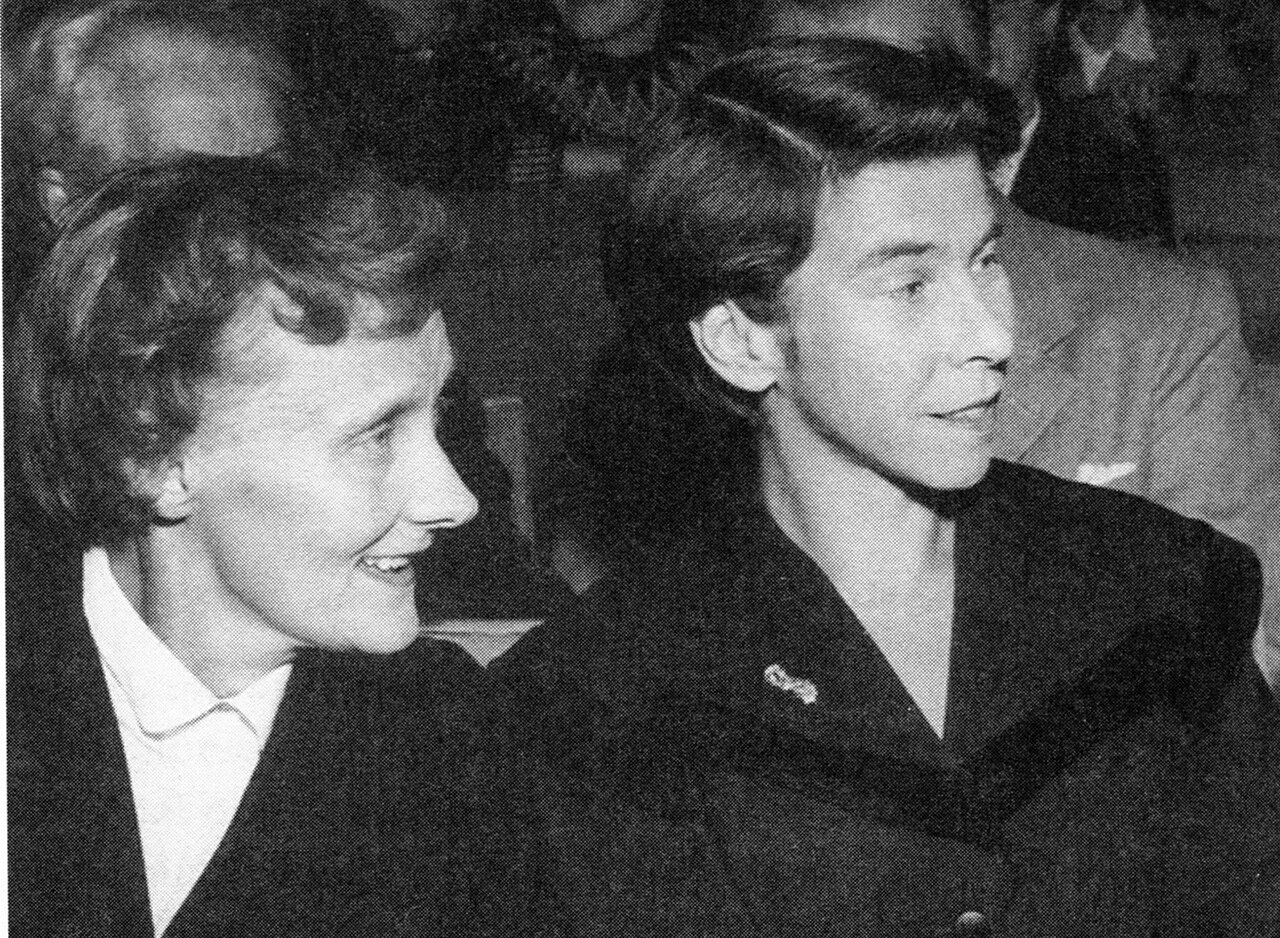
Astrid Lindgren and Tove Jansson in Stockholm
Karl Heinz Hernried · 1958
Free account
Read every Astrid Lindgren source
Sign up free →
Ready when you are
Start chatting with Astrid Lindgren now.
20 messages free · No credit card · Available in 50+ languages.