


Secondary sourcePaintingc. 1290
Saint Francis
Cimabue (attributed) · c. 1290
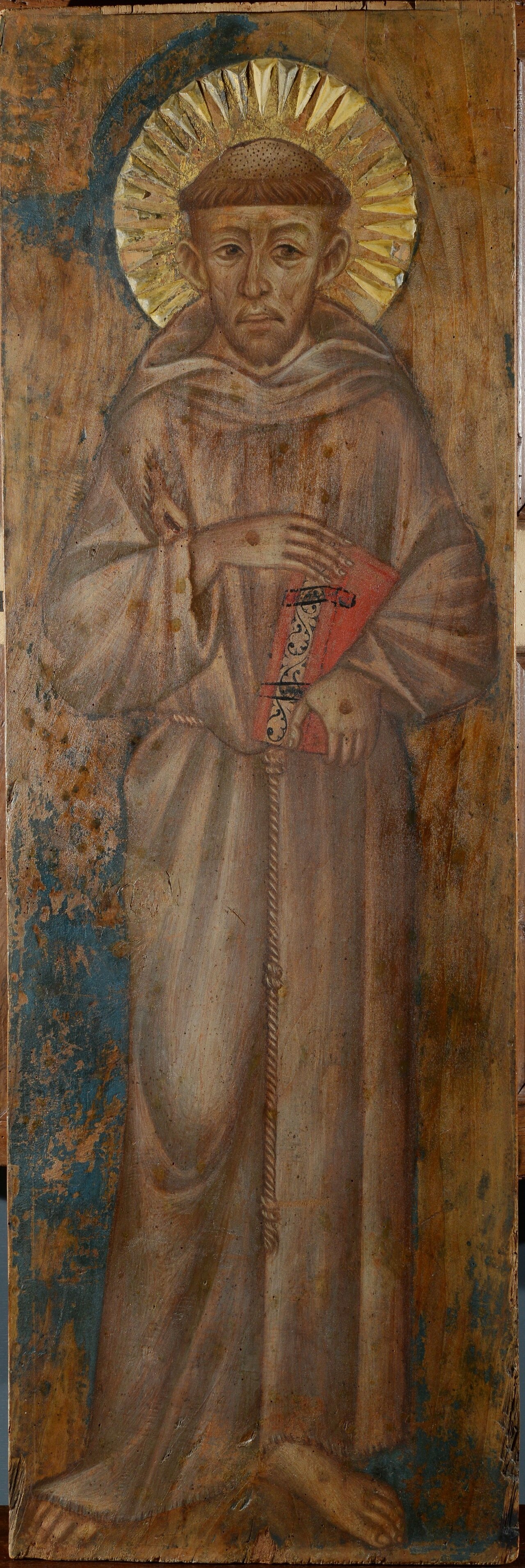
A panel painting attributed to Cimabue, traditionally said to be painted on the board on which Francis died, held at the Porziuncola near Assisi.
A near-contemporary image of Francis, traditionally linked to the very board on which he died.
About this source
What it is
This tall wooden panel painting of Saint Francis is attributed to the Italian artist Cimabue, dated around 1290. It shows Francis as a bearded friar in a brown habit with a golden halo, holding a red book. It is kept at the Museo della Porziuncola, a site closely connected to Francis's life and death.
Why it matters
According to tradition, the panel was painted on the very board on which Francis died, linking the image directly to the place and moment of his death. Made within decades of his death by one of the most important painters of the era, it reflects how closely Francis's memory was tied to specific holy sites and relics by his early followers.
Look closer
- Why might it matter to believers that this image was painted on the board where Francis died?
- What symbols in the painting mark Francis as holy?
- How does the flaking paint affect what we can still see of the original image?
This painting is part of the curated material that grounds the AI version of Saint Francis on Humy.ai — when students ask about related events, the AI can quote it and cite it.
More Saint Francis sources
Meet the AI Saint Francis →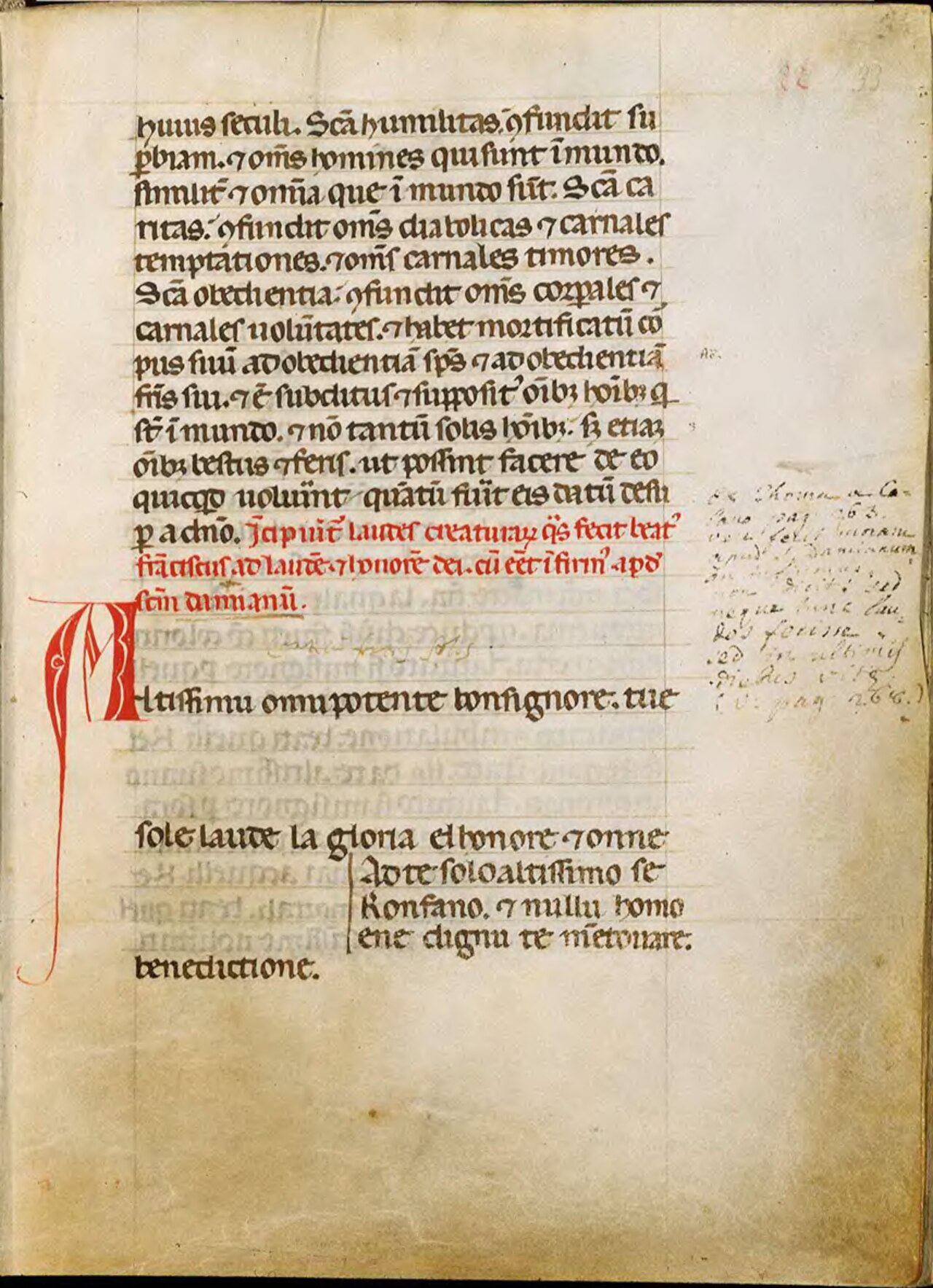 Book
Primary source
Canticle of the Sun
Francis of Assisi · 1226
 Document
Primary source
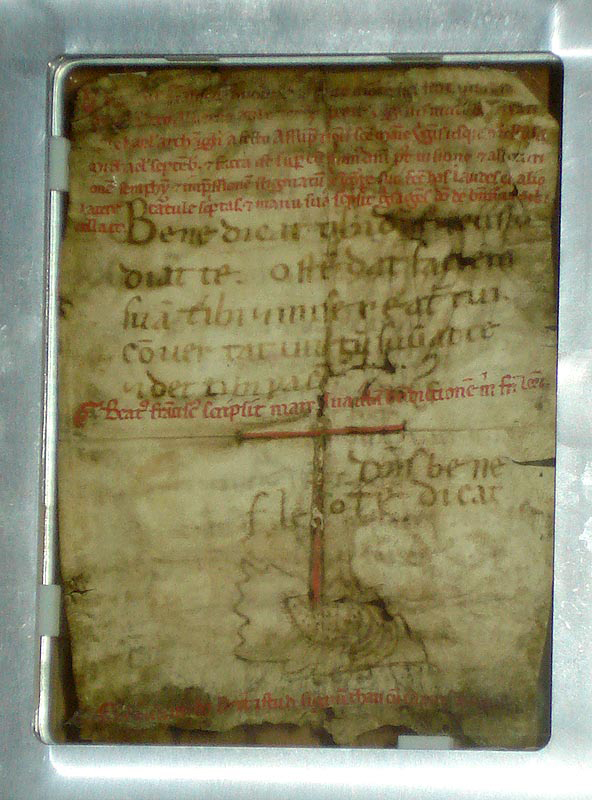
Chartula fratri Leonis
Francis of Assisi · 1224
Secondary source
First Life of Saint Francis
Thomas of Celano · 1230
 Painting
Secondary source
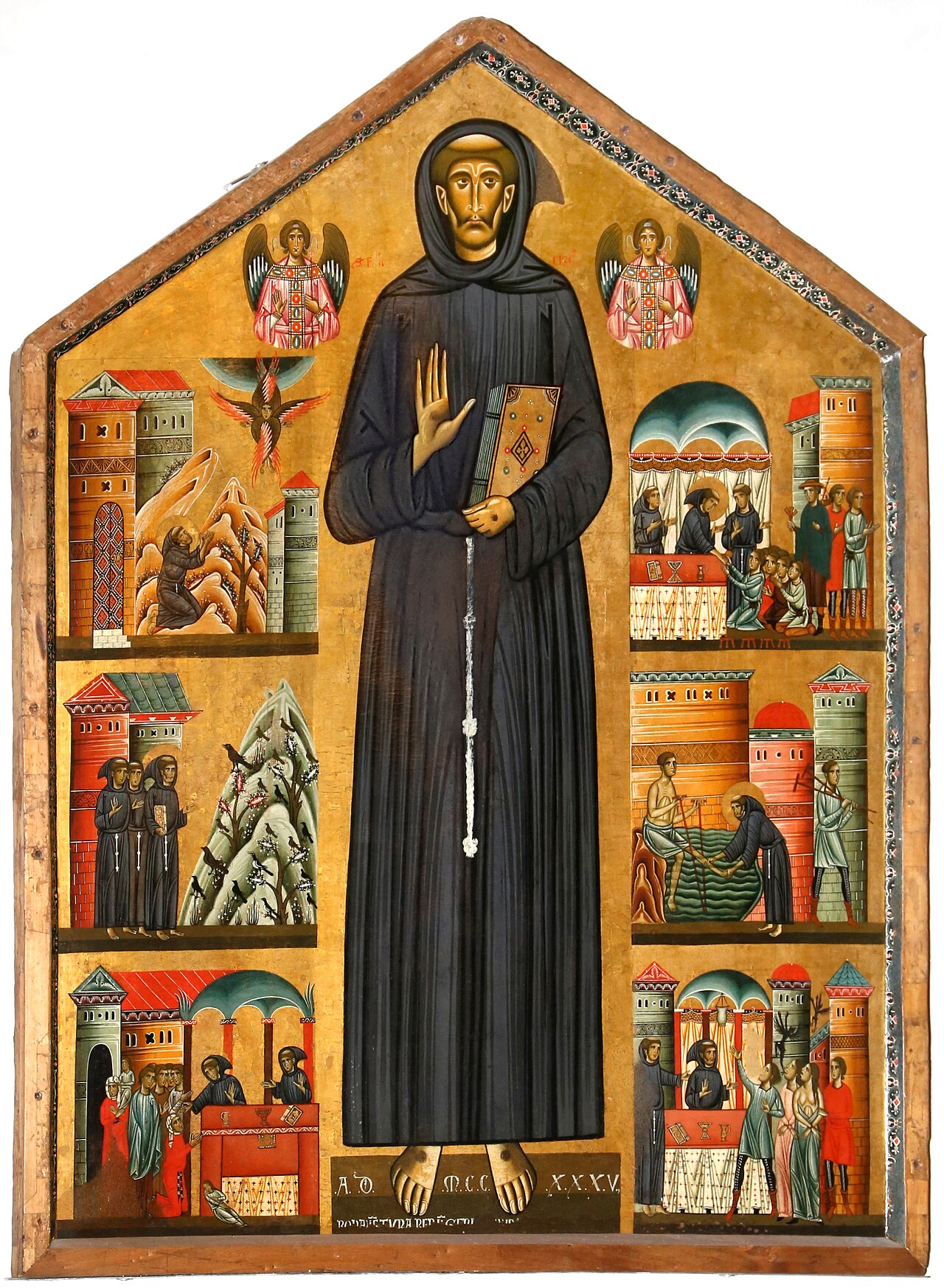
Saint Francis of Assisi and Scenes of His Life
Bonaventura Berlinghieri · 1235
 Artifact
Secondary source
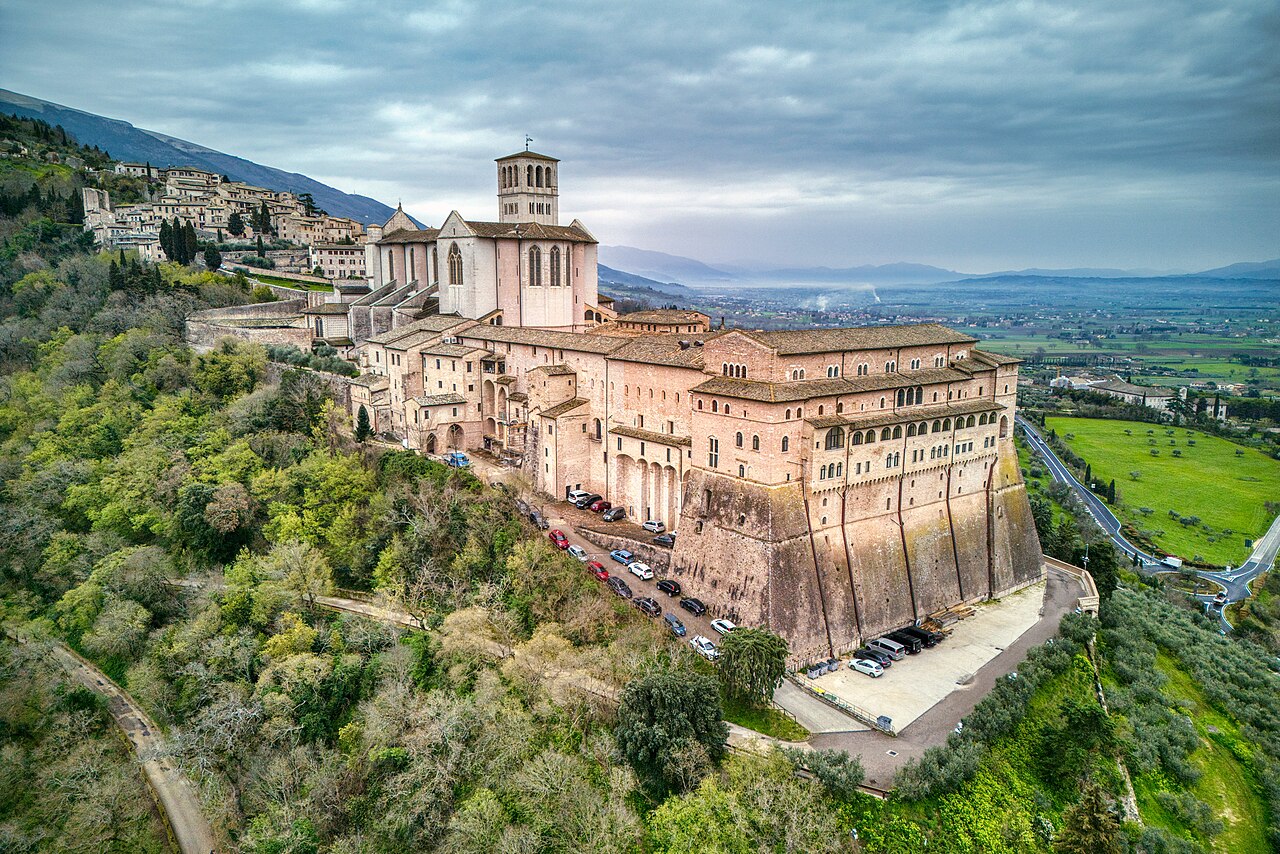
Basilica of San Francesco d'Assisi
begun 1228
Ready when you are
Start chatting with Saint Francis now.
20 messages free · No credit card · Available in 50+ languages.