


Secondary sourcePainting1594
Saint Francis of Assisi in Ecstasy
Caravaggio · 1594
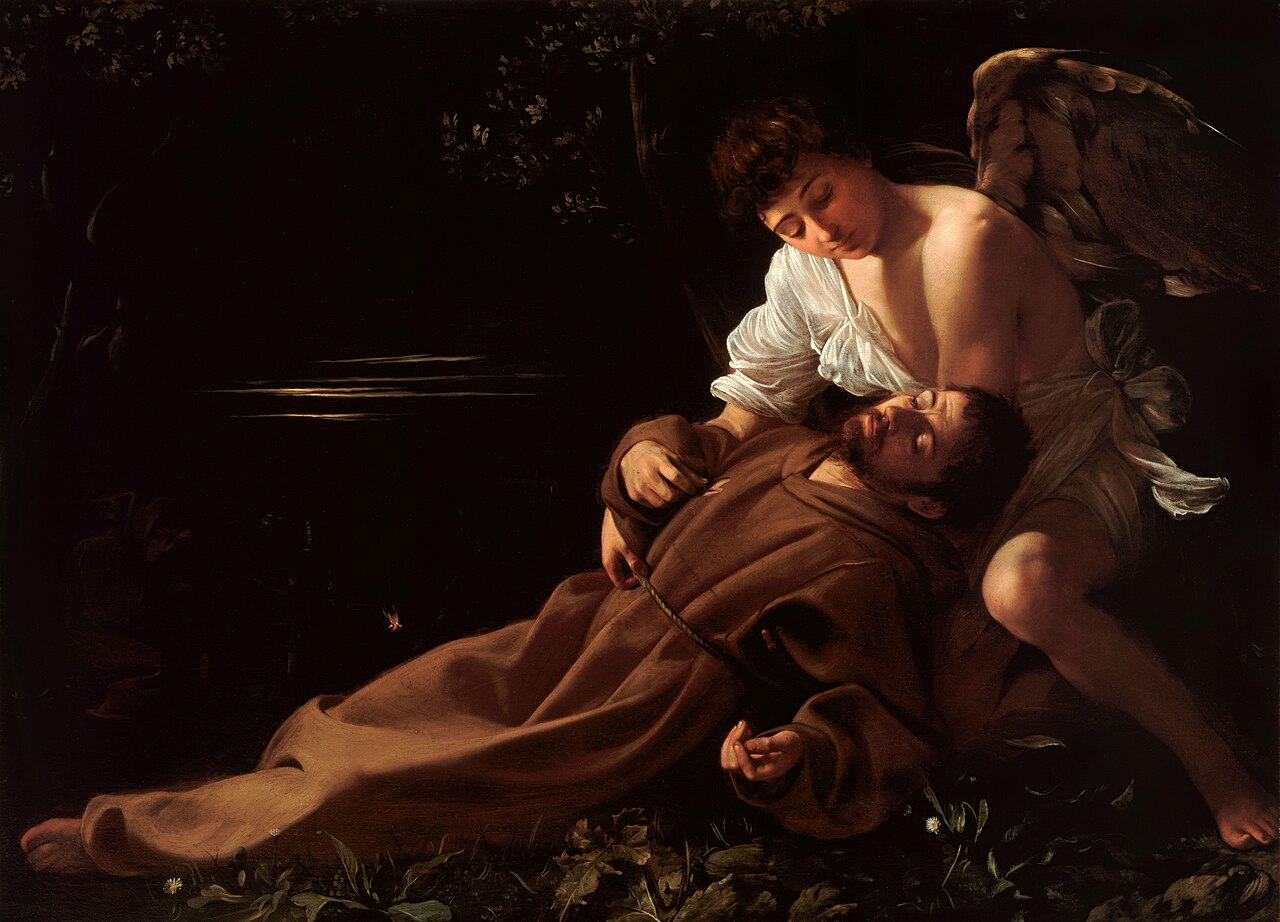
A painting by Caravaggio showing Francis of Assisi swooning as he receives the stigmata, supported by an angel.
This painting depicts Francis receiving the stigmata, one of the central events of his life.
About this source
What it is
This oil painting was made by the Italian Baroque artist Caravaggio around 1595, early in his career while he lived in the household of Cardinal Francesco Maria del Monte. It shows Francis of Assisi receiving the stigmata, the wounds of Christ's crucifixion. The painting is now held at the Wadsworth Atheneum Museum of Art.
Why it matters
The story of Francis receiving the stigmata, told by his companion Brother Leo, describes a dramatic, fiery vision. Caravaggio instead painted a quiet, intimate moment: a gentle angel cradling the unconscious saint, with almost no sign of blood or wounds. The painting is thought to use the Cardinal's own features for Francis's face, showing how patrons could shape religious art to reflect themselves.
Look closer
- What details does Caravaggio leave out of Brother Leo's dramatic account, and why might he have done that?
- How does the lighting and composition make the scene feel calm rather than violent?
- Why might a cardinal have wanted this subject painted in such a gentle, personal way?
This painting is part of the curated material that grounds the AI version of Saint Francis on Humy.ai — when students ask about related events, the AI can quote it and cite it.
More Saint Francis sources
Meet the AI Saint Francis →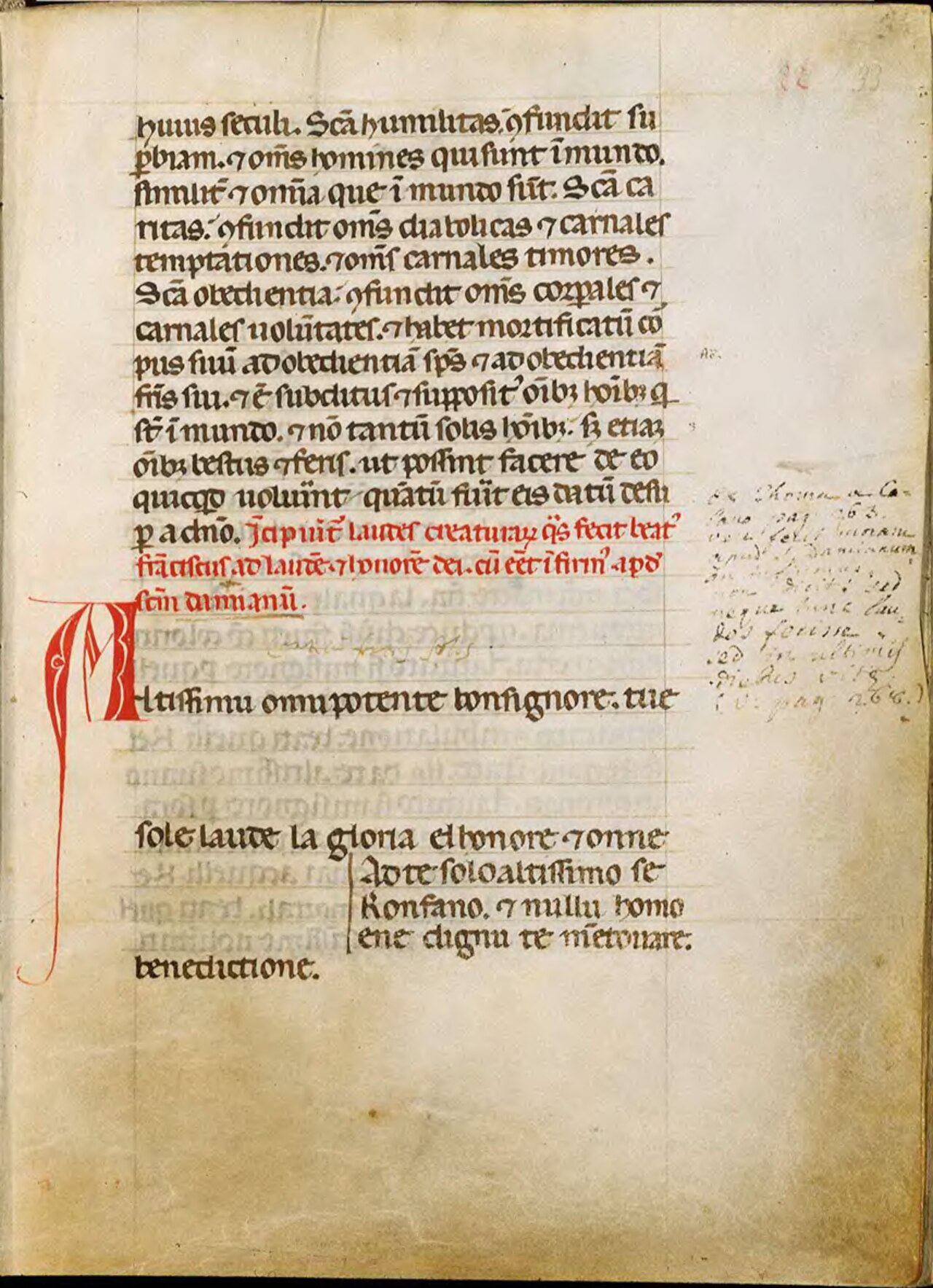 Book
Primary source
Canticle of the Sun
Francis of Assisi · 1226
 Document
Primary source
Chartula fratri Leonis
Francis of Assisi · 1224
Secondary source
First Life of Saint Francis
Thomas of Celano · 1230
 Painting
Secondary source
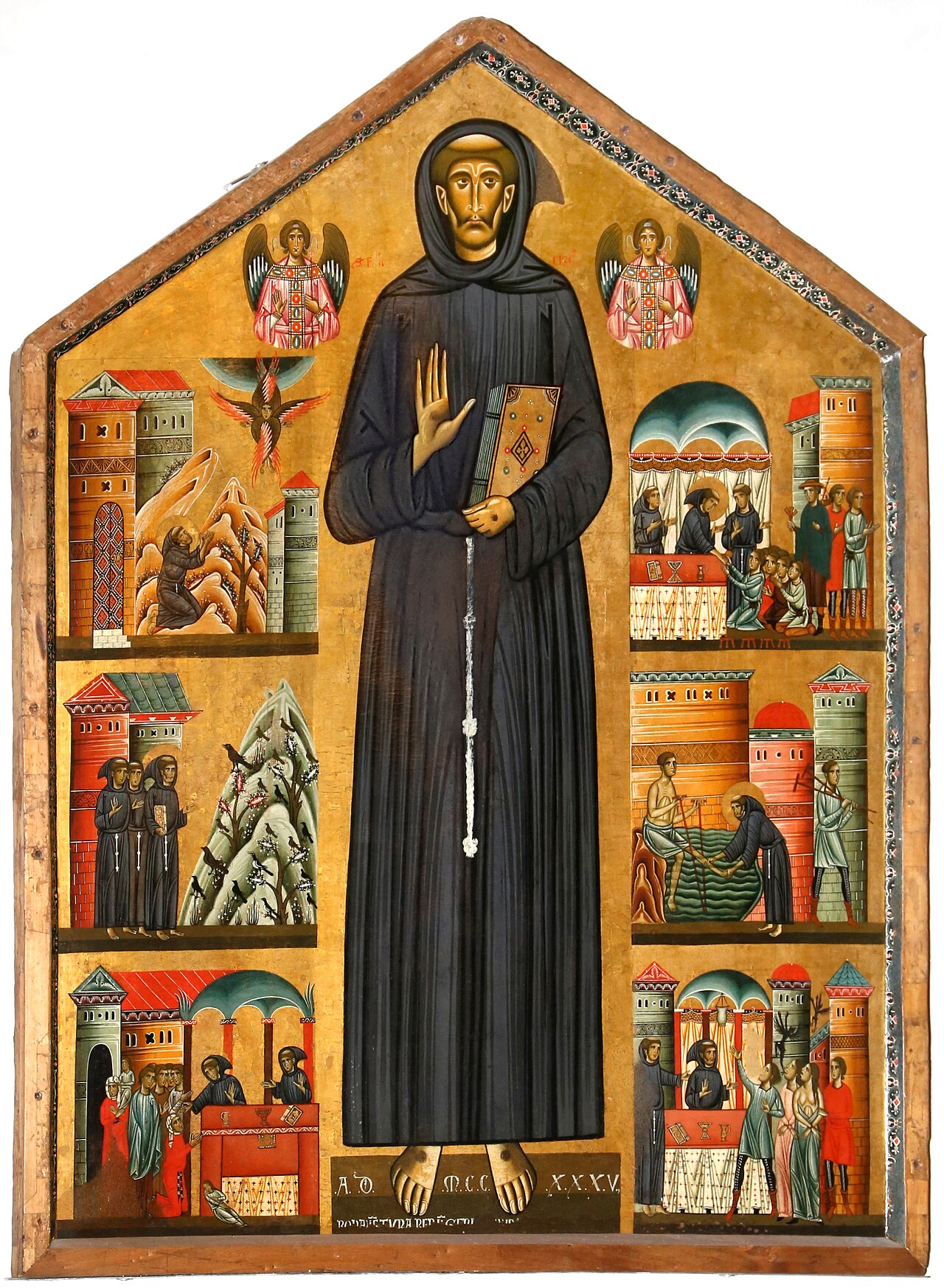
Saint Francis of Assisi and Scenes of His Life
Bonaventura Berlinghieri · 1235
 Artifact
Secondary source
Basilica of San Francesco d'Assisi
begun 1228
Ready when you are
Start chatting with Saint Francis now.
20 messages free · No credit card · Available in 50+ languages.