


Secondary sourcePaintingca. 1633–59
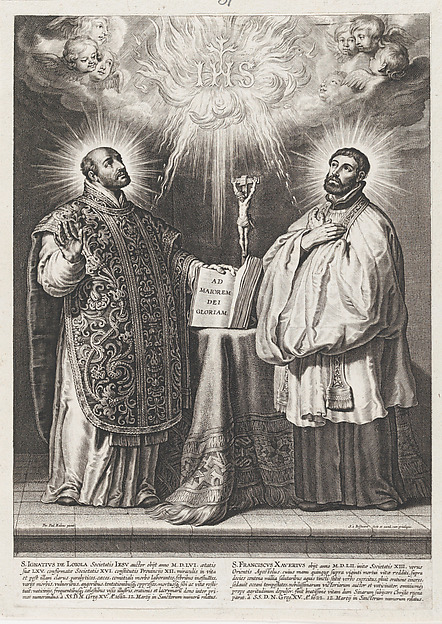
Saint Francis Xavier and Saint Ignatius of Loyola
Schelte Adams à Bolswert · ca. 1633–59
An engraving by Schelte Adams à Bolswert showing the two founding Jesuit saints together under an IHS monogram. It was made after Ignatius's death.
Presents Ignatius as one of two founding Jesuit saints, a later image made after his death in 1556 to honor his memory.
About this source
What it is
This is an engraving by Schelte Adams à Bolswert, dated ca. 1633 to 1659 and held by The Metropolitan Museum of Art. The Met record identifies it as a second state of two prints. The image shows two saints in clerical vestments under a radiant IHS monogram, with cherubs. The figure at left has a tonsure and holds a book labeled AD MAIOREM DEI GLORIAM, topped by a small crucifix. The figure at right has a full beard and clasps his hand to his chest. Latin inscriptions fill the lower margin.
Why it matters
The curator note says the engraving shows the two founding Jesuit saints together and was made after Ignatius died in 1556. Its motto on the book, meaning 'for the greater glory of God', is the kind of phrase linked with the Society of Jesus. The print shows how the early Jesuits were presented as a pair of saints, and how their reputations were built through images made long after their deaths.
Look closer
- Which details, such as the book, the crucifix and the cherubs, tell you what the artist wanted viewers to think about the two saints?
- How does the print use the Latin text in the lower margin to explain who the figures are?
- Why might a print made decades after Ignatius's death present him differently from how his own letters or writings describe him?
This painting is part of the curated material that grounds the AI version of Ignatius of Loyola on Humy.ai — when students ask about related events, the AI can quote it and cite it.
More Ignatius of Loyola sources
Browse all 87 →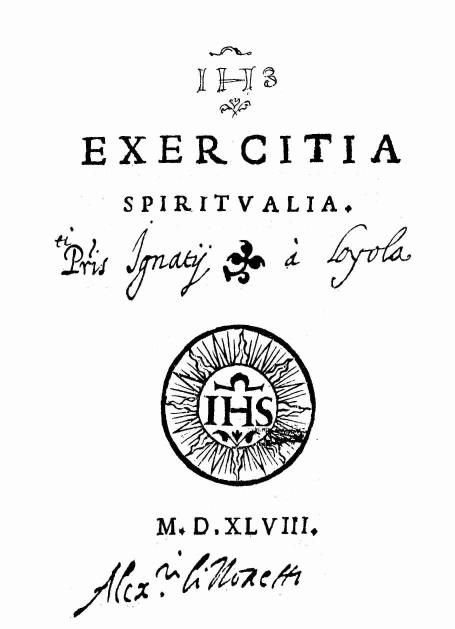 Book
Primary source
Spiritual Exercises
Ignatius of Loyola · 1548 (first printed edition)
 Document
Primary source
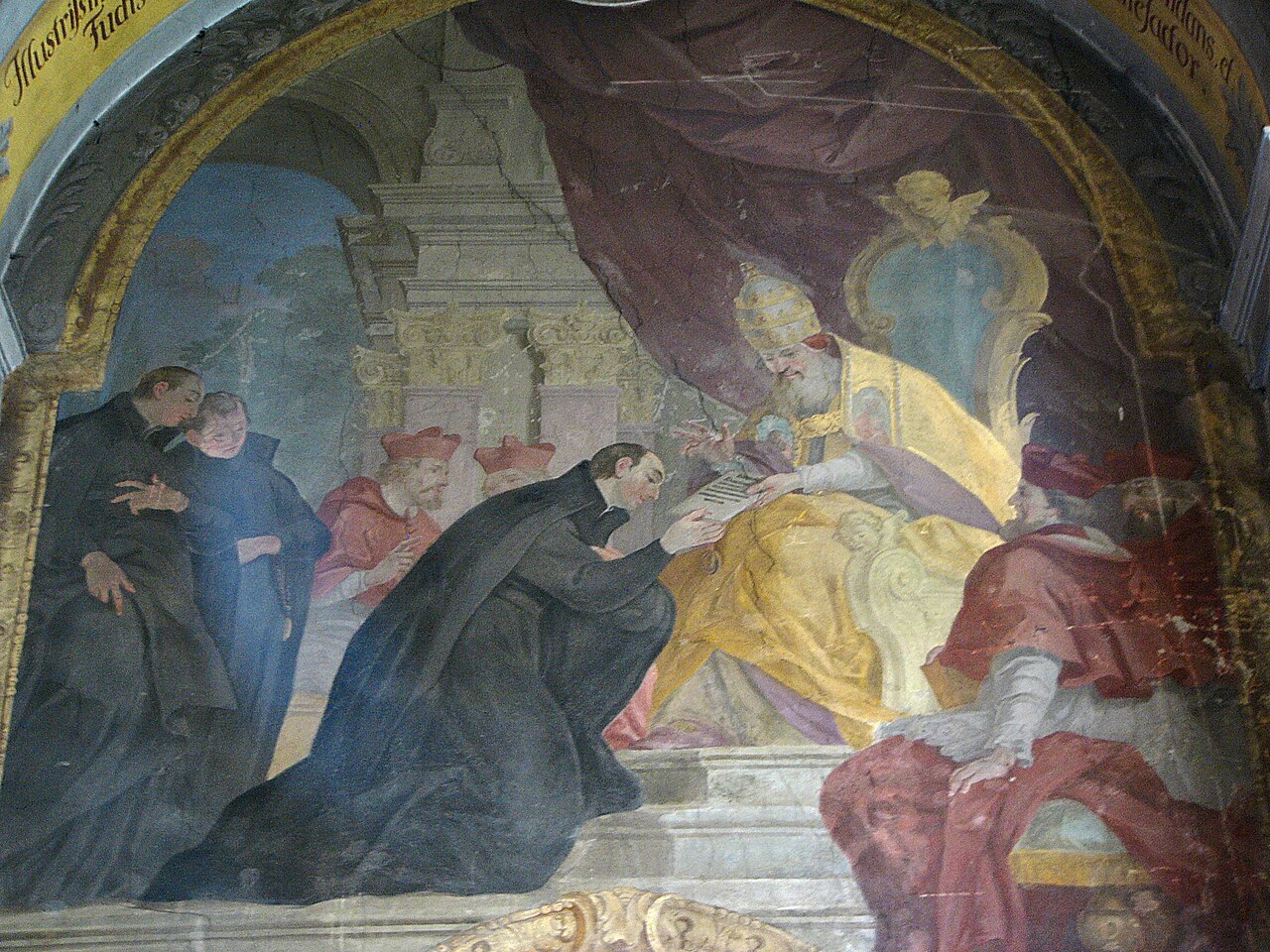
Regimini militantis Ecclesiae
Paul III · 27 September 1540
 Painting
Primary source
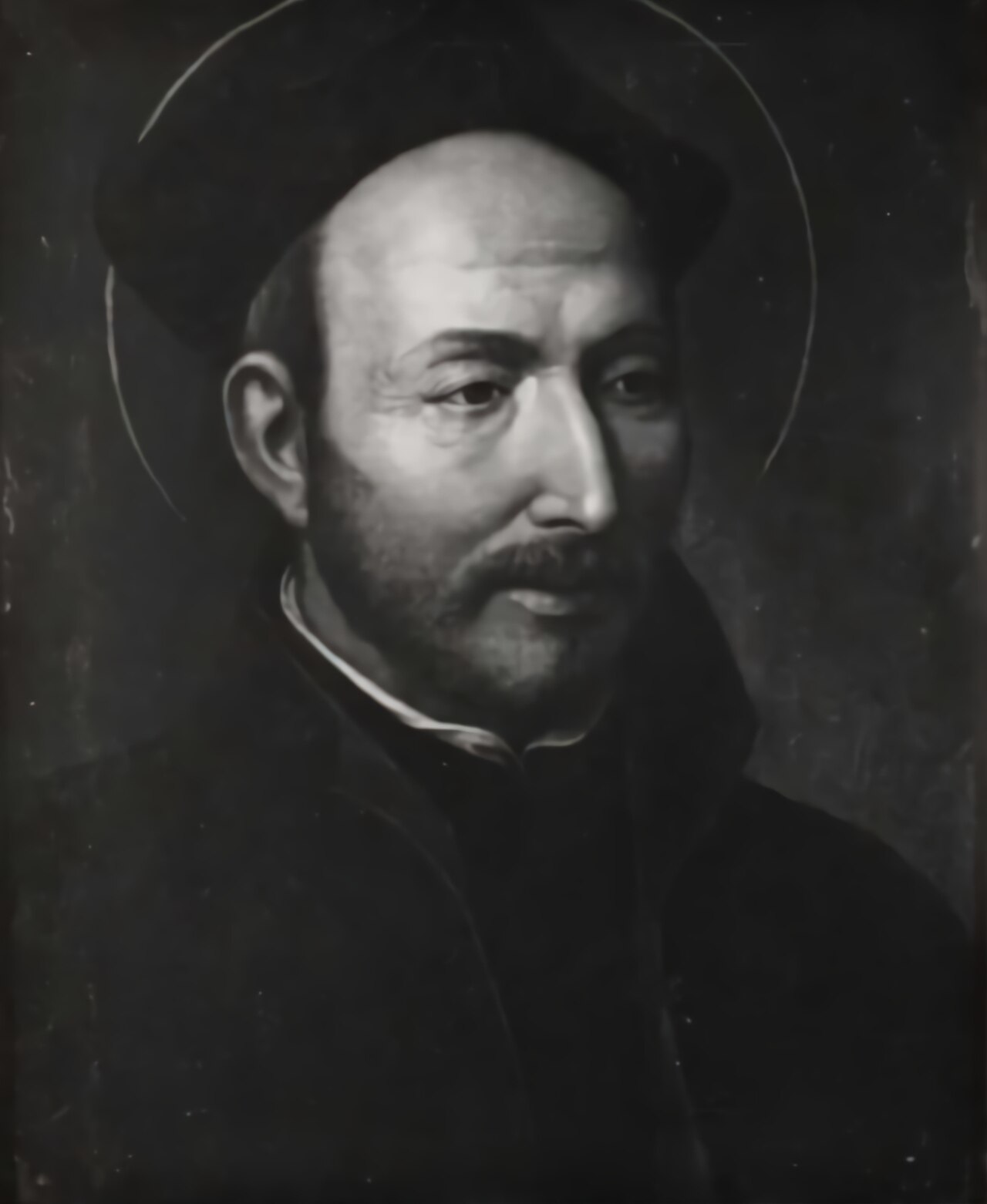
Portrait of Ignatius of Loyola
Jacopino del Conte · 1556
 Artifact
Primary source
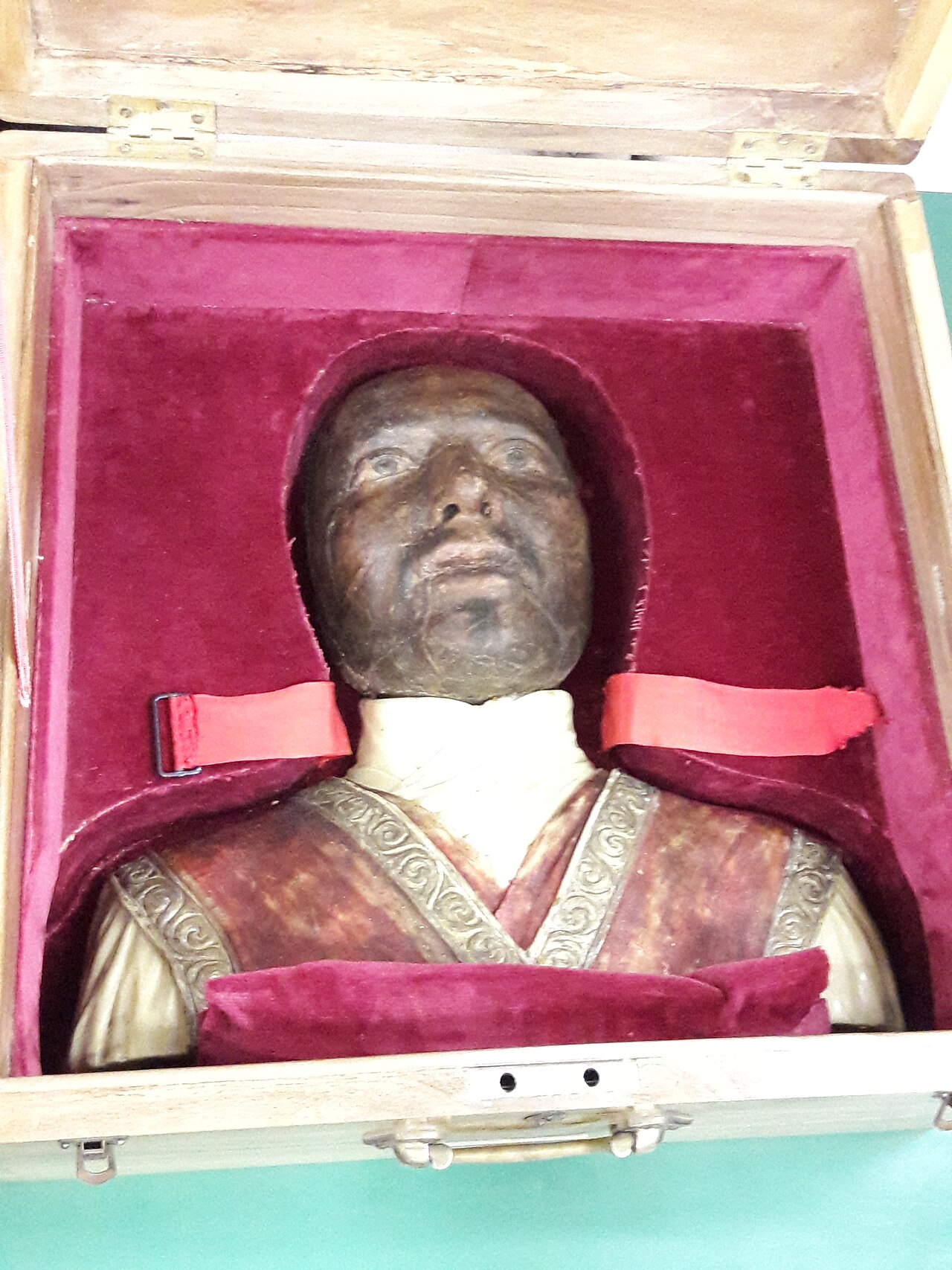
Death Mask of Ignatius of Loyola
Unknown · 1556
Free account
Read every Ignatius of Loyola source
Sign up free →
Ready when you are
Start chatting with Ignatius of Loyola now.
20 messages free · No credit card · Available in 50+ languages.