


Secondary sourcePainting1715–60
Saint Ignatius of Loyola and Allegories of the Four Continents
Felix Anton Scheffler · 1715–60
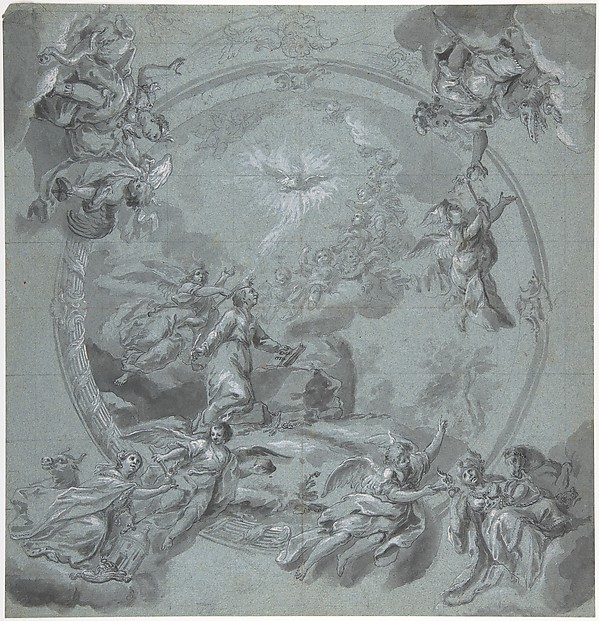
A grey-wash drawing by Felix Anton Scheffler showing a kneeling Ignatius beside the Holy Spirit, with allegorical female figures in the corners. It reflects Jesuit imagery of global mission.
Presents Ignatius as a saint within a symbolic scene of the Holy Spirit and worldwide allegories, reflecting how later artists imagined the founder of the Jesuits.
About this source
What it is
This is a drawing by Felix Anton Scheffler, dated 1715 to 1760 and held by The Metropolitan Museum of Art. The Met record describes it as pen and black ink with gray wash, heightened with white, over black chalk, on blue paper. It was a gift of the Estate of James Hyden in 1959. The image is an oval composition. A dove of the Holy Spirit radiates light at the top center above clouds and angels. A kneeling robed figure with a halo sits at center left beside a book. Winged angels and allegorical female figures fill the corners and lower edge, with putti and clouds.
Why it matters
The curator note says the drawing reflects Jesuit imagery of global mission, and the allegorical figures in the corners are the kind used to suggest the world's continents. Ignatius founded the Society of Jesus, whose members traveled widely; the drawing shows how his order was later pictured in terms of worldwide reach. It tells us about the artistic taste of its period and about how the Jesuits wanted their founder shown.
Look closer
- Which figures in the corners seem to stand for something beyond themselves, and how can you tell from their clothing or objects?
- Why do you think the artist placed the Holy Spirit at the top, above Ignatius?
- What does a drawing like this leave out that a written biography of Ignatius would include?
This painting is part of the curated material that grounds the AI version of Ignatius of Loyola on Humy.ai — when students ask about related events, the AI can quote it and cite it.
More Ignatius of Loyola sources
Browse all 87 →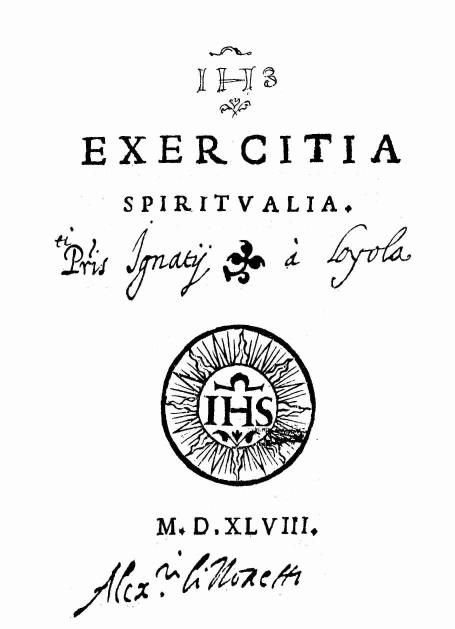 Book
Primary source
Spiritual Exercises
Ignatius of Loyola · 1548 (first printed edition)
 Document
Primary source
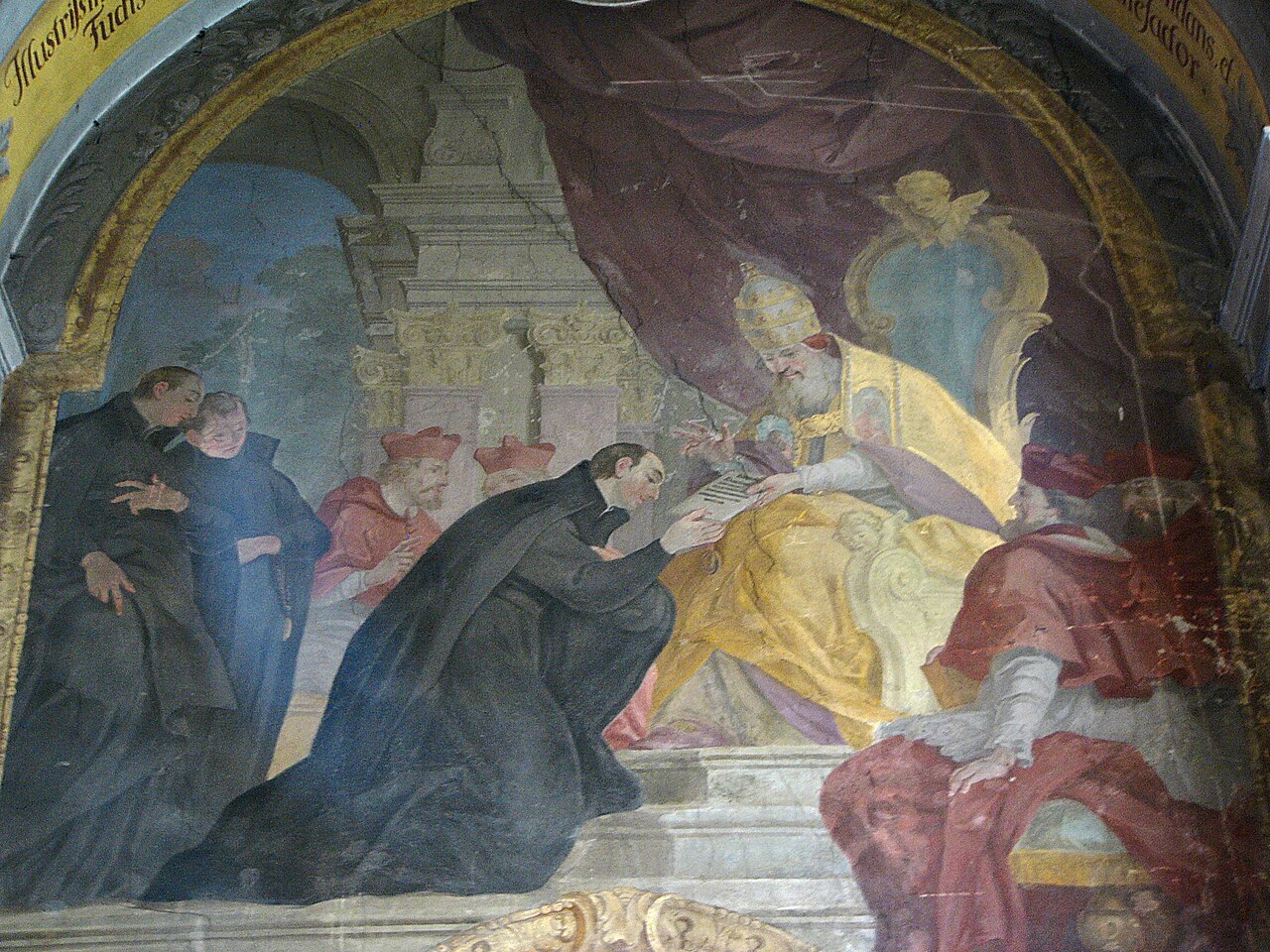
Regimini militantis Ecclesiae
Paul III · 27 September 1540
 Painting
Primary source
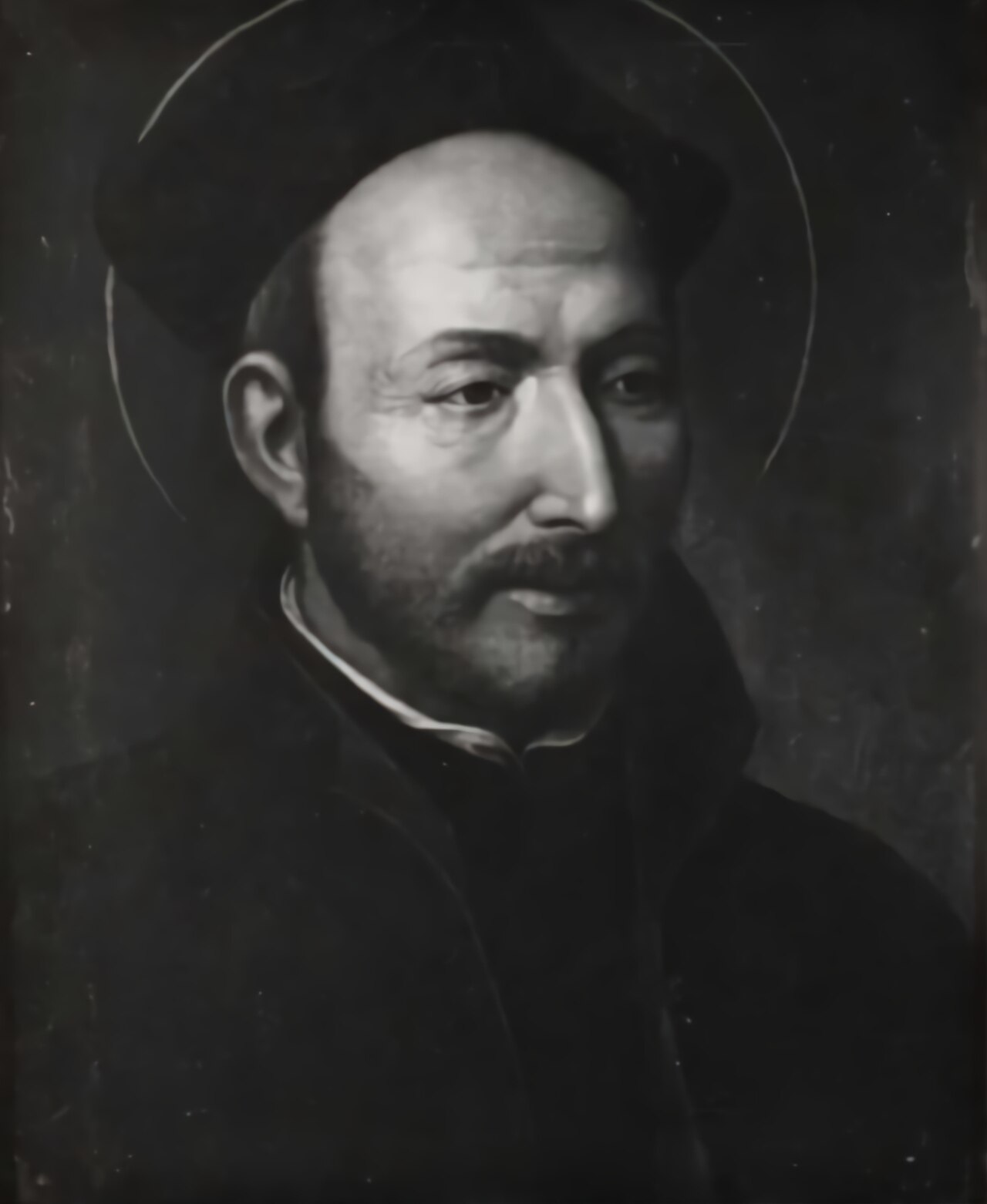
Portrait of Ignatius of Loyola
Jacopino del Conte · 1556
 Artifact
Primary source
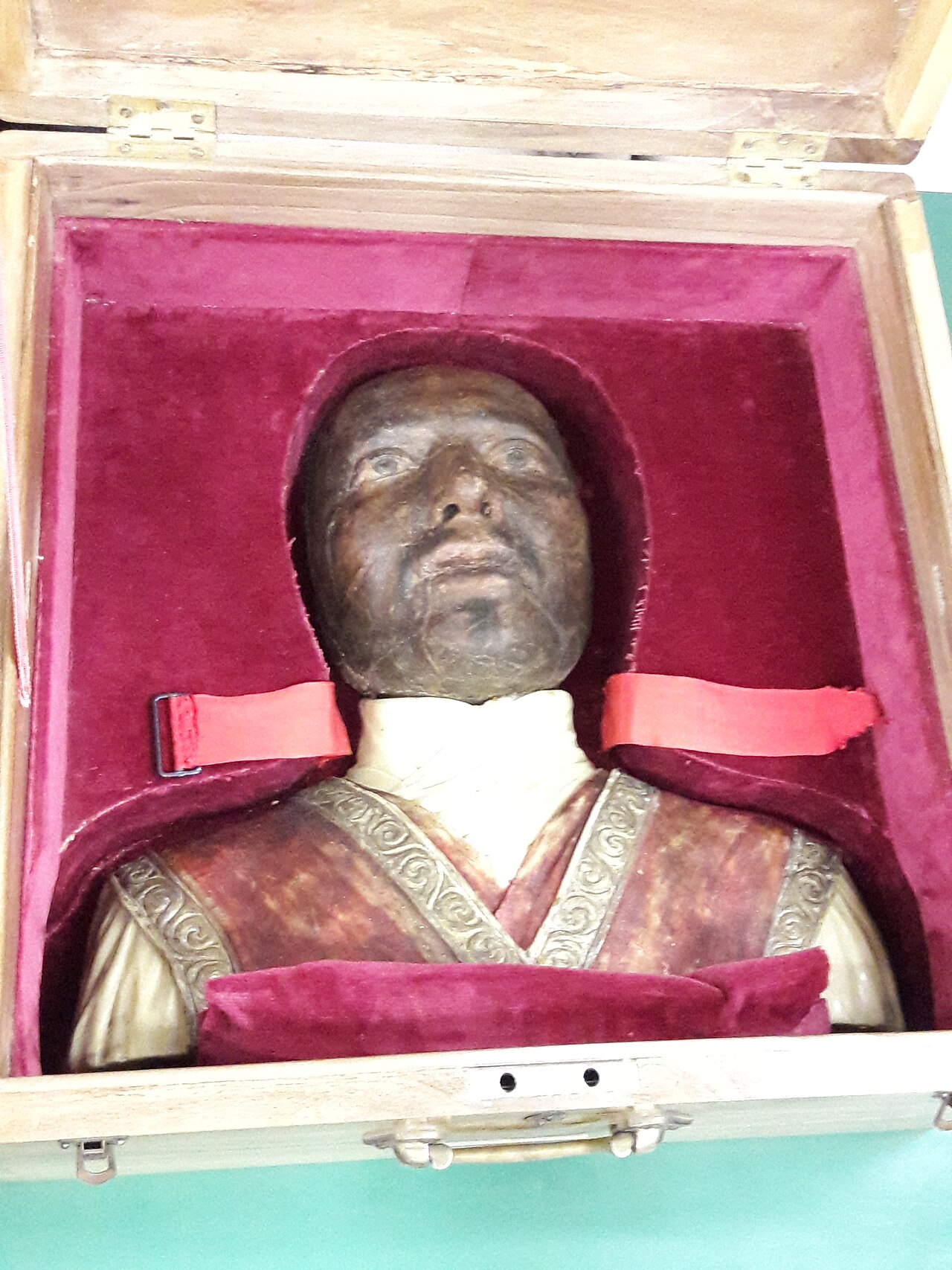
Death Mask of Ignatius of Loyola
Unknown · 1556
Free account
Read every Ignatius of Loyola source
Sign up free →
Ready when you are
Start chatting with Ignatius of Loyola now.
20 messages free · No credit card · Available in 50+ languages.