


Secondary sourceSculpturec. 1475-1478
Saint John the Baptist
Mino da Fiesole · c. 1475-1478
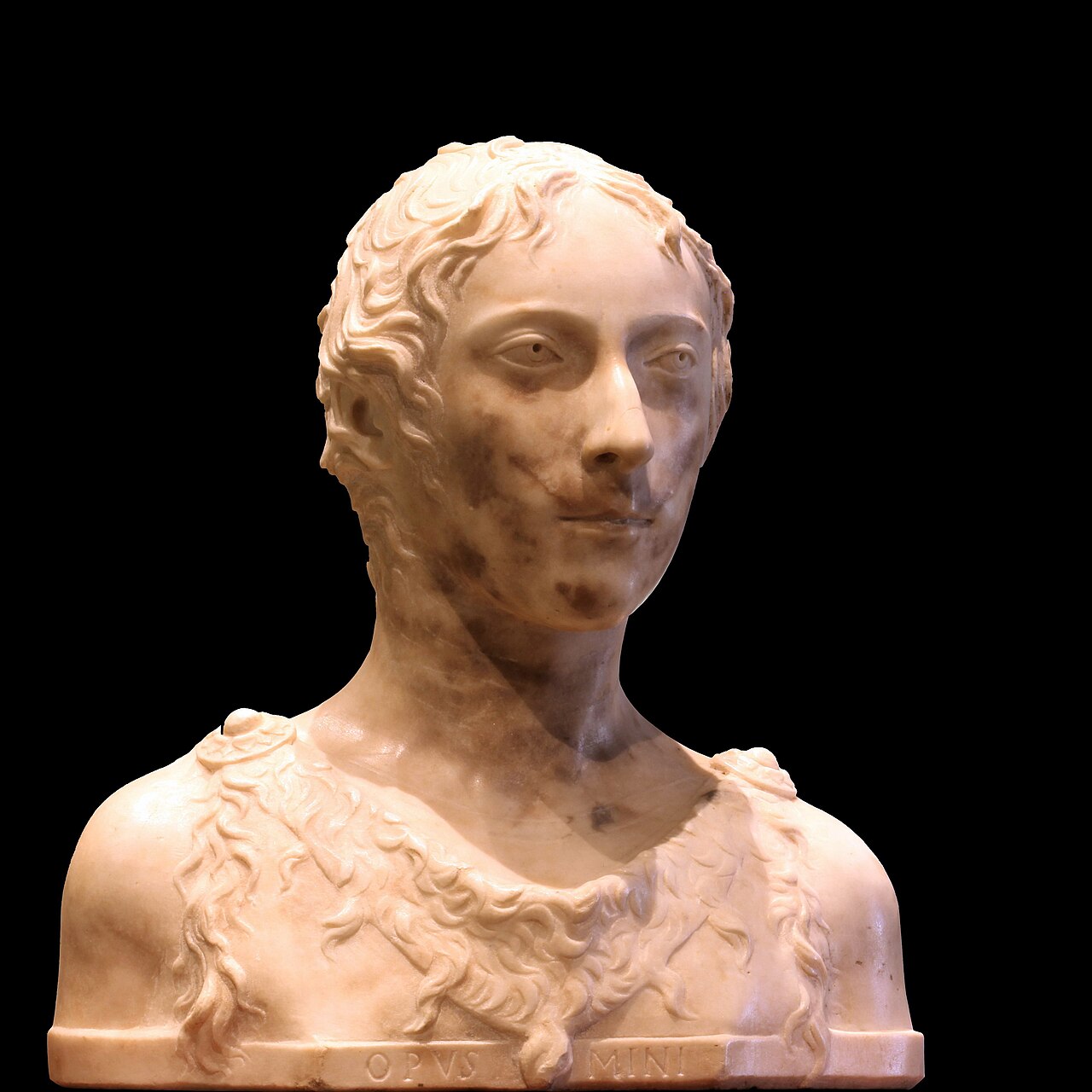
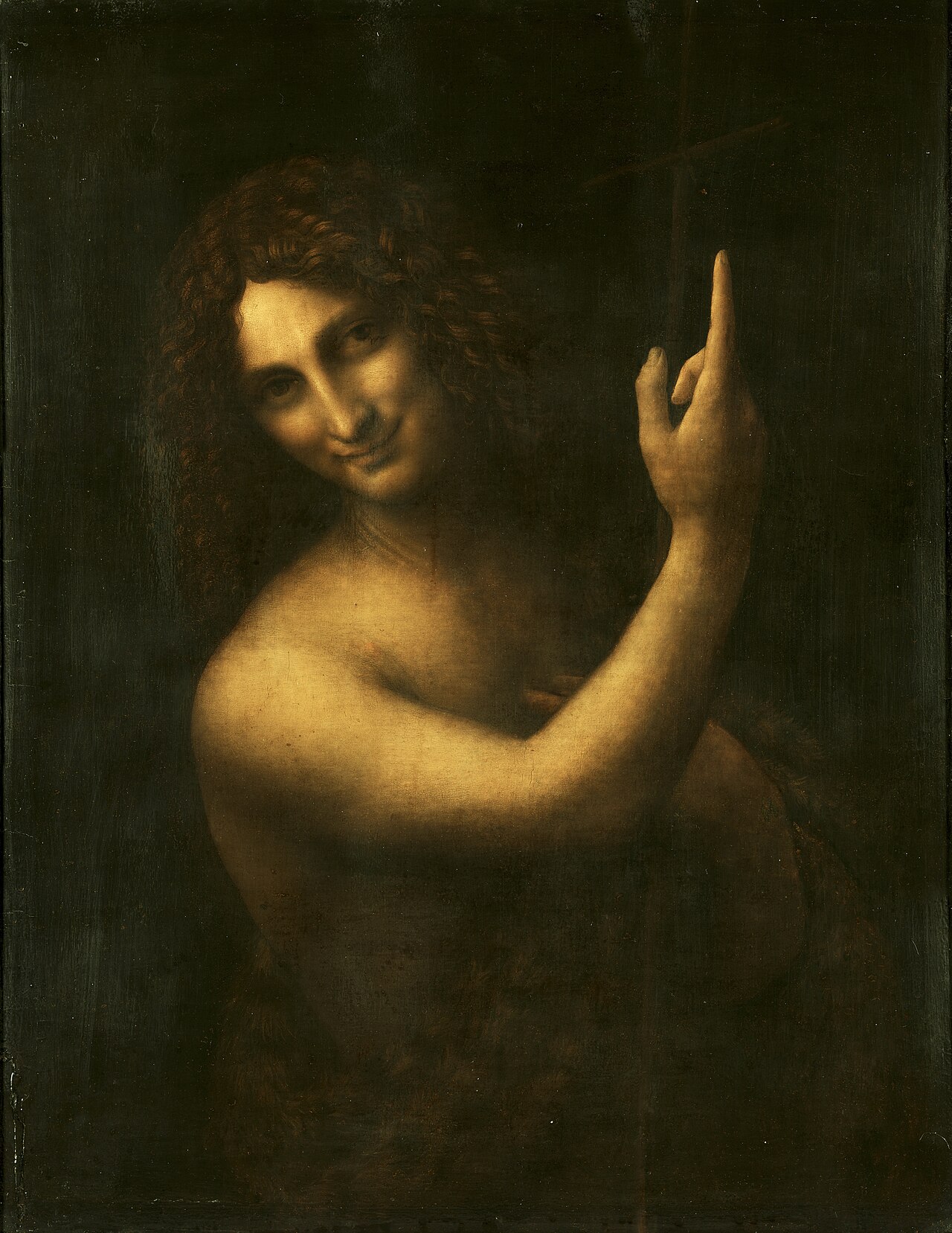
A Renaissance marble bust attributed to Mino da Fiesole, held in the Musée des Beaux-Arts de Lyon. It shows how John was portrayed in art.
Shows how a Renaissance artist portrayed John as a young saint, a museum example of how his image was shaped later.
About this source
What it is
The catalogue record lists this work as a painting by Mino da Fiesole, dated c. 1475-1478. The photograph in the archive shows a white marble bust of a young man with wavy, curly hair and a slight smile, with an animal skin draped over his shoulders. The inscription 'OPVS MINI' is carved on the base. The work is held in the Musée des Beaux-Arts de Lyon.
Why it matters
Renaissance artists often showed John as a young man with an animal skin, referring to his life in the wilderness. This bust shows how a Florentine sculptor of the 1470s imagined him. It was made about fourteen centuries after John's lifetime, so it reflects later ideas rather than John himself.
Look closer
- What details tell you this is John, and what do the animal skin and smile suggest?
- Why might the sculptor have chosen to show him as a young man?
- What does the bust leave out about John's preaching or his death?
This sculpture is part of the curated material that grounds the AI version of John the Baptist on Humy.ai — when students ask about related events, the AI can quote it and cite it.
More John the Baptist sources
Browse all 86 → Book
Secondary source
Gospel of Luke
Luke the Evangelist · c. AD 85
Secondary source
Josephus on Jesus
Josephus · c. 93-94 CE
 Painting
Secondary source
The Baptism of Christ
Piero della Francesca · c. 1440-1460
 Painting
Primary source
The Baptism of Christ
Andrea del Verrocchio and Leonardo da Vinci · c. 1470-1475
Free account
Read every John the Baptist source
Sign up free →
Ready when you are
Start chatting with John the Baptist now.
20 messages free · No credit card · Available in 50+ languages.