


Secondary sourcePaintingc. 1622
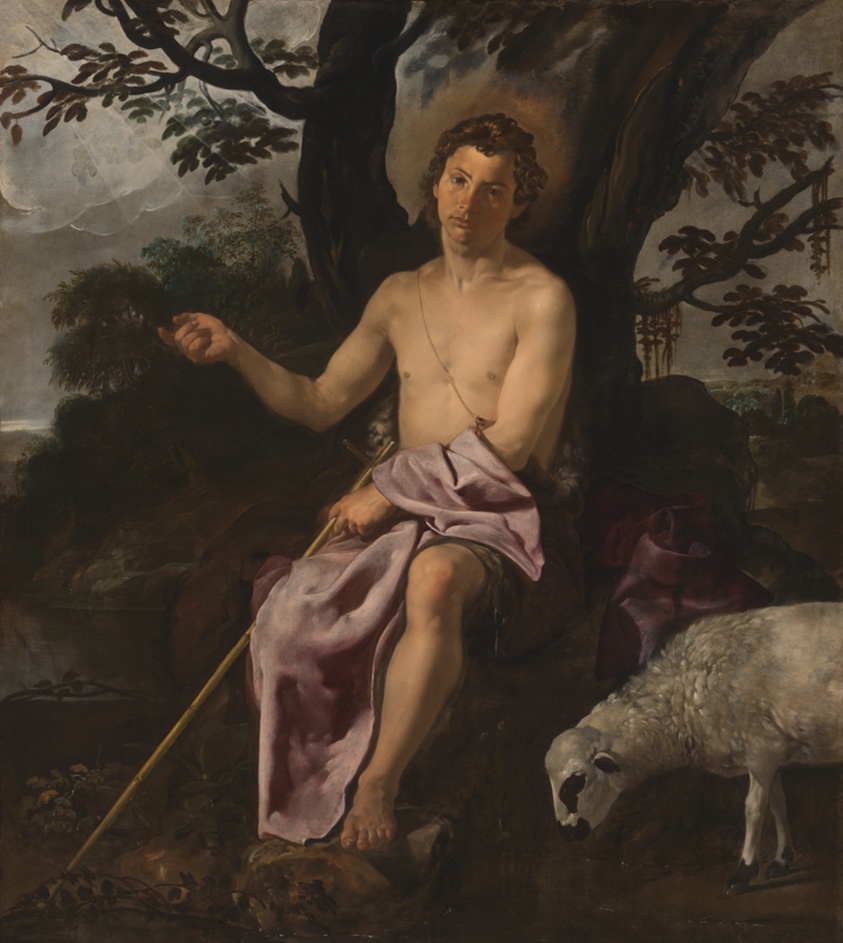
Saint John the Baptist in the Wilderness
Diego Velázquez · c. 1622
An early Baroque painting by Diego Velázquez showing a young John the Baptist seated in the desert with a lamb.
An early work by Velázquez imagining John the Baptist as a youthful figure in the wilderness with his symbolic lamb.
About this source
What it is
This oil painting, created around 1622 by Spanish artist Diego Velázquez, shows a young man with a faint halo, understood to be John the Baptist, seated before a large tree in a dark wilderness landscape. He holds a reed-like staff and is accompanied by a lamb, both symbols traditionally linked to him. The painting is held at The Art Institute of Chicago.
Why it matters
Painted early in Velázquez's career in Seville, this work shows how the young Spanish artist approached a religious subject using naturalistic detail and dramatic lighting, reflecting the Baroque style and religious themes popular in 17th-century Spain.
Look closer
- Why might Velázquez have painted John as youthful rather than as an older preacher?
- What do the lamb and staff symbolize in this image?
- What might this painting leave out about the historical John the Baptist's life?
This painting is part of the curated material that grounds the AI version of John the Baptist and Diego Velázquez on Humy.ai — when students ask about related events, the AI can quote it and cite it.
More John the Baptist sources
Browse all 86 →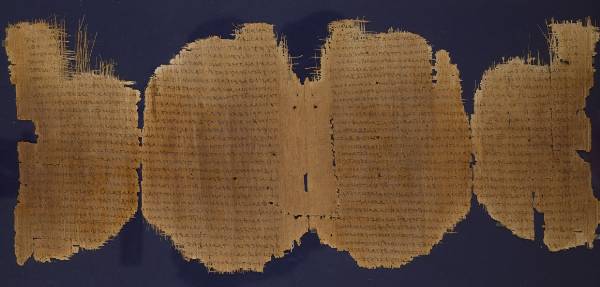 Book
Secondary source
Gospel of Luke
Luke the Evangelist · c. AD 85
Secondary source
Josephus on Jesus
Josephus · c. 93-94 CE
 Painting
Secondary source
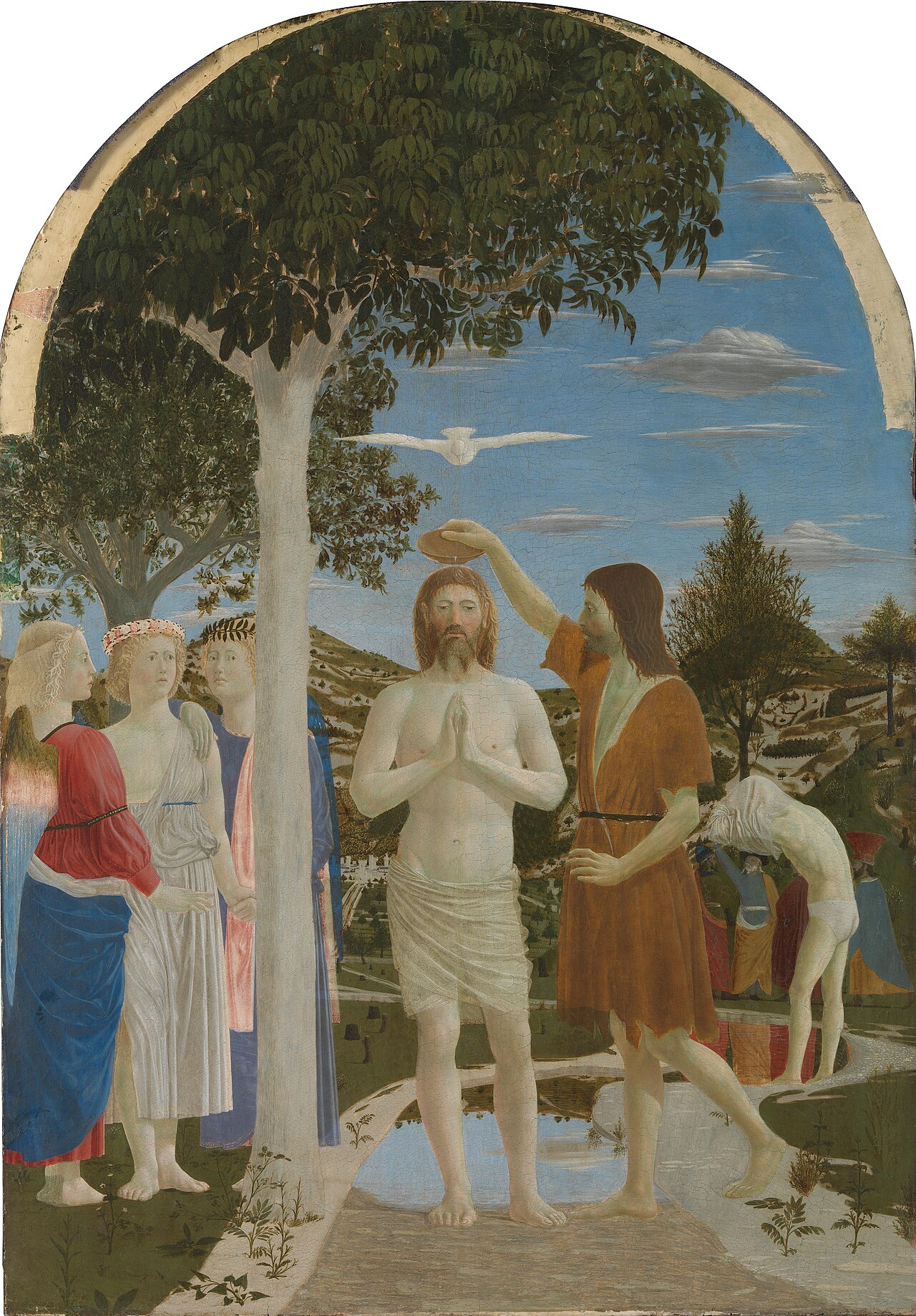
The Baptism of Christ
Piero della Francesca · c. 1440-1460
 Painting
Primary source
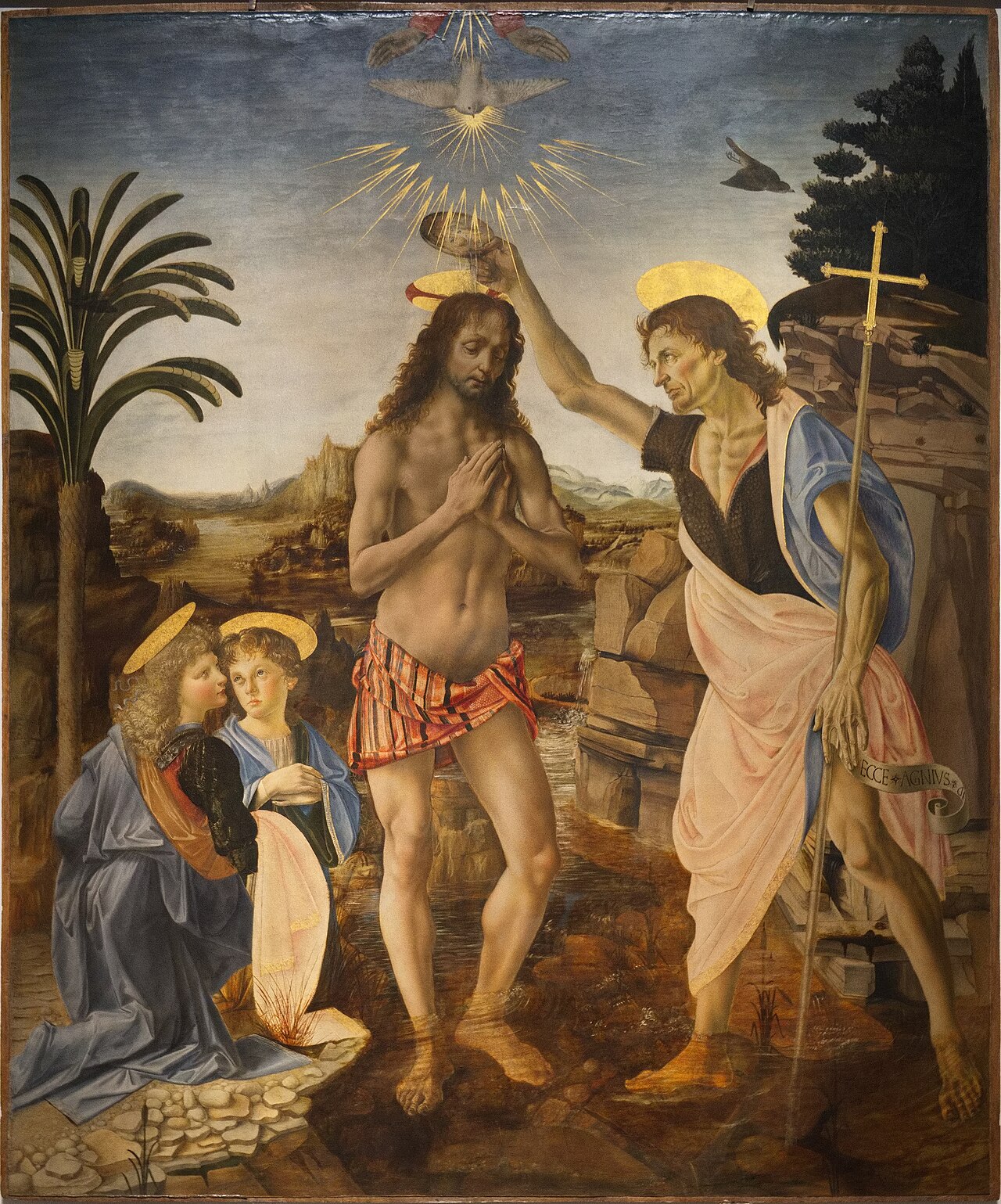
The Baptism of Christ
Andrea del Verrocchio and Leonardo da Vinci · c. 1470-1475
Free account
Read every John the Baptist source
Sign up free →
Ready when you are
Start chatting with John the Baptist now.
20 messages free · No credit card · Available in 50+ languages.