


Secondary sourcePaintingc. 1621
Saint Martin and the Beggar
Anthony van Dyck · c. 1621
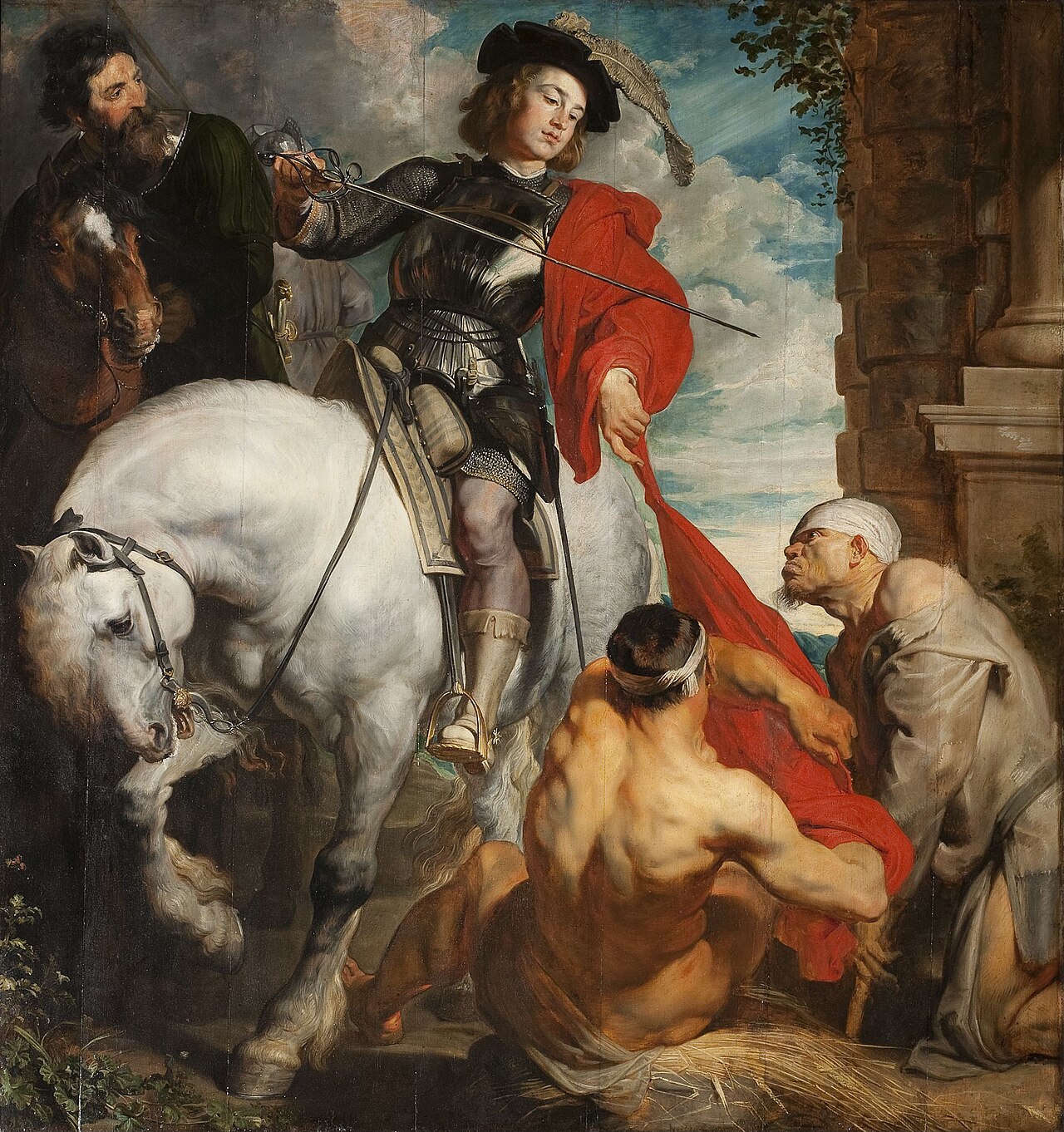
A Baroque altarpiece by Anthony van Dyck showing the young soldier Martin cutting his cloak in half to share with a beggar.
This altarpiece depicts Martin's most famous legendary act of charity, central to his sainthood.
About this source
What it is
This painting by the Flemish artist Anthony van Dyck was made around 1621 and remains an altarpiece in the Church of Saint Martin in Zaventem, Belgium. It shows the moment from Martin's legend when, as a young soldier, he cuts his cloak in two to give half to a shivering beggar.
Why it matters
The story comes from an ancient biography of Martin and became one of the most popular images of Christian charity in European art. Van Dyck painted it while strongly influenced by his teacher Peter Paul Rubens, and the work shows how artists of the 1600s used dramatic poses and rich colour to make old legends feel immediate and real to churchgoers.
Look closer
- What does Martin's pose and expression suggest about his decision?
- How does the painter use colour and light to draw your eye to the cloak?
- What might the beggar's condition tell you about how the artist wanted viewers to feel?
This painting is part of the curated material that grounds the AI version of Martin of Tours on Humy.ai — when students ask about related events, the AI can quote it and cite it.
More Martin of Tours sources
Browse all 88 →Secondary source
Vita Sancti Martini manuscript page
unknown monk
 Painting
Secondary source
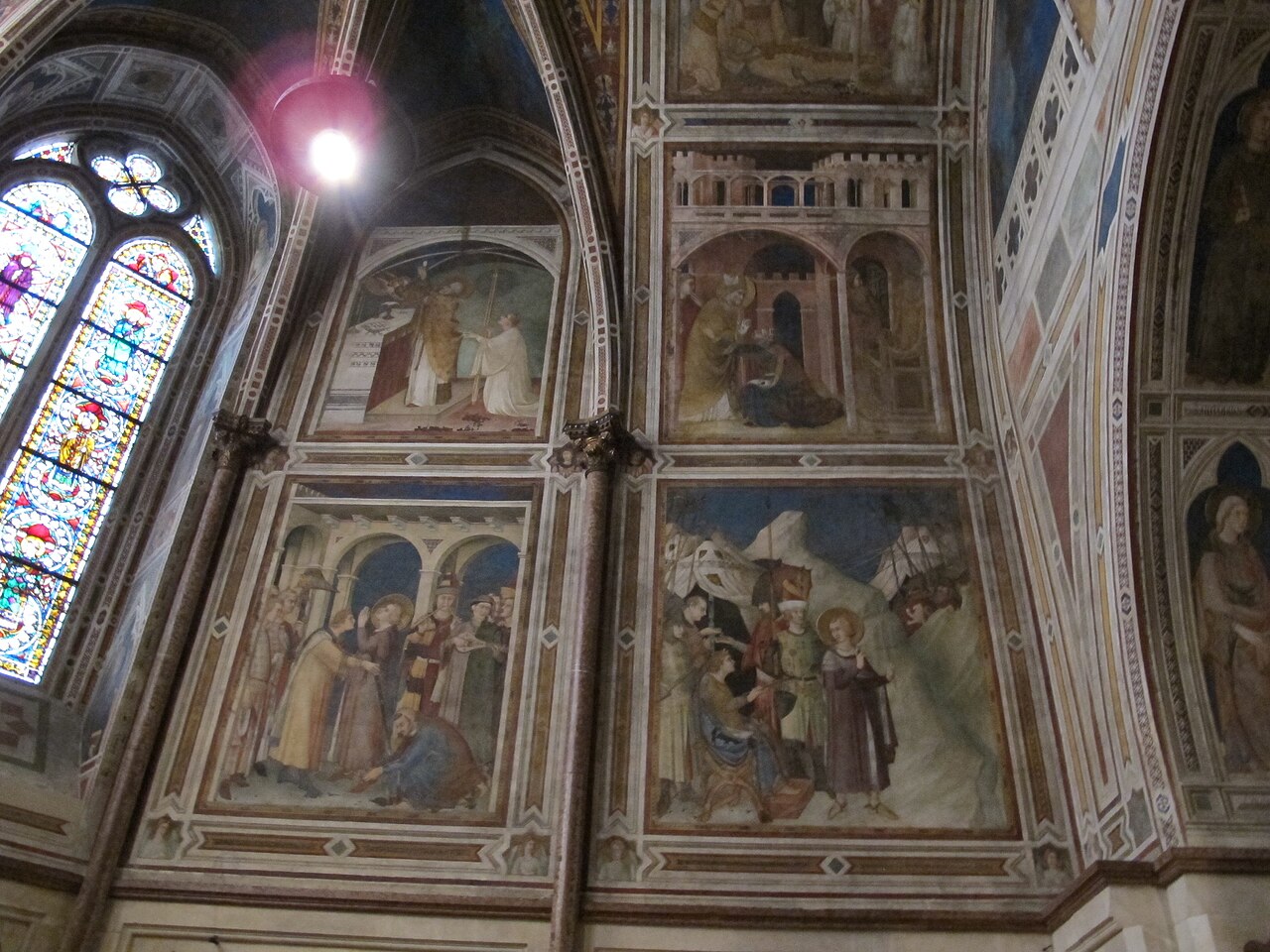
Portrait of Martin of Tours (Assisi fresco detail)
Simone Martini
 Painting
Secondary source
Saint Martin and the Beggar
El Greco · 1597–1599
 Sculpture
Secondary source
Bassenheimer Reiter
Naumburg Master · 1240
Free account
Read every Martin of Tours source
Sign up free →
Ready when you are
Start chatting with Martin of Tours now.
20 messages free · No credit card · Available in 50+ languages.