


Secondary sourceArtifact
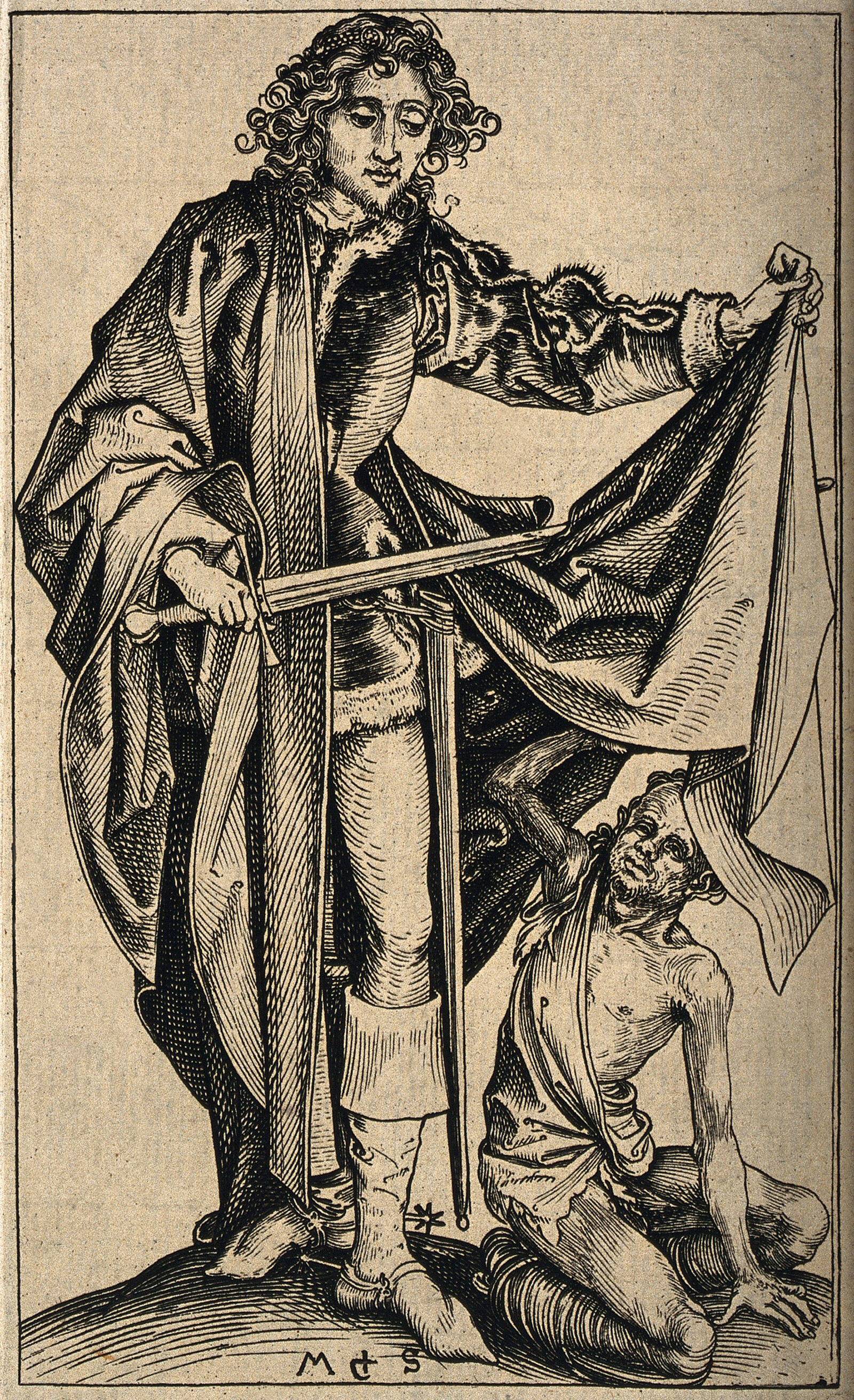
Saint Martin dividing his cloak, etching after Martin Schongauer
Martin Schongauer
An etching showing the famous scene of Saint Martin cutting his cloak to share it with a poor man. It was made centuries after the saint's death.
A print of Martin's best-known act, dividing his cloak with a beggar, showing how later artists retold his story.
About this source
What it is
This is a black and white etching after Martin Schongauer. It shows a standing figure with curly hair in a full-length, fur-trimmed cloak. He holds a sword and cuts his cloak with it, lifting the cut half. At lower right, a nearly naked, thin kneeling beggar reaches up to receive the half-cloak. The letters M c t S appear at the bottom. The collection record describes the print as an etching, and the catalogue says it was made centuries after the saint's death. The print is held by the Wellcome Collection in London.
Why it matters
The cloak scene is one of the best-known stories about Martin. Artists returned to it again and again because it showed charity in a simple, dramatic moment. This print tells us what later artists chose to emphasise: the act of giving and the poverty of the beggar. It says more about the artists and their audiences than about what happened in Martin's own lifetime.
Look closer
- What does the beggar's body show about his poverty, and why might the artist have drawn him this way?
- Why does the saint appear to be using a sword, and what does that choice suggest about how he was imagined?
- What is missing from this scene, such as the setting or other people, and how does that change the message?
This artifact is part of the curated material that grounds the AI version of Martin of Tours on Humy.ai — when students ask about related events, the AI can quote it and cite it.
More Martin of Tours sources
Browse all 88 →Secondary source
Vita Sancti Martini manuscript page
unknown monk
 Painting
Secondary source
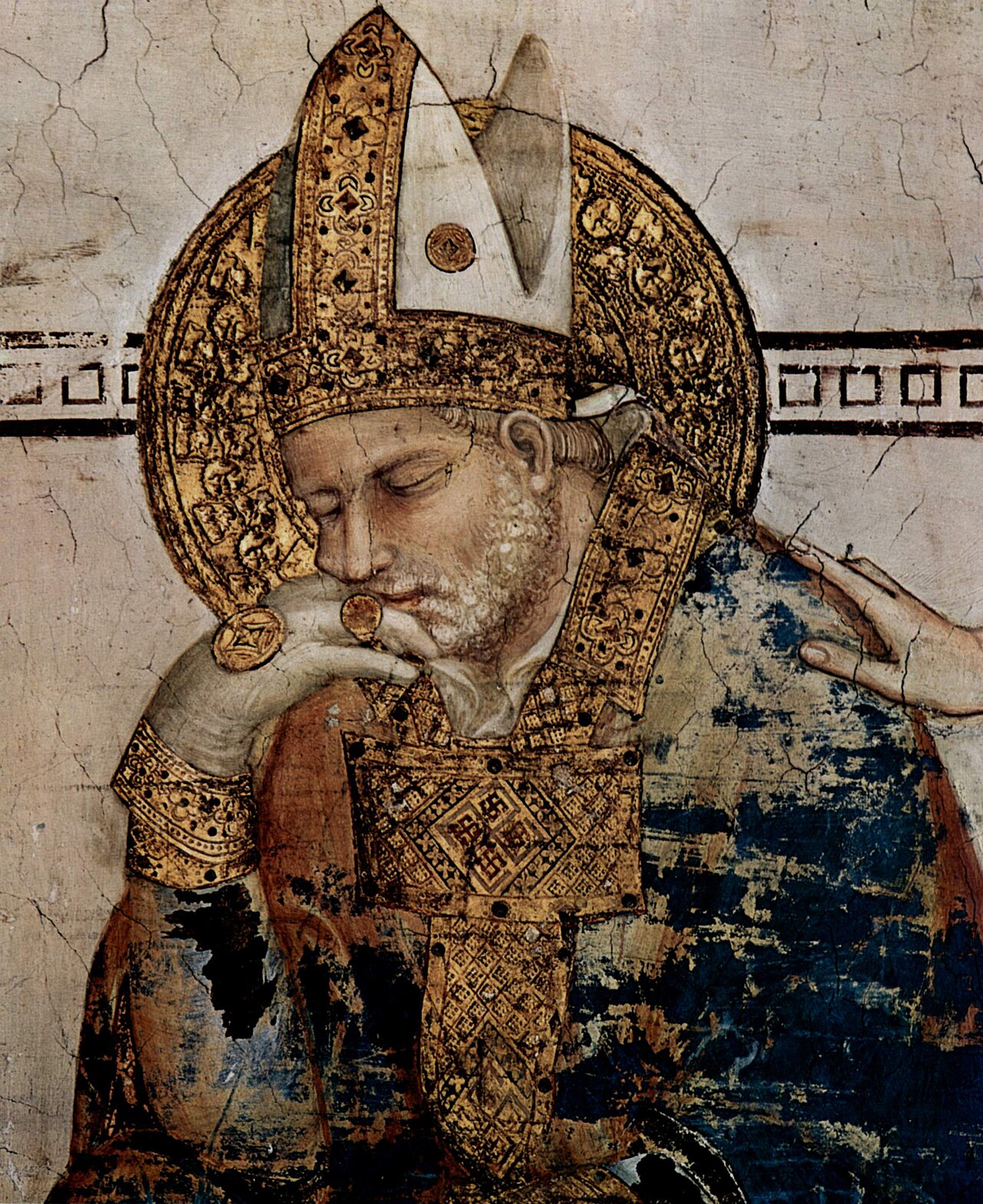
Portrait of Martin of Tours (Assisi fresco detail)
Simone Martini
 Painting
Secondary source
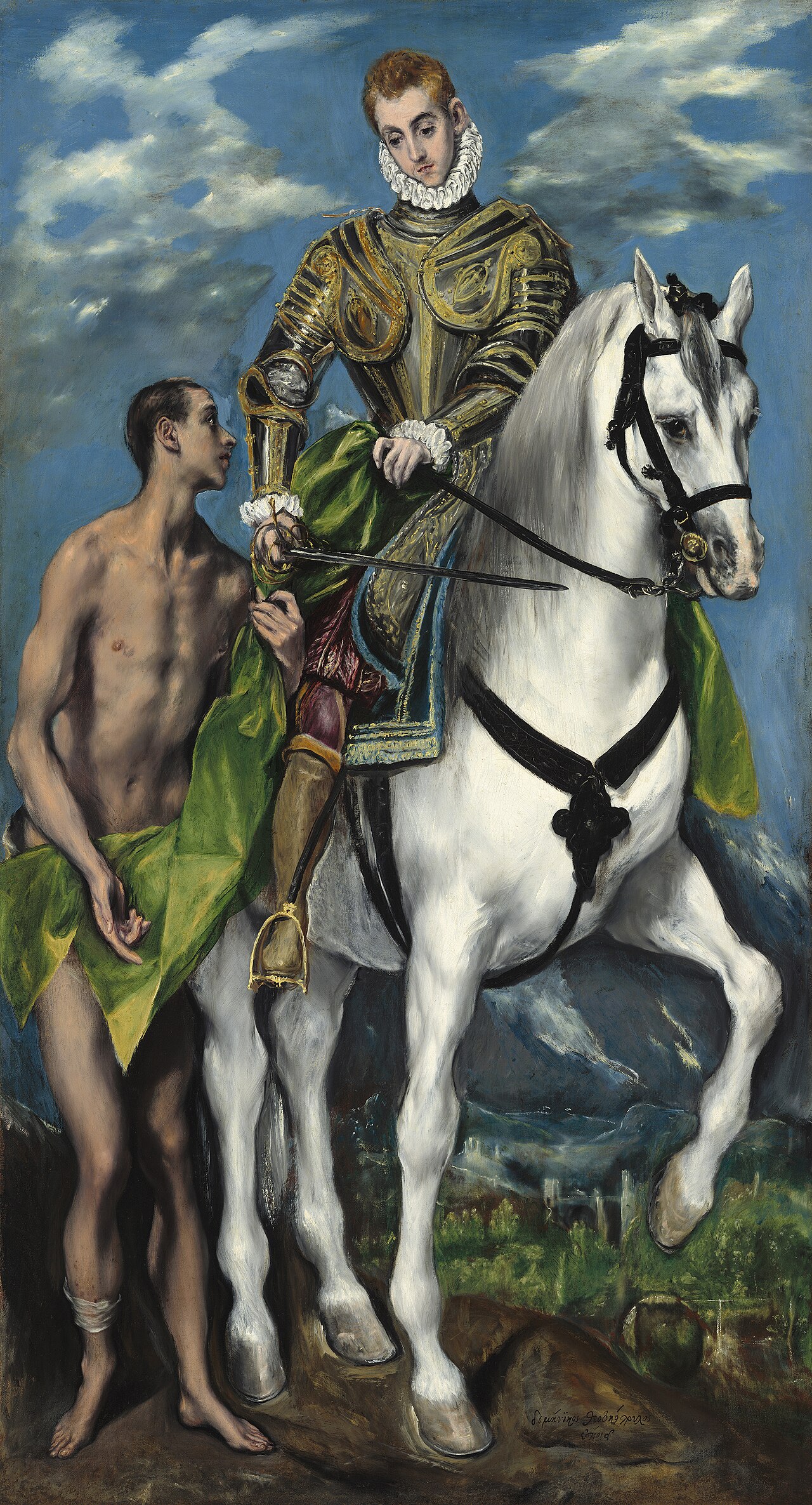
Saint Martin and the Beggar
El Greco · 1597–1599
 Sculpture
Secondary source
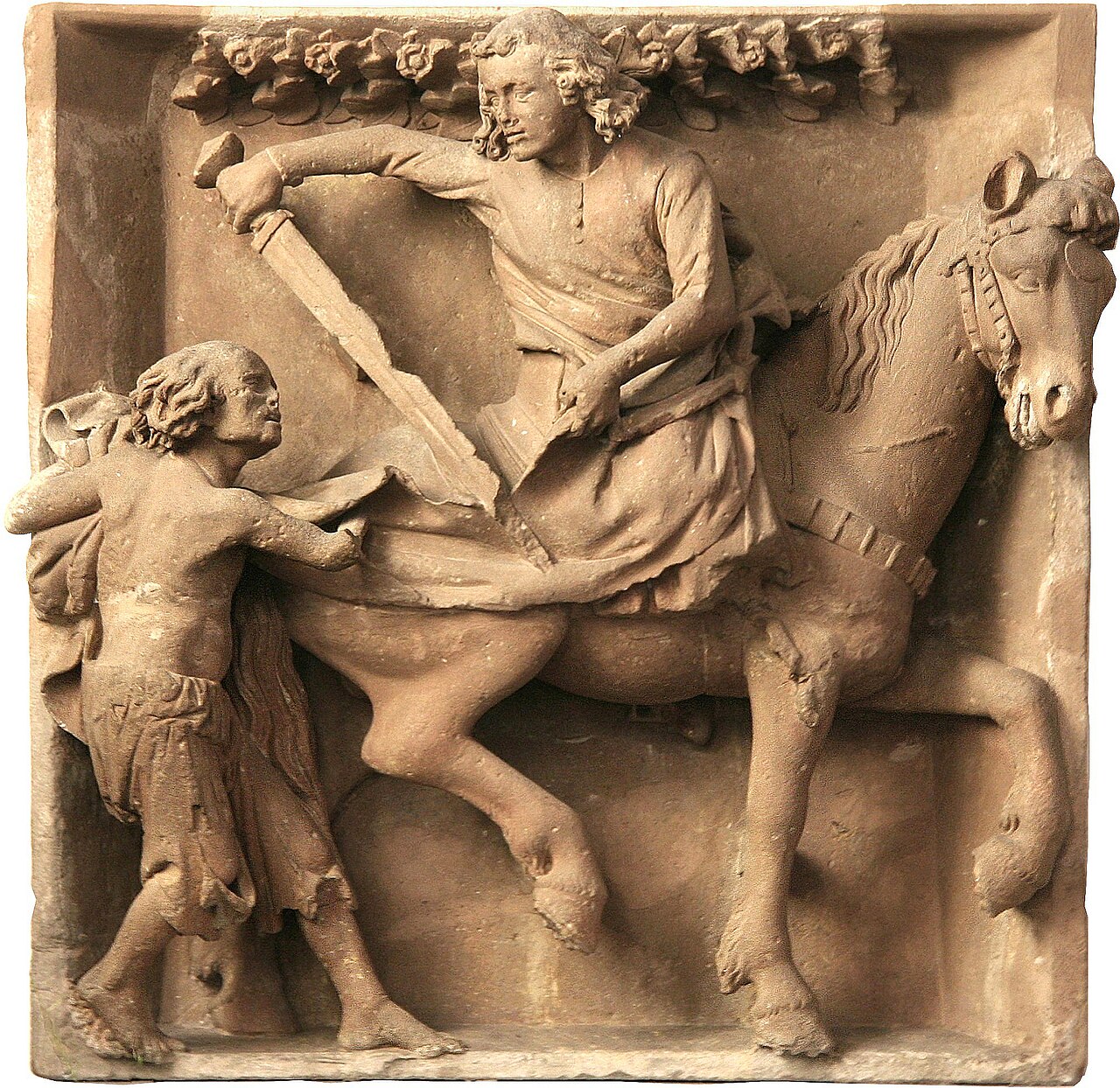
Bassenheimer Reiter
Naumburg Master · 1240
Free account
Read every Martin of Tours source
Sign up free →
Ready when you are
Start chatting with Martin of Tours now.
20 messages free · No credit card · Available in 50+ languages.