


Secondary sourceSculpturec. 1531
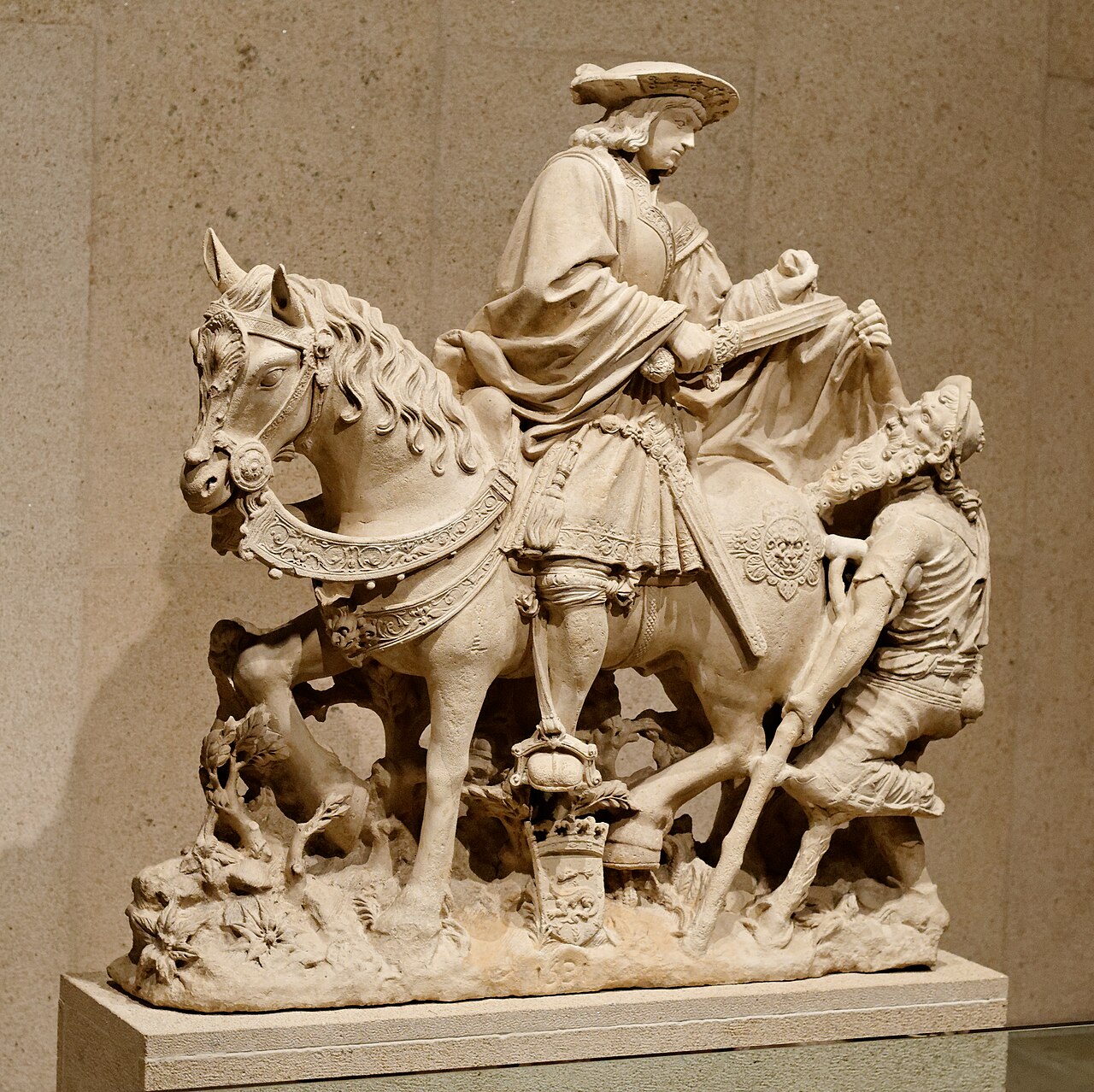
Saint Martin on Horseback Sharing His Cloak
c. 1531
A 16th-century limestone sculpture from the Loire region showing Martin cutting his cloak to share with a kneeling beggar.
Depicts Martin's legendary charity, carved in stone for display, showing the lasting spread of his story.
About this source
What it is
This limestone carving, made around 1531 in the Loire region of France by an unknown sculptor, shows Martin on horseback cutting his cloak with a sword to share it with a kneeling beggar. It is now held in the Calouste Gulbenkian Museum in Lisbon.
Why it matters
The sculpture shows how widely Martin's story of charity spread across medieval and Renaissance Europe, appearing not only in paintings but carved in stone for churches or public display. Its survival across centuries and countries shows how valued this image of generosity remained.
Look closer
- What details in the carving (clothing, pose, decoration) suggest the figure's importance?
- Why might a sculptor have chosen stone, rather than paint, to tell this story?
- What has been lost or changed about this sculpture's original context, now that it stands in a museum rather than a church?
This sculpture is part of the curated material that grounds the AI version of Martin of Tours on Humy.ai — when students ask about related events, the AI can quote it and cite it.
More Martin of Tours sources
Browse all 88 →Secondary source
Vita Sancti Martini manuscript page
unknown monk
 Painting
Secondary source
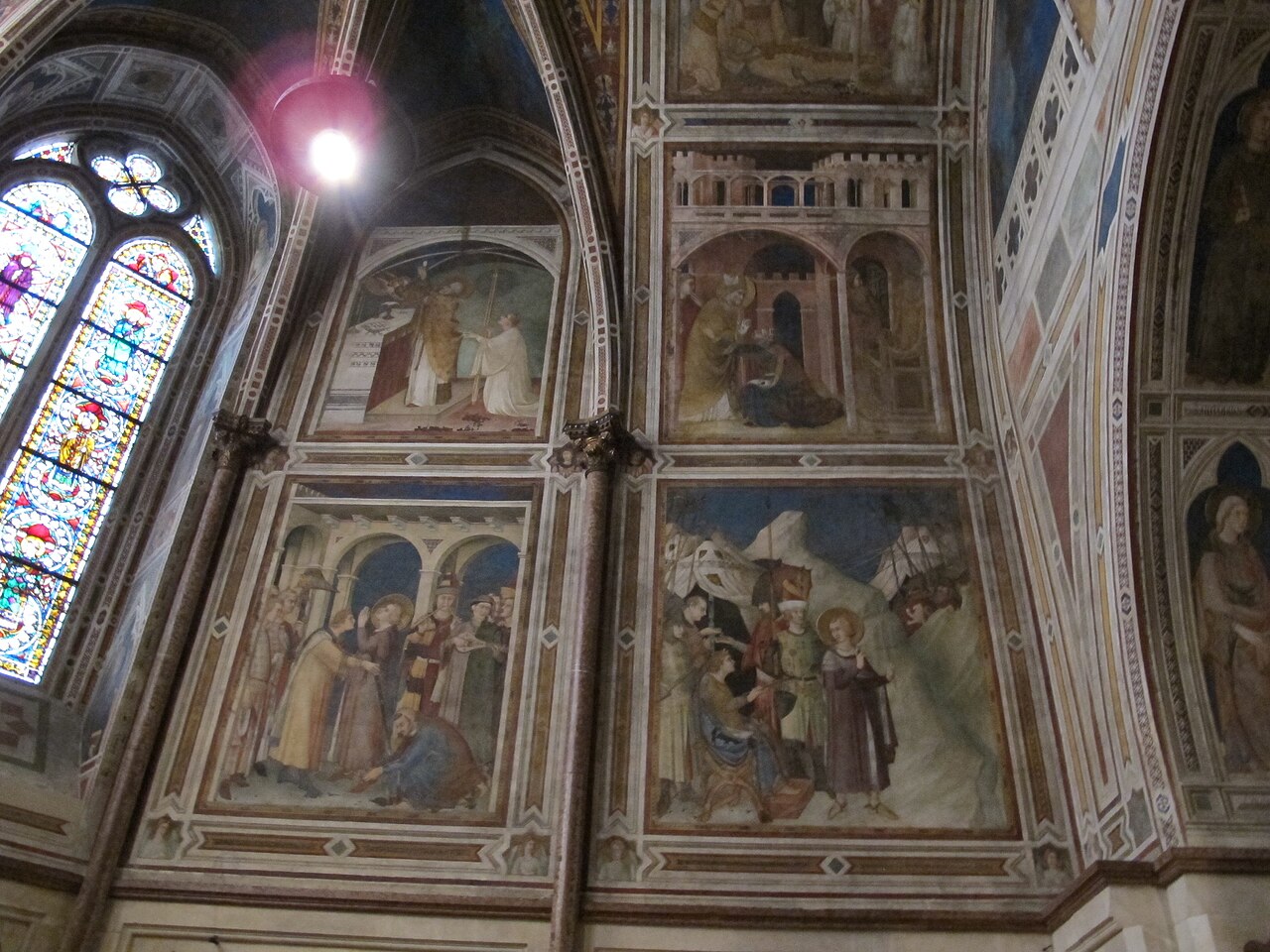
Portrait of Martin of Tours (Assisi fresco detail)
Simone Martini
 Painting
Secondary source
Saint Martin and the Beggar
El Greco · 1597–1599
 Sculpture
Secondary source
Bassenheimer Reiter
Naumburg Master · 1240
Free account
Read every Martin of Tours source
Sign up free →
Ready when you are
Start chatting with Martin of Tours now.
20 messages free · No credit card · Available in 50+ languages.