


Secondary sourcePaintinglate 19th century
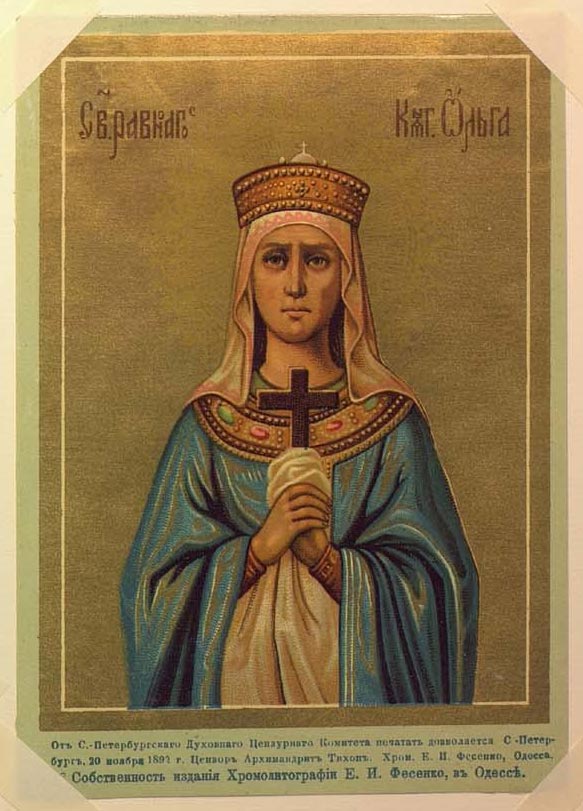
Saint Olga Chromolithograph
Anonymous Russian icon painter · late 19th century
A colour print made in Odessa in the late 19th century depicting Olga of Kiev as an Orthodox saint.
This printed icon shows Olga venerated as a saint, illustrating her lasting religious legacy.
About this source
What it is
This is a chromolithograph, a type of colour print, made by the Fesenko printing house in Odessa in the late 1800s. It shows Olga as a crowned saint holding a cross, part of an album of printed icon images sold for devotional use.
Why it matters
Printed icons like this one allowed devotional images of saints such as Olga to be produced cheaply and spread widely among Orthodox believers. It reflects how Olga's memory was kept alive through popular religious art long after her lifetime.
Look closer
- How does a printed image differ from a hand-painted icon in purpose and audience?
- What details (crown, cloak, cross) link this image to earlier icon traditions?
- Why might a commercial printing house produce images of saints like Olga?
This painting is part of the curated material that grounds the AI version of Olga of Kiev on Humy.ai — when students ask about related events, the AI can quote it and cite it.
More Olga of Kiev sources
Browse all 93 →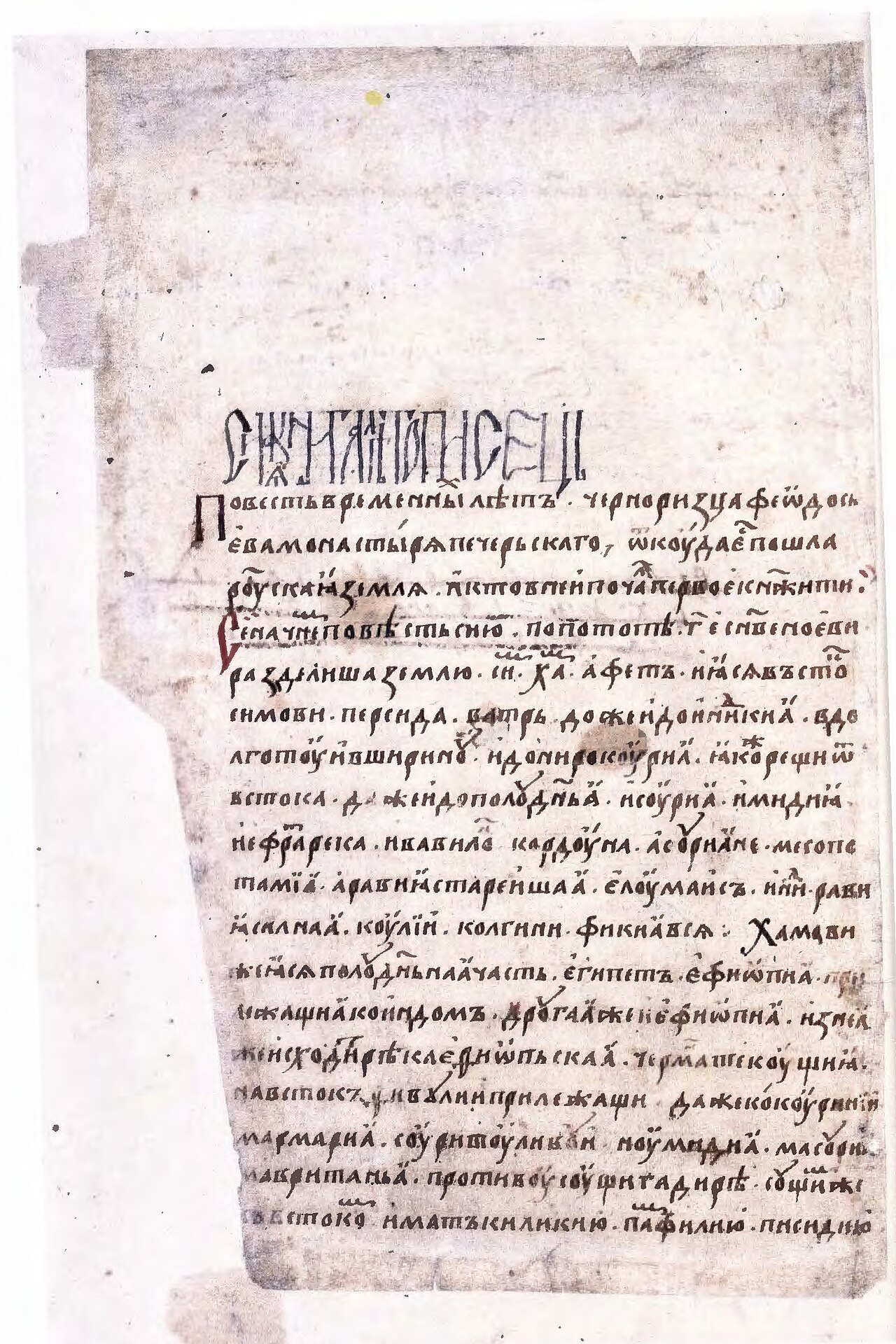 Painting
Secondary source
Radziwiłł Chronicle
c. 1500 (copy of a 13th-century original)
 Document
Primary source
Novgorod First Chronicle
13th century (covering events from 1016)
 Document
Secondary source
Laurentian Codex
Laurentius · 1377
 Document
Primary source
Rus'–Byzantine Treaty
944 or 945

Free account
Read every Olga of Kiev source
Sign up free →
Ready when you are
Start chatting with Olga of Kiev now.
20 messages free · No credit card · Available in 50+ languages.