


Secondary sourcePaintingapproximately 1703
Saint Teresa in her cell, after Charles Le Brun
Charles Le Brun · approximately 1703
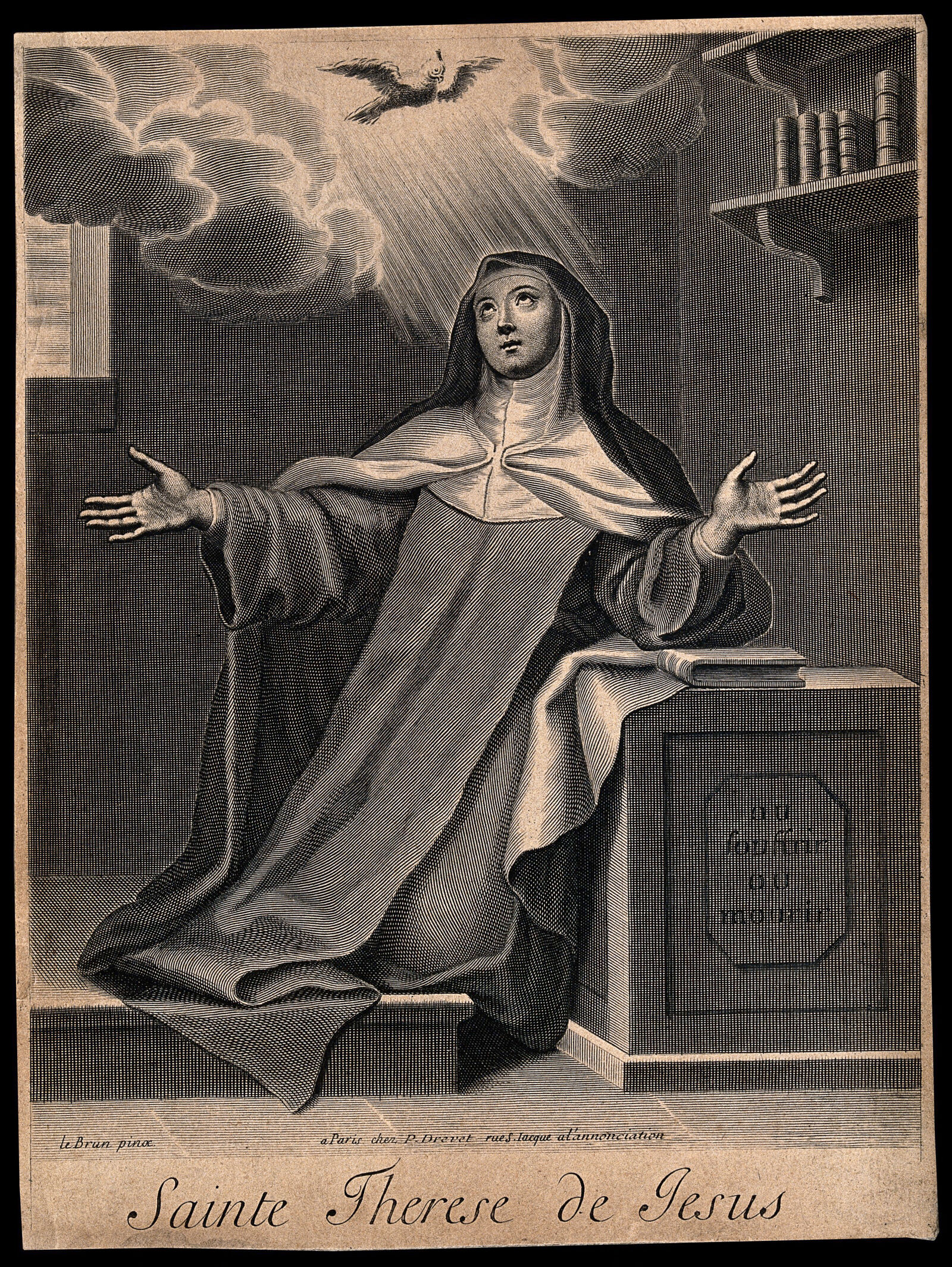
An engraving after a design by Charles Le Brun showing Saint Teresa in her cell, receiving the Holy Ghost as a dove and rays of light descend. It was made around 1703.
An engraving after Charles Le Brun showing Teresa in her cell receiving a vision, reflecting how her story was pictured in the early 1700s.
About this source
What it is
This is an engraving held by the Wellcome Collection in London. It is based on a work by the French artist Charles Le Brun and dates to approximately 1703. The image shows a robed nun with a white wimple, her arms outstretched and her gaze raised. A dove with rays of light descends from clouds toward her. Books sit on a shelf at the right, and a table with a book and a carved inscription panel stands beside her. The caption reads Sainte Therese de Jesus.
Why it matters
Teresa of Ávila (1515–1582) was a Roman Catholic saint. The Wellcome record describes the scene as Saint Teresa receiving the Holy Ghost in her convent cell. Engravings like this one, made after a painter's design, let the same image travel to many buyers across Europe. This makes the print a secondary source. It shows how a French artist of the late 1600s pictured her, rather than her own view of events.
Look closer
- How do the pose, the raised eyes and the rays of light show the moment the engraver wanted viewers to see?
- Why might an engraving have been made from a painter's design, and what might be lost in copying?
- What do the books and the inscription panel suggest about the place of learning in the saint's image?
This painting is part of the curated material that grounds the AI version of Teresa of Ávila on Humy.ai — when students ask about related events, the AI can quote it and cite it.
More Teresa of Ávila sources
Browse all 93 →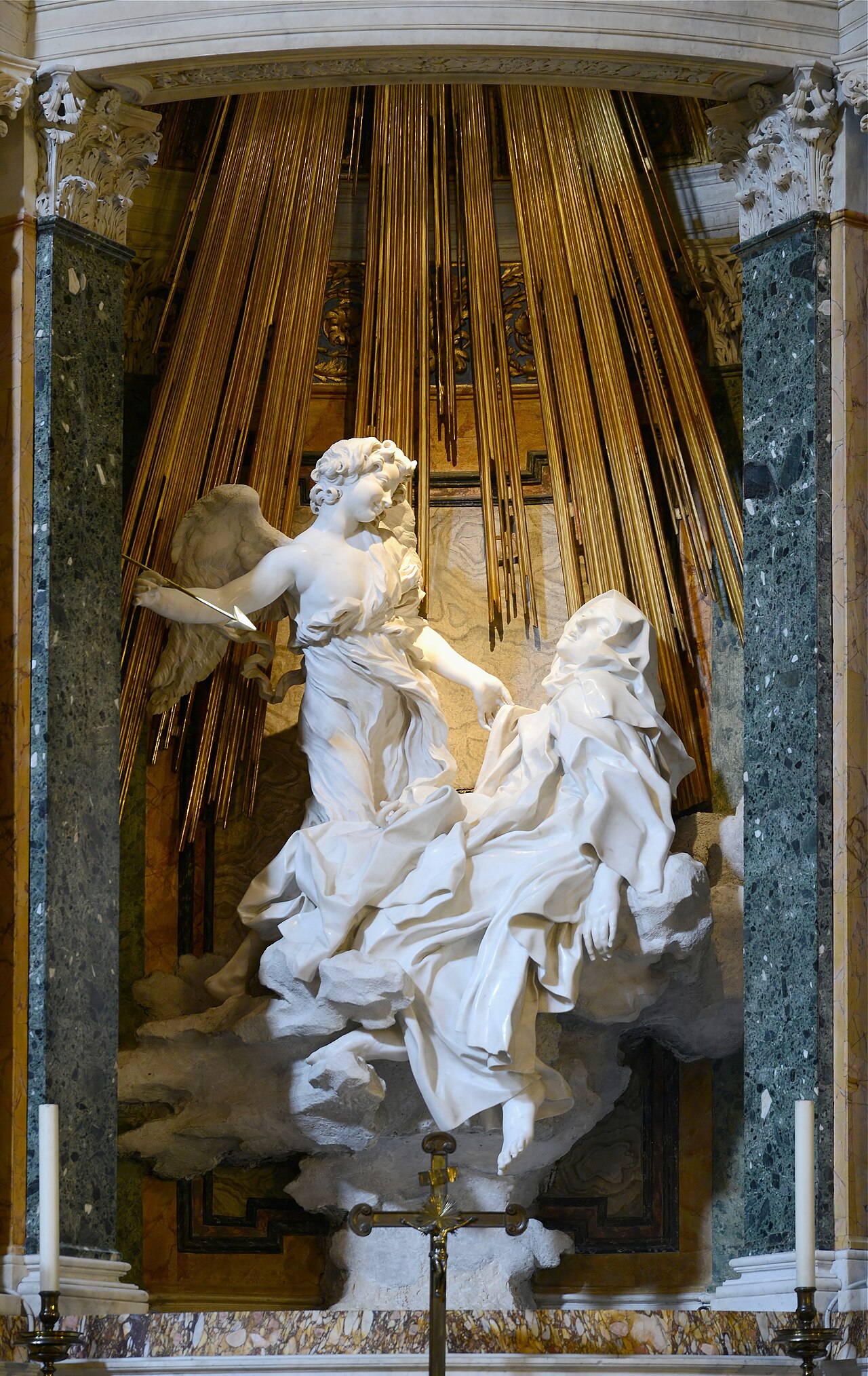 Sculpture
Secondary source
Ecstasy of Saint Teresa
Gian Lorenzo Bernini · 1647-1652
Primary source
The Interior Castle
Teresa of Ávila · written 1577, printed 1588
 Painting
Primary source
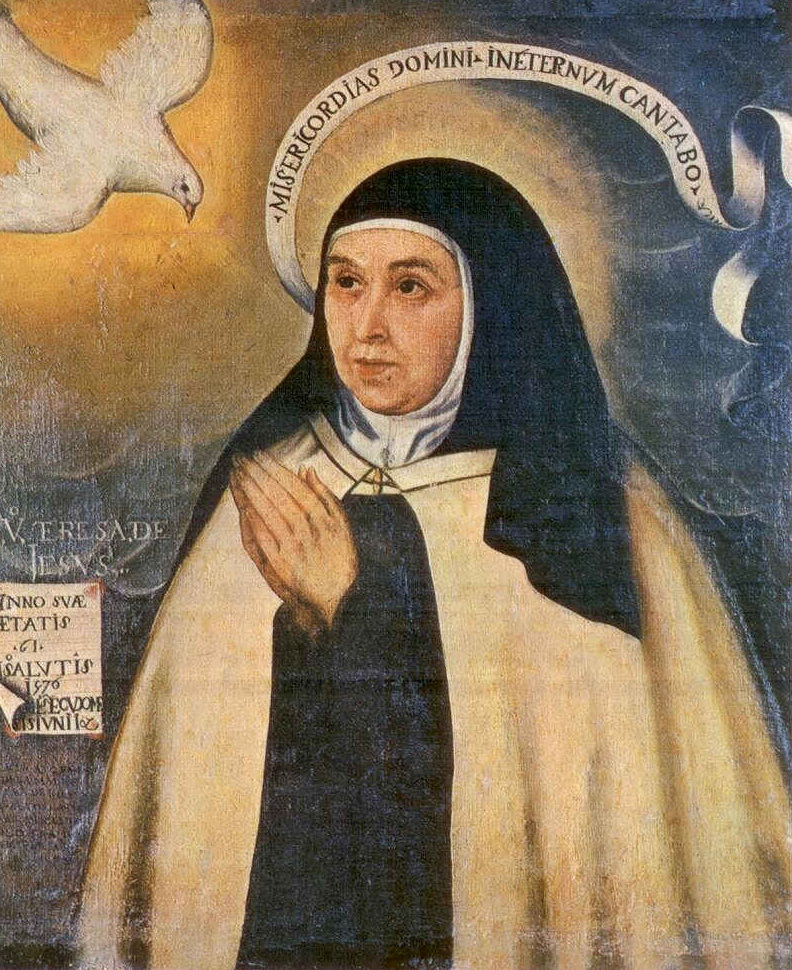
Portrait of Saint Teresa of Ávila
Juan de la Miseria · 1576
 Document
Primary source
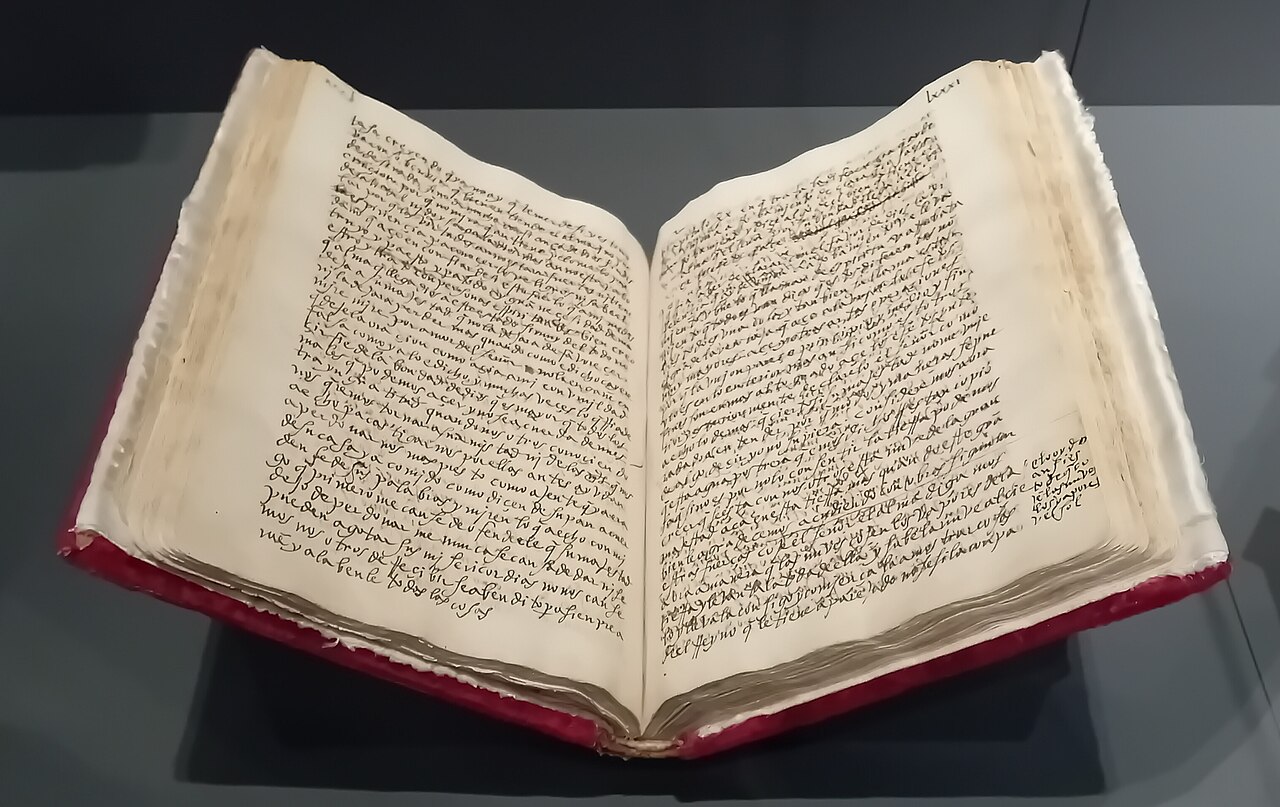
Manuscrito de la Vida de Santa Teresa de Jesús
Teresa of Ávila · 1562
Free account
Read every Teresa of Ávila source
Sign up free →
Ready when you are
Start chatting with Teresa of Ávila now.
20 messages free · No credit card · Available in 50+ languages.