


Secondary sourceArtifact10th–16th century
Saray-Jük
10th–16th century
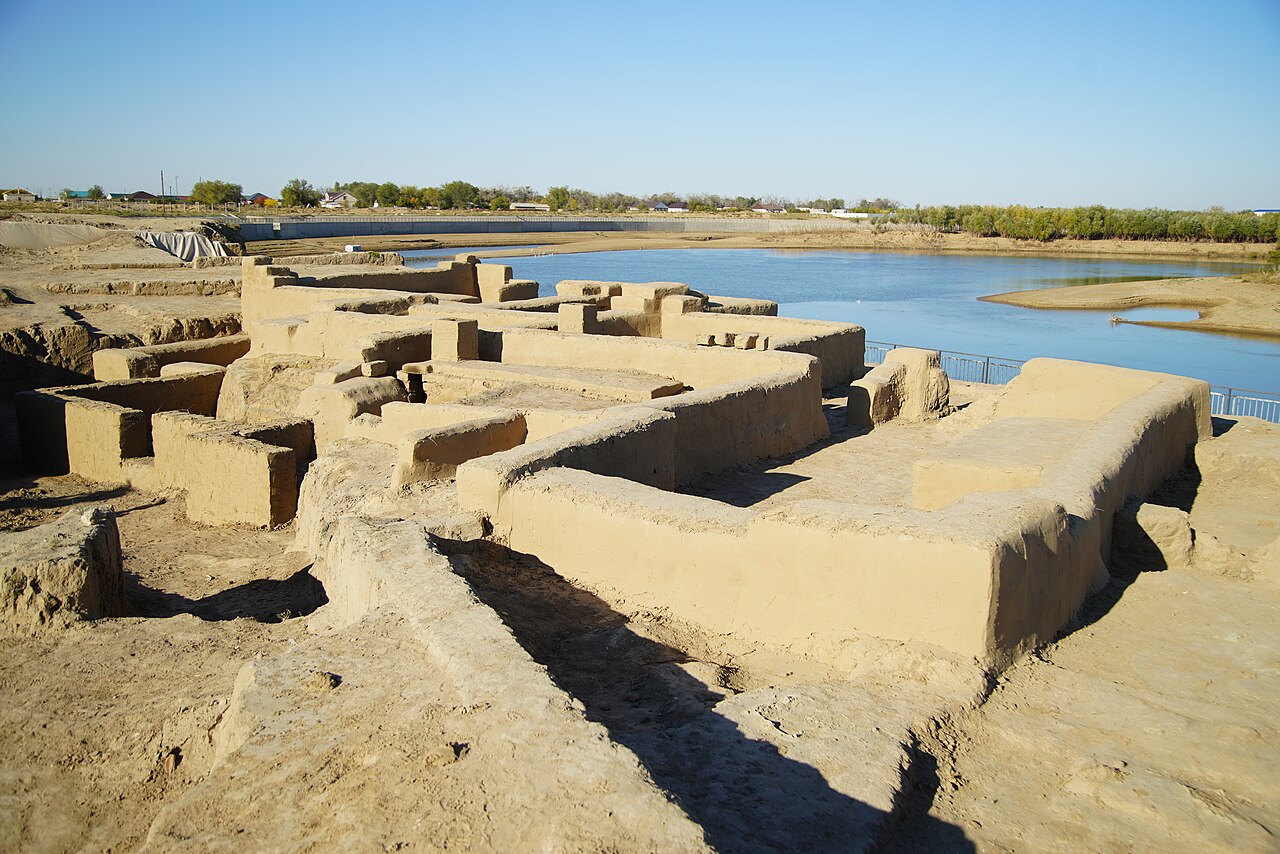
Ruins of a medieval Golden Horde city on the Ural River where Qasim Khan is traditionally said to have died and been buried.
Qasim Khan is traditionally said to have died and been buried at Saray-Jük, marking his realm's western edge.
About this source
What it is
Saray-Jük, also called Saraishyq, was a medieval trading city on the Ural River, flourishing between the 10th and 16th centuries as part of the Golden Horde and later the Nogai Horde. Its remains are now protected as a historical and cultural heritage site in Atyrau Region, Kazakhstan.
Why it matters
Saray-Jük sat on a major trade route linking Europe, Central Asia and China, and was visited by travelers such as Ibn Battuta. Tradition holds that Qasim Khan died and was buried here, making the site an important marker of the western reach of the Kazakh Khanate during his reign. Earlier Golden Horde khans were also buried in the city, connecting Qasim's story to a longer line of steppe rulers.
Look closer
- What can the layout of excavated walls and foundations tell us about daily life in a trading city like this?
- Why might a nomadic khan choose to be buried in a settled trading city rather than elsewhere?
- What is missing from the physical ruins that written accounts, like Ibn Battuta's, can add?
This artifact is part of the curated material that grounds the AI version of Kasym Khan on Humy.ai — when students ask about related events, the AI can quote it and cite it.
More Kasym Khan sources
Browse all 7 →Primary source
The Baburnama
Zahir-ud-din Muhammad Babur · c. 1493–1529
Primary source
Tarikh-i-Rashidi
Muhammad Haidar Dughlat · 1895
 Artifact
Secondary source
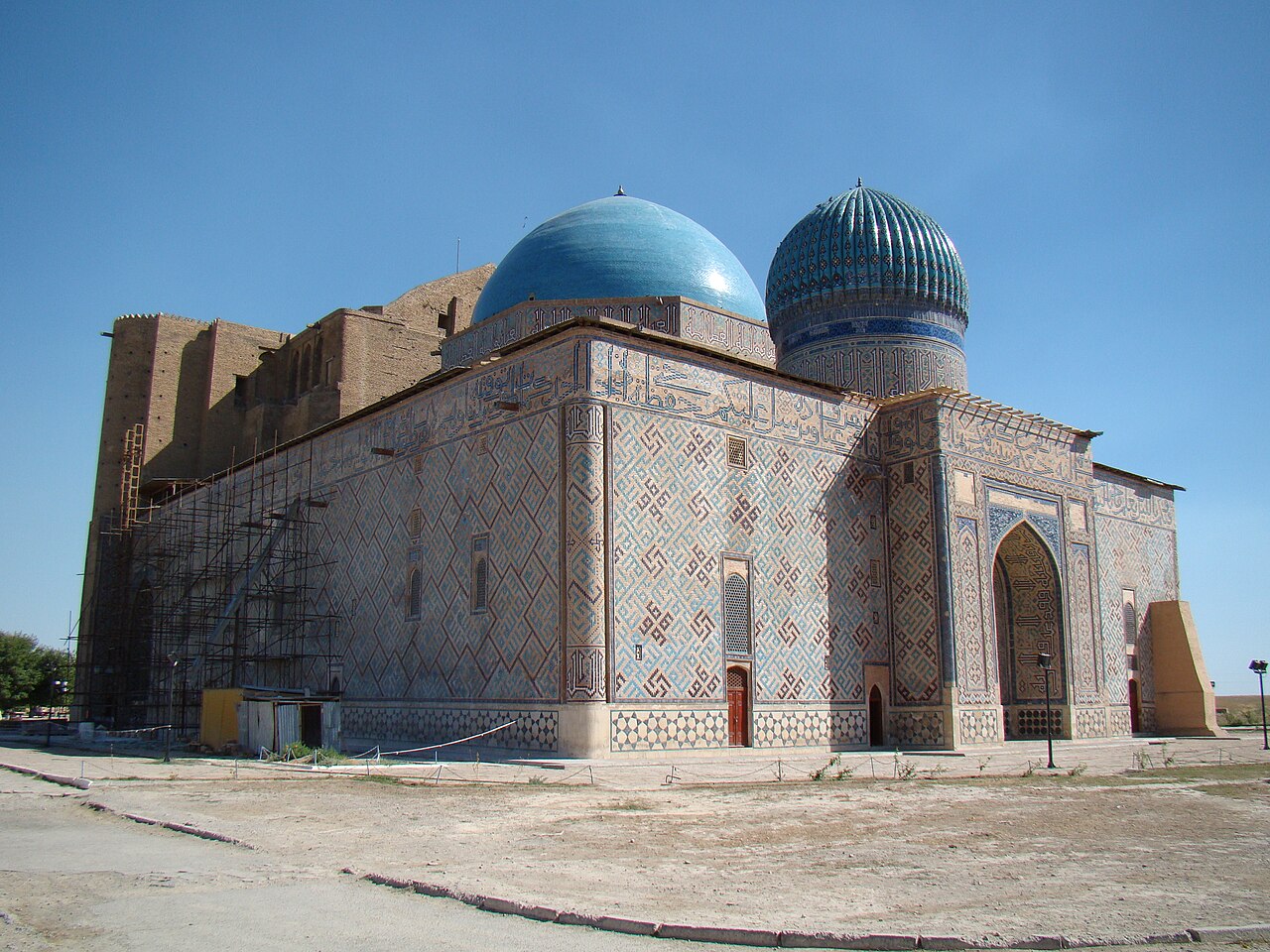
Mausoleum of Khoja Ahmed Yasawi
1389 (construction begun)
Secondary source
History of the Mongols
Henry H. Howorth · 1880
Free account
Read every Kasym Khan source
Sign up free →
Ready when you are
Start chatting with Kasym Khan now.
20 messages free · No credit card · Available in 50+ languages.