


Secondary sourceArtifact
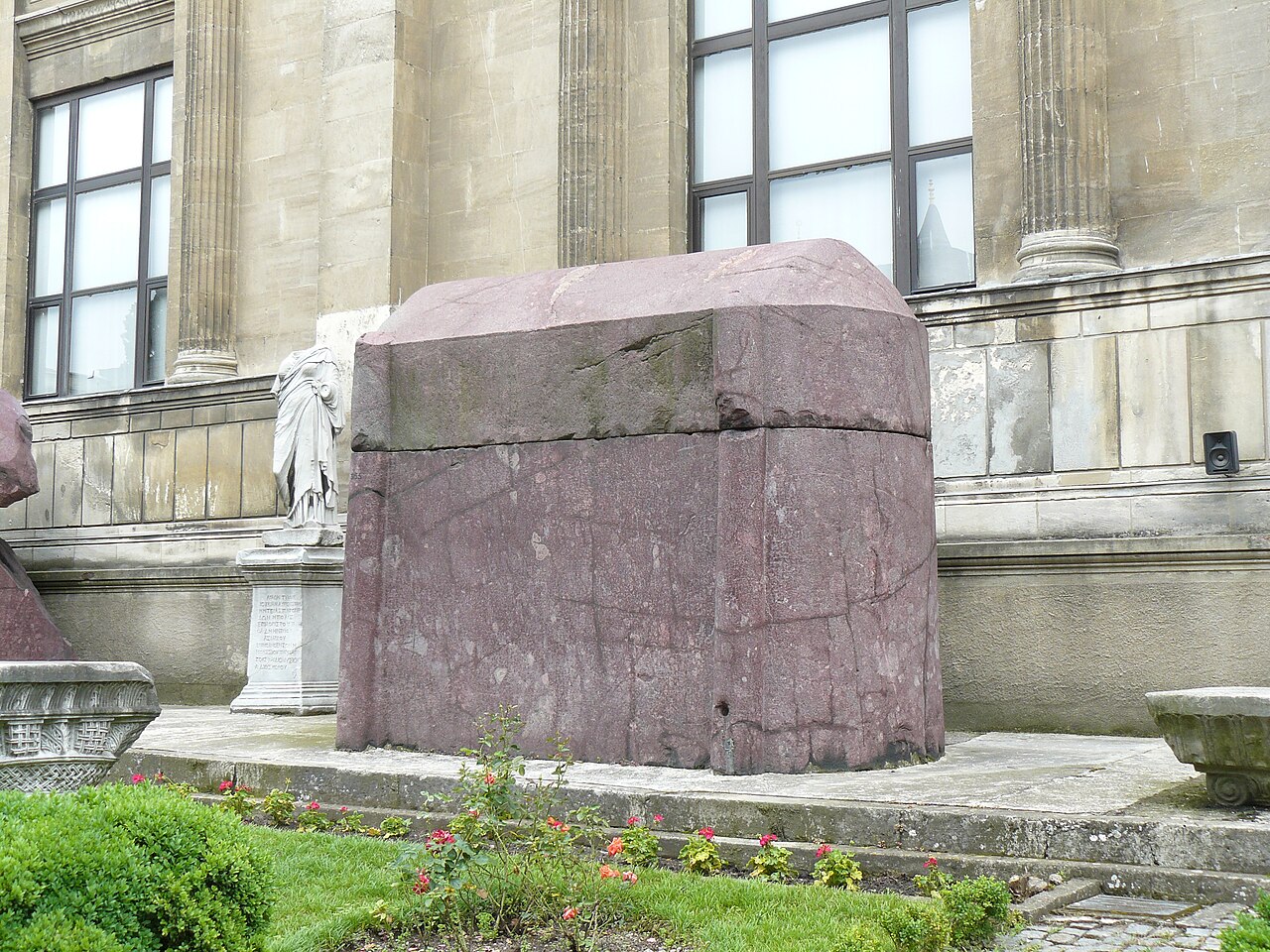
Sarcophagus Attributed to Julian
A large porphyry sarcophagus in Istanbul traditionally identified as the burial container of Emperor Julian, who was buried at the Church of the Holy Apostles.
This sarcophagus is traditionally attributed to Julian, connecting to his burial after death in 363.
About this source
What it is
This photograph shows a large, boxy reddish-purple stone sarcophagus with a flat lid, now displayed outdoors at the Istanbul Archaeology Museum. Porphyry stone was reserved for imperial burials in the Roman and Byzantine world.
Tradition links this sarcophagus to Julian, who died in 363 and was buried at the Church of the Holy Apostles in Constantinople.
Why it matters
Imperial burial customs reveal how rulers like Julian were honored even after death, and how later generations preserved or reinterpreted objects connected to emperors, especially one remembered for rejecting Christianity.
Look closer
- Why might a stone sarcophagus survive for so many centuries when other objects do not?
- What does the choice of porphyry stone tell us about how Romans marked imperial status?
- How might historians decide whether a traditional attribution like this one is accurate?
This artifact is part of the curated material that grounds the AI version of Julian on Humy.ai — when students ask about related events, the AI can quote it and cite it.
More Julian sources
Browse all 89 →
Ready when you are
Start chatting with Julian now.
20 messages free · No credit card · Available in 50+ languages.