


Secondary sourceArtifact2012-02-23
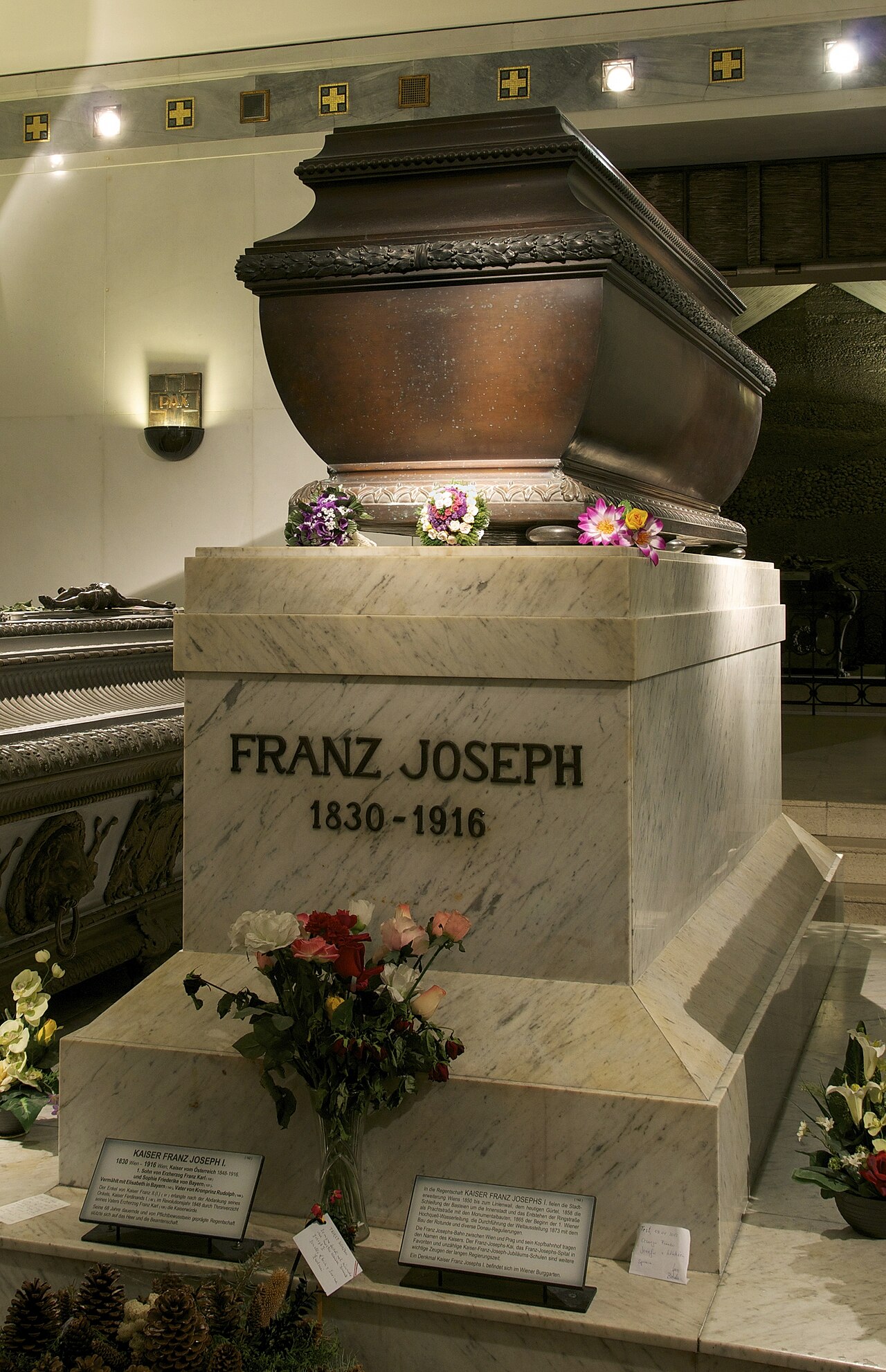
Sarcophagus of Franz Joseph I, Capuchin Crypt, Vienna
Jebulon · 2012-02-23
A photograph of the bronze sarcophagus of Franz Joseph I in the crypt of the Capuchin church in Vienna. It shows a later memorial rather than an object from his lifetime.
The tomb where Franz Joseph is commemorated, showing how his memory was kept after his death in 1916.
About this source
What it is
This is a photograph taken on 23 February 2012 of the sarcophagus of Emperor and King Franz Joseph in the crypt of the Capuchin church in Vienna. The image shows a bronze sarcophagus on a white marble plinth inscribed FRANZ JOSEPH 1830-1916, with flower arrangements on top and at the base. The photograph is a modern record of a memorial.
Why it matters
Rulers of the Habsburg family were buried in this crypt, and the sarcophagus shows how the dynasty chose to remember Franz Joseph after his death in 1916. Because it was made after his lifetime, it tells us about later memory and ceremony more than about his own time.
Look closer
- What do the flowers and the inscription suggest about how visitors remember him?
- How is a tomb different from a record made while a ruler was alive?
- Why might a memorial be designed to present a ruler in a particular way?
This artifact is part of the curated material that grounds the AI version of Franz Joseph I of Austria on Humy.ai — when students ask about related events, the AI can quote it and cite it.
More Franz Joseph I of Austria sources
Browse all 95 →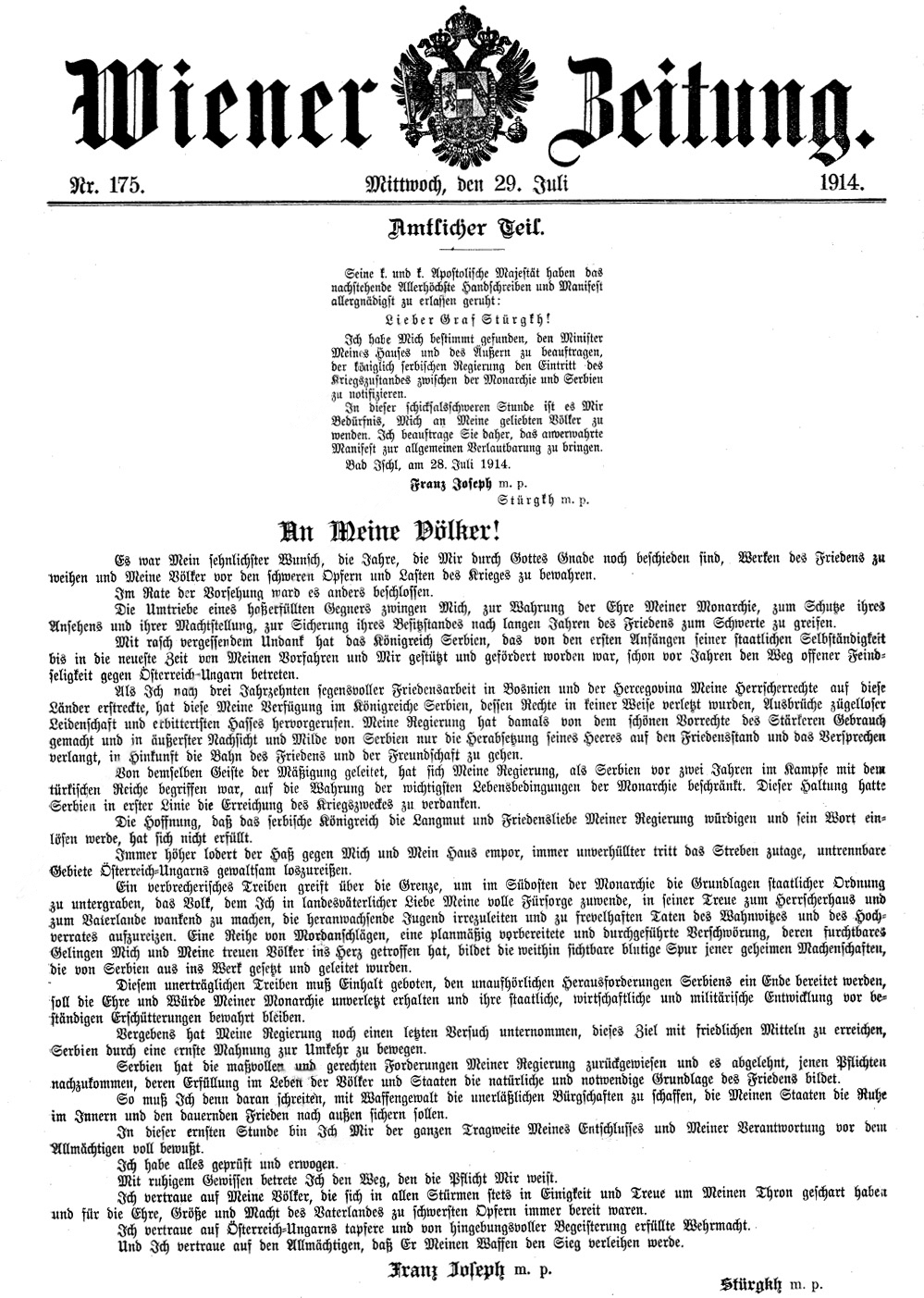 Document
Primary source
To my peoples
Franz Joseph I of Austria · 28 July 1914
 Document
Primary source
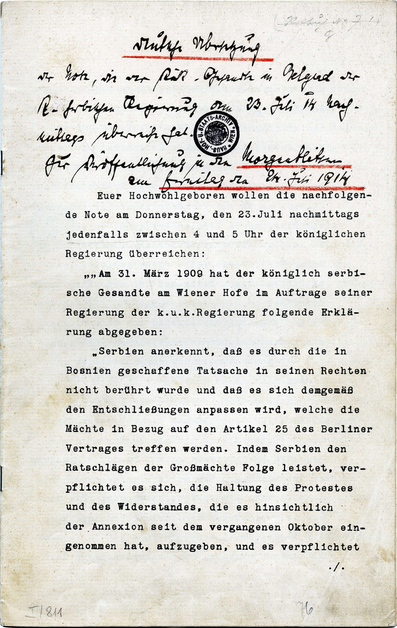
July Ultimatum
Leopold Berchtold · 23 July 1914
 Painting
Secondary source
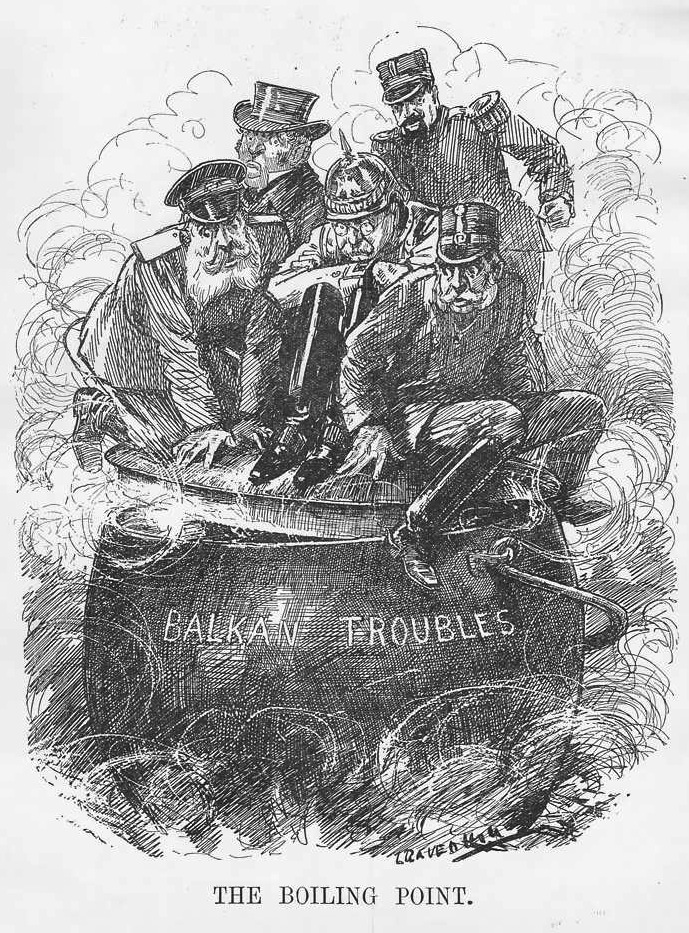
The Boiling Point
Leonard Raven-Hill · 2 October 1912
Primary source
Recording of the voice of Franz Joseph I of Austria
Franz Joseph I of Austria · 1900
Free account
Read every Franz Joseph I of Austria source
Sign up free →
Ready when you are
Start chatting with Franz Joseph I of Austria now.
20 messages free · No credit card · Available in 50+ languages.