


Primary sourceArtifact1916
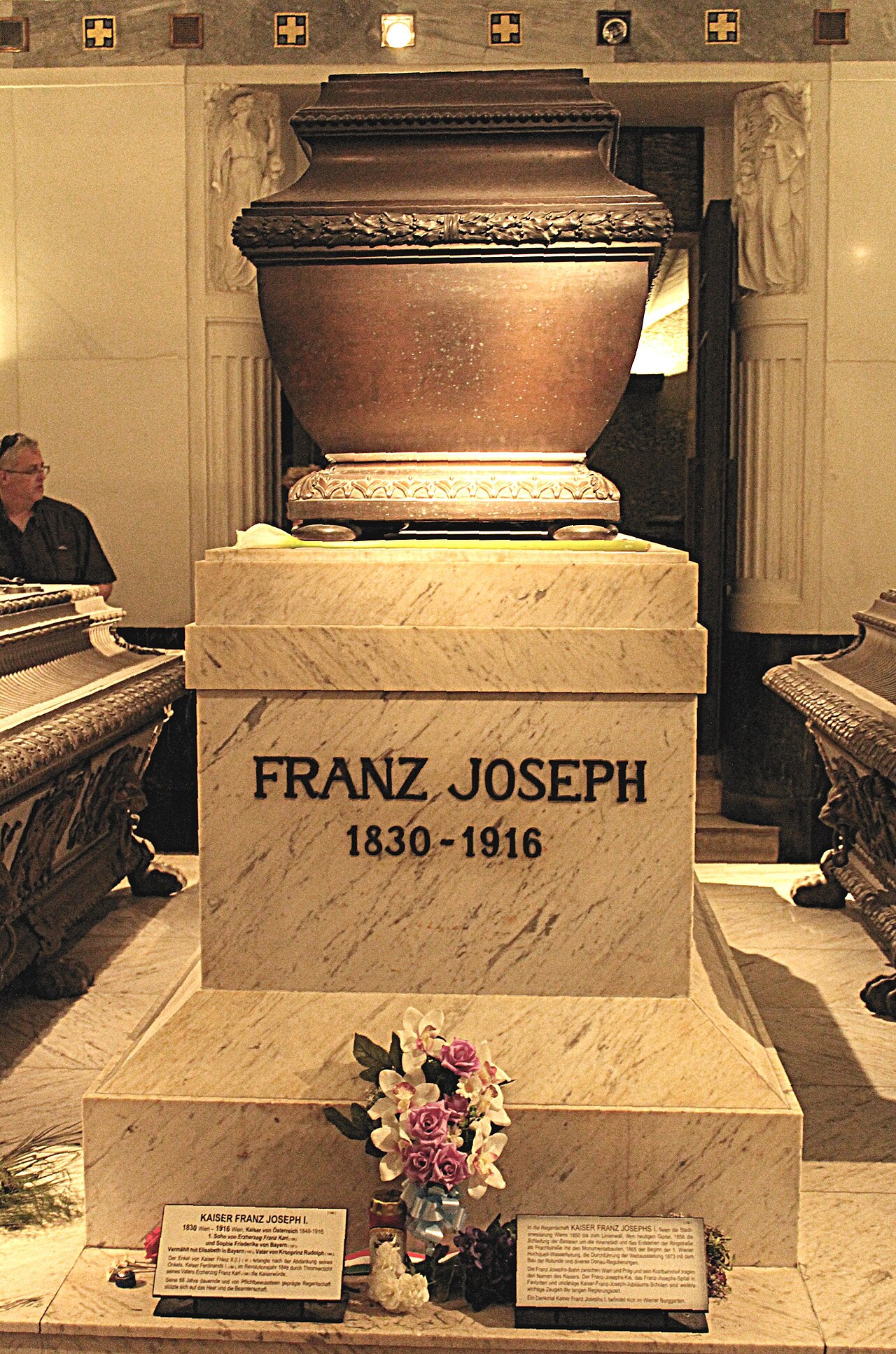
Sarcophagus of Franz Joseph I in the Imperial Crypt
1916
The metal tomb holding Franz Joseph's remains in Vienna's Capuchin Crypt, beside his wife Elisabeth and son Rudolf.
This is the tomb holding Franz Joseph's own remains after his death in 1916.
About this source
What it is
This is the sarcophagus of Emperor Franz Joseph I, placed in the Imperial Crypt (Kapuzinergruft) in Vienna after his death in 1916. By this period, Habsburg sarcophagi were typically made of cast brass and bronze, sometimes with silver-bronzed copper, worked by casting, carving and engraving.
Why it matters
The Imperial Crypt was the Habsburg dynasty's burial place for centuries, and the materials and craftsmanship of each tomb changed with fashion and cost over time. Franz Joseph's tomb, set near his wife Elisabeth and son Rudolf, marks the end of the long reign of a ruler whose family had dominated Central Europe for generations.
Look closer
- What does the choice of metal and decoration on a tomb tell you about how a ruler wanted to be remembered?
- Why might this emperor be buried near his wife and son rather than alone?
- What does a crypt full of generations of rulers reveal about how a dynasty saw its own history?
This artifact is part of the curated material that grounds the AI version of Franz Joseph I of Austria on Humy.ai — when students ask about related events, the AI can quote it and cite it.
More Franz Joseph I of Austria sources
Browse all 95 →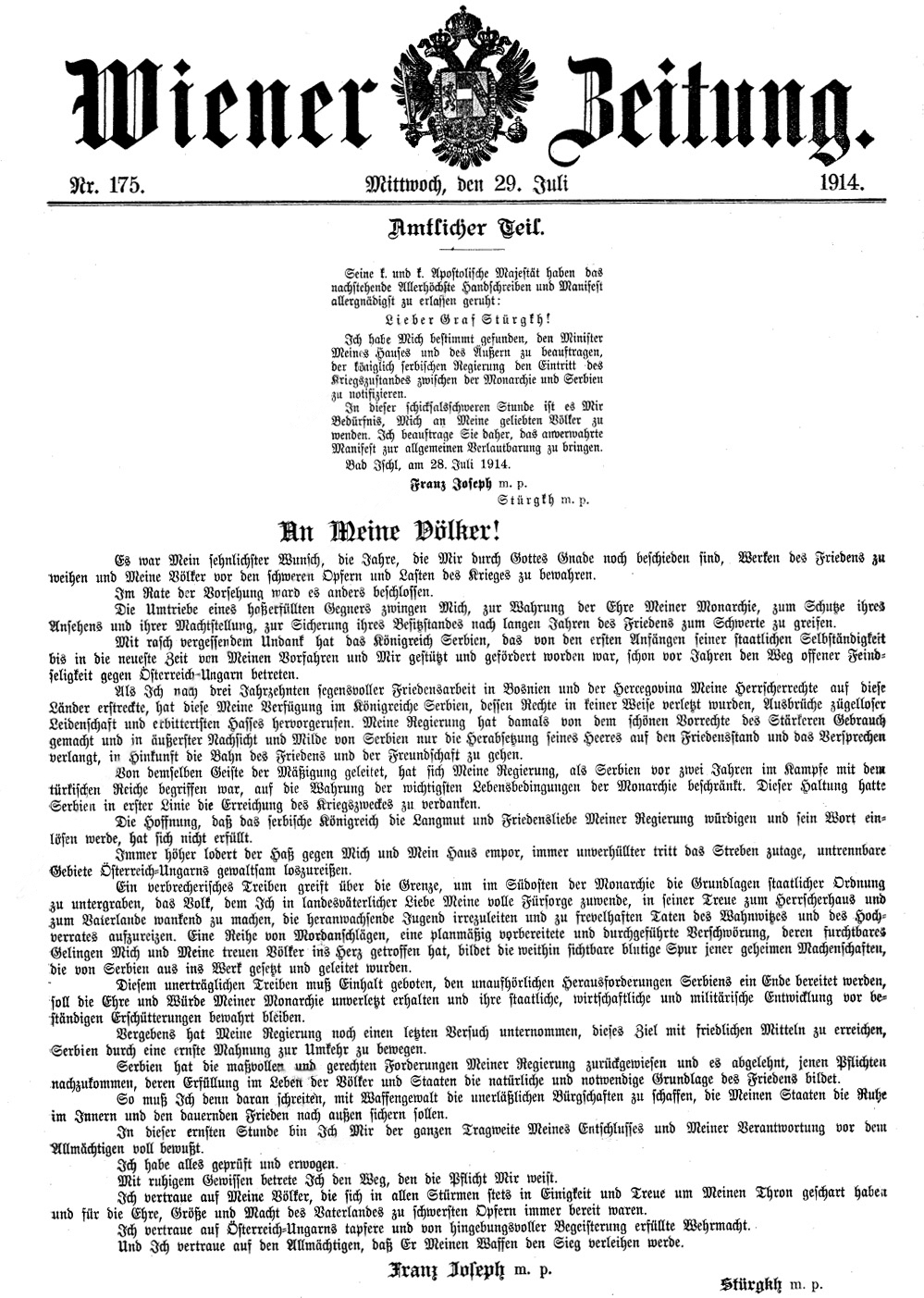 Document
Primary source
To my peoples
Franz Joseph I of Austria · 28 July 1914
 Document
Primary source
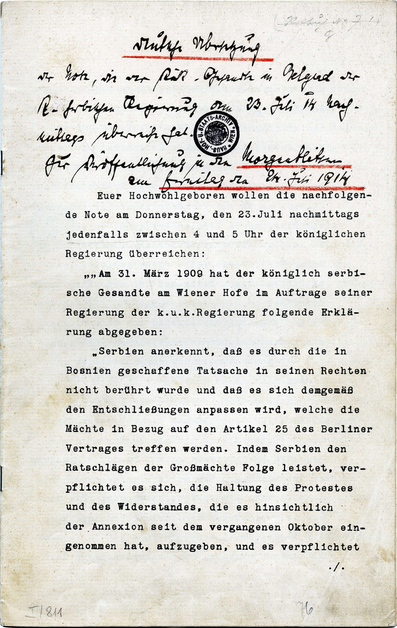
July Ultimatum
Leopold Berchtold · 23 July 1914
 Painting
Secondary source
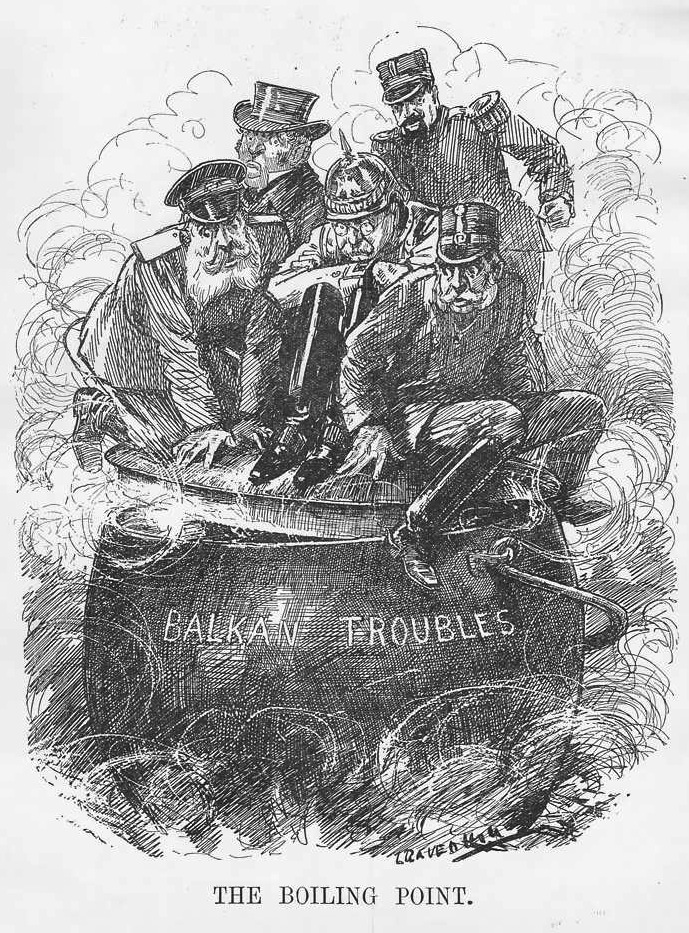
The Boiling Point
Leonard Raven-Hill · 2 October 1912
Primary source
Recording of the voice of Franz Joseph I of Austria
Franz Joseph I of Austria · 1900
Free account
Read every Franz Joseph I of Austria source
Sign up free →
Ready when you are
Start chatting with Franz Joseph I of Austria now.
20 messages free · No credit card · Available in 50+ languages.