


Primary sourcePainting1826
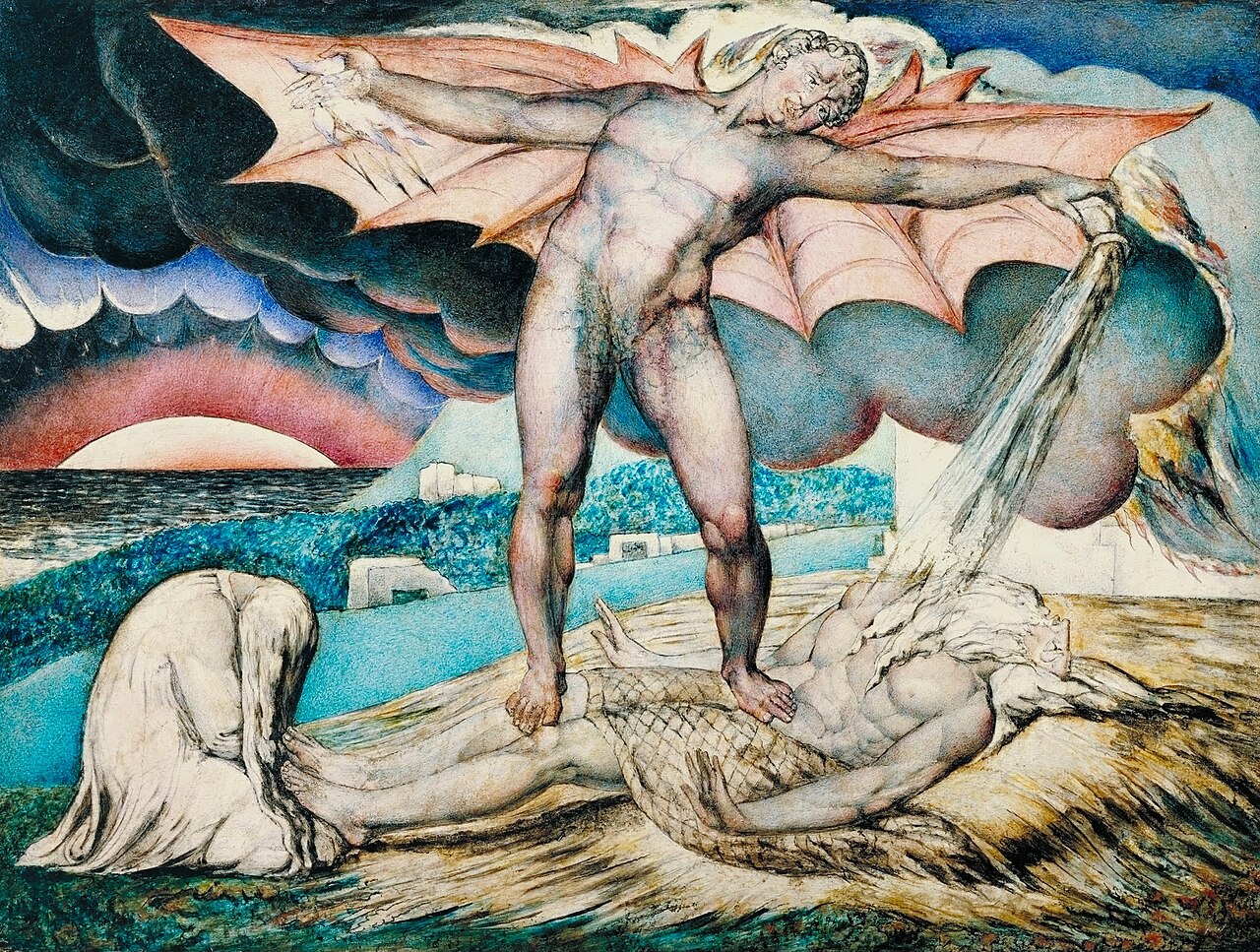
Satan Smiting Job with Sore Boils
William Blake · 1826
A late painting by William Blake, dated 1826, showing the biblical Job struck by Satan. It extends Blake's earlier Job illustrations into painting.
A late work by Blake that carries his interpretation of the biblical Job into painting, one of his final treatments of the subject.
About this source
What it is
This work by William Blake dates from 1826 and is held by the Tate. The curator's note calls it a late tempera that extends his Job interpretation into painting. The image shows a winged, nude figure with outstretched arms and bat-like wings standing over a prone, nude man on sand. A kneeling, draped figure sits nearby. Dark clouds fill the sky, and a red and white sunset glows over a sea and distant buildings. A stream of light pours from the winged figure's hand.
Why it matters
The Book of Job tells of a good man who suffers terrible losses and illness, and Blake returned to this story in several works. This late painting shows that Blake kept developing his Job ideas into a new medium at the end of his life. It reveals how a poet and artist of his time used scripture to explore suffering, faith and the power of unseen forces, themes that were central to his wider work.
Look closer
- Which figure seems to have the most power in the scene, and what visual clues show this?
- Why might the artist have chosen to show the suffering man nude and in the open, rather than in a home?
- What does the sunset and the distant buildings add to the story, and what might the painting leave out?
This painting is part of the curated material that grounds the AI version of William Blake on Humy.ai — when students ask about related events, the AI can quote it and cite it.
More William Blake sources
Browse all 75 →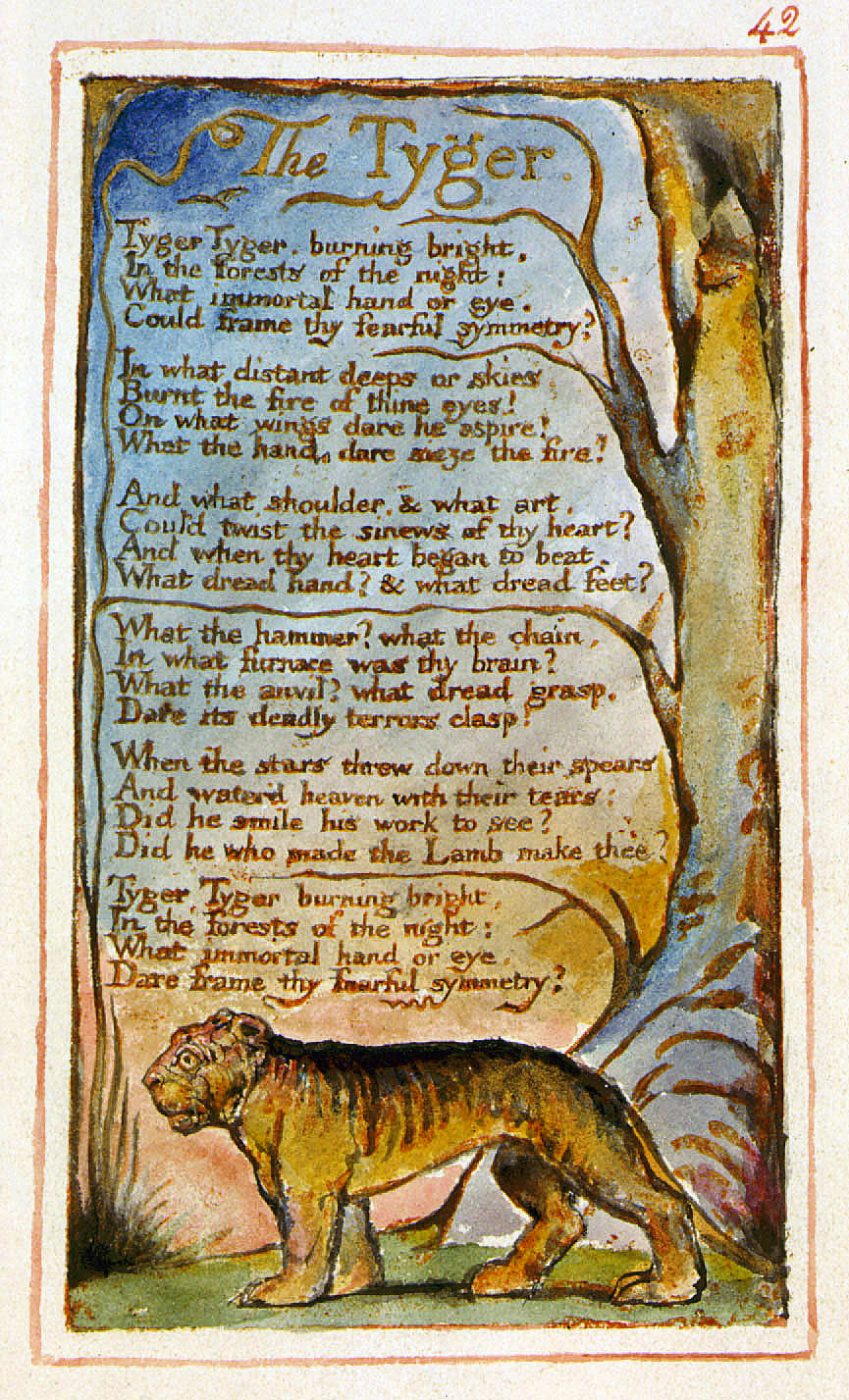 Book
Primary source
The Tyger
William Blake · 1794
 Book
Primary source
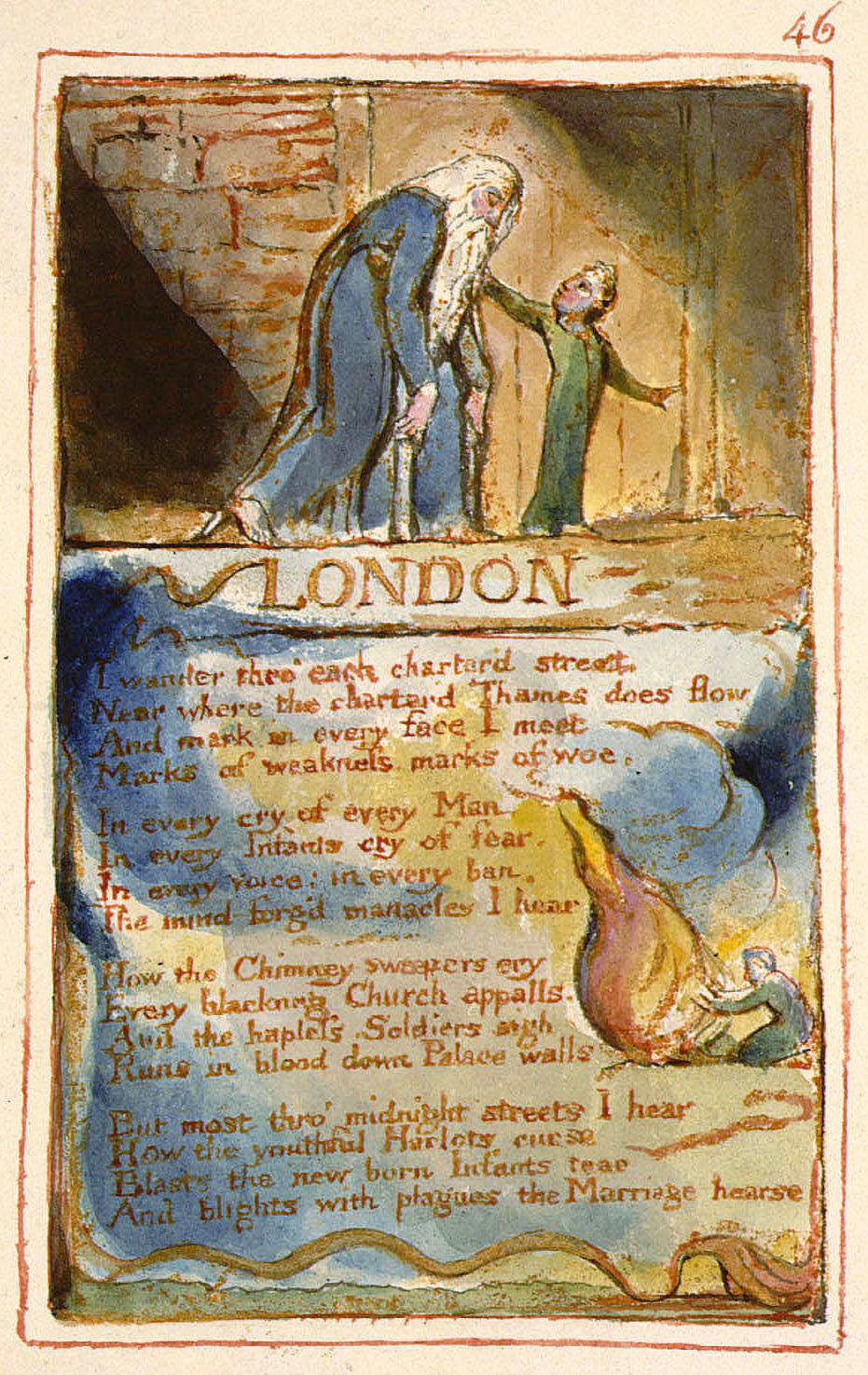
London
William Blake · 1794
 Book
Primary source
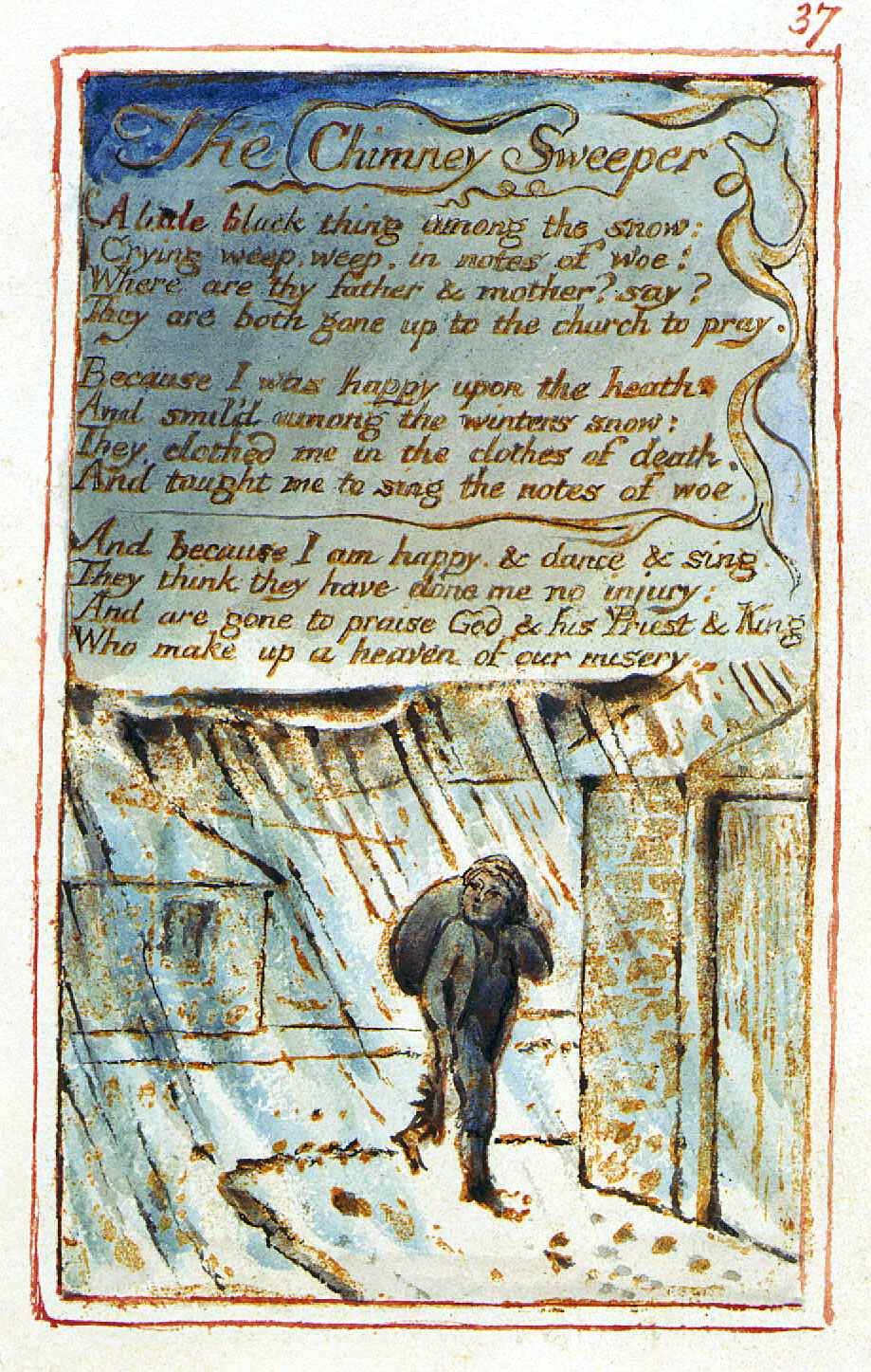
The Chimney Sweeper
William Blake · 1789 and 1794
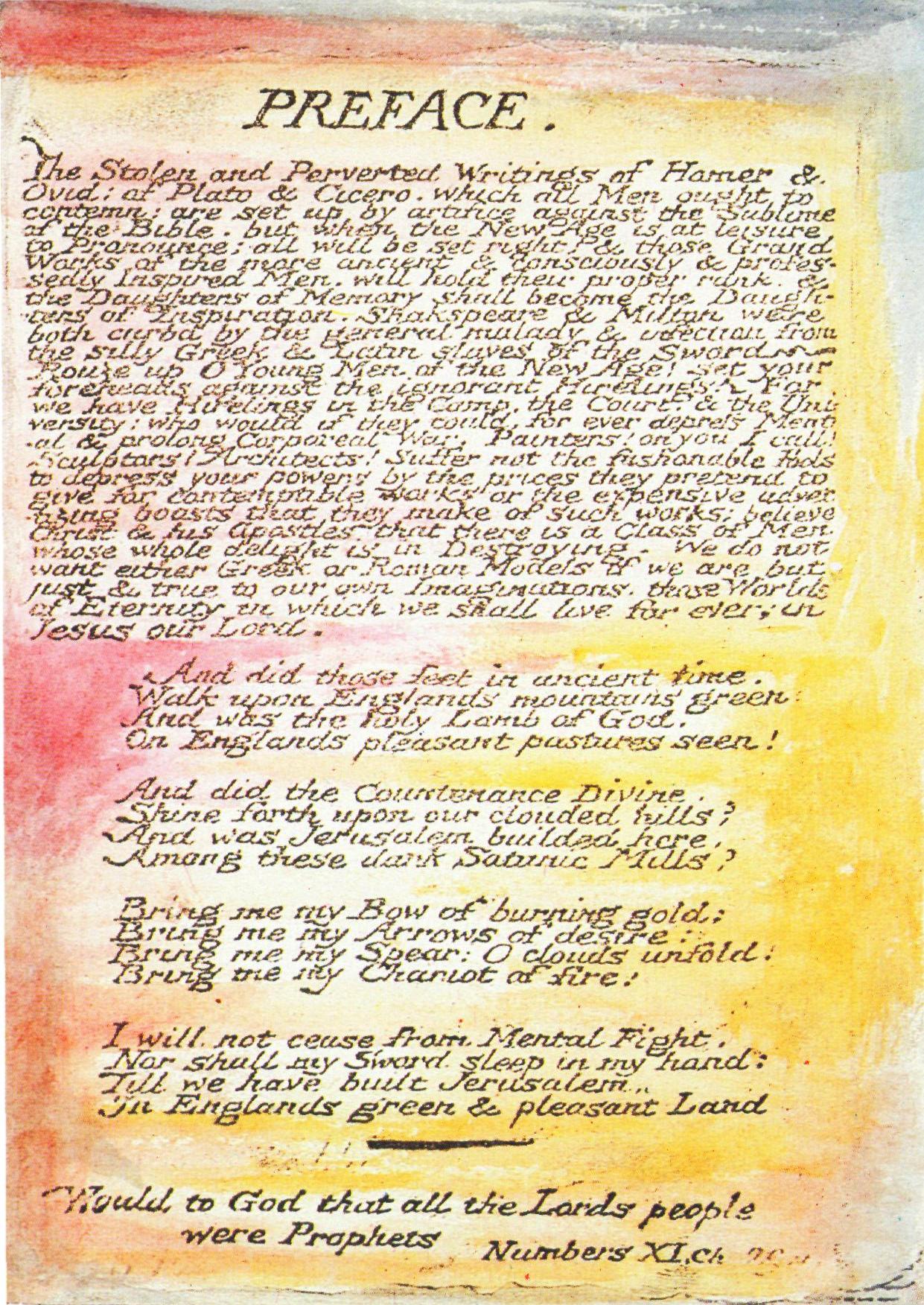 Book
Primary source
And did those feet in ancient time
William Blake · 1804 (printed c. 1808)
Free account
Read every William Blake source
Sign up free →
Ready when you are
Start chatting with William Blake now.
20 messages free · No credit card · Available in 50+ languages.