


Tertiary sourceBook1911
Savonarola entry, 1911 Encyclopaedia Britannica
1911
A long 1911 reference entry on Girolamo Savonarola's birth, family, education and career, written as background for students.
A substantial reference article covering Savonarola's family, youth and career, useful for placing him in his Ferrara and Florence settings.
Free Humy account · No credit card · 120,912 sources to read
About this source
What it is
This is the entry on Savonarola in the 1911 edition of the Encyclopaedia Britannica. It is a long article of about 6,600 words, titled Savonarola, Girolamo (1452-1498), Italian monk and martyr.
The entry begins with his birth at Ferrara on 21 September 1452. It names his father, Michele Savonarola, and his mother, Elena Bonaccossi of Mantua, and it describes his grandfather, a physician from Padua, who was his first tutor. The article also describes Ferrara in his youth as a lively town under Borso d'Este.
Why it matters
A reference entry like this is a tertiary source. It gathers older studies and sources into one summary. The bibliography cites later works by P. Villari and E. Casanova, showing how historians kept studying Savonarola after the nineteenth century. The article is a useful starting point for the family and city that shaped him.
Look closer
- Why does the entry describe his mother Elena in such detail, and what does it suggest about the sources the writer used?
- The article says his parents hoped he would follow his grandfather into medicine. What does that tell us about the family's fortunes?
- Which parts of Savonarola's early life are presented as facts, and which might rest on the writer's own judgment?
This book is part of the curated material that grounds the AI version of Girolamo Savonarola on Humy.ai — when students ask about related events, the AI can quote it and cite it.
More Girolamo Savonarola sources
Browse all 90 →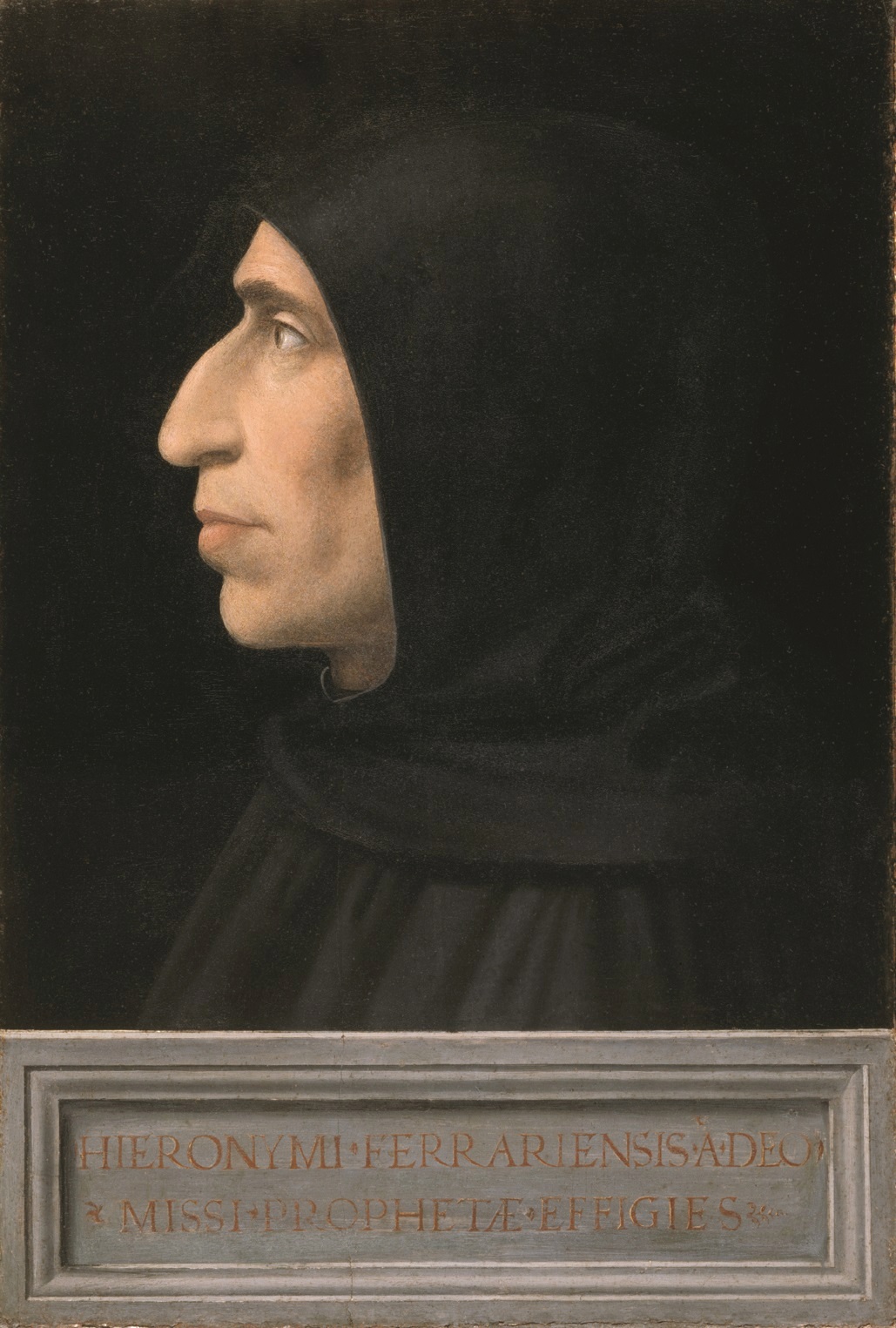 Painting
Primary source
Portrait of Girolamo Savonarola
Fra Bartolomeo · 1498
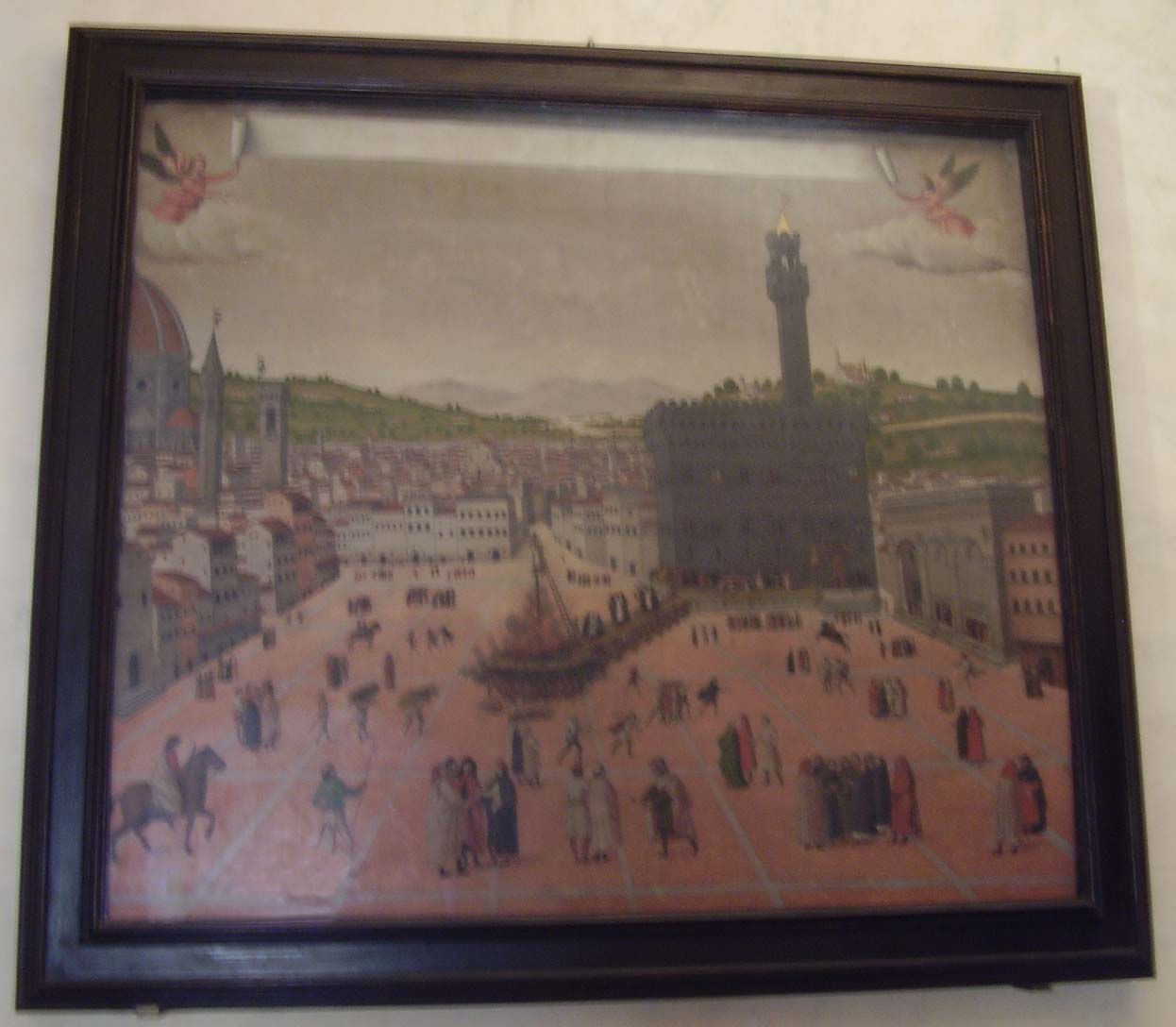 Painting
Primary source
The Execution of Savonarola in the Piazza della Signoria
Anonymous Florentine painter · c. 1498–1500
Primary source
Trattato sul governo di Firenze
Girolamo Savonarola · 1500
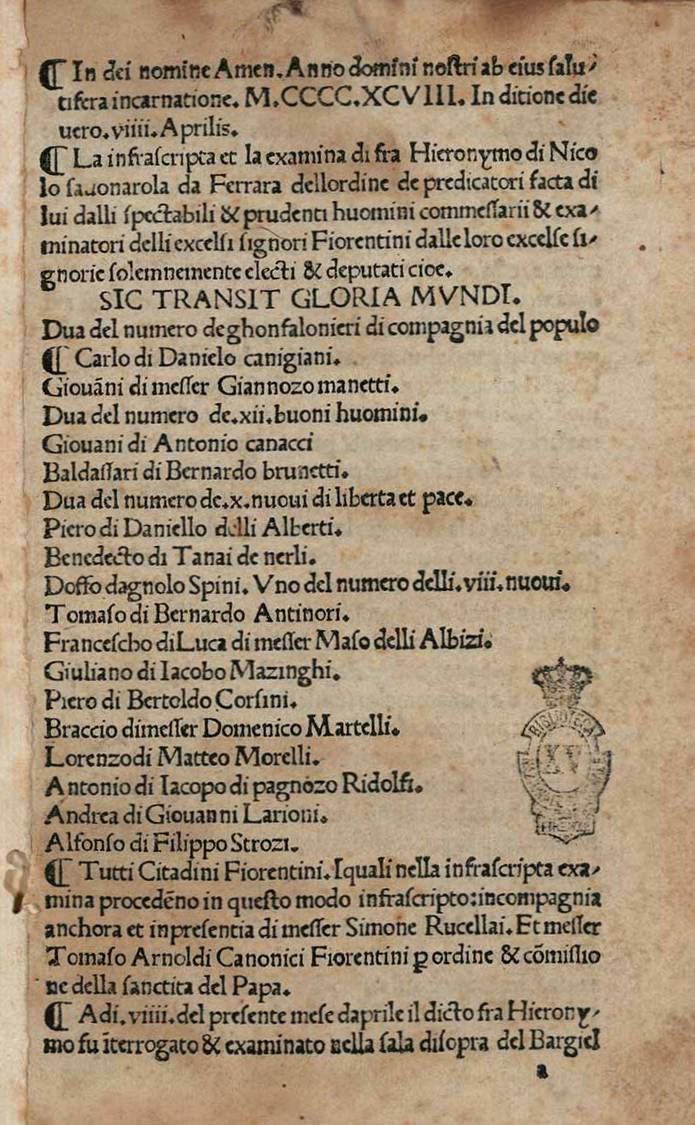
 Diary entry
Primary source
Diario fiorentino
Luca Landucci · 1450–1516
Free account
Read every Girolamo Savonarola source
Sign up free →
Ready when you are
Start chatting with Girolamo Savonarola now.
20 messages free · No credit card · Available in 50+ languages.