


Primary sourcePainting16 March 1872
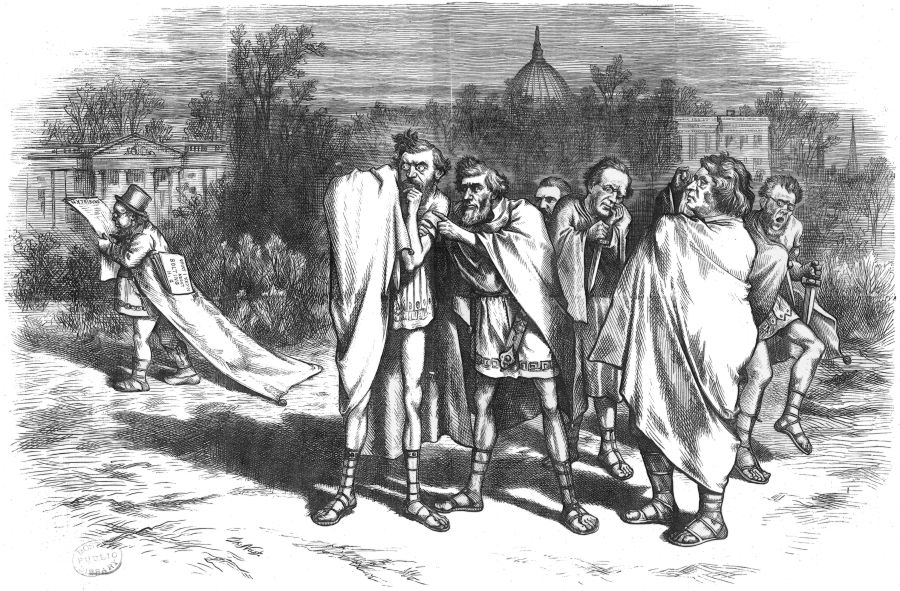
Schurz Conspirators
Thomas Nast · 16 March 1872
A Thomas Nast cartoon from 1872 casting Carl Schurz and other senators as conspirators from Shakespeare's Julius Caesar.
Greeley is cast as Cicero, being considered for inclusion in a political conspiracy against Grant before the 1872 election.
About this source
What it is
This 1872 engraving by Thomas Nast depicts a scene modeled on Shakespeare's Julius Caesar. Senators including Carl Schurz, Reuben Fenton, Lyman Trumbull, Charles Sumner, and Thomas W. Tipton are shown as conspirators outside the White House, discussing whether to bring Horace Greeley (cast as Cicero) into their plot.
Why it matters
The cartoon comments on the Liberal Republican split of 1872, when Schurz and other Republicans broke from President Grant's party to back Greeley's presidential run. By using the famous Shakespeare conspiracy, Nast suggests these politicians were plotting against established power for self-interested reasons.
Look closer
- Why would Nast use a Shakespeare play to comment on real politics?
- What does dressing real senators as Roman conspirators suggest about Nast's opinion of them?
- What historical context would a reader need to understand this cartoon fully?
This painting is part of the curated material that grounds the AI version of Horace Greeley and Carl Schurz on Humy.ai — when students ask about related events, the AI can quote it and cite it.
More Horace Greeley sources
Meet the AI Horace Greeley →Primary source
Letter to Horace Greeley
Abraham Lincoln · 22 August 1862
 Newspaper article
Primary source
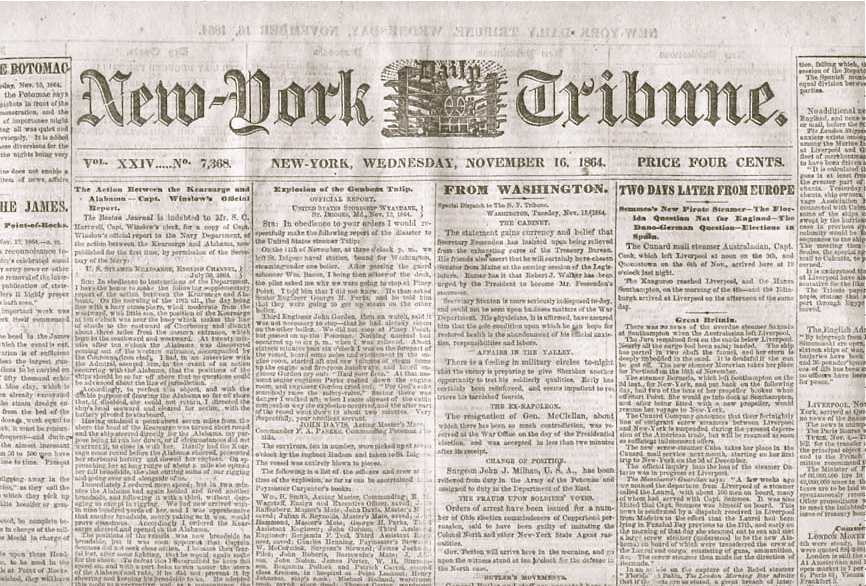
New-York Tribune
Horace Greeley · 1841 (issue shown: 16 November 1864)
Primary source
An Overland Journey, from New York to San Francisco, in the Summer of 1859
Horace Greeley · 1860
 Photograph
Primary source
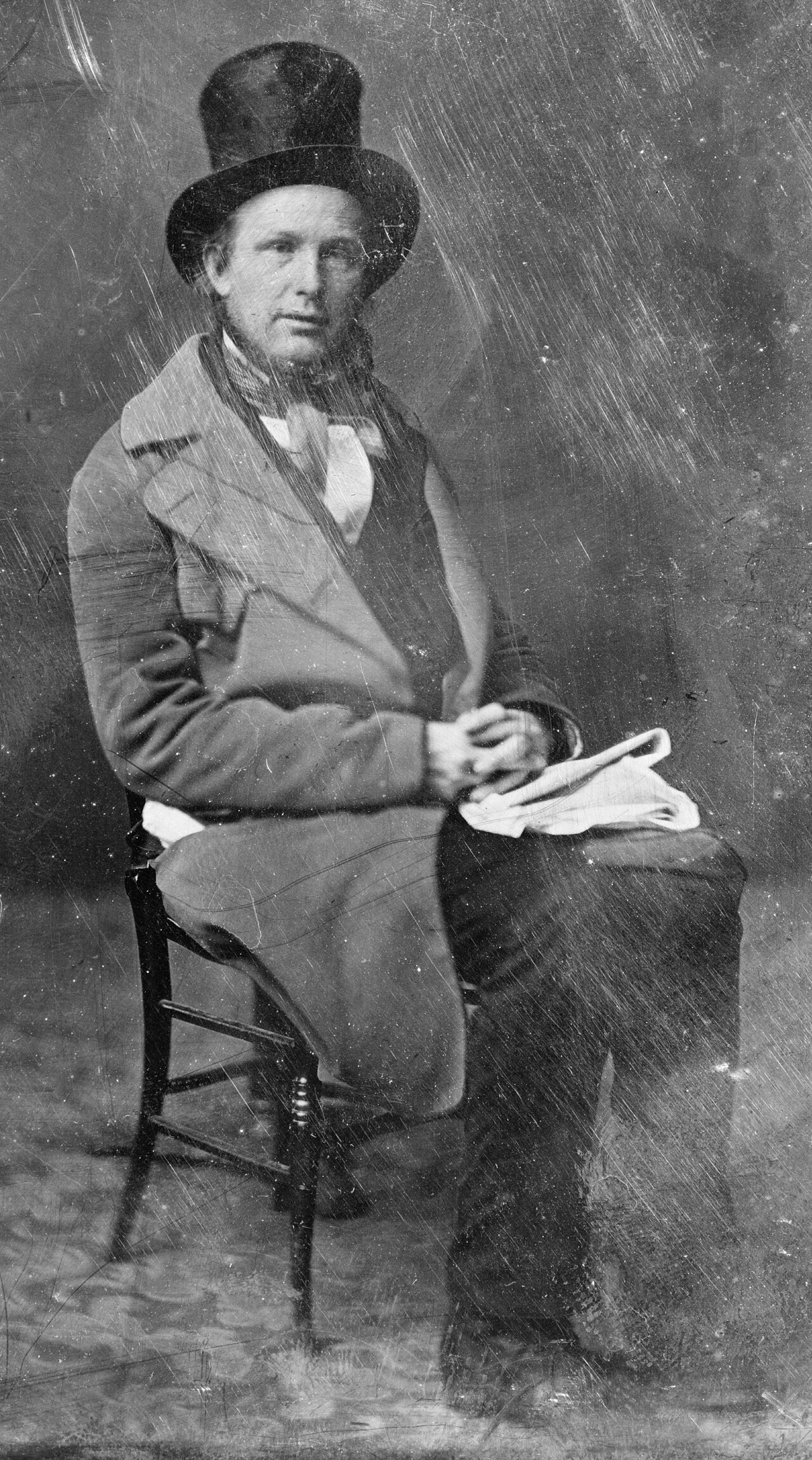
Portrait of Horace Greeley
Mathew Benjamin Brady · 1840s
 Painting
Primary source
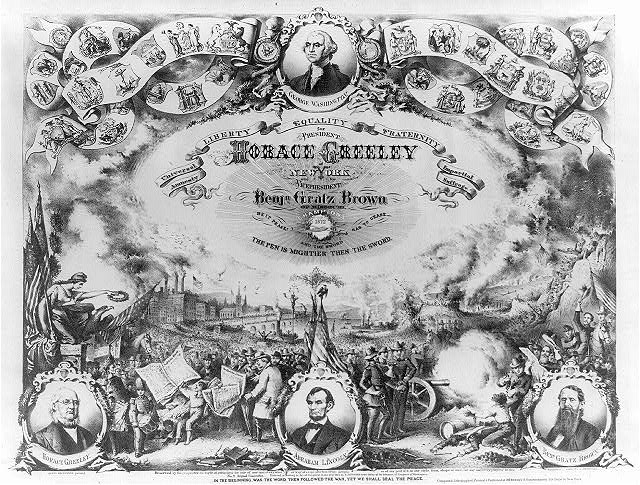
Campaign Print for Greeley and Brown
Henry Brueckner and Svobodin Merinsky · 1872
Ready when you are
Start chatting with Horace Greeley now.
20 messages free · No credit card · Available in 50+ languages.