


Primary sourcePhotographc. May 1944
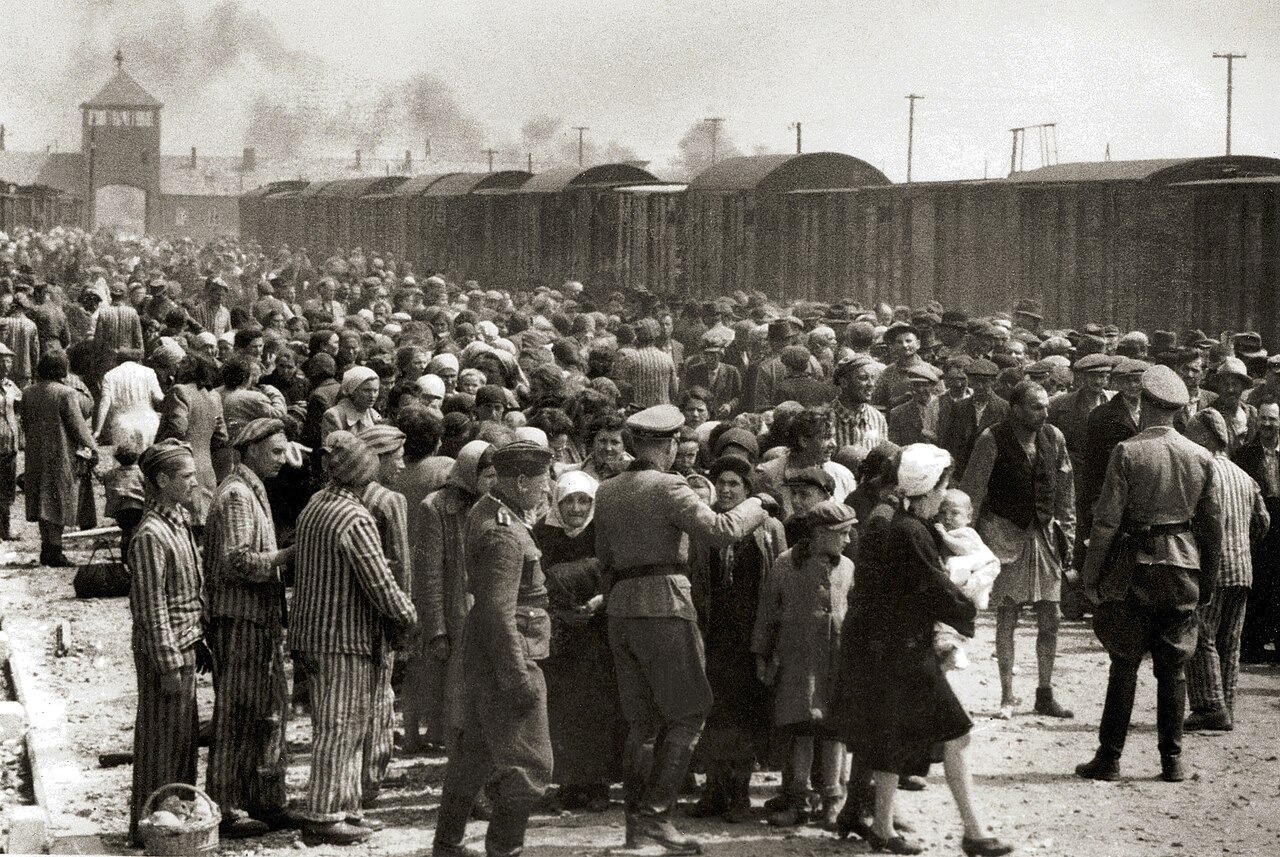
Selection on the Ramp at Auschwitz-Birkenau (Auschwitz Album 1a)
Bernhard Walter · c. May 1944
A 1944 SS photograph showing Hungarian Jews on the arrival ramp at Auschwitz-Birkenau, part of the historical context behind Adorno's postwar thought.
Provides the historical backdrop of the Holocaust that shaped Adorno's reflections on culture after catastrophe.
About this source
What it is
Taken by Bernhard Walter around May 1944, this photograph shows a crowded ramp at Auschwitz-Birkenau where Hungarian Jews were separated for either forced labor or death. It is part of the Auschwitz Album, discovered by survivor Lili Jacob in 1945 and now held at Yad Vashem.
Why it matters
Yad Vashem calls the Auschwitz Album the only surviving visual evidence of the process leading to mass murder at the camp. Adorno, writing after the war, grappled with how culture and thought could continue after such atrocities, making images like this part of the moral and historical background to his philosophy.
Look closer
- What can you tell about the people in this photograph from their clothing and posture?
- Why was this photograph taken, and by whom?
- How does seeing this image change the way you understand Adorno's postwar writing?
This photograph is part of the curated material that grounds the AI version of Theodor W. Adorno on Humy.ai — when students ask about related events, the AI can quote it and cite it.
More Theodor W. Adorno sources
Browse all 37 →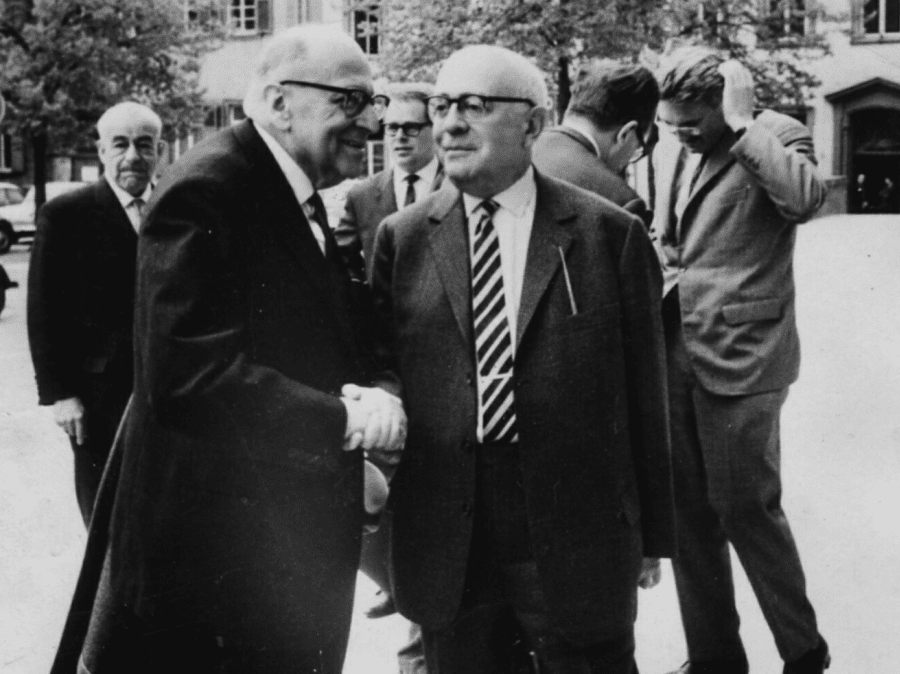 Photograph
Primary source
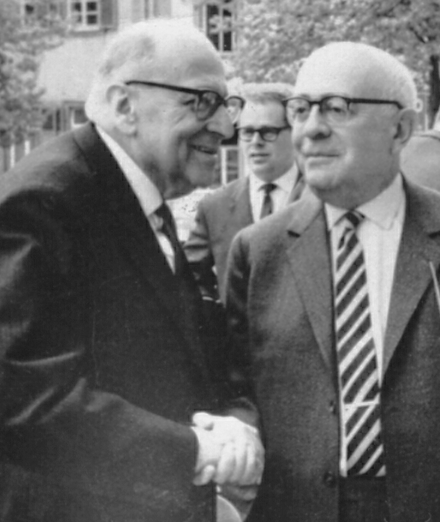
Photograph of Horkheimer, Adorno and Habermas
Jeremy J. Shapiro · April 1964
 Document
Primary source
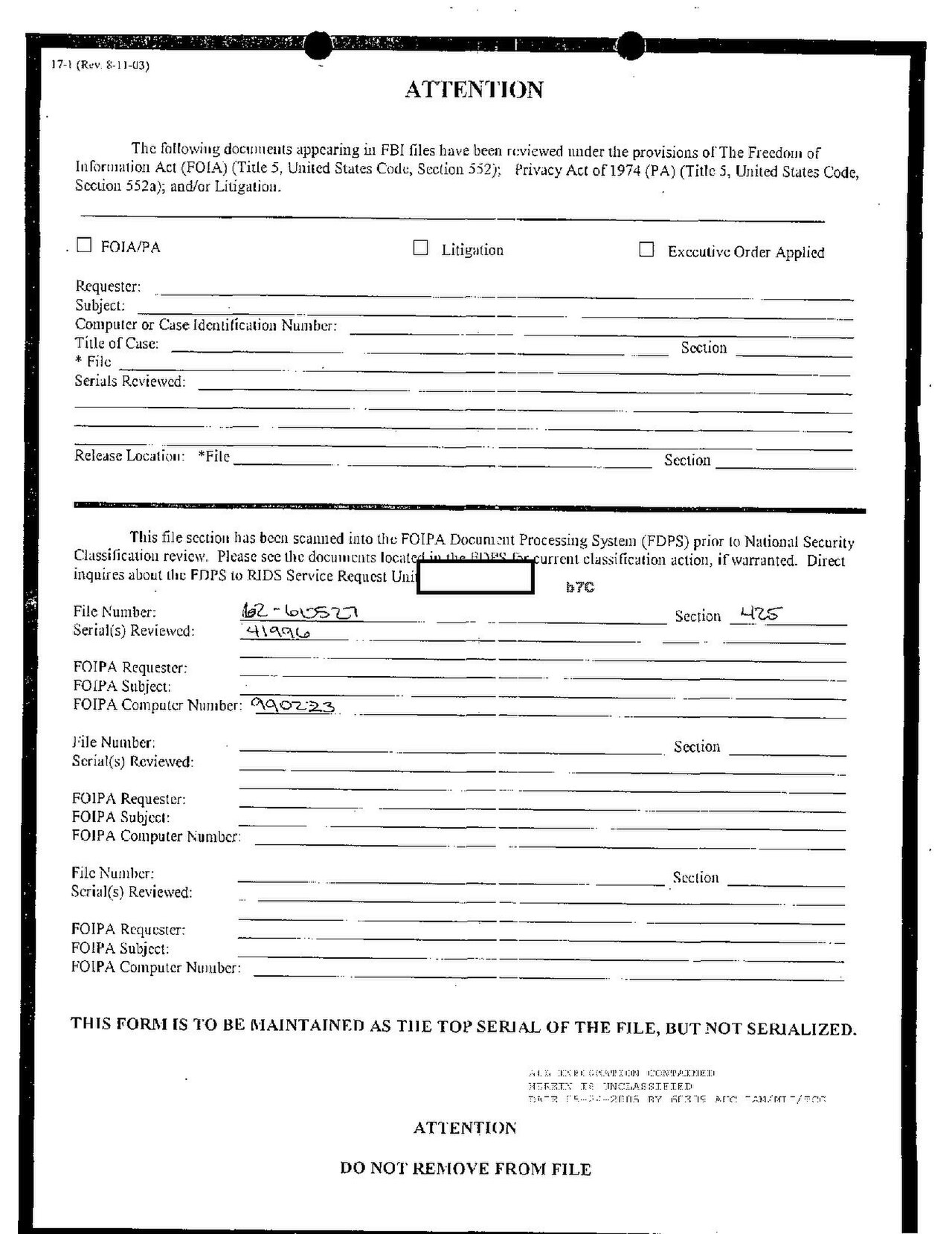
FBI File on Theodor Adorno
Federal Bureau of Investigation
 Photograph
Primary source
Portrait of Theodor W. Adorno
 Book
Primary source
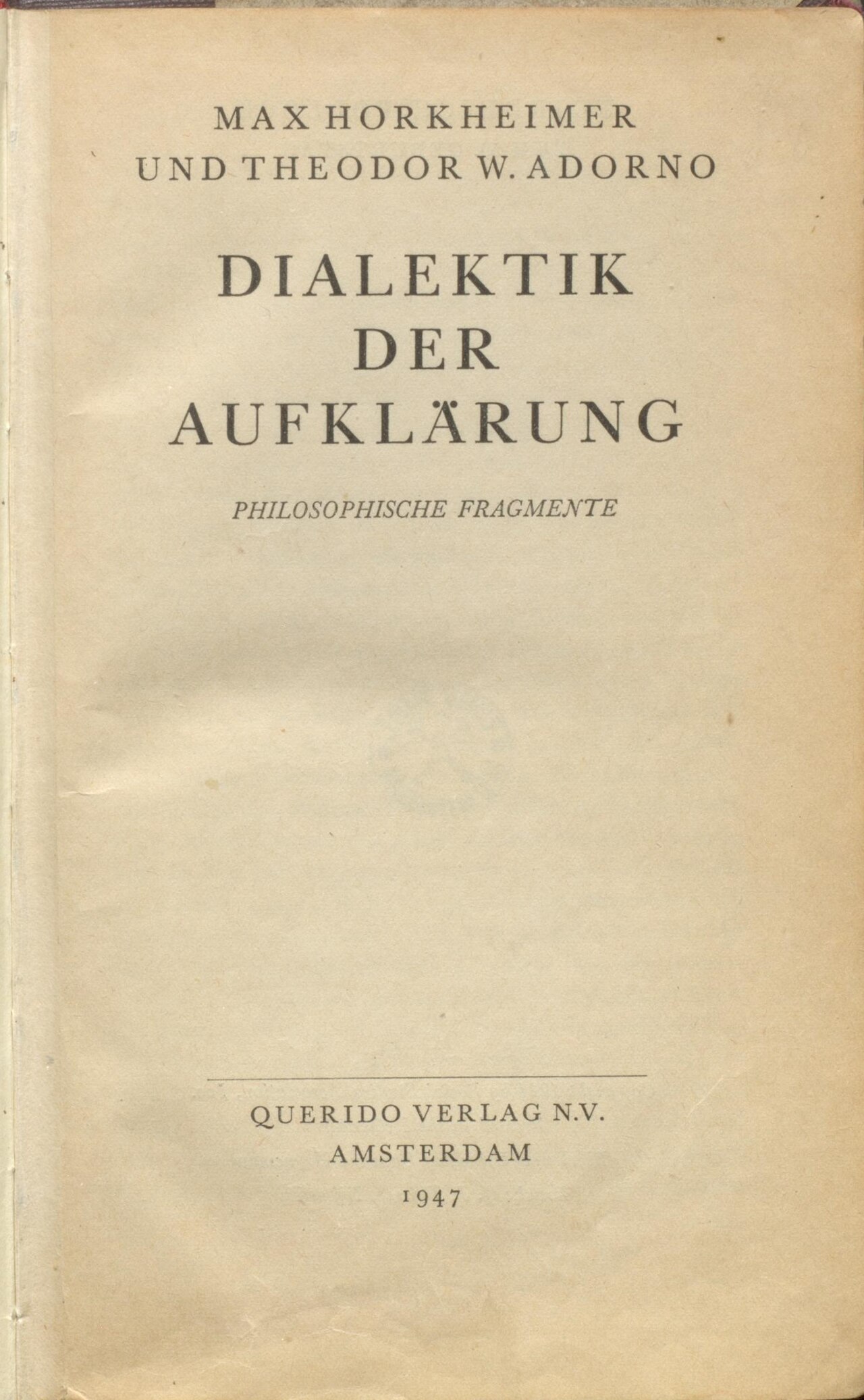
Title Page of Dialektik der Aufklärung
Max Horkheimer, Theodor W. Adorno · 1947
Free account
Read every Theodor W. Adorno source
Sign up free →
Ready when you are
Start chatting with Theodor W. Adorno now.
20 messages free · No credit card · Available in 50+ languages.