


Secondary sourcePainting19th century
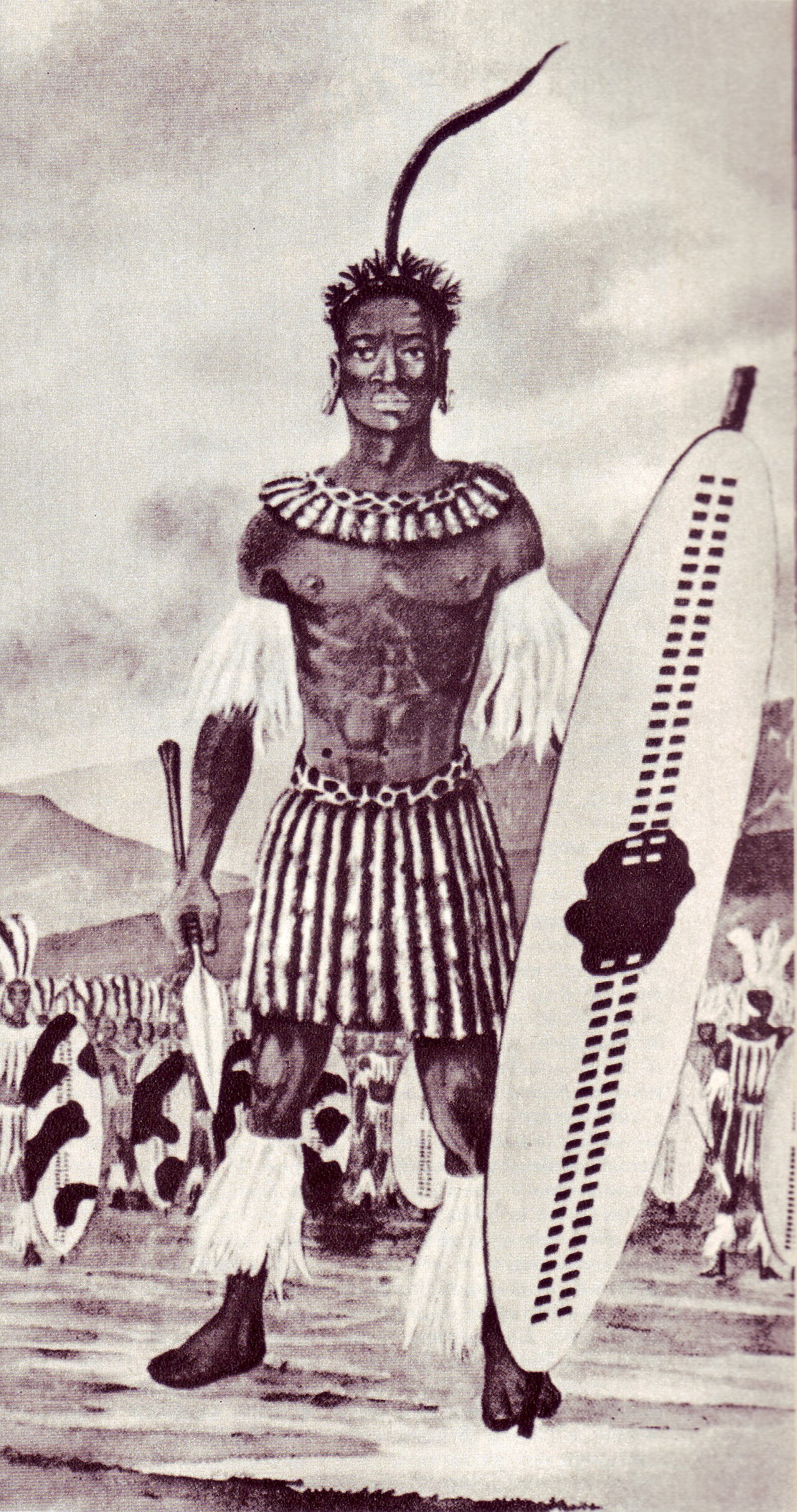
Shaka Zulu Engraving
Anonymous · 19th century
A nineteenth-century engraving of Shaka, showing how European print culture spread his image after his death.
A posthumous European engraving showing how Shaka's image circulated in print long after his death.
About this source
What it is
This is a sepia-toned engraving made in the nineteenth century, showing a standing man identified as Shaka, wearing a feathered headdress and ornaments, holding a spear and a large shield, with other warriors in the background. The creator is unknown.
Why it matters
Shaka died in 1828, so this image was made by someone who likely never saw him, drawing instead on earlier descriptions or illustrations circulating in Europe. It shows how prints like this helped shape, and sometimes distort, how European audiences pictured African rulers in the nineteenth century.
Look closer
- What details in the image look like they could be accurate, and which might be imagined or exaggerated?
- Why do you think European printmakers were producing images of African rulers at this time?
- How might this image have shaped what ordinary Europeans believed about Shaka and the Zulu kingdom?
This painting is part of the curated material that grounds the AI version of Shaka Zulu on Humy.ai — when students ask about related events, the AI can quote it and cite it.
More Shaka Zulu sources
Browse all 22 →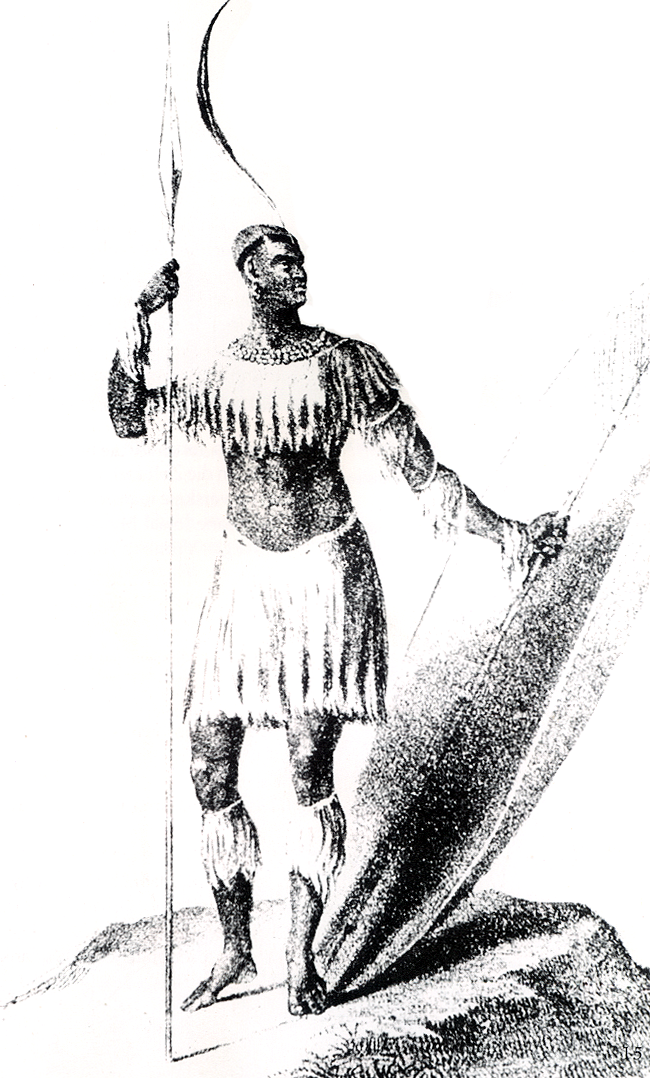 Painting
Primary source
Shaka, King of the Zulu
Nathaniel Isaacs (after a sketch by James King) · 1836
 Book
Primary source
Travels and Adventures in Eastern Africa
Nathaniel Isaacs · 1836
 Painting
Primary source
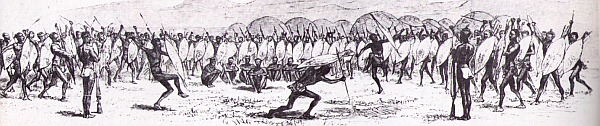
Reception of the Zooloos for Chaka
Nathaniel Isaacs · 1836
 Book
Secondary source
Nada the Lily
H. Rider Haggard · 1892

Free account
Read every Shaka Zulu source
Sign up free →
Ready when you are
Start chatting with Shaka Zulu now.
20 messages free · No credit card · Available in 50+ languages.