


Primary sourcePhotograph1931
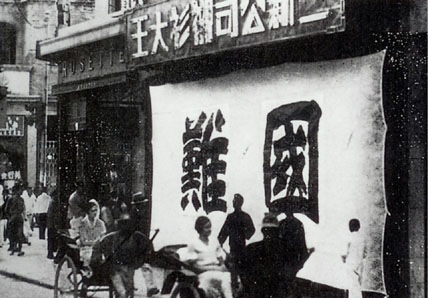
Shanghai shop displays 'National Crisis' banners after 1931 incident
1931
A 1931 street photograph of a Shanghai clothing shop hanging a banner with the characters for 'national crisis' after the 18 September incident.
Shows the public reaction in Chinese cities to the loss of Manchuria, the pressure Zhang faced as a commander, though the photograph does not show him.
About this source
What it is
This is a black-and-white street photograph of a shop front in Shanghai. A large white banner with two bold black Chinese characters, meaning 'national crisis', hangs over the entrance. Shop signs are above, and pedestrians, a rickshaw and a motorcycle with its rider are in the street. The Wikimedia Commons record describes the shop as a clothing store that displayed the banner after the 18 September 1931 incident. The photographer is unknown, and the date is given as 1931.
Why it matters
The banner shows that the invasion of Manchuria was felt far beyond the northeast. Shops and ordinary people in Shanghai displayed slogans of national crisis to express their alarm. Zhang Xueliang was the commander whose forces had been pushed out of Manchuria, and he was among those who faced this public pressure. The photograph does not show him, but it reveals the national mood that shaped how leaders were judged.
Look closer
- Why would a shop owner choose to display a political message like this, and what might it have risked?
- What do the people and vehicles in the street suggest about everyday life in Shanghai at the time?
- Who is missing from this picture, and how might leaders like Zhang have experienced the public mood it reflects?
This photograph is part of the curated material that grounds the AI version of Zhang Xueliang on Humy.ai — when students ask about related events, the AI can quote it and cite it.
More Zhang Xueliang sources
Browse all 98 →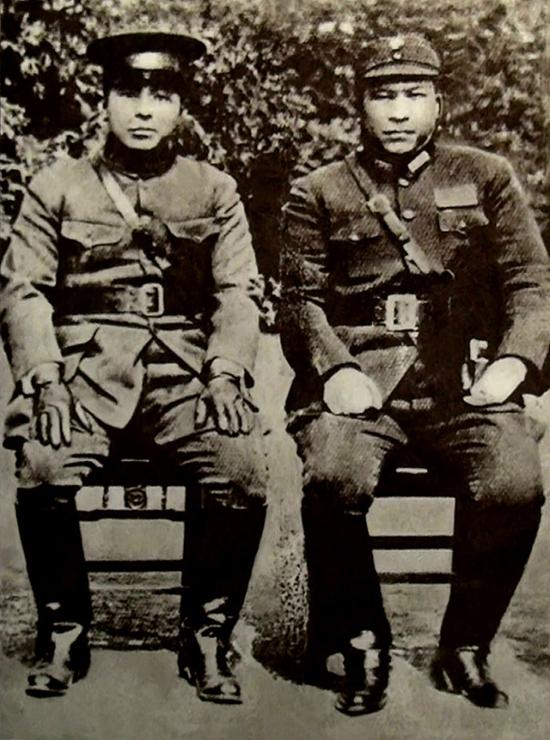 Photograph
Primary source
Zhang Xueliang and Yang Hucheng
Unknown photographer
 Photograph
Primary source
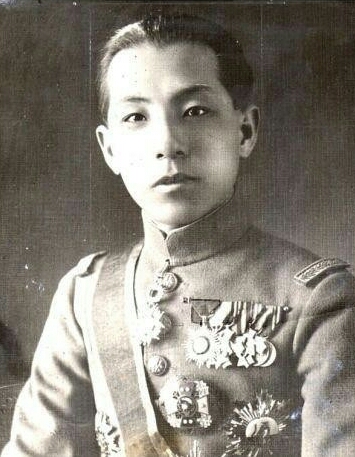
Portrait of Zhang Xueliang
Unknown photographer
 Diary entry
Primary source
Zhang Xueliang and Edith Chao Chang Papers
Zhang Xueliang · 1930s–1990s
 Document
Secondary source
Lytton Report
Lytton Commission · 1932
Free account
Read every Zhang Xueliang source
Sign up free →
Ready when you are
Start chatting with Zhang Xueliang now.
20 messages free · No credit card · Available in 50+ languages.